Demystifying Tosuis

So here’s one long and complicated family lineage that many find confusing. The Tosui-Harumatsu line of the Seto region is one of the longest in the modern age of bonsai pottery, and both branches continue to see production today, in a certain way of looking at things.
The Players:
Uematsu Chotaro: 1899-1959, Designer of most pots made by Mizuno Masao, pots made by Masao and designed by Chotaro are called “Uematsu Tosui”
Mizuno Sakataro:?-1921, Father of Mizuno Haramatsu and Mizuno Masao
Mizuno Masao: 1904-1975, maker of pots designed by Uematsu Chotaro, marked Uematsu Tosui, brother of Mizuno Harumatsu. After Chotaro’s death in 1959, took over the Tosui name solely. In 1964, at 60 years of age, began marking pots Ryokujuan Tosui, a play on the fact that “Ryokujuan” sounds like the Japanese “60”(Rokuju).
Mizuno Harumatsu: 1893-1958, eldest son of Mizuno Sakataro(Harumatsu Toen), took on the Harumatsu name from his father in 1921, making him the second generation Harumatsu. Also made some pots designed by Uematsu Chotaro. Pots marked with both Harumatsu and Uematsu Tosui are thought to be pre-war.
Mizuno Shikao: 1942-present, son of Mizuno Masao, if you count Uematsu Chotaro as a designer, that makes him 3rd generation of the Tosui kiln.
Harumatsu Rokumisai: 1917-2005, 3rd generation Harumatsu Kiln
Shinano Chazan: 1904-1992, a student of pottery and the tea ceremony, Chazan began painting pots made by Mizuno Masao and designed by Uematsu Chotaro around 1940, and went on to paint and carve pots by Harumatsu and a host of other potters, including Tsukinowa Yusen and Heian Kozan.
Haruyoshi: While not an official member of this lineage, like Chazan, Haruyoshi studied pottery under Harumatsu Rokumisai, and later painting with Shikao Tosui, so it is my thought that, while the Harumatsu line has ended, Haruyoshi is the successor to both lines.
Saavy? Good, I’m still a little confused too. But, on to the pots!
Uematsu Tosui
So, pots labeled as Uematsu Tosui can have been made by Harumatsu or Masao, and were often painted or carved by Chazan.

20121229-161228.jpg
A Chazan painted rectangle by Masao, designed by Chotaro. A very nice painting, on a very famous pot.

20121229-161338.jpg
Another with the same pedigree as above. Really nice details to the window painted landscape, and excellent glaze work.

20121229-171048.jpg
An unglazed rectangle with riveted bottom band. Clean, straight lines. Very masculine.
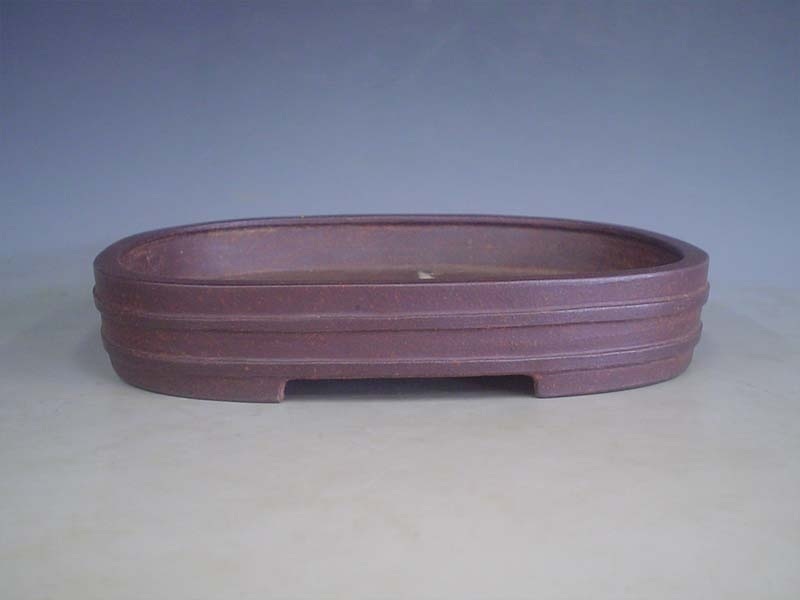
20121229-171153.jpg
Unglazed oval with double center band.

20121229-171235.jpg
A really cleanly glazed red square.

20121229-171310.jpg
A really cool cascade pot with glaze topper. Really nice yohen(kiln drips) to this the glaze topper on this pot.
Ryokujuan Tosui
From 1964 onward, pots made by Masao were marked Ryokojuan Tosui, and differ quite a bit from pre 1959 pieces devoted by Uematsu.

20121229-175434.jpg

20121229-175444.jpg
This design is a popular one of Ryokujuan Tosui. I’ve seen several different ones. The “bat/cloud” is porcelain. The pocked unglazed clay surface is rustic for such a formal pot shape with such whimsical designs.
20121229-180552.jpg
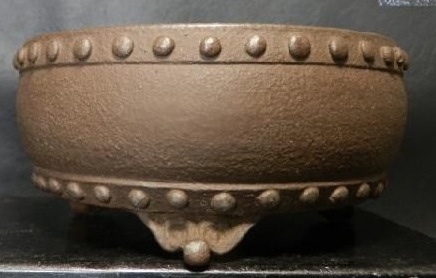
A really well made round riveted drum with 3 balled feet. A really nice and bold pot.
20121229-180644.jpg
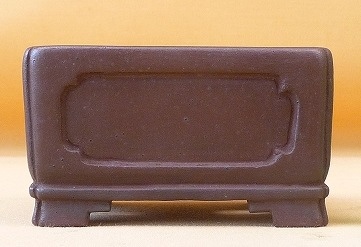
A super simple square with cut corner window. Good looking clay quality.

20121229-180736.jpg
A round with textured design and base with cut windows. Another bold pot. What would you plant in this?
20121229-180842.jpg
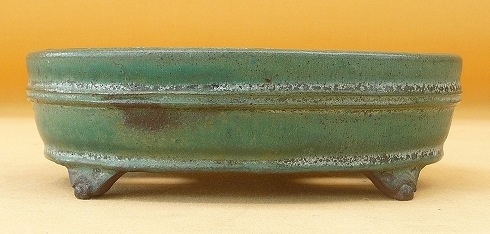
A grayish glazed oval with center band and balled feet. Nice and mild glaze, easily usable for a variety of species.
20121229-180944.jpg
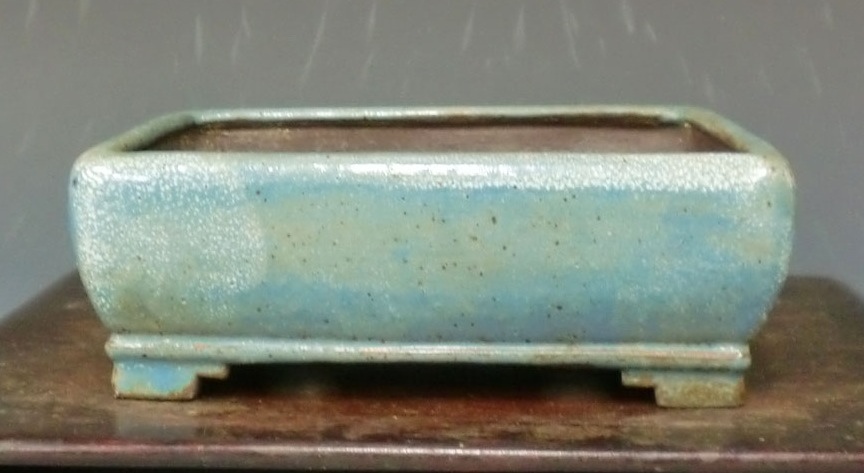
Another simply glazed pot. I really like the tones of white and brighter blue to the left of the pot.
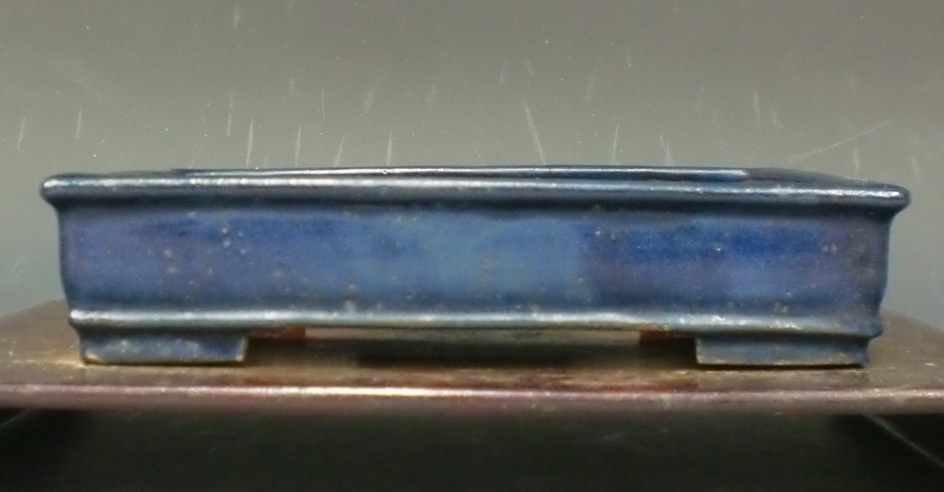
20121229-181048.jpg
A really pretty deep indigo blue rectangle with lip and bottom band. I like that the glaze fully covers the feet on this pot. Sometimes it’s nice to see a bit of the quality of the clay peeking through the glaze, other times it’s just sloppy work.
Umemodoki anyone?
Mizuno Harumatsu
The Harumatsu potters are far better known for their Suiban than their bonsai pots. Harumatsu pots are widely variable as to quality and value, ranging from 12$ to $4,000.

20121229-182719.jpg
A very famous Mizuno Harumatsu cascade pot. It looks to me to be a copy or homage to antique Chinese pieces.

20121229-182835.jpg
A published, signed(this is very rare for Mizuno Harumatsu) indigo glazed soft banded rectangle. This piece I found for sale from Taishoen for 300,000¥(a hair under 4k$)….
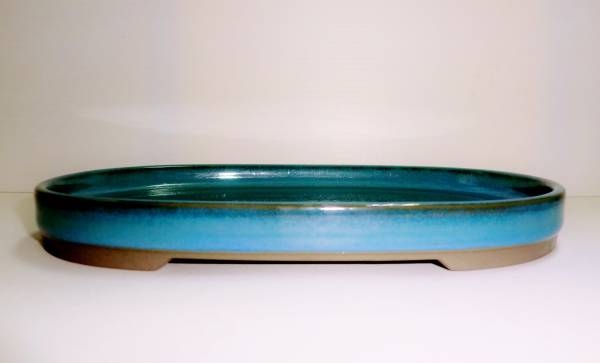
20121229-183019.jpg
And the opposite spectrum: a typical production level Harumatsu, available at $12.50.
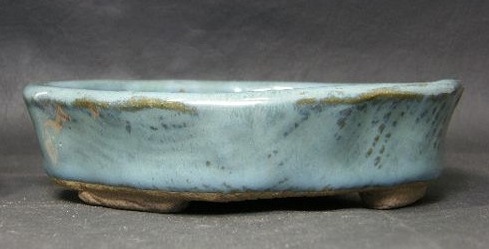
20121229-183146.jpg
A rustic hand formed blue cream glazed oval. I like the rusticity of this pot.

20121229-183333.jpg
Another hand formed rustic oval. I could see this with a small forest planting.

20121229-183420.jpg
A very thin light blue glaze. Unlike the Tosui pot above, I’m not a big fan of the clay showing here.
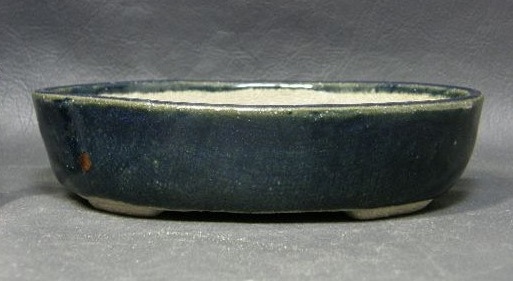
20121229-183523.jpg
A much cleaner, deep green-blue oval. Here the clay showing through seems appropriate.

20121229-190614.jpg
A Harumatsu pot with carved decoration by Chazan. The rather formal, classical pot and Chazans rustic engraving contrast well.
Harumatsu Rokumizu
The third, and last, generation of the Haramatsu line, Rokumizu pots are classical and bold.
20121229-183749.jpg

20121229-183800.jpg
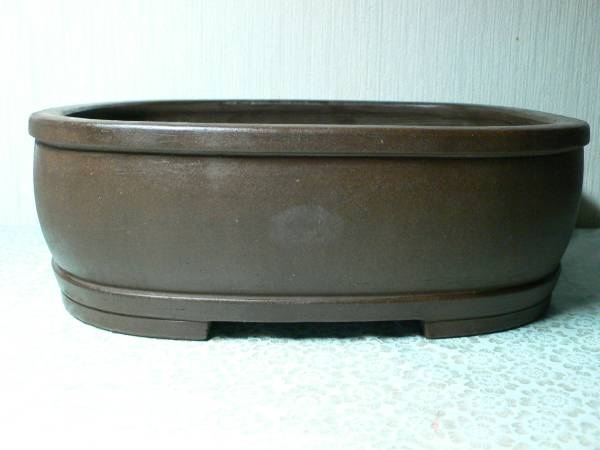
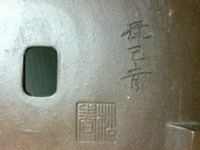
An unglazed top and bottom banded oval. Second image shows the Harumatsu seal, and the signature, “Rokumizu”.
20121229-183853.jpg
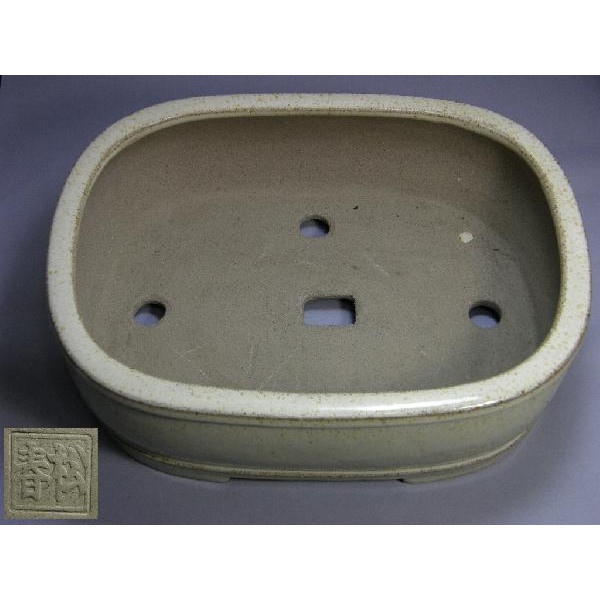
A large speckled cream oval. The chop in the lower left is unique to Rokumizu, a subject that came up recently on one of the pottery forums.
Mizuno Shikao
If you consider Uematsu Tosui to be a separate potter from Ryokujuan Tosui( which isn’t beyond the pale, since they are conceptually distinct) then Shikao, called simply “Tosui”, is the 3rd generation of the Tosui line.
Probably the most prolific of this entire Seto group, Tosui pots are everywhere, and widely vary as to cost and quality.
Glazed and unglazed Tosui are very common in the west, one reason I think Tosui has gotten a bad rap, so we’ll take a look at some better quality pieces that are not so common here.

20121229-200007.jpg
Black glazed Tosui with a whole lot going on: mokko shape, 4 cloud feet, deep indents, lip, and windows. Really clean lines and nice glaze. Tough to use.

20121229-200131.jpg
Unglazed pot with painted blue glaze designs. I’ve seen a lot of these from Tosui, it’s a difficult technique rarely used today but widespread in Antique Chinese pots.

20121229-200304.jpg
A tiny black clay pot with porcelain band painted with landscape, from my collection.

20121229-200403.jpg
These 4 pot painted sets are common by Tosui, and cost around 500$. They’re still being made.
20121229-200717.jpg

20121229-200722.jpg
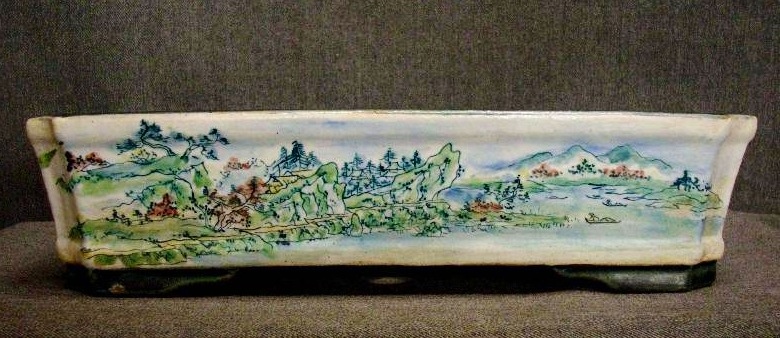
Opposing sides of the same rectangle. While Tosui doesn’t have the classical skill of pot painters like Gekkou, Yuzan, Isseki, or Yusen, his painting style posses a certain cartoonish charm and whimsy of their own.

20121229-200909.jpg

20121229-200915.jpg
A Suiban and round with different mountainous views, one of Mount Fuji. Like many pot painters we’ve talked about in the past, The painting style and images used on Tosui pots often come from famous Japanese paintings. In Tosuis case, his style and many of his motifs come from the work of Katsushika Hokusai(1760-1849).

20121229-202319.jpg
The original painting that the above Suiban is modeled from, by Hokusai.

20121229-202413.jpg

20121229-202420.jpg
Two more classical motifs, we’ve seen both painted by others on the blog before: Fox’s Wedding and the god of the wind, Fujin(Raijin, the god of thunder, appears on the opposite side).
Shinano Chazan
While not officially either a Tosui or a Harumatsu, the legacy of Chazan is intensely wrapped up with this Seto legacy, as Uematsu Tosui first commissioned him to paint pottery, and he trained the later generation Tosui to paint.

20121229-212733.jpg
A painted shallow plate by Chazan. This piece exemplifies some of the best of Chazan’s porcelain painting, with the old man figures common in his post war work and the black and gray scale details.

20121229-213040.jpg
Detail

20121229-213048.jpg
Detail

20121229-213139.jpg
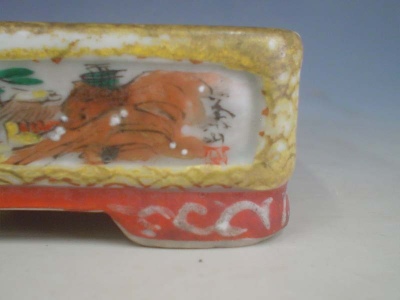
A collaborative pot painted by Chazan, made by Tsukinowa Yusen. Really interesting bright coloration to the window painted landscape scene.

20121229-213252.jpg

20121229-213302.jpg
Detail of Yusen signature on bottom and Chazan signature in side window.

20121229-213342.jpg
Another Chazan/Yusen collaborative pot, this one with an interesting glaze and brightly painted crabs.

20121229-213445.jpg
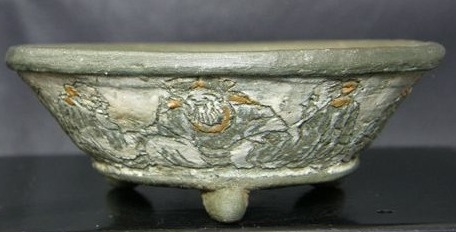
A Chazan carved pot. One can clearly see the influence Chazan would have on later potters, like Okatani Zeshin and Cyazan.
20121229-213638.jpg
A nail carved piece featuring the old man motif that Chazan is famous for, which Zeshin later emulated.

20121229-213755.jpg
Another nail carved pot, more rustic than the above piece.
20121229-213914.jpg

20121229-213919.jpg
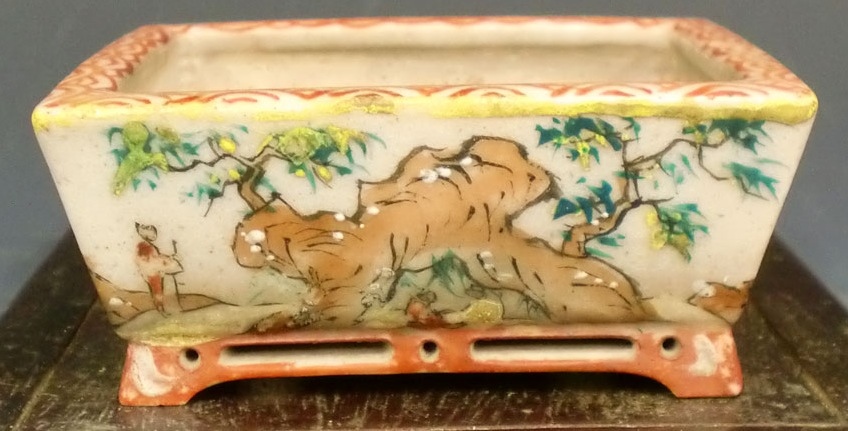
Another collaborative piece, this one between Chazan and Fukushi(福司). This one is for sale from Yorozuen, and shows very nice details, color, and patina.
Haruyoshi
While not a member of the Tosui/Harumatsu clan, being trained in pottery by the last generation of Harumatsu, and the last generation Tosui, makes Haruyoshi the successor of both lines in my opinion.
We’ve featured Haruyoshi on the blog before, so for a look back click here:
Haruyoshi

20121229-214600.jpg
A shohin kusamono from my collection in a Haruyoshi porcelain sometsuke.

20121229-214705.jpg
A really nice blue porcelain Haruyoshi. While he trained under Tosui, it’s my opinion that Haruyoshi is the best of this line of potters. His paintings show an eye for detail lacking in the others’ work.
20121229-215118.jpg
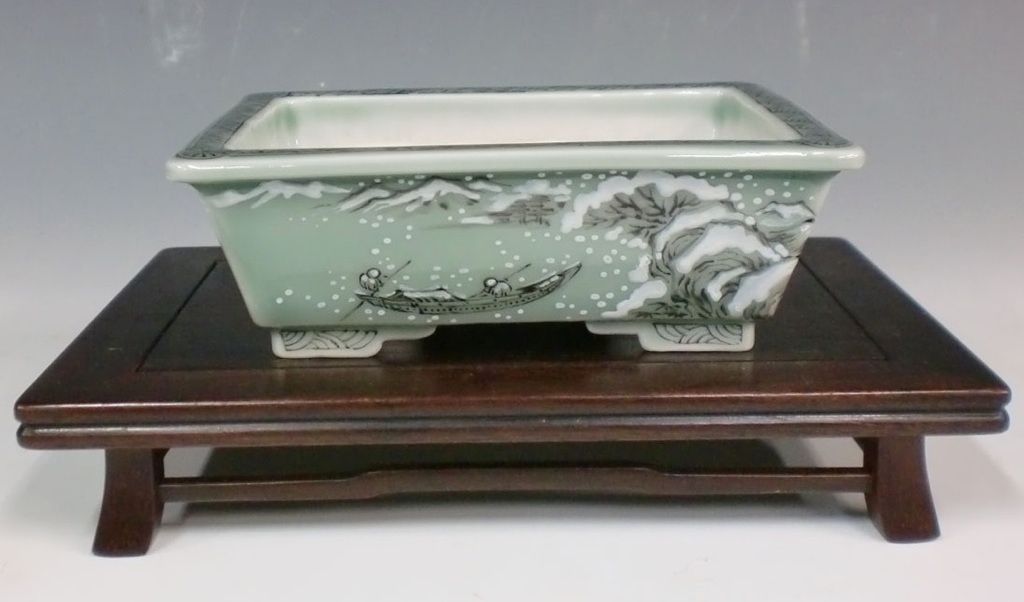
A really nice winter scene.

20121229-215143.jpg
A 5-color window scene, Kutani style!

20121229-215230.jpg
A simple glazed accent pot. In both his painting and his unpainted pieces, you can see the influence of the great line of Harumatsu, Tosui, and Chazan.

Hope this clarifies all those Tosui and Harumatsu pots out there.
Thanks for reading!

Posted in Famous and Antique Potters, Modern Potters, My Personal Collection, Pot Info, ID, Hanko, Books, ect. | 8 Comments

Heian Koso(平安香艸)

Here in the west, we’ve become familiar with the “Big 3” Japanese Bonsai Potters: Tofukuji, Yusen, and Kozan. But our familiarity with these potters would have been impossible without Heian Koso(平安香艸 or 香草), who made these potters famous in Japan in the 1960s and 70s. Koso, whose real name was Choso Kawai(河合蔦蔵), was a bonsai heavyweight in his time, the third generation proprietor at Koso-En, from 1938, in Kansai, which he made famous as its Bonsai master. The Nursery, founded in 1877, still operates today, with three locations, including one in Omiya and a Bonsai farm outside of Kyoto. The Kiln at the nursery was started by another great heavyweight, Wakamatsu Aiso, contempory and friend of Heian Tofukuji, both of whom were part of a group of potters that trained Heian Koso.
Heian Koso is well known for his Kiyomizu painted porcelain pieces, as well as glazed and unglazed pots. One can readily see the influence of Yusen, Tofukuji, Kozan, and Aiso in his work. In addition to making these Japanese potters famous, he is also often credited with helping make bonsai pottery a sustainable profession in Japan, as before he popularized Japanese pottery, it was impossible to earn a living making bonsai pottery alone. Let’s take a look at his work.

20121227-151243.jpg

20121227-151640.jpg
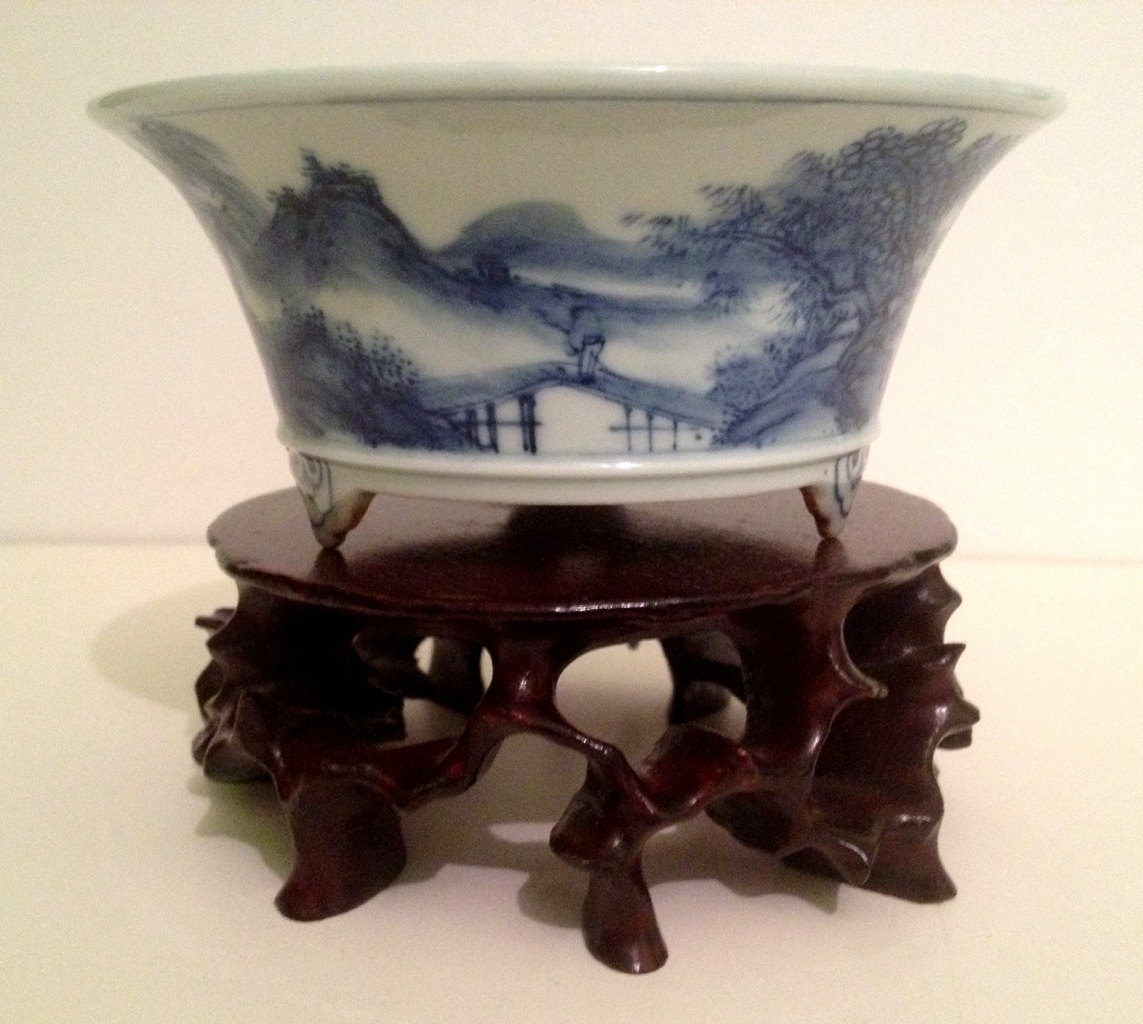
A blue painted porcelain round from my collection. Typical of Koso’s painted pots, which are most commonly seen in 9 or 12 cm. There are excellent details and fine brushwork to the painting.

20121227-151446.jpg
A pair of matching rectangles in red and blue. Really nice detail to the two figures, and the slight differences between the paintings show that it was painted free hand, not with a stencil.

20121227-152052.jpg
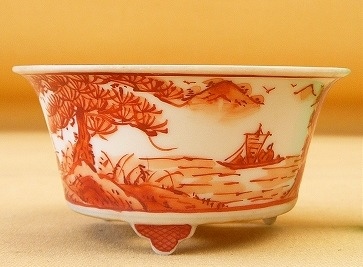
A red painted piece with pine tree and ship.

20121227-152142.jpg
Another sometsuke blue pot, this one showing some kanji, perhaps a poem or a description of the scene.

20121227-152321.jpg
A rectangle with window painted landscape. Really nice far view scene, and really dark indigo color.

20121227-152428.jpg
A common motif in bonsai pottery painting, and Japanese art in general: Choju-giga, anthropomorphic animals from old handscroll paintings. This one depicts the contest between the rabbit and the frog.

20121227-161919.jpg
The original scroll, ink on paper, from the 12th century, by Kozan-Ji.

20121227-163614.jpg
A unique 8 sided pot, shown more for Koso’s versatile clay work than the painting.

20121227-163709.jpg

20121227-163723.jpg
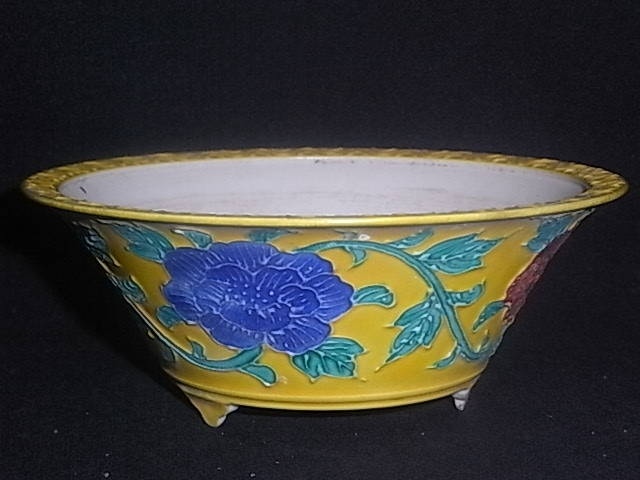
Yellow ground porcelain with enameled chrysanthemums. A very nice example of this style.

20121227-175125.jpg
A fine rectangle porcelain pot with overglaze blue net design. I really like this piece, simple and classical, not too showy.

20121227-175239.jpg
A simple glazed round that characterizes much of Koso’s glazed pots.

20121227-175342.jpg
A mostly unglazed cascade pot, with interesting glaze topper.

20121227-175445.jpg
A matched quintet of single color glazed rounds. Very clean, pure, bright colors.

20121227-175535.jpg
And we’ll finish up today with a handmade turkey-glaze round crackle. There’s just enough wonkiness to the rim, a really nice piece!

Posted in Famous and Antique Potters, Modern Potters, My Personal Collection | 2 Comments

A Forgery! (12/26 update!)

I first posted about a forged Tsukinowa Yusen I found for sale back in August. The bonsai pottery world is certainly not a safer place today! Today I saw this matched pair of “Yusens” for sale….what do you think of them?

20121226-094634.jpg

20121226-094903.jpg
Clearly made by the same painter as the pot below, in the original post. This pair has less patina than the original pot, wonder what it was used for?
And here’s the original post, from August 11, 2012:
Often I have friends who are searching for specific pots for specific trees, and also other friends who simply have me keep an eye out for big name potters’ work up for sale. When I find one of these big name pieces for a friend, I will often have it checked by the very generous master at One of my favorite nurseries, one of the most respected experts, along with a couple of other Japanese Bonsai pros and pottery collectors both here and abroad.
Recently I came upon this Tsukinowa Yusen, and I have a friend who is always on the lookout for them. I’ve bought pots from this seller before that were authentic, so, initially, I had no reason to doubt it’s authenticity. He paid me right away.
However, I had some doubts about the painting style, the feet, and the clay. So, before I purchased it from the seller, I had it checked out, and the consensus, from 3 Japanese Pros, was….FAKE!

All my doubts were confirmed, the painting style is too sloppy, the shape is not one Yusen often used, the feet are all wrong, and the clay is off. We mostly agreed that the signature is spot on though.
Of course, I sent my friend his funds back, and I was very very relieved to have the friends I have in Japan to help me with these purchases, and their great generosity in doing so!

Lesson here today: a signature or a chop is not enough to go by when evaluating high end pots. You must go by the style, the clay, the age, and the minor details that go into these potters’ works. It’s much harder to identify a forgery than just matching up the chop. Forgers in China these days are using computers, scanning equipment, CNC machines and diamond routers(I believe they’re called) to engrave picture perfect signatures into old pots that resemble a famous potter’s work(this can be identified by the tiny displacement of clay on the outside of the lines of a signature, meaning it was done before the clay was fired….no displacement waves=forged!).
The Forged Yusen

20120811-103556.jpg

20120811-103605.jpg

20120811-103614.jpg

20120811-103627.jpg
Some Real “Book Yusens”
Compare!

20120811-135817.jpg

20120811-135825.jpg

I hope you’ve enjoyed seeing the pitfalls of buying high end pottery.
Be careful out there!

Posted in Famous and Antique Potters, Pot Info, ID, Hanko, Books, ect. | Leave a comment

Seedling Time!

It’s that time of year again! Bare root seedling time! Growing bonsai from seed can be extremely rewarding(if you’re young and/or have access to a place to grow in the ground).
By growing from seedling, as an artist, you have total control of what direction you want the trees to take, and it’s much easier to minimize the flaws that are common from nursery and other types if stock.
I just got my annual group of seedlings in from Matt Ouwinga, at Kaede Bonsai En, and couldn’t be happier. In the last several years I’ve been getting seedlings from Matt, my attrition rate is next to zero, and I highly recommend Matt as the place to go for bare root seedlings for Bonsai.
Pick yours up at
Kaede Bonsai En
He also has some nice specimen trees for sale:

20121203-133159.jpg

20121203-133206.jpg

Posted in Trees, Uncategorized | Leave a comment

New Logos! ABS!

Hello All! It’s been a bit! Winter prep(such as it is here un the deep south)has been in full swing, so I haven’t had much time to post anything. But, there are many good posts in the works to help us wile away that winter downtime, including Heian Kouzan, “The Frame Analogy”, Middle Crossing Chinese Pots, Famous Suiban Potters, and More Pots From My Collection.

If you’re a member of the American Bonsai Society and receive their quarterly journal, you’ll have noted some photos from the blog in an article by local bonsai potter, bonsai artist, and SOB(thats “student of Boon”), Byron Myrick. It’s a great article, as all all of Byron’s articles on pottery are, and I hope you check it out.

Unbeknownst to myself, my friend Harvey Carapella designed me a new logo(not that I had an old one), in both black and white and color, and I am quite taken with it! Harvey is a graphic design artist when he’s not doing bonsai, and is great at both. If you’re not familiar with Harvey’s Bonsai work from the trees he’s shown at the National Exhibition, take a look here for a peek at his backyard:
Bonsai Gardens of the Northeast Part 1
So here’s the new logo, with the photo of my shohin Miyasama Kaede in a very nice Bushuan pot that Harvey pulled off the blog for the logo.

20121122-063849.jpg
And the logos:

20121122-063928.jpg

20121122-063942.jpg

Thanks Harvey!

Posted in My Personal Collection, Uncategorized | Leave a comment

New on the for sale page, 5/15

New pots up for sale on the for sale page, Juetsu, Bigei, Ino Shukuho, Masahi, Bushuan, and more!

20121115-060547.jpg

20121115-060553.jpg

20121115-060612.jpg

20121115-060644.jpg

Posted in Modern Potters, My Personal Collection | Leave a comment

Bonsai Gardens of the Northeast Part 2

Thursday morning brought us to see Chase Rosade at Rosade Bonsai Studio. Like Suthin, Chase has also pared down his collection, but it was a pleasure to see his garden, studio, and trees nonetheless. He was kind enough to show us the tropicals on display in his clean and spotless home, filling all of the sun lighted space near windows; species such as Jaboticaba that were unfamiliar to my Japanese companions were especially interesting! They remarked that it was like Himeshara(Stewartia) but with better, smaller leaves. Chase is a real character and has a way with words, it was a real pleasure meeting him.

20121023-212203.jpg
Very Old Hinoki Cypress at Rosade Studio

20121023-212318.jpg
Large Forest on Faux Rock slab

20121023-212422.jpg
Twin Trunk Juniper

20121023-212514.jpg
The Garden at Rosade Bonsai Studio

20121023-212606.jpg
Lovely Jaboticaba With Exfoliating Bark

20121023-212655.jpg
Big Ficus With Nice Base

20121023-212739.jpg
Tropical Bonsai at Rosade Studio

20121023-212831.jpg

20121023-212844.jpg

20121023-212859.jpg
A few shots of the many Pots at Chase’s Studio

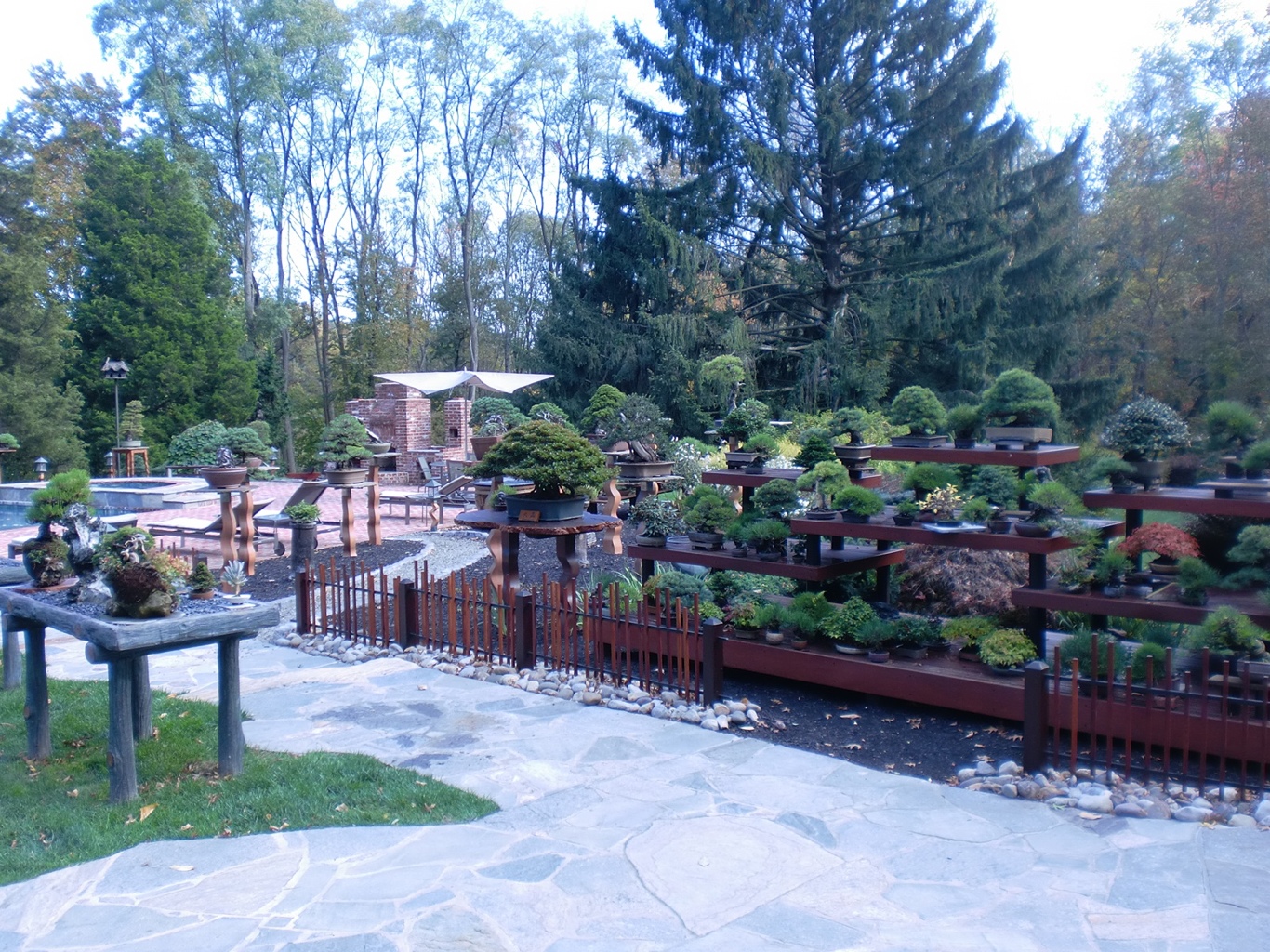
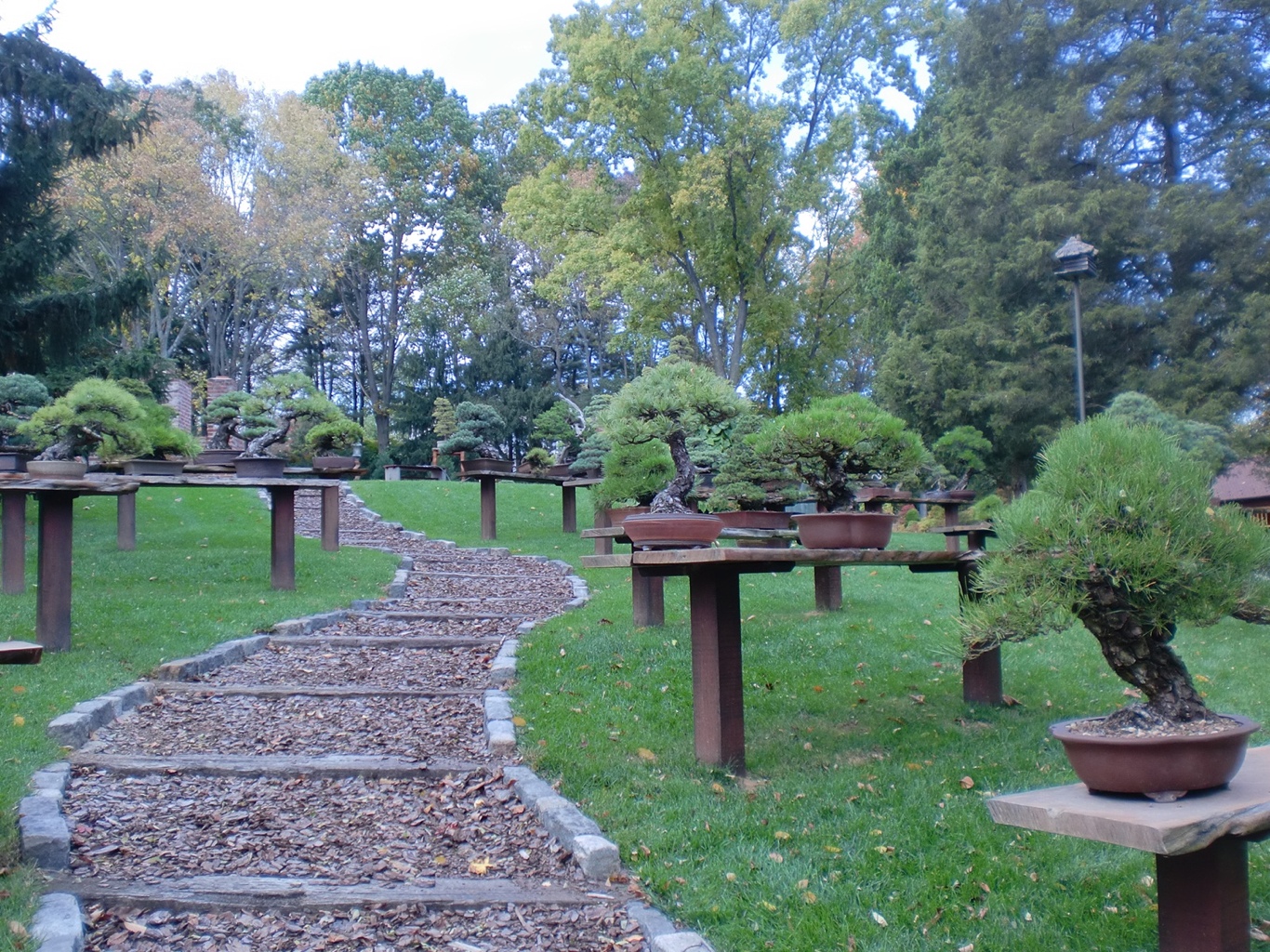
That afternoon we drove to Kennett Square, Pennsylvania. If you are a bonsai enthusiast and dont know where this is going, you must be living under a rock! We were there to visit The Kennett Collection, the private garden and Bonsai of Doug Paul. Well….wow. The gardens are impressively situated on a slope leading downward to the greenhouse area, with Bonsai arranged on plinths and benches, raised shelves and lovely stones, inside arbors and topping the very walls! Some of the wood used to build a few of the benches cost more than all my bonsai! River stone walkways meander through the Bonsai, Sculpture, Koi pond and waterfall, and excellent Niwaki(larger garden trees sculpted and trained like Bonsai). It takes over a half hour just to walk the paths without stopping to appreciate anything! Fortunately, we had time! The Kennett Collection has an impressive variety of species, a good mix of Deciduous and Coniferous trees, in a wide range of styles; American, European, and Japanese species are all well represented. If you ever get the chance, do whatever it takes to see it, I didn’t want to leave!
Doug has a wide variety of both Western and Eastern containers holding the bonsai at the Kennett Collection, though American potters take the lions share, and Toriumi and Endo were quite impressed with some of the pieces. They left the Kennett Collection with a real desire to see more American containers and meet some American potters.

20121023-215040.jpg
View from the Entrance to The Kennett Collection

20121023-215154.jpg
A few pretty nice Shimpaku 🙂

20121023-215301.jpg
More outstanding Bonsai

20121023-215353.jpg
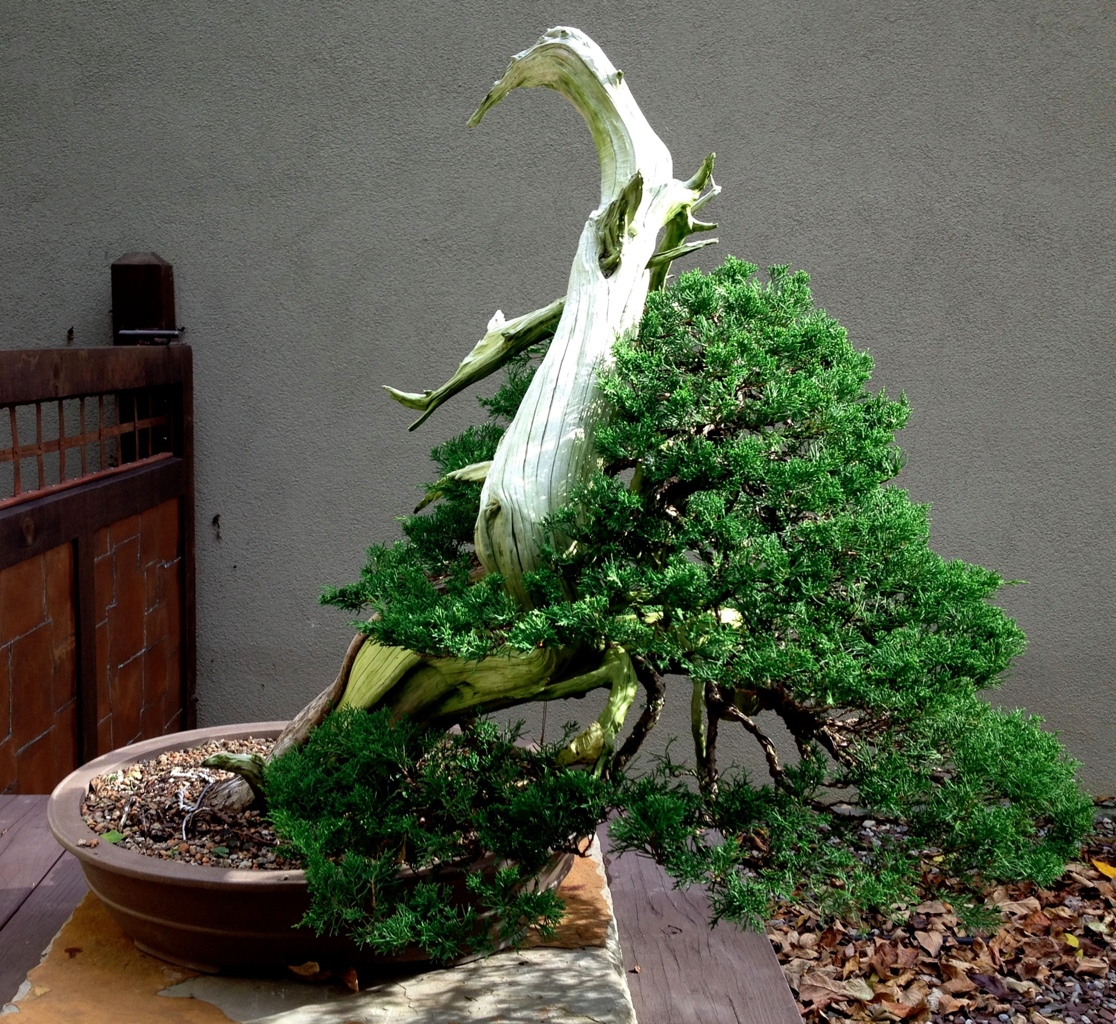
Surreal and fantastic Deadwood

20121023-220651.jpg
Wow. That says it all.

20121023-220816.jpg
An Outstanding yew, featured on the cover of the most recent International Bonsai

20121023-220942.jpg
Really cool pine with Ten-jin

20121023-215731.jpg
Outstanding Root Over Rock Kaede

20121023-215848.jpg
Marvelous Shohin on some really pretty benches

20121023-220004.jpg
A distant view of The Kennett Collection

20121023-220117.jpg
And Past a few Benches…

20121023-220231.jpg
Outstanding Osakazuki Satsuki

20121023-220336.jpg
A Pine lovers dream

20121023-220436.jpg
Just over the Koi pond…

20121023-220540.jpg
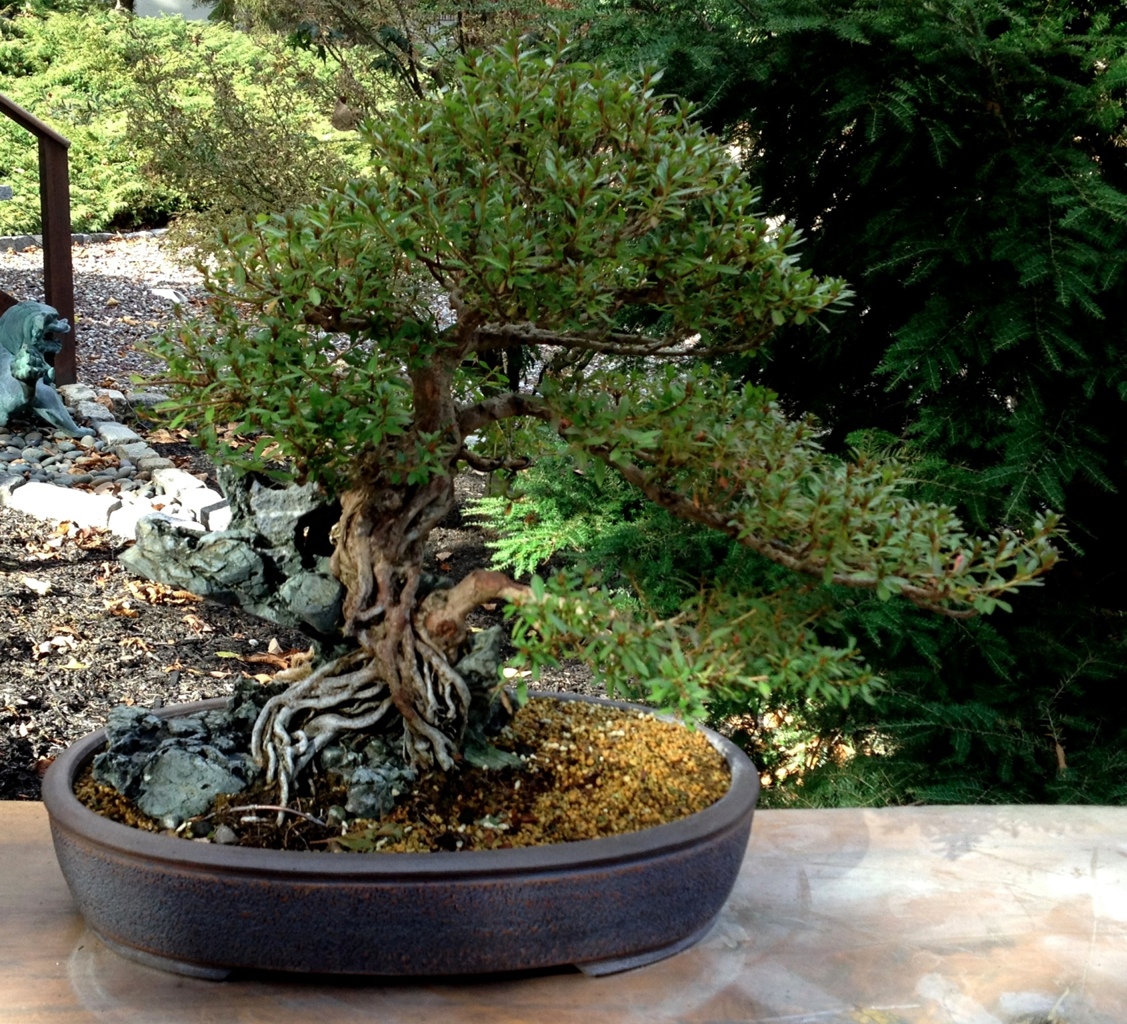
Shohin Satsuki

20121023-221134.jpg
Another gorgeous bit of Bonsai, really unique ten-jin

20121023-221232.jpg

20121023-221243.jpg
Root Over Rock Satsuki

20121023-221350.jpg
Shimpaku Ishizuke

20121023-222153.jpg
Another Outstanding Root over Rock Kaede

20121023-222257.jpg
Korean Hornbeam

20121023-222348.jpg
Elephant foot Crepe Myrtle

20121023-222436.jpg
Chinese Quince

20121023-222518.jpg
Elegant Shimpaku

20121023-222609.jpg

20121023-222632.jpg
Who wouldn’t kill for benches like these!

20121023-222734.jpg
Big and Beautiful Pine!

20121023-222824.jpg
Another lovely Shimpaku

20121023-222915.jpg
Outstanding Shari!

20121023-223010.jpg
Maybe this was one of the European Benches? Looks to be some Scots Pine, European Olive, Pomegranate, and Potentilla in there

20121023-223149.jpg
Twin Trunk Pine

20121023-223258.jpg
Hornbeams and Kaede
in Fall Glory

20121023-224315.jpg
Surreal and fantastic Shimpaku

20121023-224431.jpg
A lovely old Pine

20121023-224534.jpg
Another Amazing Juniper

20121023-224701.jpg
A few small Satsuki 😉

20121023-224814.jpg
Coast Redwood

20121023-224910.jpg
Another Lovely Shimpaku
Seriously, one may spend days at The Kennett Collection and not get a good grasp of everything that’s there. I could spend all night uploading photos to the blog and it wouldn’t come close to what you see when you’re there. It’s a truly majestic experience, well worth the time of the trip in its own right, for any enthusiast, no matter their level. I can’t say it enough, this is a must see!

Chase Rosade pointed us in the direction of the Pennsylvania Bonsai Society and a special meeting and demonstration by retired curator of the Montreal Botancal Garden’s bonsai collection, larch master extraordinaire, and friendly Quebecian David Easterbrook. David’s lecture was a very informative talk on Bunjin-ji, and the demonstration was a far northern collected Larch. The material was fantastic, the lecture informative, and the finished Bonsai: very nice Bunjin Bonsai. My Japanese friends were quite surprised that Americans knew much about Bunjin, much less the amount and quality of information presented by Mr. Easterbrook, and were quite taken with his styling and demonstration skills. I was very surprised when Toriumi told me that very few Japanese know the sources of Bunjin-Ji, while, I think, here in America, most enthusiasts know of the Chinese paintings that inspired the form.

20121023-225437.jpg
David Easterbrook with collected Larch, A fantastic lecture on Bunjin and a great Demo tree

20121023-225615.jpg
Larch Bunjin-after. I didn’t get a before, needless to say, it had a lot more foliage!

Friday morning brought us to Nature’s Way Nursery, and the soft spoken and very hospitable Jim Doyle. I’d timed the trip to coincide with the first day of Nature’s Way’s annual weekend open house, so my Japanese friends could see an American style bonsai workshop, with collected Larch, and, you guessed it…David Easterbrook. Again, the material was great, and my traveling companions were very interested in the American workshop style, which goes a long way towards showing differences in Bonsai culture(the social kind, not the growing kind) between America and Japan, with amateurs and hobbyists wiring and styling their own trees under the supervision and guidance of a master, as opposed to a master wiring and styling a customers’ tree under the plan and permission of the owner.
The Walter Pall collected trees at Nature’s Way are exceptional, as were trees on the benches styled by Mauro Stemberger, Marco Invernizzi, and Jim Doyle. My friends were pretty amazed at the quality of the yamadori we saw, with Endo San remarking at one point that he would really love to style the 1000+ year old Rocky Mountain Juniper below, and Toriumi stating as we drove away that he’s not so sure anymore, maybe bigger bonsai can be better! He left saying he was going to work with more Chuhin! Bold words for a shohin professional!

20121023-230917.jpg
Jim Doyle, Toriumi, and Endo in front of a huge collected pine, lodgepole, I believe(not lodgepole, but limber pine; thanks Tom!)

20121023-231757.jpg
The Pine in the background

20121023-231515.jpg
Massive Collected Rocky Mountain Juniper that Endo San virtually drooled over

20121023-231941.jpg
Massive Ponderosa!

20121023-232034.jpg
Twisted and Contorted, truly expressing the will to live in Natures harsh embrace

20121023-232200.jpg
Lovely, Natural deadwood

20121023-232253.jpg
Breathtaking and natural Ponderosa

20121023-232406.jpg
Awesome deadwood. Carved by the premier artist of deadwood, God! Crazy beautiful, crazy natural

20121023-232549.jpg
Age and beauty!

20121023-232705.jpg
This big Yew was pretty fascinating…Edvard Munch’s “The Scream” anyone?

20121023-232719.jpg

20121023-232732.jpg

20121023-232755.jpg
Now That’s some Fall Glory!

20121023-232810.jpg

20121023-232829.jpg
While the Yamadori and Walter Pall trees at Nature’s Way were tough to ignore, there were many other bonsai, old and young, that made the day a simply awesome experience.do not pass Natures Way up! Thank god most of these species don’t thrive in the Mississippi heat, or I would’ve blown every cent I have!

20121023-233143.jpg
Ed works on a collected Larch in David Easterbrook’s Workshop -at Nature’s Way

20121023-233315.jpg
David Easterbrook, Toriumi,and Endo
Saturday I sent my friends on their way back to Japan, after they invited me to take them next year to Oregon and California, to see the Artisan’s Cup, meet American Bonsaists from all over the country, American Potters at the Vendors area, and see some local bonsai nurseries either before or after the exhibit. I look forward to hanging out with them again wholeheartedly, and can’t wait to see some of the friends we made on this trip again next year.

20121023-233527.jpg
Toriumi and Endo in front of the main display area at International Bonsai Arboretum
Later Saturday morning, I returned to the International Bonsai Arboretum to enjoy the trees without the pressure of a schedule, and wasn’t disappointed. Bill had a beginners workshop going on, and gave a great presentation and lecture on Shohin Bonsai(and kindly put up with my chiming in about containers, as I’m wont to do). I got to meet some of Bill’s senior crew(it was especially nice talking with Jon Robbins and Mark Arpag), watch Mr. Carapella change the front(again)on an awesome yamadori thuja, and had a great time rummaging through Bill’s container collection, with every pile turning up new gems: pre-Pine Garden-Delaware Pottery Bravermans, awesome Hagedorns, middle crossing Chinese antiques, and the most expansive collection of old and cool Tokoname I’ve seen. I was mocked! Mocked I tell you! When I couldn’t tear myself away from the containers to watch more critique and setup of a shohin bonsai display for Bill’s upcoming book, celebrating his 50 years of creating Bonsai. Laugh all you want, Mark and Jon! 😉

20121023-233719.jpg
Pots at the International Bonsai Arboretum…I only made it through 4 shelves…15 more to go, next time.

This was a fantastic journey and a great time was had by all 3 of us. If you get the time, and are anywhere near the northeast, I’d recommend stopping in to see any of these places; they are all great and truly represent the spirit and quality of American Bonsai.

Posted in Trees, Uncategorized | 19 Comments

Bonsai Gardens of the Northeast Part 1

So, settle in, this is going to be a long one!
I mentioned in my next to last post that I was taking two Shohin Bonsai professionals from Japan on a tour of American Bonsai nurseries in the Northeast for an upcoming piece in the Japanese publication “Bonsai Sekai”, and here’s the rundown!
I’d planned the trip a couple weeks earlier than normal peak times for Autumnal color(because of the very early spring), and wasn’t remiss. We hit each nursery, moving from north to southeast, at just about peak autumn color(sure made the drive around New England easy on the eyes too!).

20121021-152247.jpg
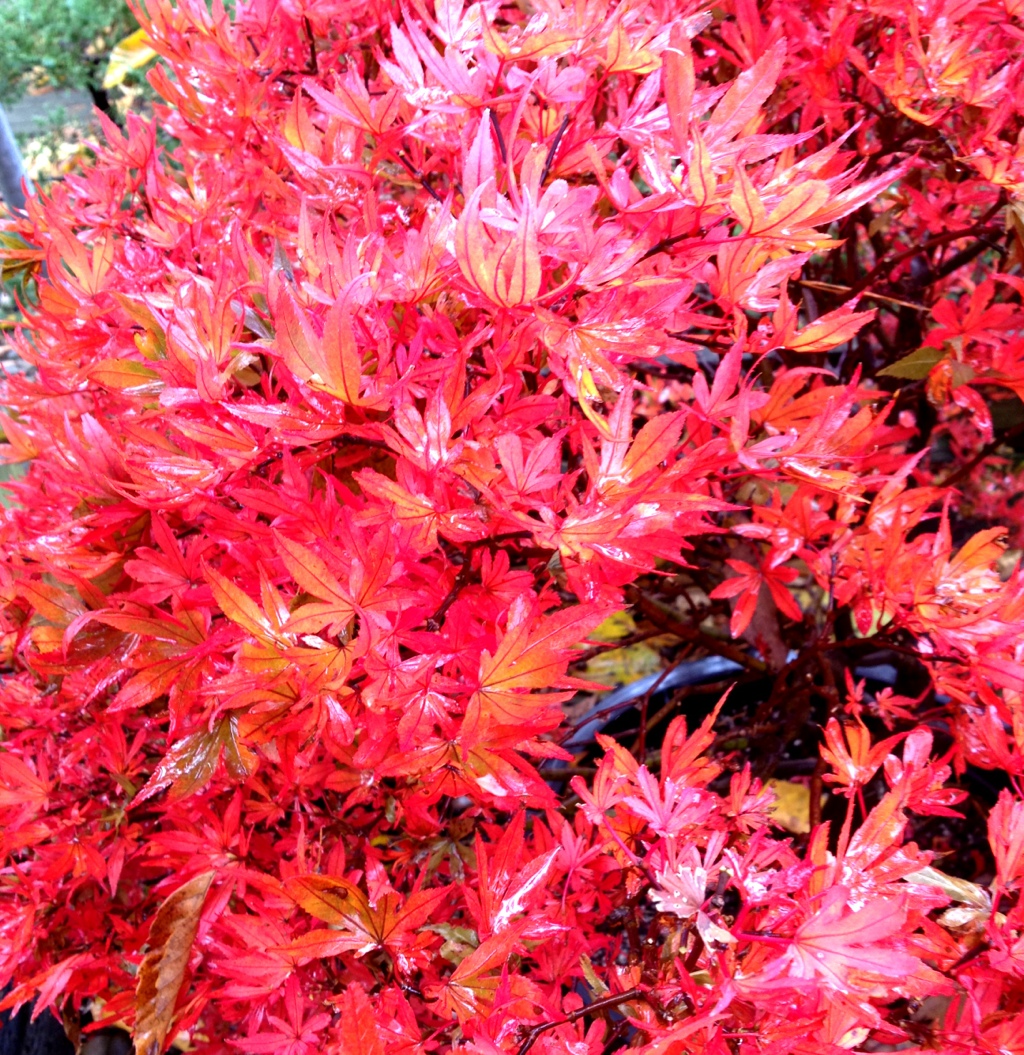
Scarlet foliage on Japanese maple at Nature’s Way

20121021-152406.jpg
Autumn leaves compliment and contrast with the beautiful Koi at The Kennett Collection
I’d like to thank everyone at each nursery and collection for their generosity and hospitality, for myself and my friends: Toriumi San and Endo San. Everyone was truly kind and commendably willing to showcase some of the best that American Bonsai has to offer. Thank you all.

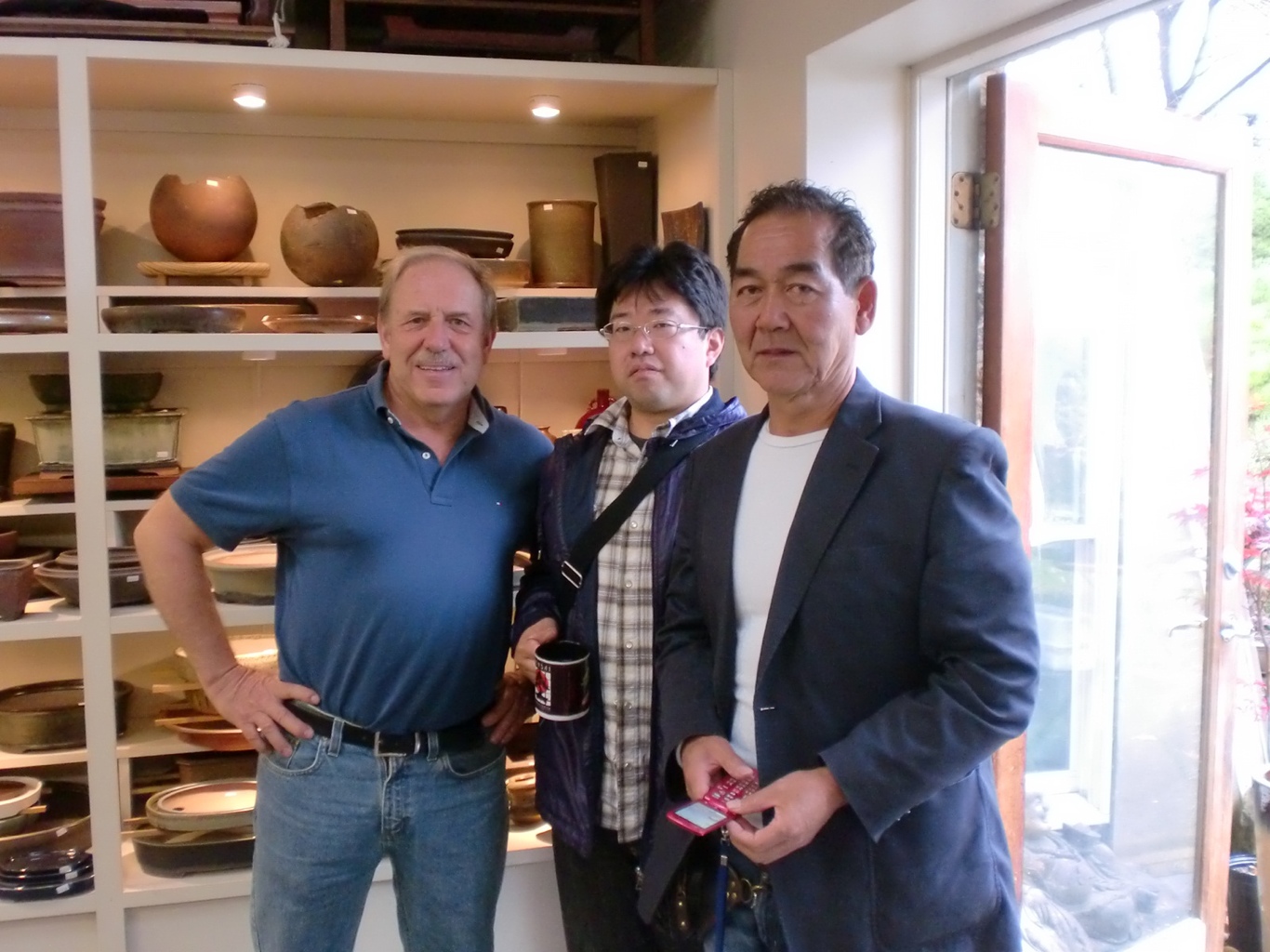
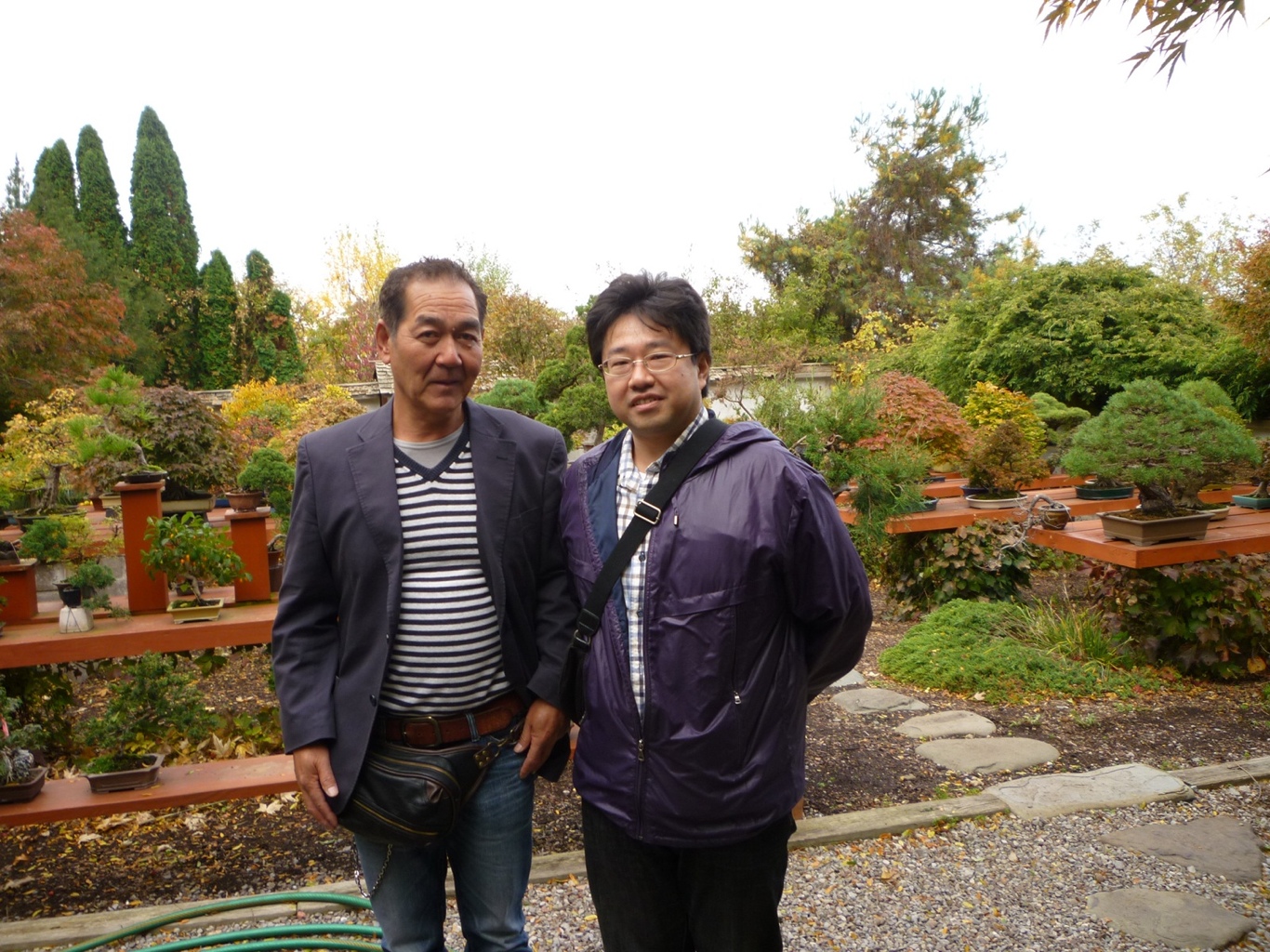
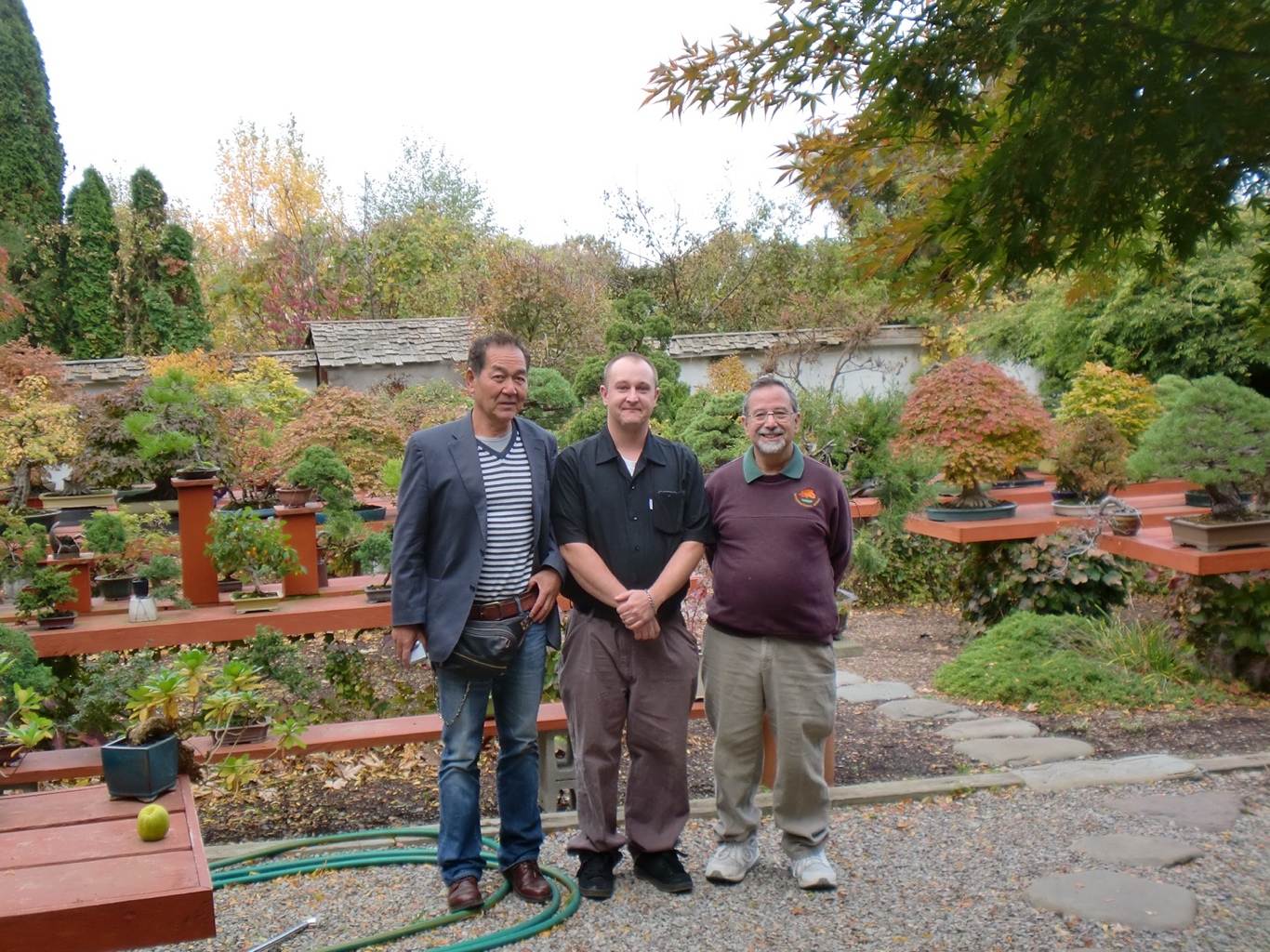
We began Tuesday morning in Rochester, NY, with Bill Valavanis and The International Bonsai Arboretum. We’re all familiar with Bill’s work by now(if you’re not, where have you been for the last 50! Years?), but, as with any and all Bonsai, pictures don’t do any justice to the majesty of Bill’s collection. If you haven’t been to the Arboretum, make it a priority! Bill’s enthusiasm for Bonsai is absolutely contagious, and you’d be hard pressed to find the variety and quality present at Bill’s.
In addition to the wonderful trees and containers and tables at the IBA, Bill’s library is something really special: nearly all the Kokufu-ten albums, back issues of Japanese Bonsai magazines to the first issue, American and Japanese rarities, and historically significant books that are nearly ancient. I, for one, could’ve spent a week just perusing Bill’s library!

20121022-165449.jpg
Endo San, me, and Bill in front of the main Benches at International Bonsai Arboretum

20121022-165711.jpg
Broom style Keyaki in fall glory

20121022-165845.jpg
Iwashide(hornbeam) with some showy autumn leaves

20121022-170057.jpg
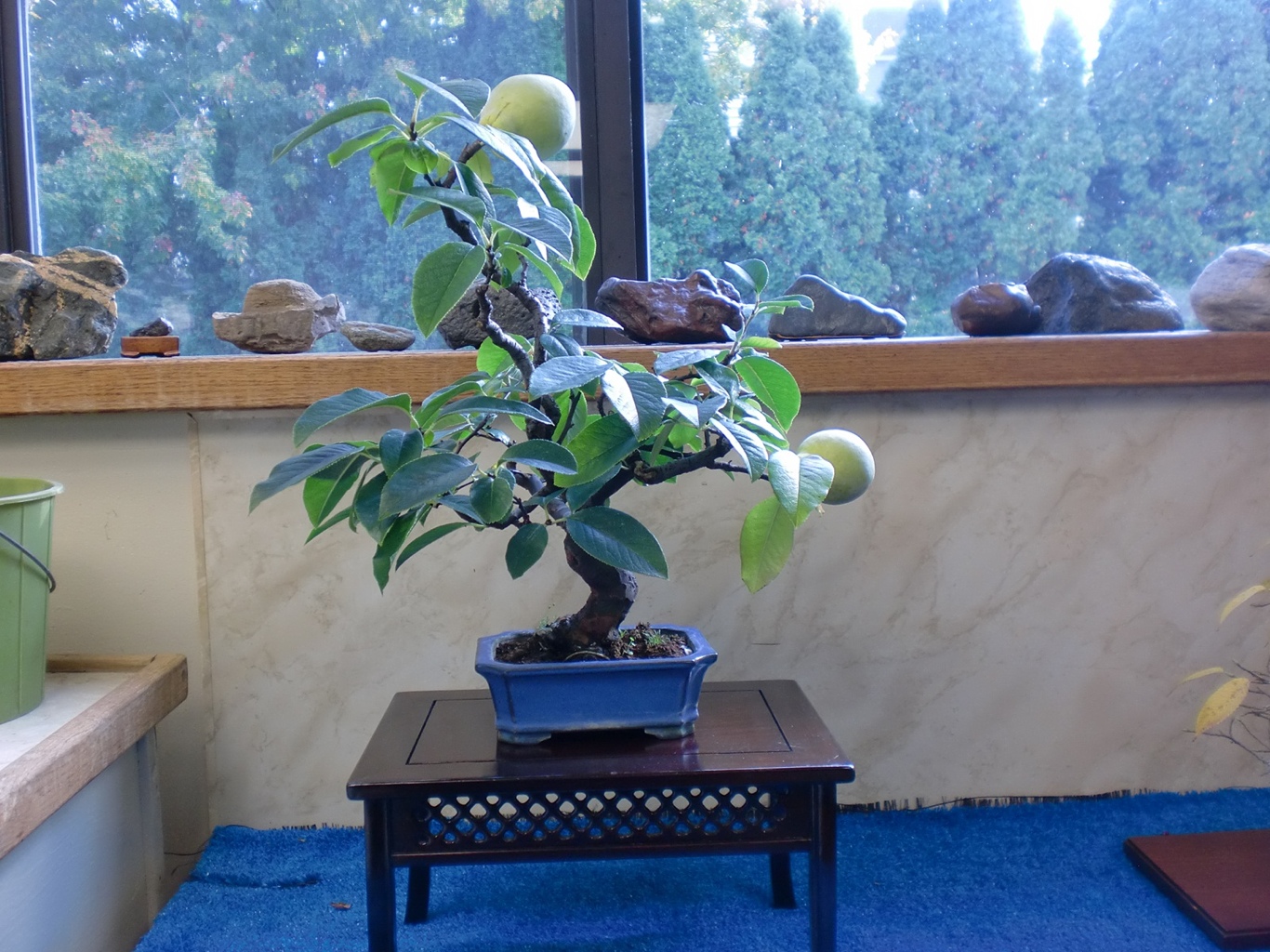
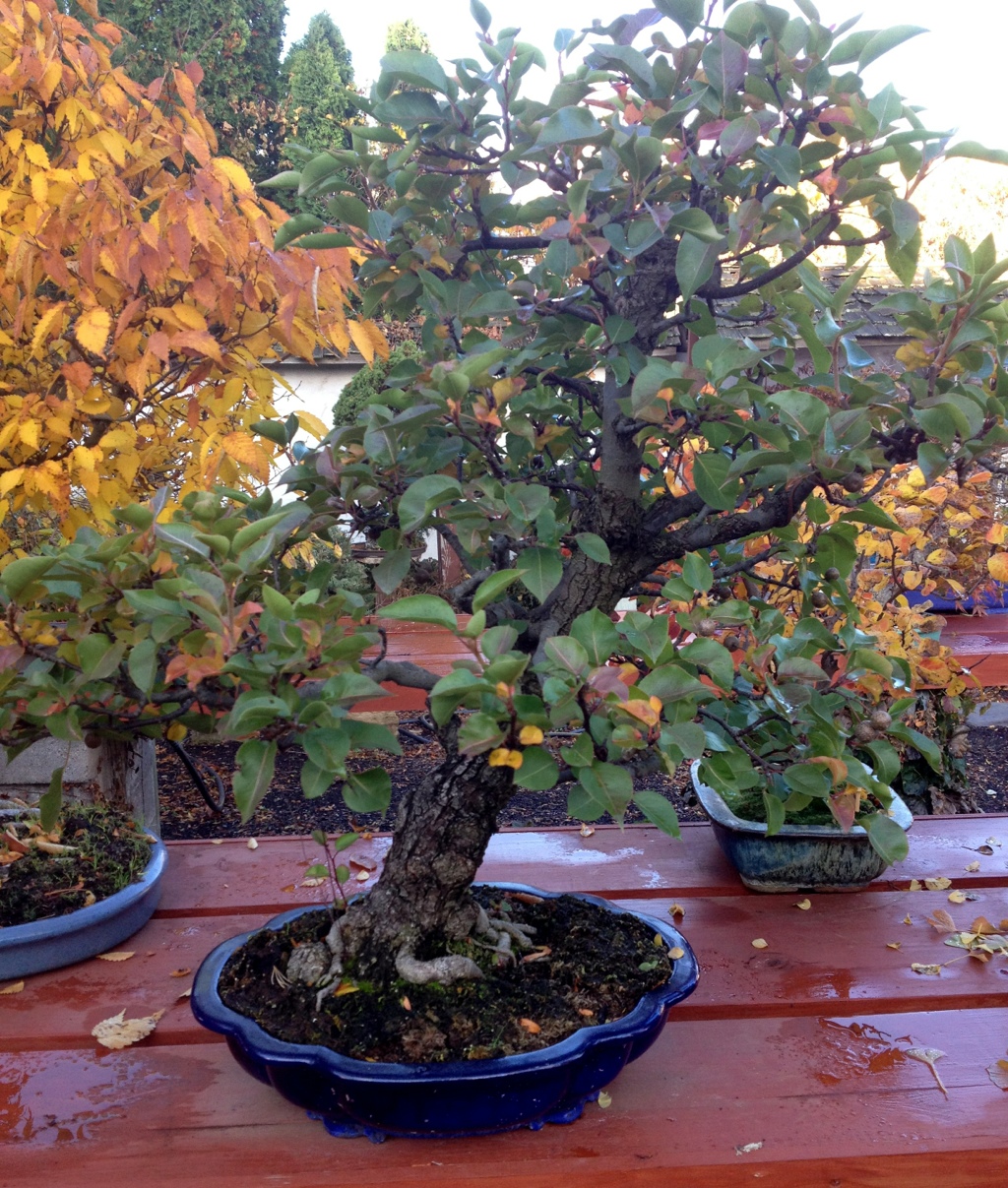
A Chinese Quince on display in Bills classroom.

20121022-170253.jpg
Beech forest

20121023-092121.jpg
“Bashful Lady”, a shohin Ficus Nerifolia.

20121023-092317.jpg
Dwarf Spruce on display in a pot by Touinken

20121023-092439.jpg
A wonderful Tokonoma display Bill set up for us, showing Chinese quince in the best Fall color

20121023-092702.jpg
Nashi(dwarf mountain pear) showing tiny fruit…this is a huge tree!

20121023-092852.jpg
Shohin Bonsai in the greenhouse

20121023-093158.jpg
Another Beech forest with Bill for scale

20121023-093326.jpg
Chinese quince Shohin bonsai

20121023-093434.jpg
My favorite Shohin Bonsai in Bill’s collection: A yamamomiji originally from the collection of Count Masudaira, father of Shohin Bonsai in Japan(if you’re interested in more information about Count Matsudaira, John Romano wrote a great treatise on the history of Shohin Bonsai in International Bonsai number 3, 2011, with some great history on Count Matsudaira).

20121023-093953.jpg
A Rocky Mt. Juniper taking some grafts with Shimpaku foliage

20121023-094859.jpg
A very large deciduous semi cascade in what appears to be an antique Cantonese pot

20121023-095044.jpg
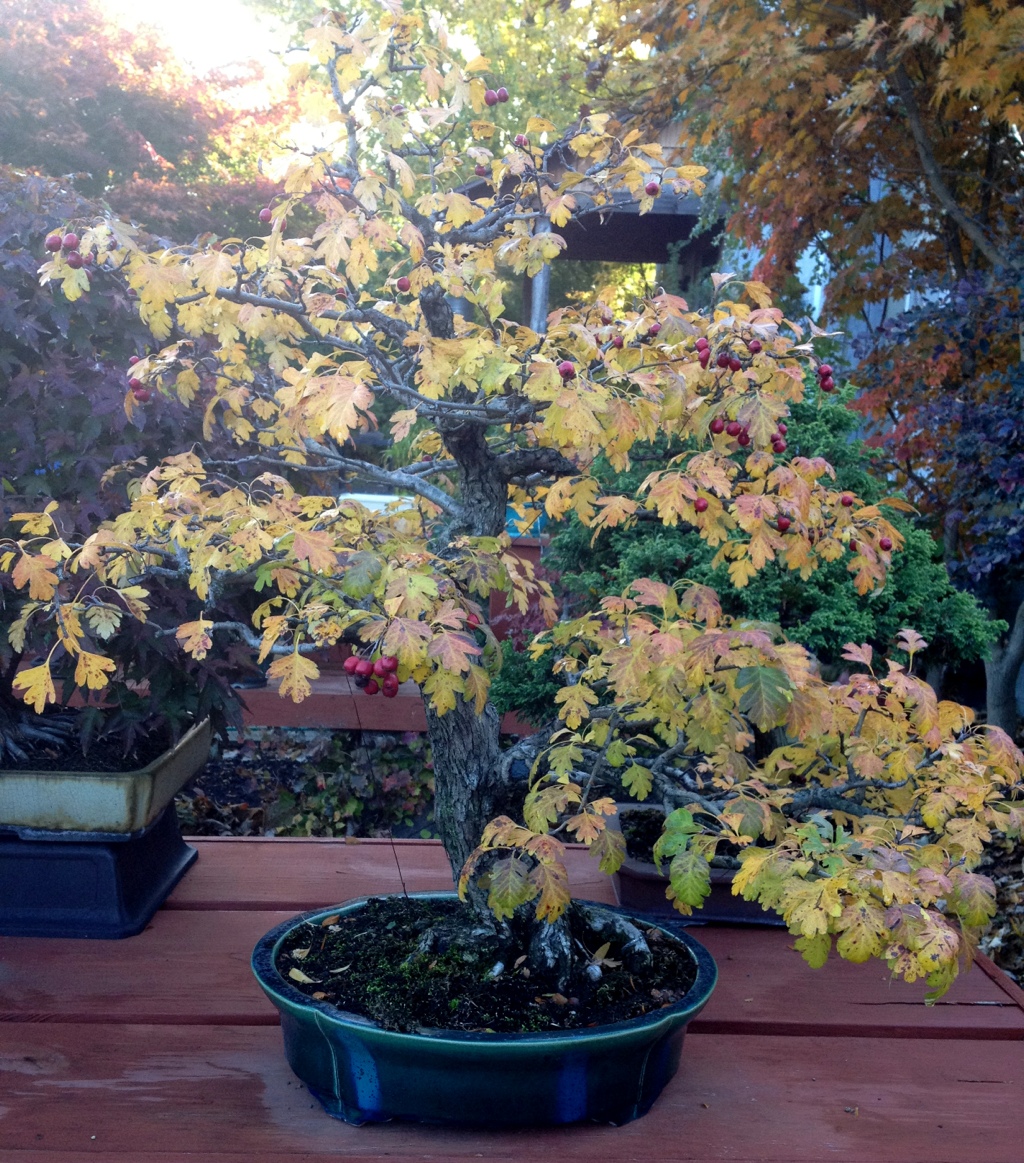
A large hawthorn showing the best of fall: bright red fruit and wonderful autumn color

20121023-095220.jpg
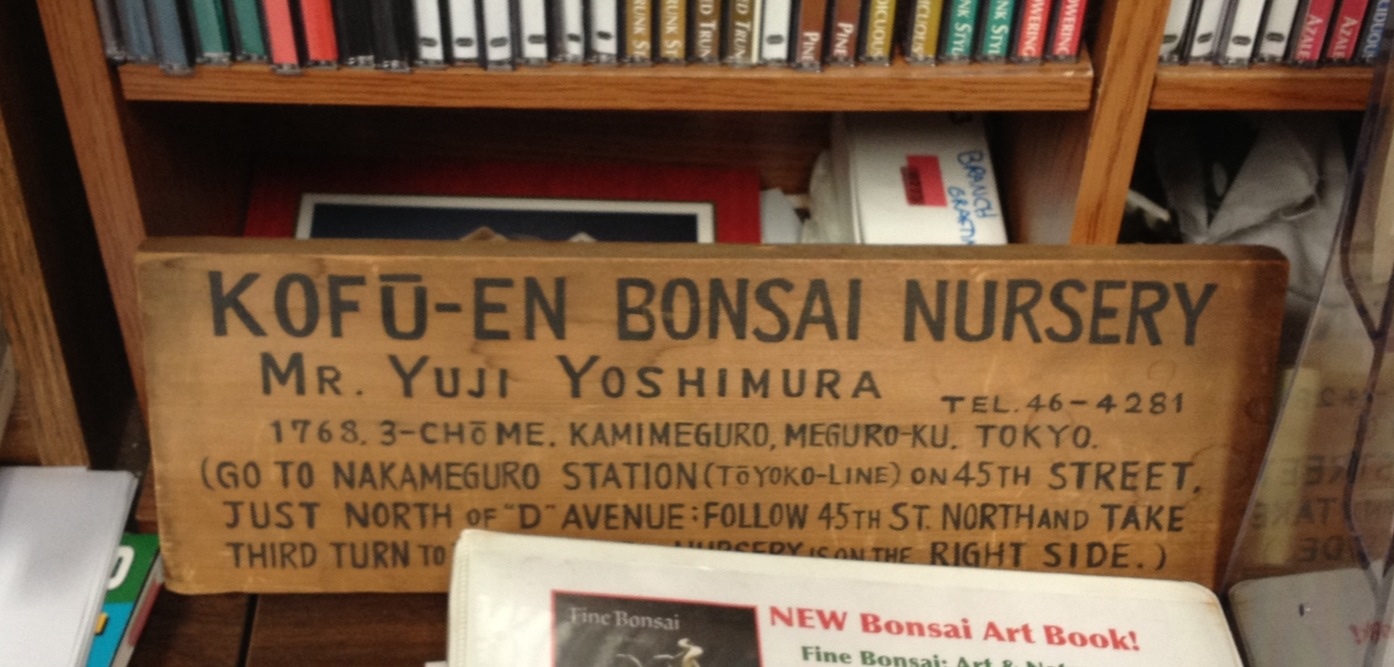
In Bill’s office, I saw this tucked behind some papers and pulled it out for a photo: A little piece of both American and Japanese Bonsai history! For those who don’t know, Yuji Yoshimura was Bill’s teacher, and one of the founders of American Bonsai; his family nursery was Kofu-en in Japan

20121023-124954.jpg
Shimpaku Ishizuke, kusamono, and shohin at The IBA

20121023-125109.jpg
Scots Pine RAF

20121023-125221.jpg
Beautiful berries and fall color!

20121023-125405.jpg
Kaede, Scots Pine, and Momiji at The International Bonsai Arboretum

20121023-190132.jpg

20121023-190140.jpg

20121023-190148.jpg

20121023-190154.jpg
More Great Bonsai at The International Bonsai Arboretum

20121023-190731.jpg

20121023-190744.jpg

20121023-190738.jpg

20121023-190751.jpg
And Still More Great Bonsai at the International Bonsai Arboretum

After The International Bonsai Arboretum, Bill was kind enough to arrange a visit with Harvey Carapella. Mr. Carapella, with his background in fine art, has a wonderful personal collection of Bonsai lovingly worked and maintained for more than 30 years. He wanted me to be sure that my friends knew that he was just a hobbyist, but we agreed that his trees were NOT those of the average hobbyist, here or in Japan, and often better than the work of some professionals. I’d like to thank Harvey again for allowing us into his home.

20121023-095802.jpg
Harvey Carapella cleans up a big multi-trunk maple

20121023-095907.jpg
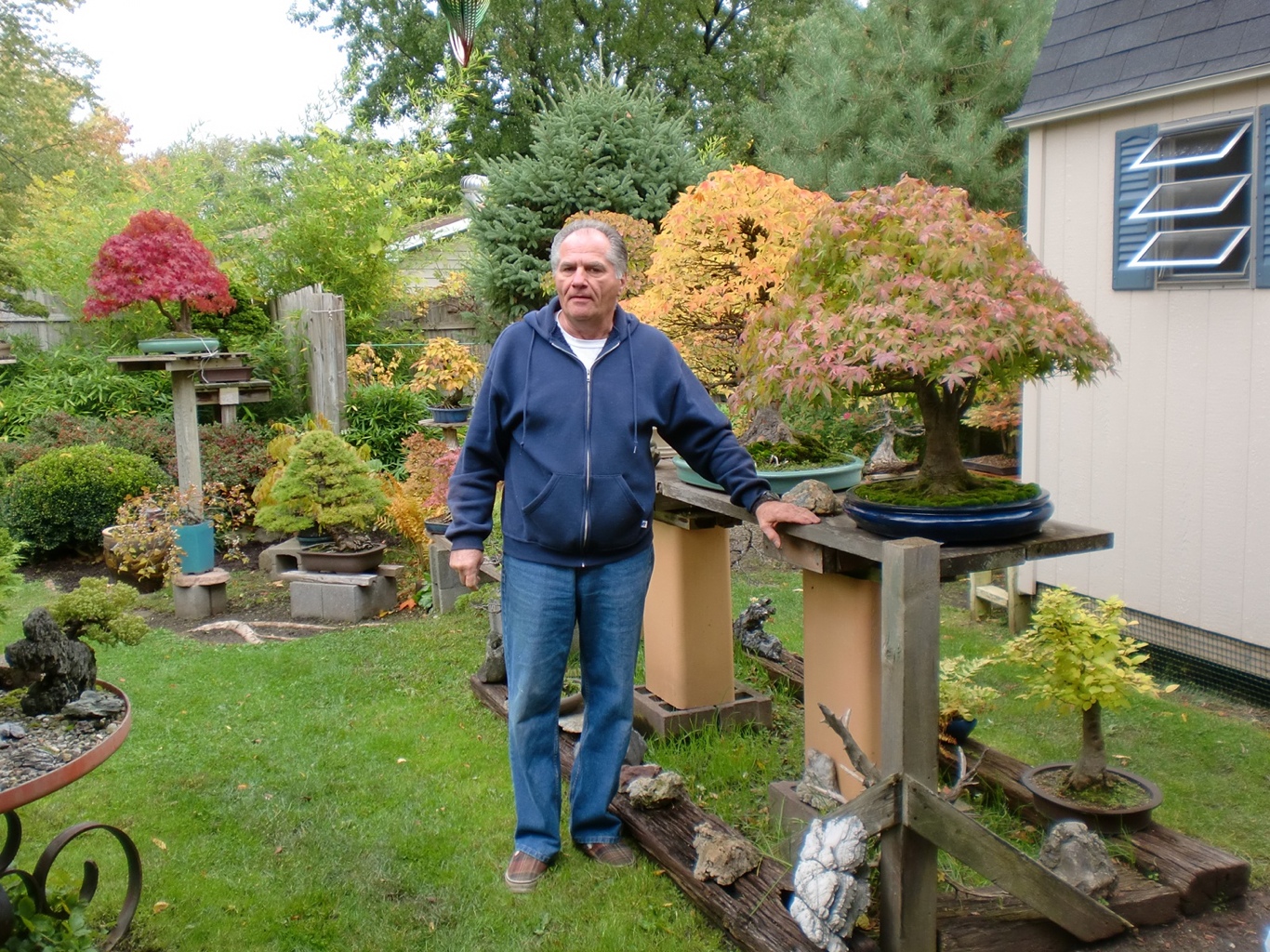
Harvey, Me, Bill, and Endo in Harvey’s garden

20121023-100011.jpg
Entering Harvey’s collection

20121023-100110.jpg
Shohin Bonsai at Harvey Carapellas

20121023-100214.jpg
A very large and dynamic Japanese Black pine cascade

20121023-100315.jpg

20121023-100600.jpg
Broom style Arakawa Momiji showing off awesome fall color

20121023-100721.jpg
Twin trunk collected Thuja

20121023-100821.jpg
A natural sinuous root Larch forest

20121023-101052.jpg
Harvey poses with some of his wonderful Bonsai

20121023-191938.jpg
Bonsai at Harvey Carapellas Garden

20121023-192028.jpg
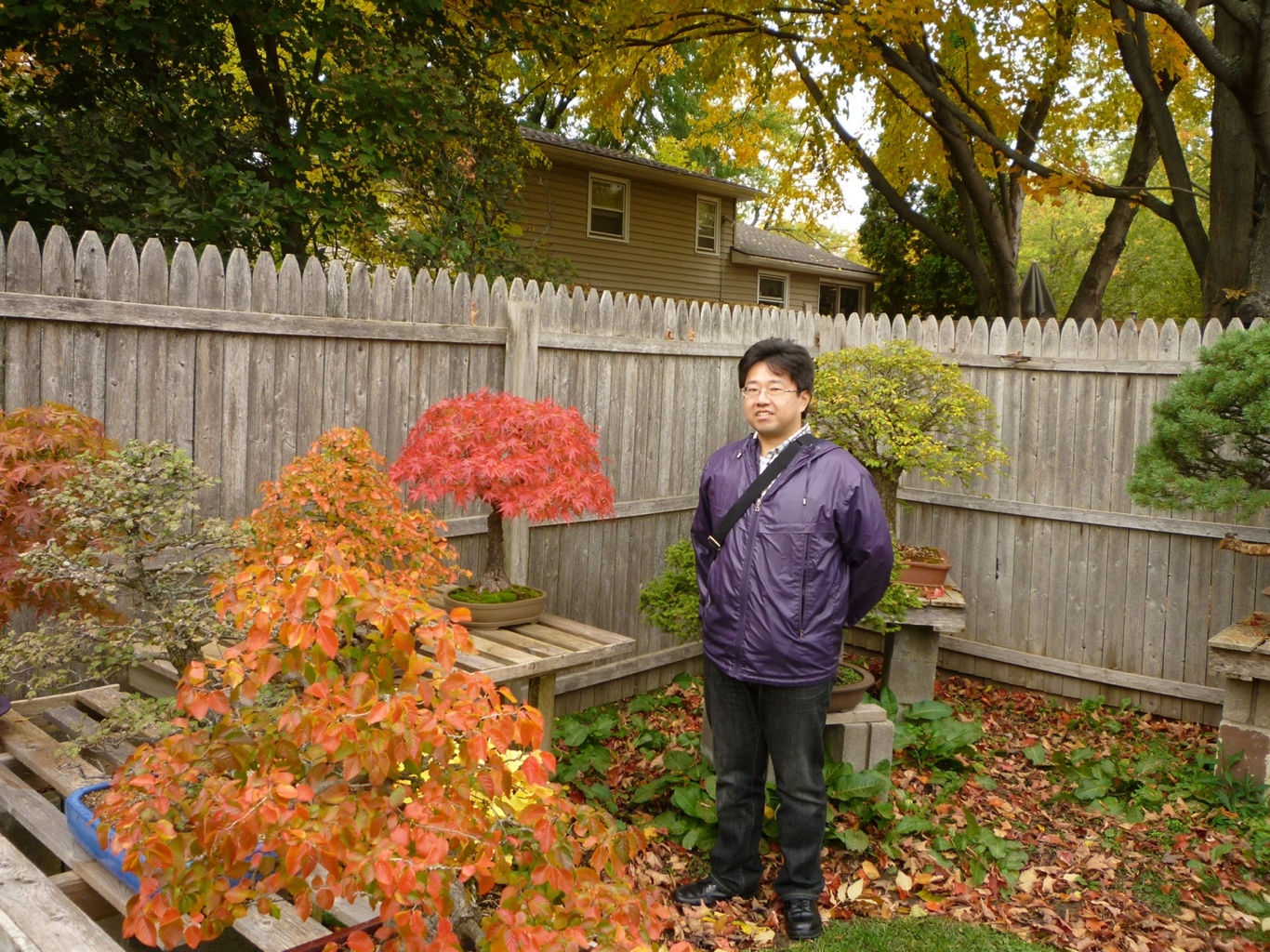
Toriumi Poses with some of Harvey’s trees

After seeing Harvey’s wonderful collection, we drove to Niagra Falls.

20121023-101539.jpg
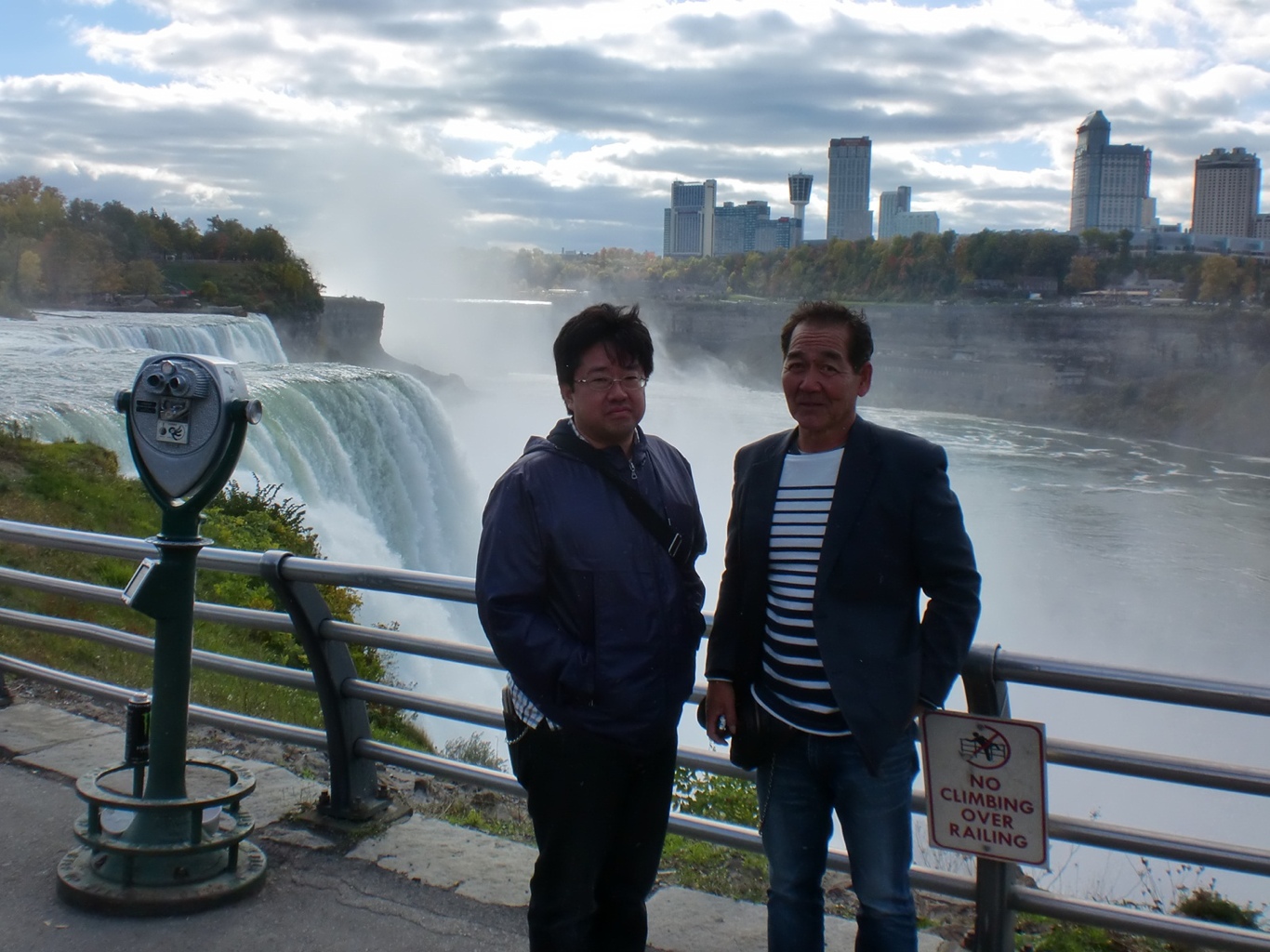
Toriumi Atsuishi and Endo Shoichi at Niagra Falls

Wednesday brought us to Massachusetts, and New England Bonsai Gardens. Hitoshi and Teddi were very kind in allowing us to visit, as they’re closed Wednesdays. Jun Imabashi, a bonsai artist from Japan, was working there as well, and took us on a great tour of the nursery and greenhouses. It was a great visit.

20121023-101746.jpg
Hitoshi Kanegae and Teddi Scobi pose in front of a large Bougainvillea

20121023-102228.jpg
Huge Brazilian Raintree

20121023-102330.jpg
Large collected Juniper

20121023-102432.jpg
Bonsai at New England Bonsai Gardens

20121023-102541.jpg
Another large collected Juniper

20121023-102644.jpg
Ume

20121023-102946.jpg
Satsuki Azalea

20121023-103107.jpg
Large collected Korean Hornbeam

20121023-103157.jpg
Nishiki Matsu(corkbark black pine)

20121023-103325.jpg
Nishiki Matsu

20121023-103411.jpg
Maki(podocarpus, aka Buddhist Pine)

20121023-103537.jpg
Umemodoki

20121023-103715.jpg
Another large collected Juniper

That afternoon we arrived at Royal Bonsai Garden, Nursery of Suthin Sukosolvisit. When I called to arrange a visit, Suthin had told me that the nursery had been closed for over a year, and he didn’t have too much left, that the bulk of his trees were sold, and he didn’t want us to be disappointed…..I quickly discovered his incredible humility and self effacing humor when we saw what “not much left” meant! Suthin and his wife Donna were incredibly kind and fun, and his trees were something else! The shohin were easily the best we saw on the trip, and my friends were incredibly impressed.

20121023-120933.jpg
Shohin Bonsai at Royal Bonsai Gardens

20121023-121043.jpg

20121023-121053.jpg

20121023-121104.jpg

20121023-121116.jpg
Some Shohin Black Pines at Suthins

20121023-121244.jpg
Suthin, Donna, Me, and Endo in Front of Suthin’s personal collection

20121023-121431.jpg
Shohin Shimpaku

20121023-121528.jpg
Bunjin Pine

20121023-121617.jpg
Needle Juniper

20121023-121725.jpg

20121023-122022.jpg

20121023-122052.jpg

20121023-122118.jpg
A few Kaede showing some impressive taper and fall color

20121023-122220.jpg
Very nice Root over Rock Kaede

20121023-122320.jpg
Large and small Black pines: whatever the size, Suthin is a true master!

20121023-122420.jpg
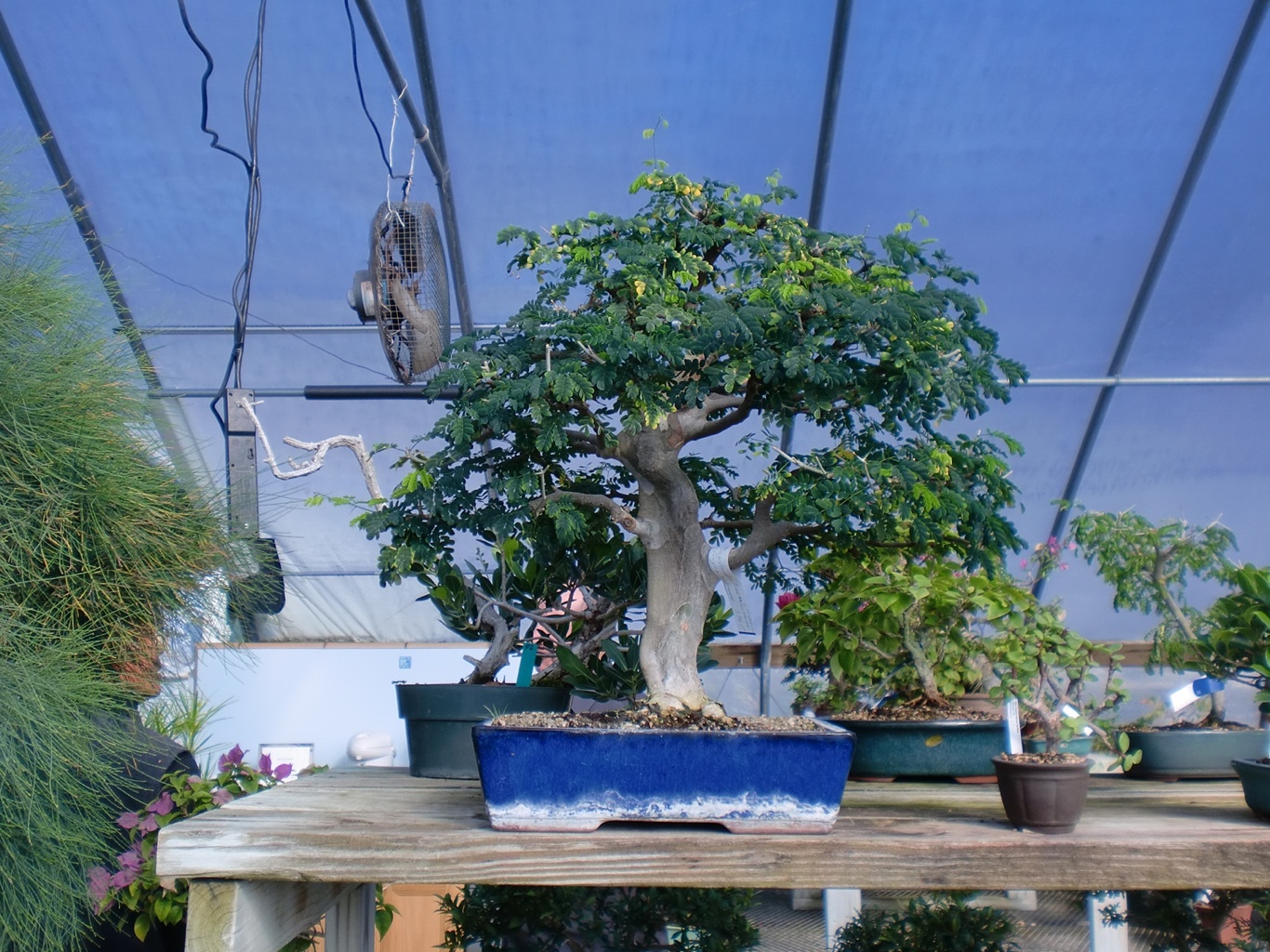
Tropical Bonsai in the greenhouse

20121023-122536.jpg
Willow Leaf ficus Shohin Bonsai

20121023-122630.jpg
Large Ficus Bonsai

20121023-122721.jpg
Tropical Shohin Bonsai

20121023-123303.jpg
Big base Willow Leaf Ficus

20121023-123457.jpg
Some impressive Bonsai at Royal Bonsai Gardens

20121023-125954.jpg

20121023-130015.jpg

20121023-130033.jpg
Still more impressive Bonsai at Suthins

20121023-130825.jpg

20121023-130849.jpg

20121023-130930.jpg

20121023-130905.jpg
Still More Impressive Bonsai at Suthins! Seriously, it would take days to upload all of the wonderful trees we photographed at Suthins, I hope these highlights suffice!
From there it was on to Bonsai West, a more commercial operation in northern Massachusetts. There are many excellent trees there from well known California bonsai artists of previous generations, many great Bald Cypresses from my neck of the woods, and a nice selection of imports and collected trees. It was a pleasure to see them in person.

20121023-131205.jpg
A far view of the Collection at Bonsai West

20121023-131309.jpg

20121023-131337.jpg
A couple of very large and very old Junipers created by Mrs. Hatanaka in California many years ago

20121023-131506.jpg
Large collected Coast Redwood

20121023-131554.jpg

20121023-131607.jpg

20121023-131626.jpg

20121023-131646.jpg
Bonsai on Display at Bonsai West

20121023-131743.jpg
Shohin Bonsai at Bonsai West

20121023-132042.jpg

20121023-132058.jpg

20121023-132123.jpg
Still more Bonsai on Display at Bonsai West

Stay tuned! In part two of Bonsai Gardens of the Northeast, Toriumi, Endo, and I visit with Chase Rosade, check out the wonderful Kennett Collection, watch David Easterbrook do wonders with Collected Larch, and visit with Jim Doyle at Nature’s Way!

Posted in Trees, Uncategorized | 11 Comments

Suiseki For Sale

A trio of Suiseki for sale from my personal collection. I’m running out of room in my workshop and pottery display room, so these are up on the chopping block. All very heavy, very dark and well seasoned. Nice stones from Japan, Setagawa.
If you’re interested drop me a line at gastrognome at aol dot com.

20121008-191940.jpg
A black plateau to the right of this stone gives it some mystery and interest.
Measures 4.5″ 3″ by 1.5″.

20121008-192051.jpg
Very, hard, very heavy, near view mountain with plateau or lake to the right of the peak. Measures 10″ by 5″ by 5″.

20121008-192209.jpg
An interesting twin peak far view mountain. Looks good from multiple angles.
Measures 7.25″ by 3″ by 4″.

Posted in My Personal Collection, Uncategorized | 2 Comments

New Trees Up For Sale

New Trees Up for sale! Contact me at Gastrognome at aol dot com.

Shohin Root over Rock trident maple. Nice crown, roots gripping the interesting stone nicely. I think some extension on the lower branch to unround the crown is in order.SOLD

Shimpaku shohin. Good areas of Shari developed over the last couple of seasons. Entire lower branch under crown to become jin, bark removal and some texturing and it will be a great feature!

Shohin Black Pine stock. Ready for fall wiring! A nice wire job and this tree will look really nice. 36 years old, entirely pot grown, picture doesnt really do it justice.

Up next week: I’ll be accompanying my friend Toriumi(I’m sure all you pot nerds out there know exactly who Toriumi is!) and his associate, Endo San, of Asahi Bonsai, both professional Bonsai artists in Japan, on a tour of Bonsai nurseries in the Northeastern US. We’ll be starting in Rochester at Mr. Valavanis’s fantastic nursery, and making a loop through everything in 5 states before returning back to Rochester(hopefully, for a look at Mr. Carrapella’s wonderful collection!). Hopefully, fall has come to Rochester by the time we arrive, we’ll be a couple weeks early for optimal fall color(here in the deep south, such concepts are foreign but for pictures!) I’ll post up a full report on the trip when I get back. Promises to be a great time!

Posted in Trees | 5 Comments