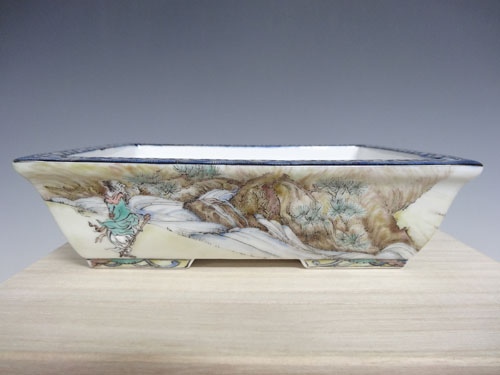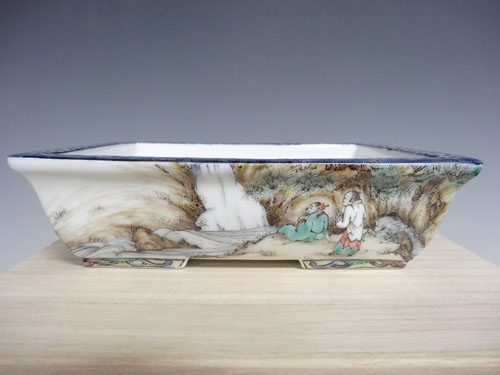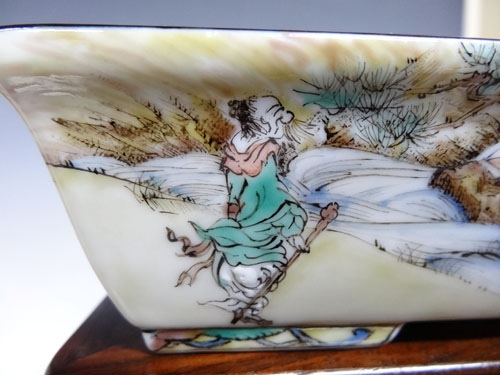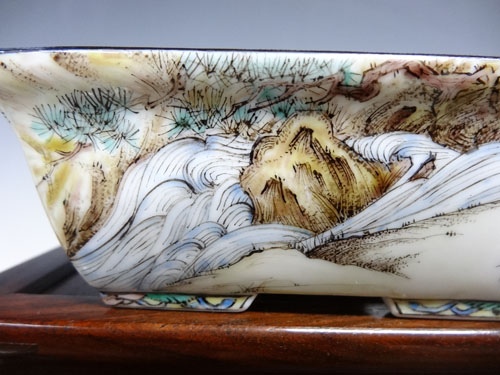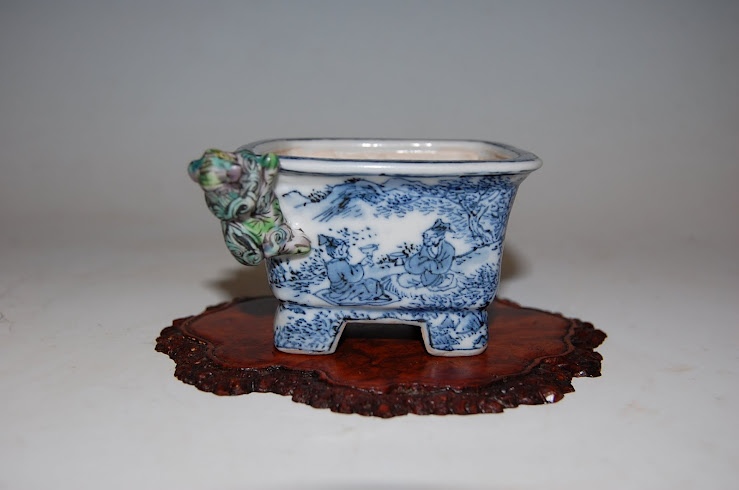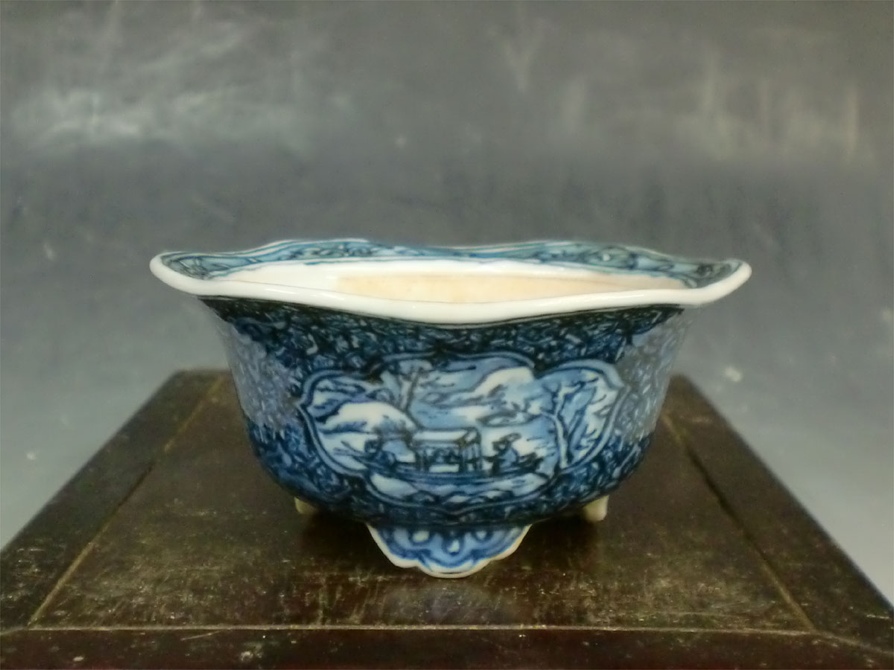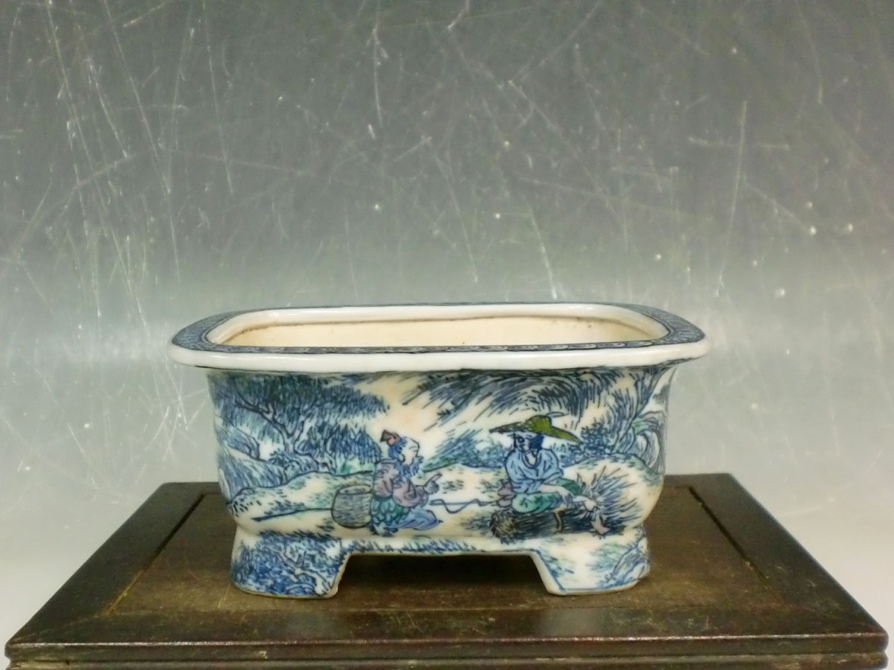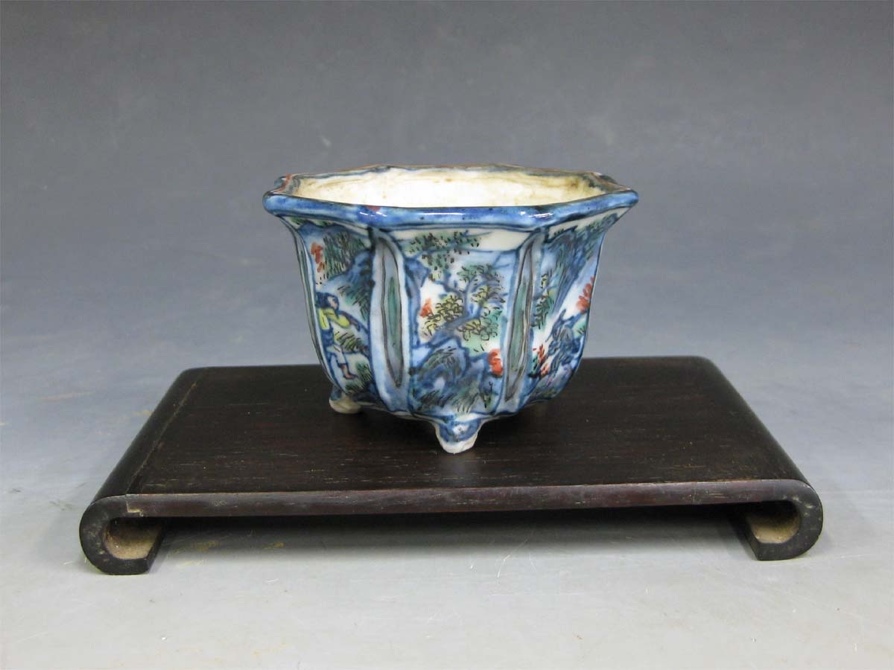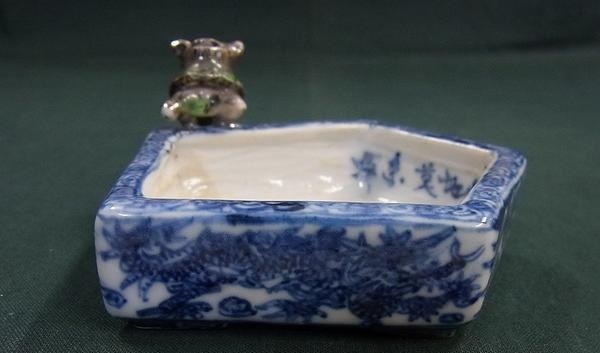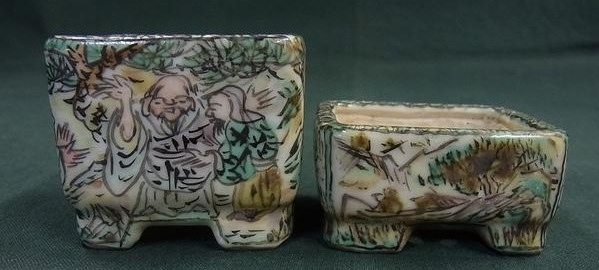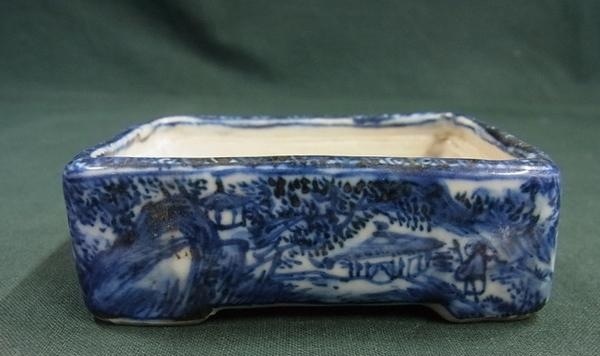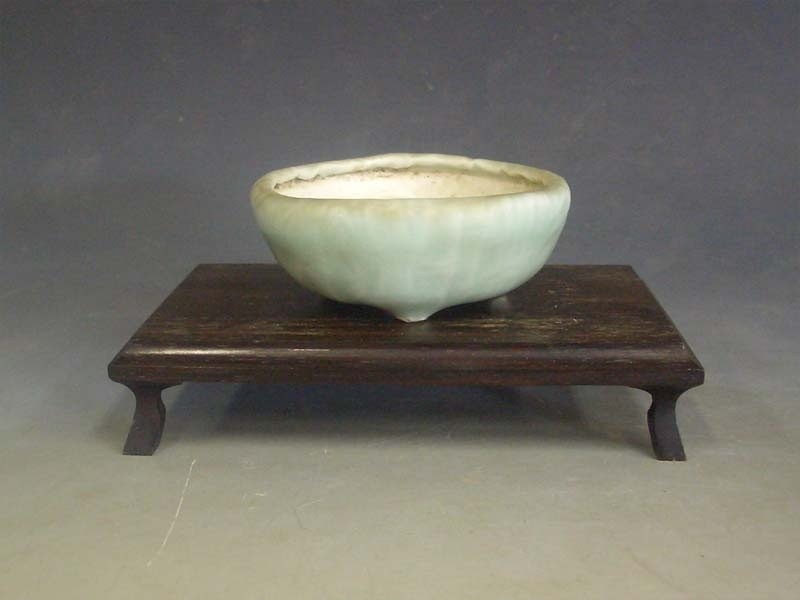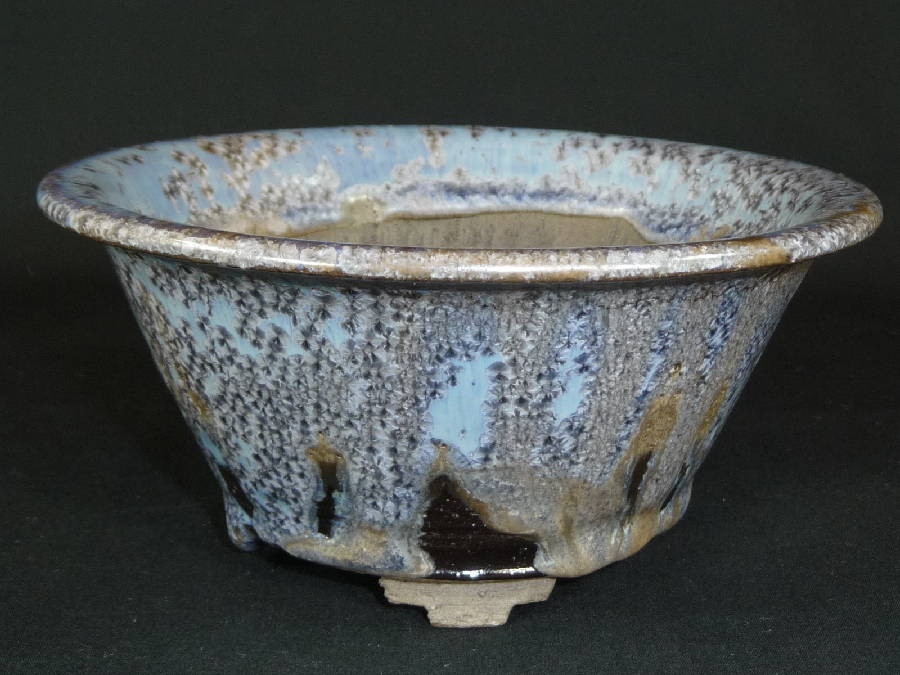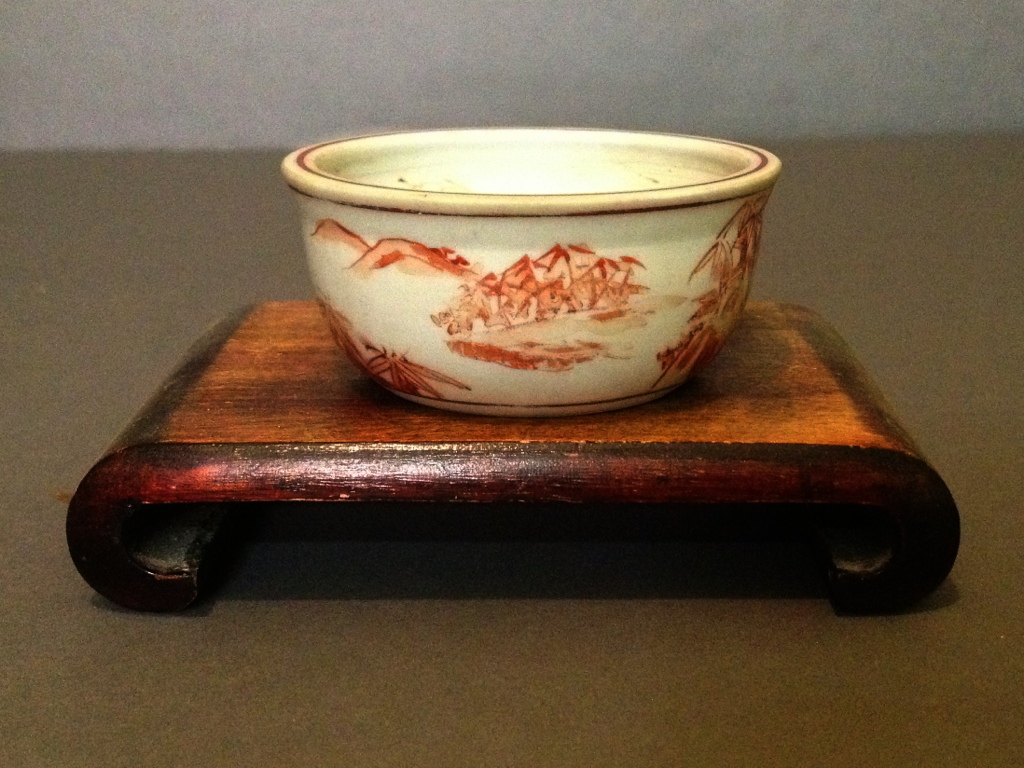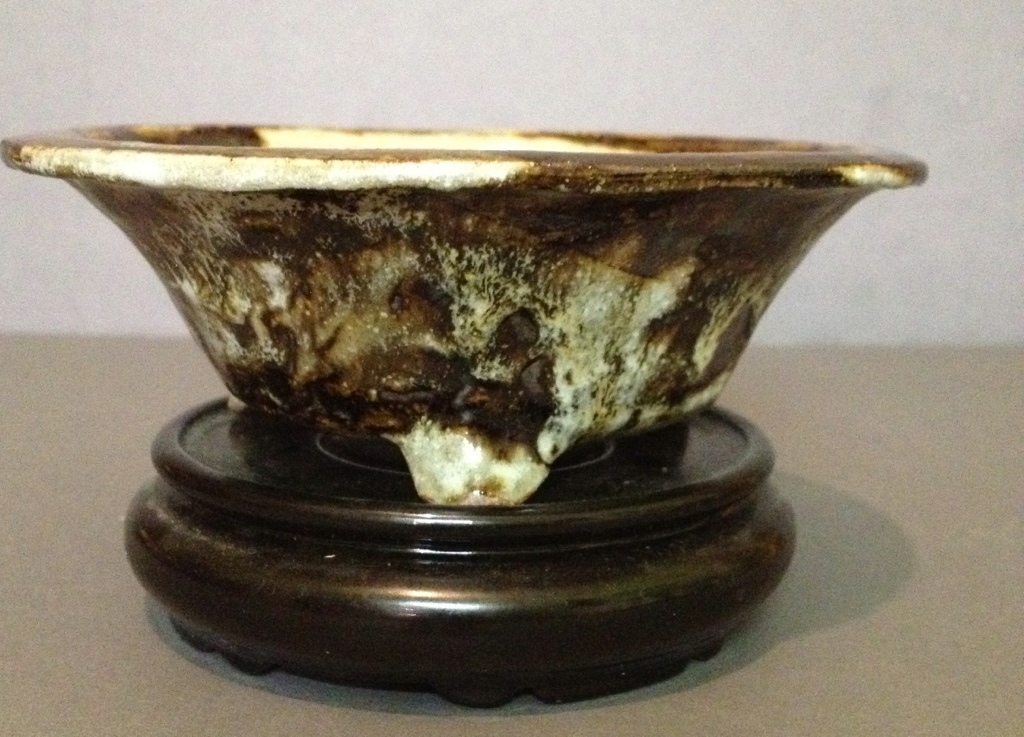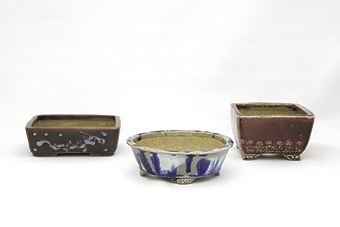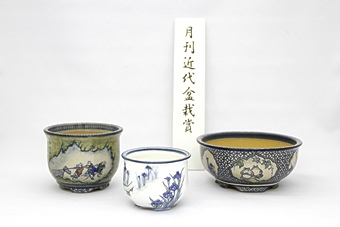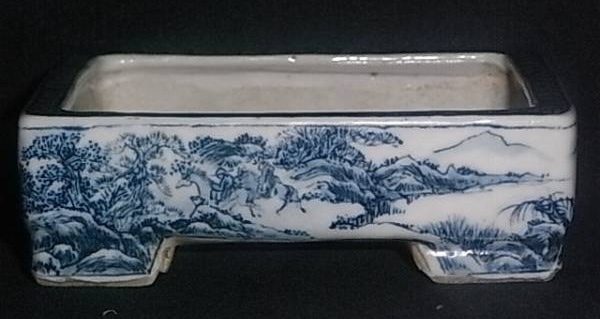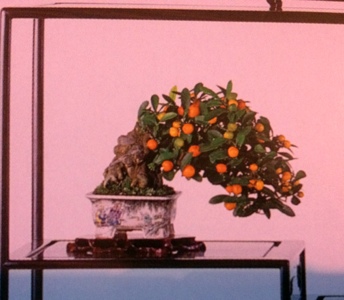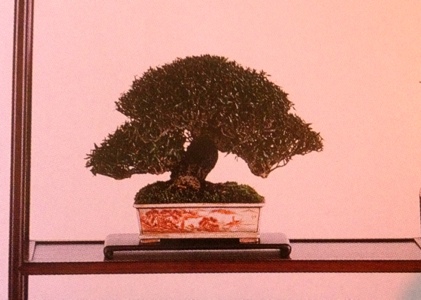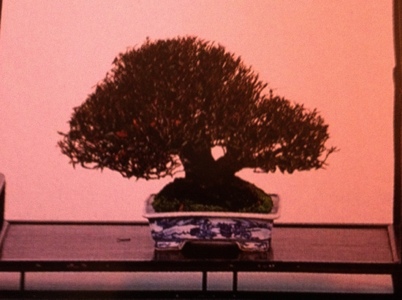
Heian Kouzan(平安香山)Part 1

There are 3 potters in Japan whose work is considered the pinnacle of Japanese design and aesthetics in Bonsai pottery: Heian Tofukuji, Tsukinowa Yusen, and Heian Kouzan; also known as the “Big Three”. We’ve taken a look(or 3!) at the works of Tofukuji and Yusen, today we’ll look at the glazed and painted pots of Heian Kouzan.
Born April 28, 1905, Heian Kouzan comes from a long line of Seto potters going back more than 12 generations. By 1918, at the age of 13, he was already making an income with Bonsai and pottery. By 1948, at the age of 33, he was famous. He passed away in 1990.
20130417-145841.jpg
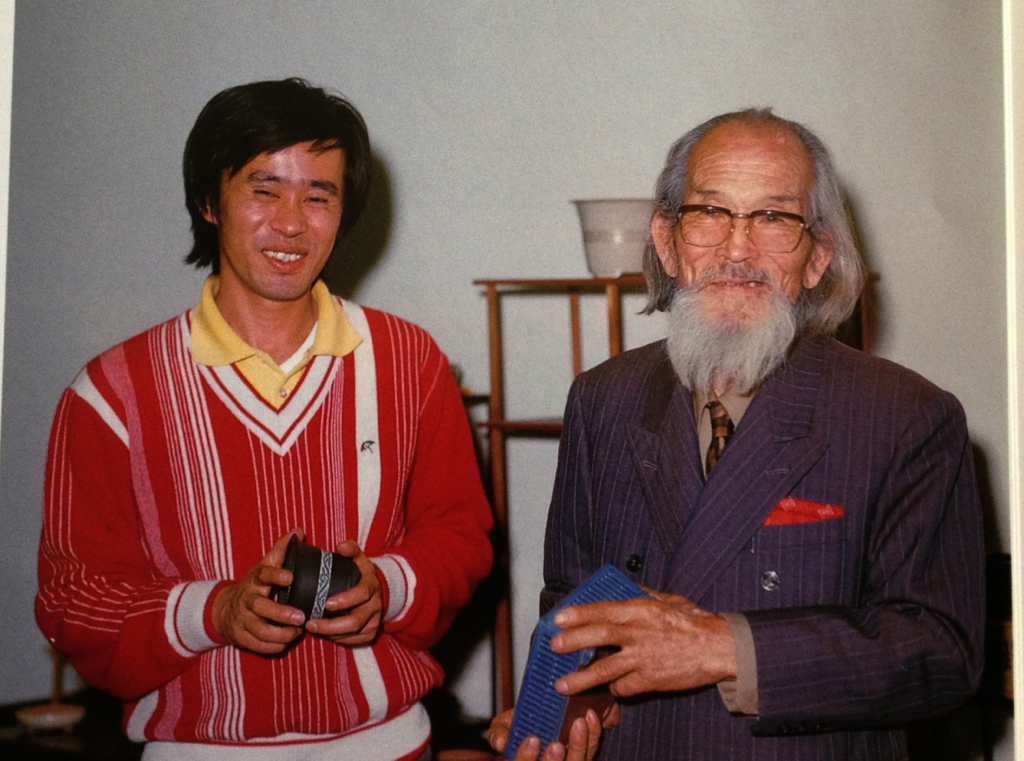
Heian KouOu(Kouzan Senior)and Heian Kouzan(Jr.) at the second Gafu Ten exhibition, in 1978, where a special display was presented of Kouzan pots, I believe in celebration of the upcoming “Charisma” which was first published in 1979.

Kouzan’s work is known for relatively thin walled and delicate construction, despite which his pots are mathematically precise, with strong straight lines and corners. For this, he earned the nickname “The Razor”. In many ways, this makes him the opposite of Tofukuji, whose pots are often wonky, rustic, and warm; everything but mathematically precise! Kouzan is perhaps best known for glazed pots, his most famous being blues, chicken blood reds, and greens. However, his work is very diverse, and includes carved decoration and window motifs as well as painted pieces.
A few salient points should be poised about Kouzan pots. Pre-war pots use a white clay, while post war pots use reddish clays. This makes white clay Kouzan more valuable and rare, as they were made before he became famous and are early work. In 1973, handing the family pottery name off to his son, Kouzan changed his trade name to “KouOu”(香翁), or “Old Man Kou”. Some of his best work comes from the 1973-1990 “KouOu” period, especially unglazed pieces, as this is the era when Shohin bonsai took root, along with “deadwood style” conifers. Other than his son, Kouzan took only one apprentice in his life: contemporary potter Horie Bikoh. Today we’ll take a look at the glazed and painted works of Kouzan, and in the next post, unglazed pots and the work of the second generation, Shin-Kouzan.
Now, On to the Pots!
Glazed Heian Kouzan

20130415-180843.jpg
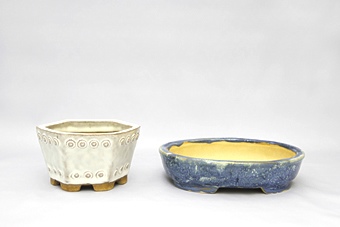
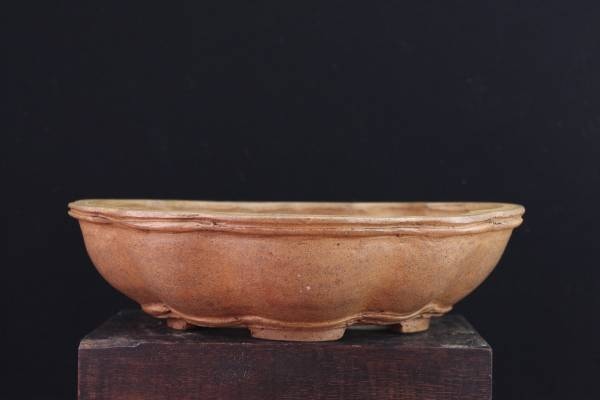
We’ll start off with this white clay pre war pot from my collection. The braided rim, called something like a “hemp rope decoration” in Japanese, is a Kouzan signature adornment. At around 80 years old, this pot really shows some nice patina.

20130415-181207.jpg
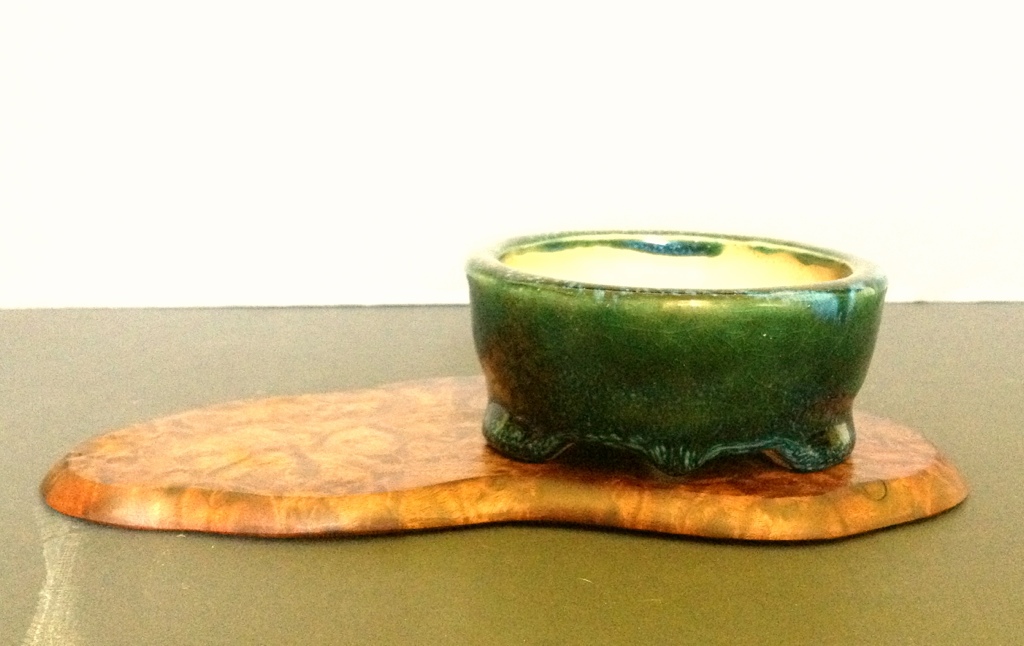
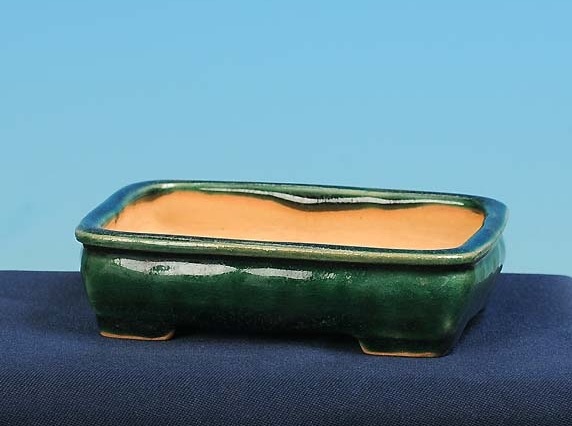
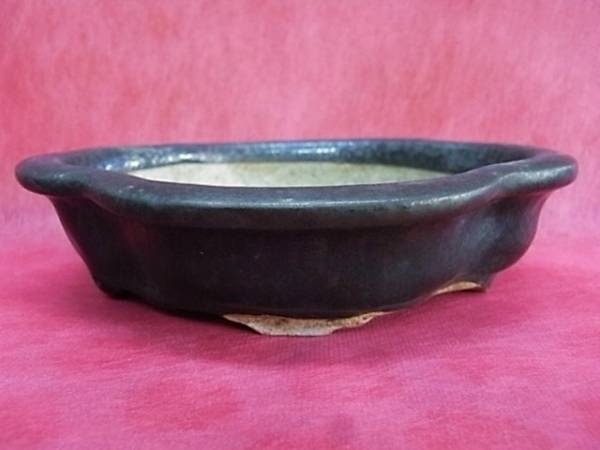
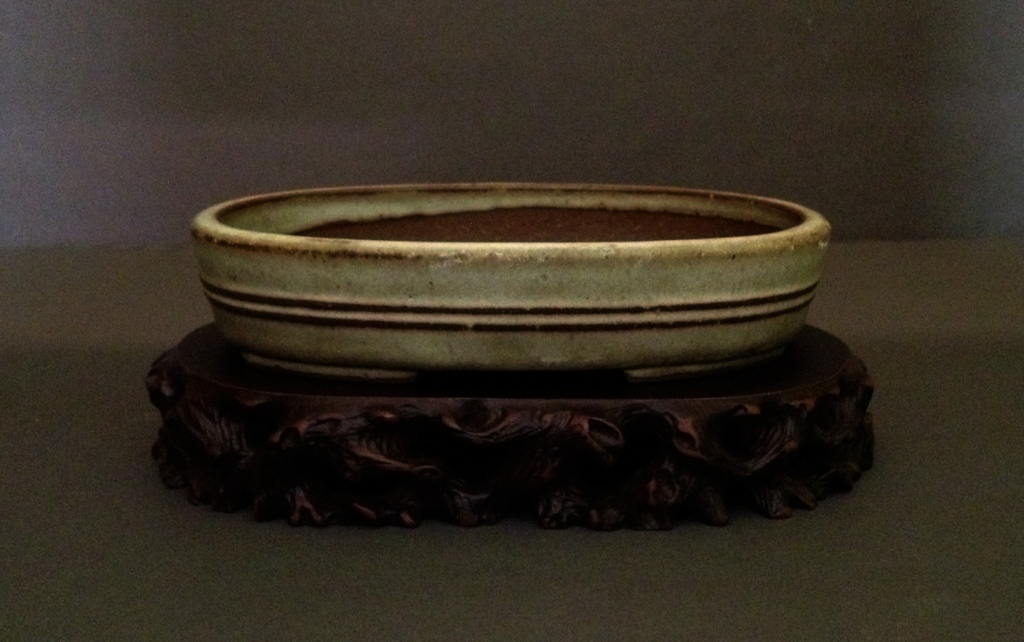
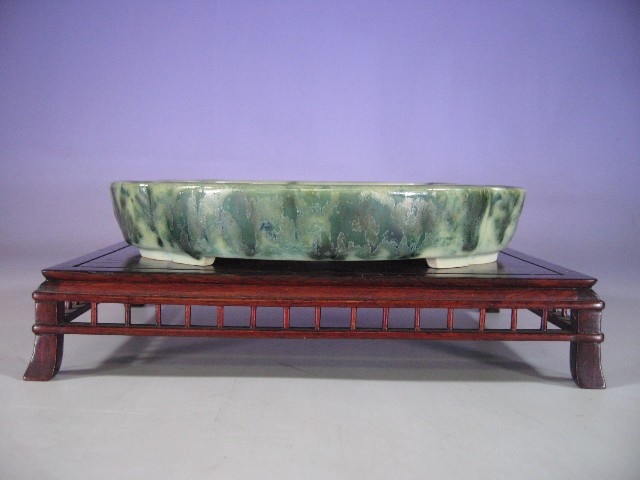
While my tiny green glazed pot is pretty nice, it’s not extremely valuable like this piece. This pot is considered some of Kouzan’s finest glaze and clay work, and the price reflects it at around $6500.

20130415-181423.jpg
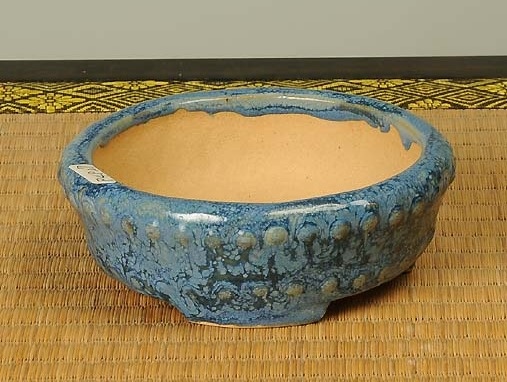
A blue glazed “KouOu” featured in “Charisma”, the book dedicated to the pottery of Kouzan and Yusen. This one comes from my friend and frequent contributor to the site, Matthew H. Ouwinga of Kaede Bonsai En. The varying shades of blue in the pot are very pretty, and the precise, clean lines of the pot characteristic of Kouzan’s style.

20130415-181732.jpg
Another from Matt Ouwinga’s collection, showing another of Kouzan’s signature go to adornments: geometrics. Kouzan’s use of geometric pattern has a light and airy feel to it, giving the pot a delicate appearance. The patina is also outstanding.

20130415-181908.jpg
A third from Kaede Bonsai En. This is my favorite of the lot(though I wouldn’t kick the other two out of bed for eating crackers[What, YOU don’t sleep with your pots…ahem]). The deep rich indigo glaze is clean and pure, and the roughly mokko shape pot is unique yet easily usable. Umemodoki anyone?

20130415-182259.jpg
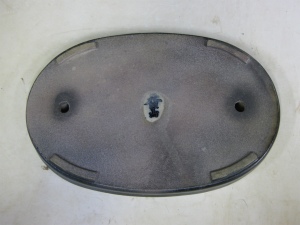
This pot is formerly of Matt’s collection(although the old photo is the original sales photo from unimpeachable pottery and bonsai dealers Yorozuen), and has a real history. It’s a great learning tool. While most Kouzan signatures are as precise as his clay work, around 10-15% of verifiably real Kouzan that I’ve seen have some smudging and “bleed” in the porcelain and sometsuke signature. It’s a common error to jump to conclusions with a smudged signature, but the fact is that it’s much more likely that signatures on forgeries are clean, yet unlike Kouzan’s real signature kanji style. As a matter of fact, most of the likely forgeries I’ve seen have much cleaner signatures than Kouzan! Kouzan Jr’s porcelain signature is also a bit cleaner than Senior. Anyway, this pot is definitely a real Kouzan, independently verified by some of the top authenticators in the biz. The bleed and subsequent smudge of the signature occurred before firing, I believe.
20130415-183032.jpg
Base of the pot showing the damaged porcelain and sometsuke signature. It is noteworthy that the porcelain has been smudged and the streak remains, something that would have to happen before firing, as opposed to being smudged up with sandpaper to hide a poor forgery.

20130415-183117.jpg

20130415-183130.jpg
I’ve seen a lot of Kouzan signature pots with similar pre-fire damage, the above are three that are representative of the different kinds of signature damage I’ve often seen on real Kouzans.
20130415-183821.jpg
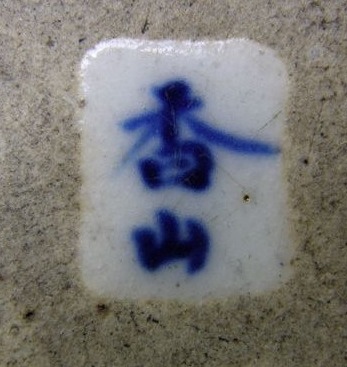
An example of what I believe is likely a forged Kouzan signature. Note that the arm is significantly longer on the right than the left, this is a dead stylistic giveaway. Not all forged Kouzan will have this, but it’s a trademark of what I believe to be one very prolific forger. It also bears mentioning that the line style is significantly cleaner with less bleed than real Kouzans.

20130416-222119.jpg
A book Kouzan, in the Antique bulb pot style he’s famous for. This style of pottery is often seen on antique Chinese bulb pots without drainage, Kouzan imitated these pots for bonsai. The clay work is superb. A really spectacular piece. The glaze itself is one Kouzan is famous for, considered by many to be the closest anyone has come to the very light blue glaze of the best antique Chinese blues(Kinyo), for this reason, pots with this glaze are often refered to as “KouKinYo” shorthand for something like “Kouzan Light Blue in the Antique Cantonese Style”.

20130416-222308.jpg
The image of the pot from the super deluxe pottery encyclopedia “Bijutsu Bonkei.”. Note how the lighting in the two photos completely changes the pot’s feel.
20130417-144747.jpg

20130417-144756.jpg

20130417-144807.jpg

20130418-223847.jpg</a
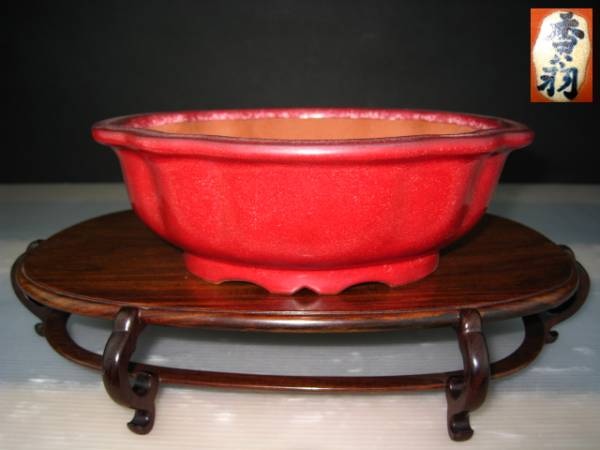
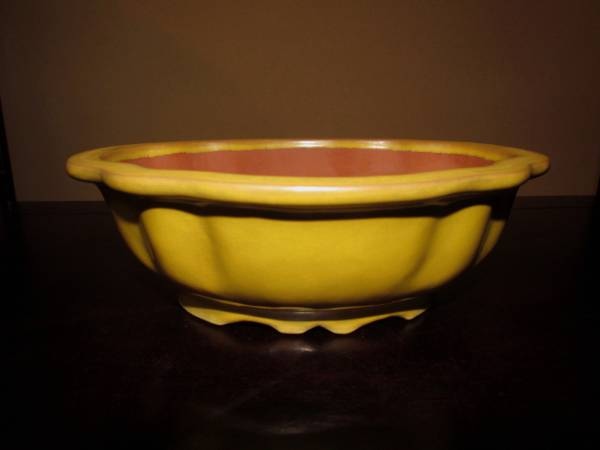
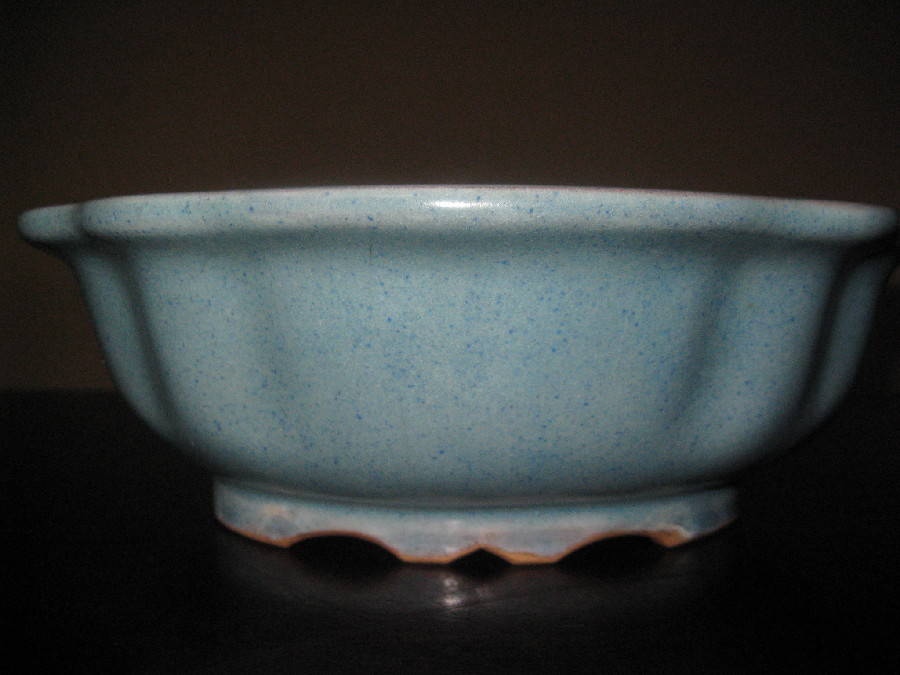
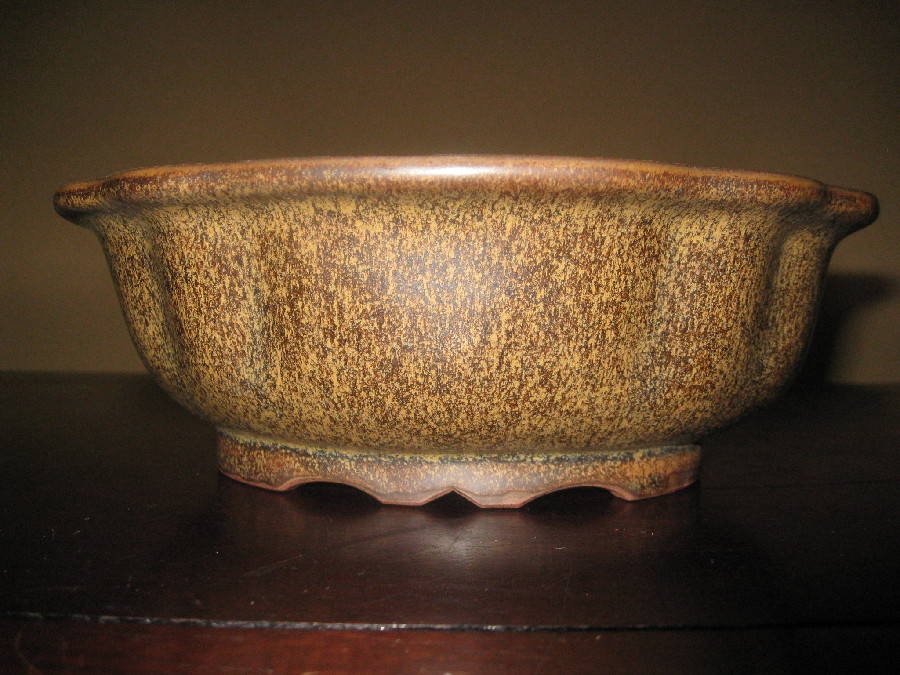
A quartet of deeper antique mirror shape with fancy cut feet, in 4 different glazes, from the KouOu period. Kouzan didn't use molds in his late work, to my knowledge, but did in his earlier pieces. Many later pieces marked KouOu are actually Kouzan Jr pots, with the glaze and/or painting work done by Kouzan Sr. The light robins egg blue and rich red are nice, and representative of Kouzan's glaze profile, but I have a soft spot for yellows!

20130417-145048.jpg
A very nice stamped early work Kouzan. The original glaze looks to have been yellow, or maybe cream, it’s tough to tell under all that patina! I couldn’t find my picture of the feet, which, from the underside, are full triangle cut from the bottom.

20130417-151504.jpg
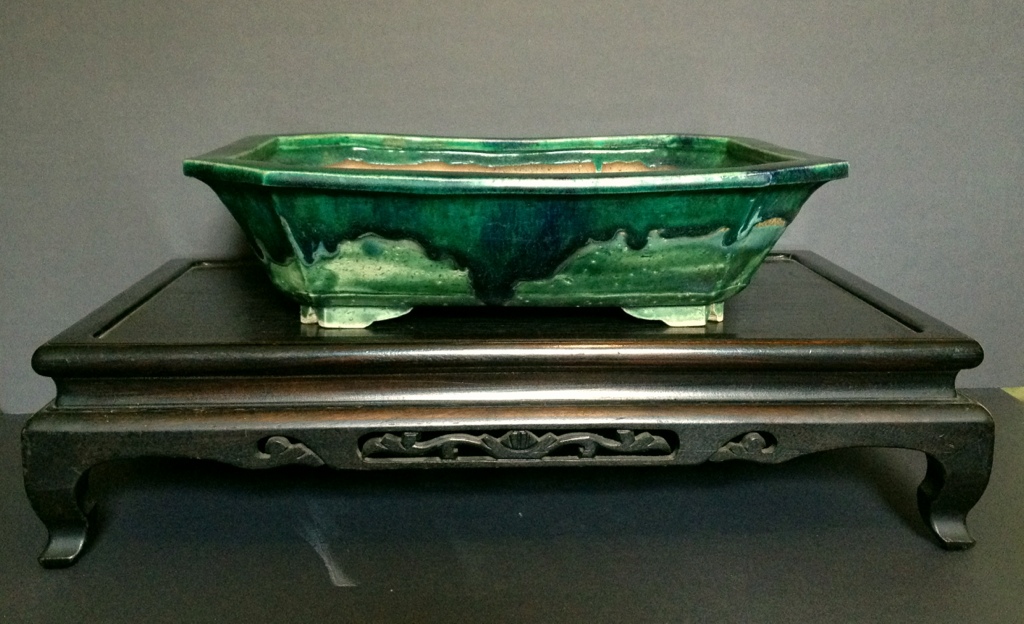
A uniquely glazed green taller rectangle with hints of blue. Kouzan’s precision can easily be seen from the strong lines and corners in this pot. This is an early piece, created in the climbing kiln which can produce such “Yohen”-kiln changed glazes.

20130417-151820.jpg
A square with carved window motifs. The glaze on this pot is especially nice. This is perhaps Kouzan’s most duplicated style. I’ve seen homage pots in this style from several major potters. If you look back to the picture above of Kouzan and Jr Kouzan, you’ll see That Senior is holding a similar pot in “KoKinYo”. These are my favorites of Kouzan’s signature style pots.

20130417-152743.jpg
Kouzan homage pot by Bigei. I’ve seen a bunch of these from Bigei, mostly unglazed but some burnished like this one. Given Bigei’s love of precision and detail, it’s unsurprising to see Homages to “The Razor Kouzan”.
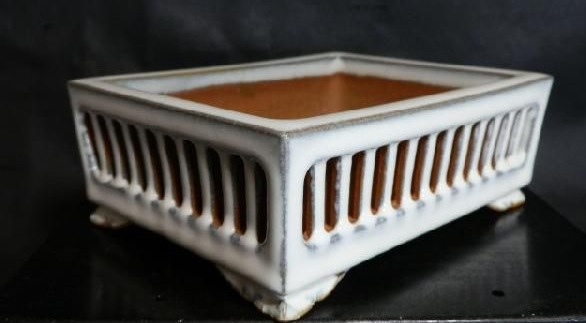
20130417-152906.jpg
Kouzan homage pot from 奥貫昭仁(Okunuti Shojin?). This potter seems to have made his motif nothing but Kouzan homage pots, mostly these carved panel pots and some in Kouzan’s most famous glaze colors: Buckwheat, Chicken Blood, and green oil droplets(how cool do the glaze names sound translated, eh?).

20130417-153102.jpg
A cream glazed Kouzan with incredible patina. Cream glazed Kouzan are uncommon in and of themselves, ones with this level of patina more so. Simply lovely.

20130417-153153.jpg
A taller “KouKinYo” rectangle. The glaze is delicate and pure, the lightest of blues. From this piece it’s easy to see why Kouzan’s light blues are so desirable! The lack of patina is indicative of its time spent on a shelf. With the Big 3, it’s tough to say which makes a pot more valuable: heavy patina or none whatsoever, though it’s certain that anything in between is less valuable! One of the things that makes Tofukuji, Yusen, and Kouzan pots so valuable is their ease of use and excellence in presenting bonsai at its best. Ergo, almost all have been used. Consequently, completely unused, virgin pieces, can fetch some higher prices than heavily patinaed ones. Not something you could ever use, but a collection dream!

20130417-153322.jpg
A pre-war white clay pot with a darker blue glaze. The glaze on this one is interesting, as it seems to darken towards the base. A glance through a couple of Gafu Ten albums will show you many darker blue Kouzans, the friend of Red fruiting varieties everywhere.

20130417-172312.jpg
A multilayered red Kouzan in a square cascade style. The different reds: blobby surface and inner crackle, are very unusual, especially from Kouzan, whose M.O., as you can see in this post, is single color and understated. For this reason, this probably is early work, and created in the climbing kiln before Kouzan began using gas or electric.
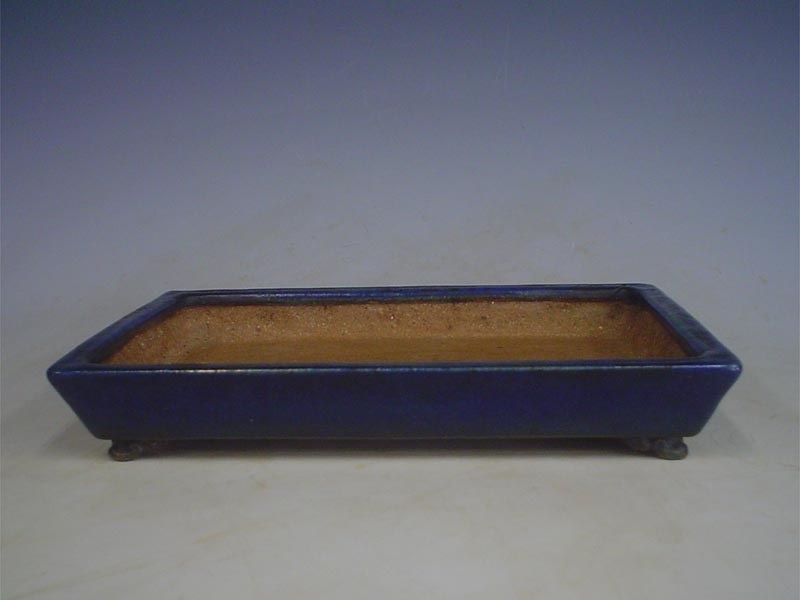
20130417-172643.jpg
A very deep blue cloud footed shallow rectangle with inner lip. This is one of the three most often seen glaze colors from Kouzan, along with red and light blue.

20130418-002114.jpg
A really interesting pinkish glaze with top and bottom hemp rope, outer attached feet, and killer patina, most apparent on the rim. The varying shades to this pot are really pretty and feminine, I’m not sure what I’d plant in it. Perhaps something elegant, thin trunked, slanted and weeping, with purple berries, Yamabudou? Murasaki Shikibui?
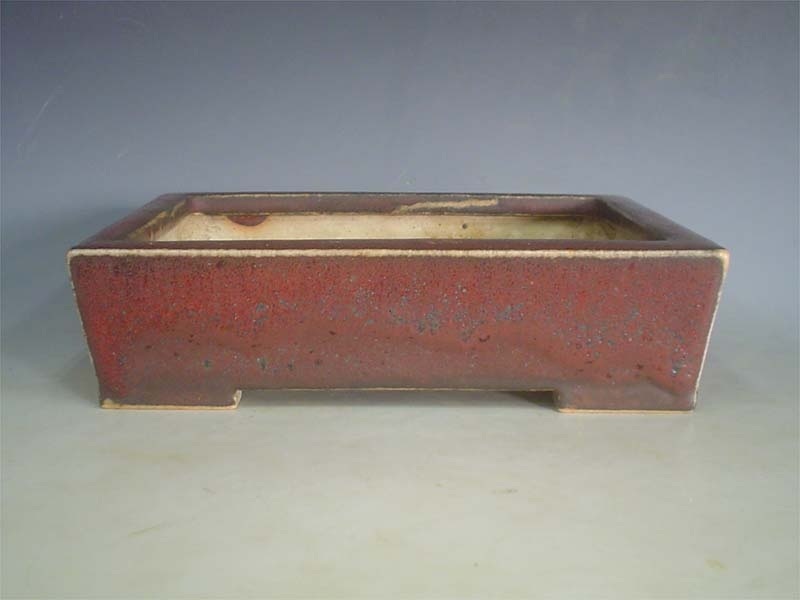
20130417-172954.jpg
A more muted and understated Kouzan Red. Simple and elegant, with clean lines. Everything Kouzan is all about. The very subtle drip in the glaze presents a wave only noticeable with a closer look.

20130417-174015.jpg
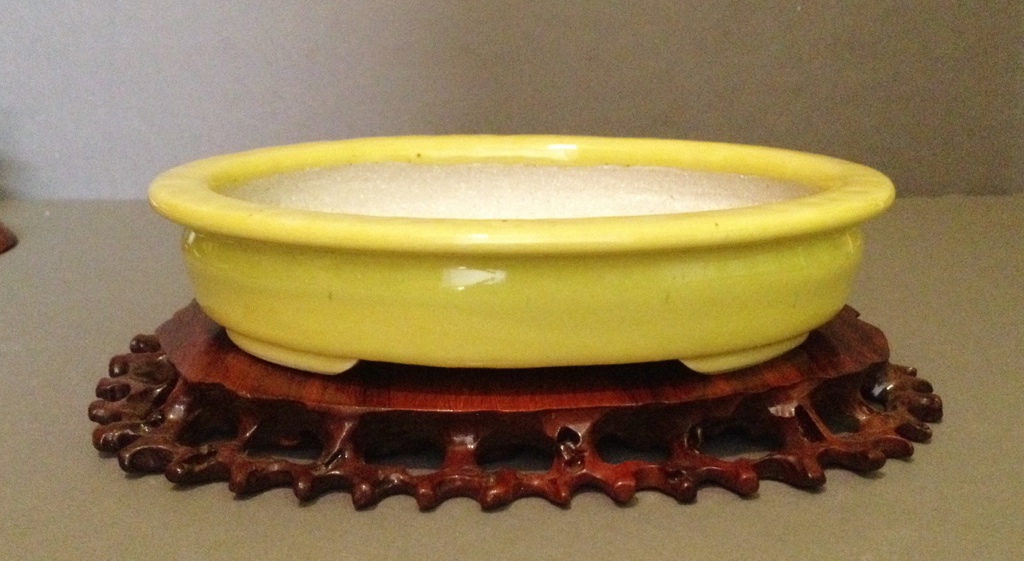
A really nicely glazed cream oval with bottom band, inner lip, and cut feet. The thin cream glaze is expertly done, and the patina is really starting to give this pot a dignified air.

20130417-173208.jpg
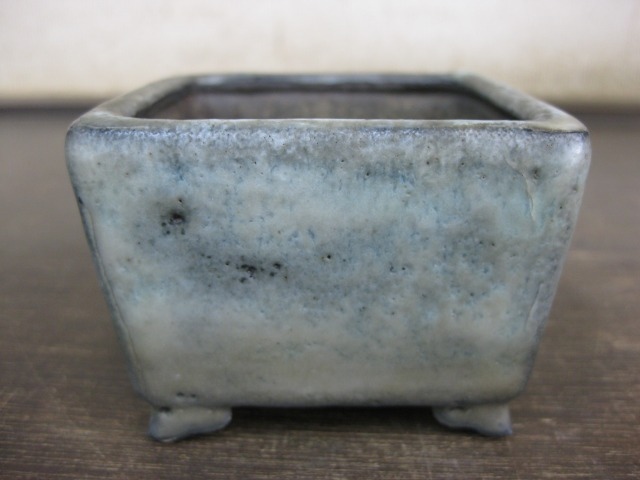
And we’ll finish up looking at glazed Kouzans with this simple and elegant green crackle. A simple and beautiful pot, awash with wabi sabi, a picture of understated elegance, showing how much Kouzan dedicated his life to “creating ‘pots bonsai can grow in'” and not pots that showcase himself.
Painted Heian Kouzan
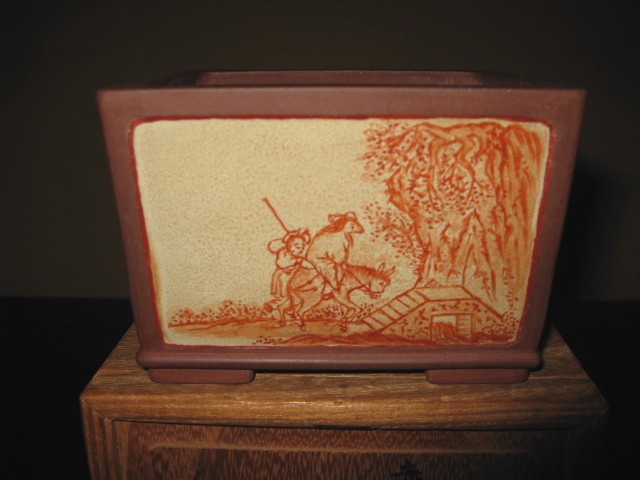
20130417-182039.jpg
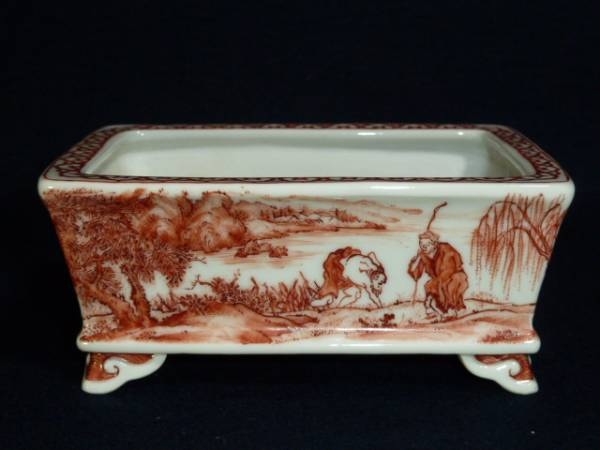
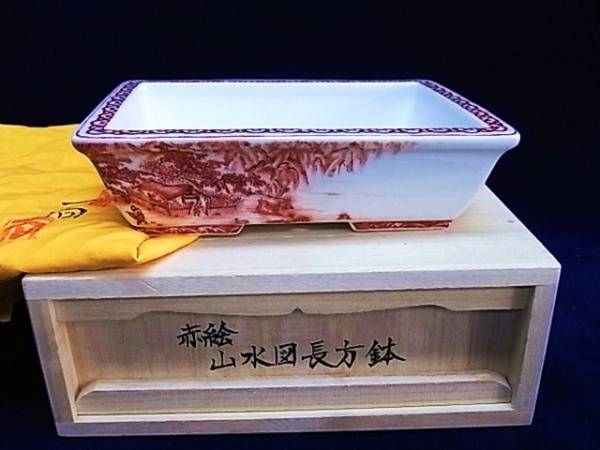
A panel painted Kouzan square. While not as detailed or impressively painted as, say, a Yusen or Gekkou, Kouzan’s painted pots have their own unique charm. Sometimes they are a little too precise and astringent, and seem overly formal, but at other times they are simple and elegant, with marvelous use of negative space and detail, like this piece.

20130417-185121.jpg

20130417-185136.jpg
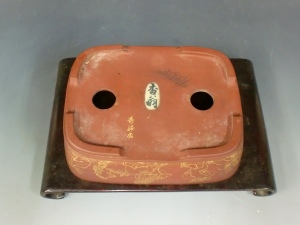
A collaboration piece in gold enamel, pot by KouOu, painting by KouSyu(?). The gold overglaze enamel is subtle and the image well rendered, a good collaboration piece. This is the only collaboration piece I have on file, and why I included it. For more on Kouzan collaborations, I highly recommend the article translated by Peter Warren from Kinbon in the first Bonsai Focus of this year, it’s got some great images and stories about Kouzan, and features several collaboration pots between Kouzan and Jr, as well as others!

20130417-185530.jpg

20130417-185537.jpg

20130417-185547.jpg
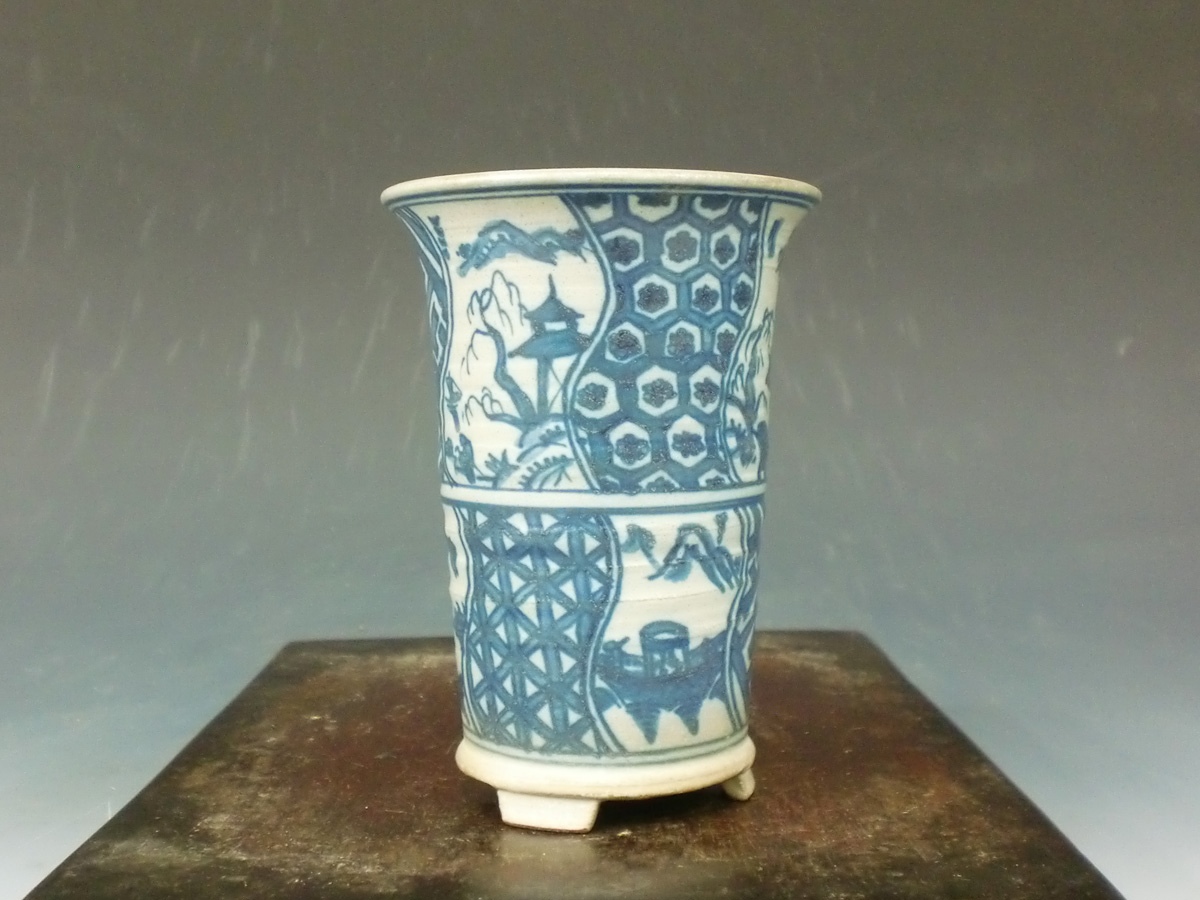
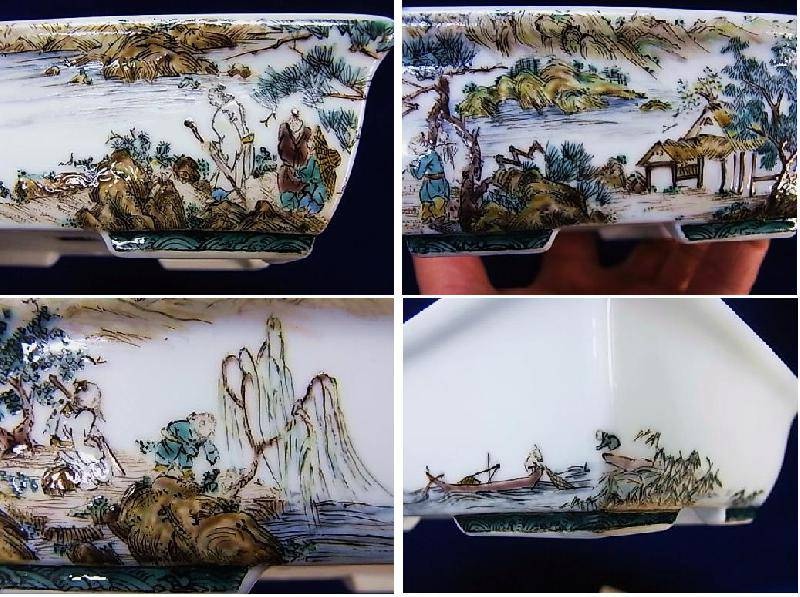
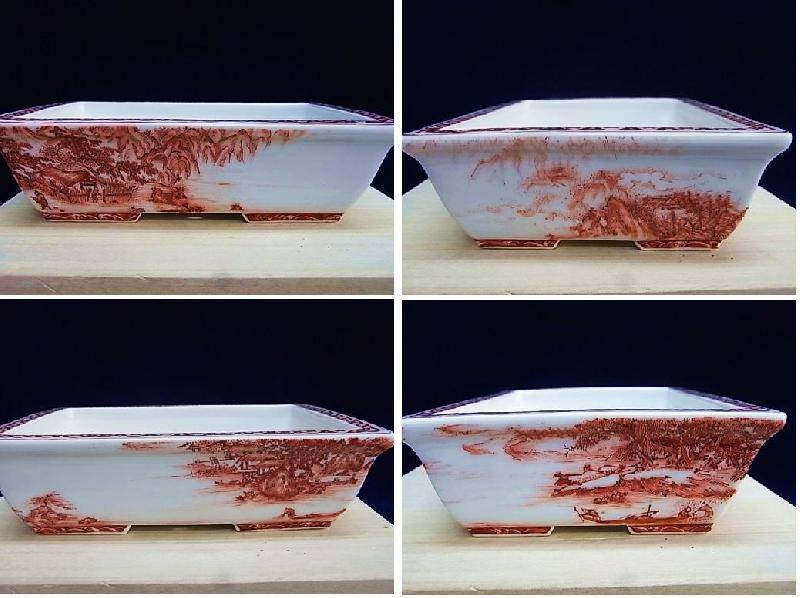
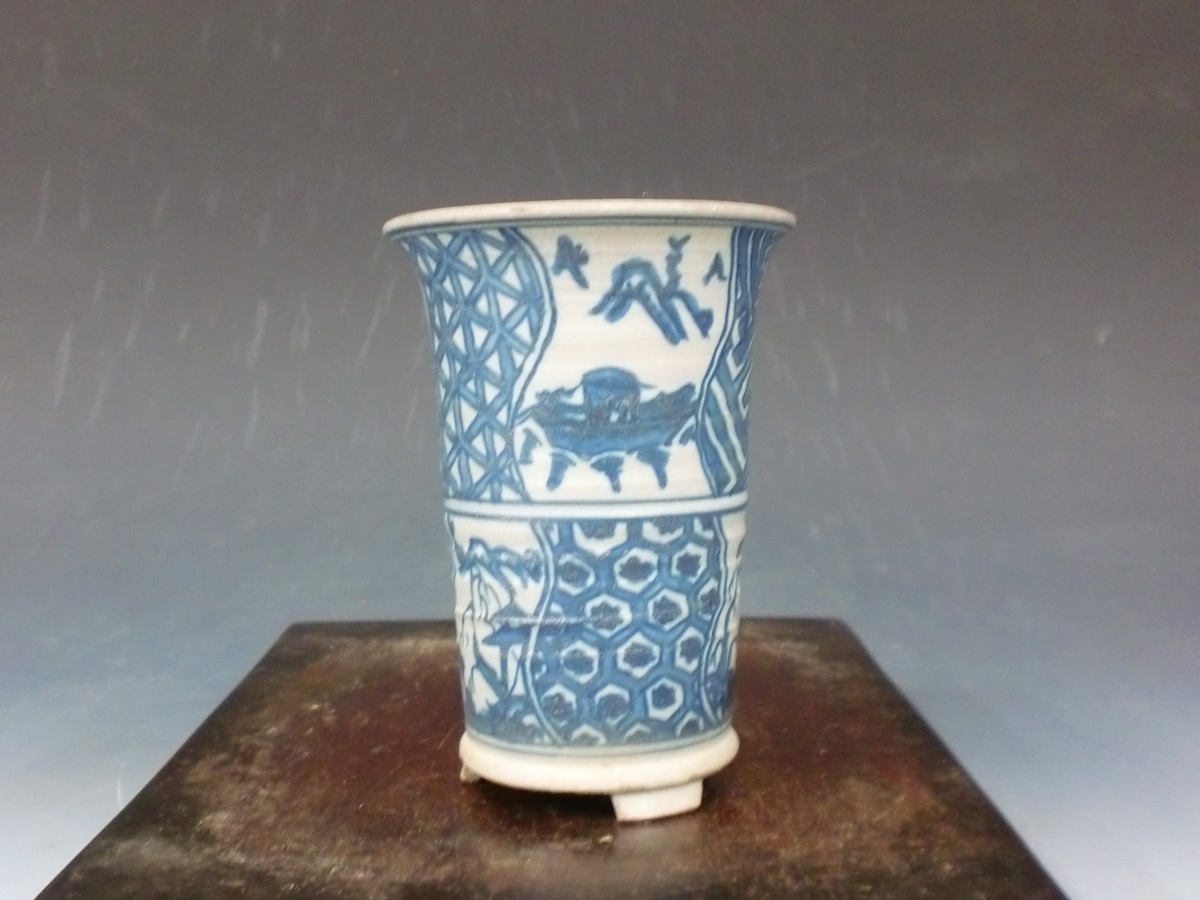
Three views of a more astringently painted cascade with landscapes and traditional geometrics. While this pot is beautiful, it’s a good candidate to show what I mean about Kouzan’s rather formal painting style. The overall impression the piece gives, at least to me, is rather rigid.

20130417-195949.jpg
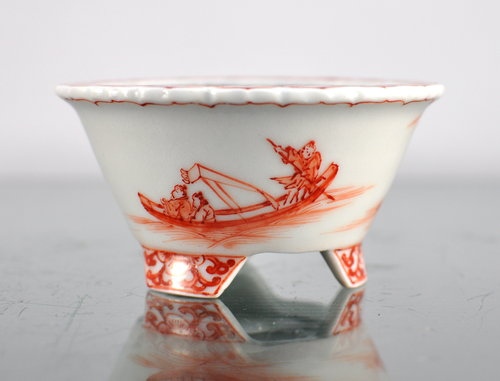
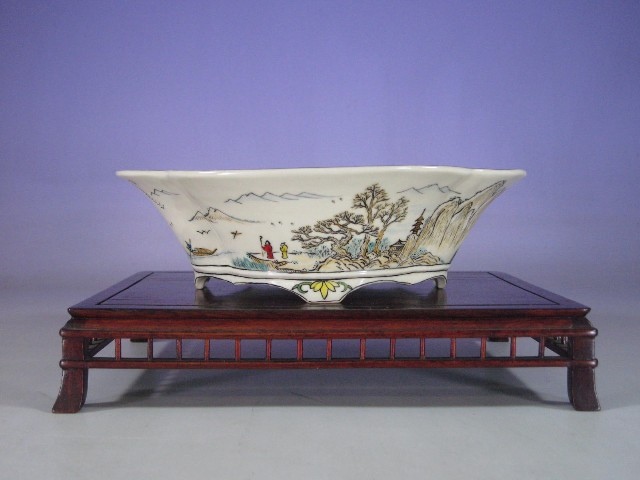
A Kouzan Suiban, the interior painted with a landscape scene. Presented as a contrast to the above, in this scene Kouzan’s line style comes across as charming rather than formal.
20130417-200036.jpg
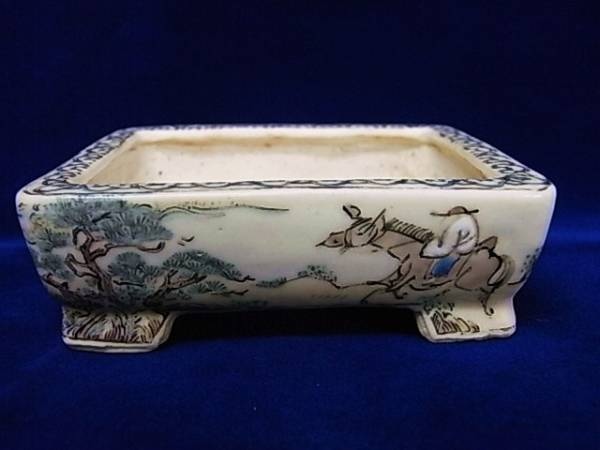
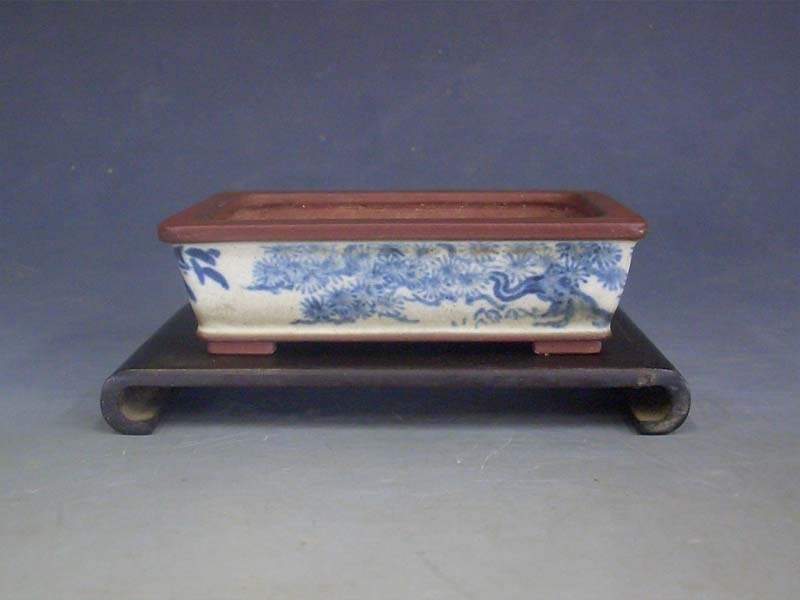
A Porcelain band painted sometsuke rectangle over brownish red clay. The tree is rendered interestingly, with near arabesque foliage.

20130417-202604.jpg

20130417-202613.jpg
A really interesting painted or dyed pot. I don’t think I’ve ever seen this glaze technique painted before. The glaze is what is referred to as “apricot skin,” and has been used in some really beautiful pots by Imaoka Machinao, in this, the standard apricot color and also in gold and silver. The landscape itself is very well rendered, especially considering the technique and glaze. An interesting and very unique piece. This one is currently available for sale from Yorozuen on EBay, and the price, I think, is a steal at a hair over a grand, US. 5 years ago you would have expected to pay 3 times that, and a decade ago 5 times….two decades ago during the economic boom? Maybe 10.

20130417-203013.jpg
Detail of the apricot skin glaze.

That’s all today for the painted and glazed pots of Heian Kouzan. I have a few more images, but I am going to save them for a future post, as I’m off to bed! I hope you’ve enjoyed this look at the pots of “The Razor Kouzan”.
In the next post, a surprise special! 2 years I’ve been at it on collecting pottery, and publishing my research on the blog, and we’ll take look back! Montage!(que montage music).
Then, Heian Kouzan Part 2:Unglazed, Artist Marks, and Jr.
Thanks for reading!

Posted in Famous and Antique Potters, My Personal Collection | 4 Comments

Kutani Ikko(久谷一向)

I haven’t been able to find much biographical information on Kutani Ikko, but it seems no one else has any either, either in the West or in Japan! But, I have a little information, so here goes.
His given name is 宮保 英明(Eimei Kyuho?) and he’s been painting porcelain for over 25 years. Like most Kutani painters, most of his pots are collaboration pieces(Kutani ware works a little like a co-op, with people specializing in porcelain or painting), and he has collaborated with the likes of Tsukinowa Yusen and Takao Koyo. His work is breathtakingly detailed, and pretty rare, and commands some very high prices for an artist so new(relatively speaking) to the bonsai pottery game. Ive got some friends in Japan digging around for extra information for me, so I’ll repost this with an update soon.
Now, on to the pots!

20130406-180254.jpg

20130406-180309.jpg
We’ll begin with two sides of an akae painted, rectangular dragon pot. The detail to the dragons on both sides is really spectacular, highly realistic and impressively figured.

20130406-180502.jpg
Detail of base, showing Ikko’s characteristic signature style featuring animals. If you look closely behind the mouse you can see the stamp of the potter, a frequent collaborator with Ikko, “雅”-“Miyabi”.

20130406-194250.jpg

20130406-194308.jpg

20130409-094945.jpg
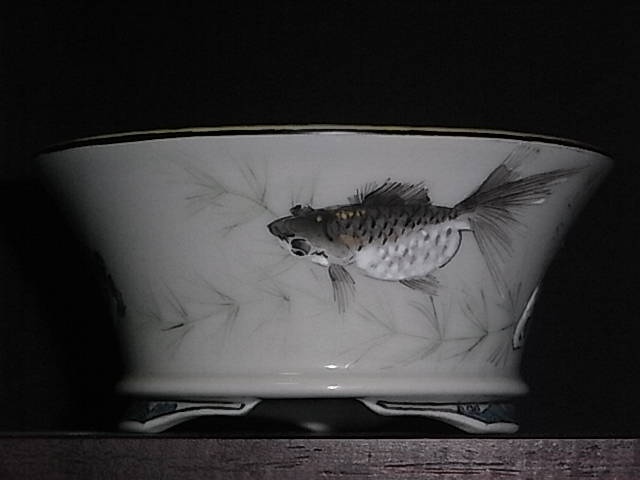
Three views of a fantastic overglaze enamel celadon pot with goldfish. The thickness of the enamel makes the goldfish seem almost 3 dimensional. The detailing to the feet is especially nice.

20130406-194853.jpg
A really nicely painted rectangle with cloud feet. The scene itself calls to my mind both the subject and style of Yusen. Superior brushwork and another with really nice foot detail.

20130406-195002.jpg
Detail of signature on base.

20130406-195042.jpg
A six sided pot painted in vibrant blue. This one didn’t impress me much until I looked a little closer….

20130406-195145.jpg
Four views from multiple angles. Up close we can see how impressive a piece this is! The vibrant splash of blue that is the bush in the lower right photo is my favorite detail on this piece.

20130406-213816.jpg
Nice use of negative space in this 5 color rectangle. The very skillful use of color is incredibly realistic. It’s pretty incredible how the details surrounding the negative space of the sea to the left create a great sense of depth out of bare porcelain!

20130406-214036.jpg
Four different detail views. Up close, we can see what the distance shot didn’t show: incredibly realistic detail work and beautiful line detail.

20130409-095205.jpg

20130409-095214.jpg
A three footed round pot painted in 5 colors. A lot of negative space to this piece. In the detail shot we can see Ikko’s highly detailed, figurative style.

20130409-095346.jpg

20130409-095353.jpg
We showed this pot in our post on Tsukinowa Yusen. A Yusen-Ikko collaborative pot. From the images above, it’s easy to see why I think this piece is very early work from Ikko, although very late pottery work from Yusen.

20130409-095627.jpg
Another rectangle, this one painted in red with a blue band on top. We can see from this image a great sense of depth from the negative space on the left, and clear directionality to the pot.

20130409-100125.jpg
Four distance detail views. In my opinion, a great painted pot should have a different directionality in either side, as this one does. In each image, we can see good use of both detail and negative space.

20130409-100623.jpg
Four close up detail views. In these views, the impressive use of detail is most apparent. Truly beautiful brushwork to these scenes.

20130409-101206.jpg
A pyracantha in an Ikko-Yusen collaboration pot. The orange berries and deep green leaves contrast well with the blue painting, another that looks to be early work from Ikko.

20130409-101605.jpg

20130409-101614.jpg

20130409-101621.jpg
Three views of a 5 color overglaze enamel round with children. The details to the children are especially well rendered in vibrant 5 colors. Comparing this to the popular children’s motifs used by Ishida Shoseki, we can see that Ikko stands far above in painting skill!

20130409-102118.jpg

20130409-102124.jpg

20130409-102257.jpg
Three views of a red painted, 3 footed round. The detailing to the figures and the trees in the landscape is especially nice, as is the boat in the third view.

20130409-125512.jpg

20130409-125518.jpg
A three footed round similar in shape to the one above, but the scene is entirely different. The figures in these scenes are the focus, and they are very well rendered and detailed.

20130409-125713.jpg

20130409-125721.jpg
A red painted collaborative pot between Ikko an Takao Koyo. This style of painted mokko shape is often referred to as “Isseki Style” for Isseki’s frequent use of the shape.

20130409-125857.jpg
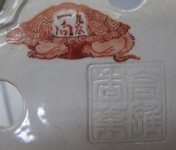
Takao Koyo stamp and Ikko signature with Turtle.

20130409-125937.jpg
A cut foot rectangle with a very nice landscape scene.

20130409-130530.jpg

20130409-130545.jpg

20130409-130558.jpg
3 detail views from the corners, and the base, showing Ikko’s animal signature, signed turmeric cloth, and box. In the details, we can see how incredibly well rendered and detailed both the figures and the landscape are! I think in images like this, it’s easy to see why Ikko’s style and incredible skill is often compared to Yusen.

20130409-131016.jpg
Four views of an impressively detailed square. The figure crossing the bridge, and the landscape seen through the rain are my favorite details in this piece.

20130409-131405.jpg

20130409-131434.jpg

20130409-131730.jpg

20130409-131751.jpg
And we’ll finish up today with views all four sides of an impressively detailed 5 color rectangle. The use of white in the robes of the figures is interesting, I’m not sure I’ve seen this done often in overglaze. The scenes themselves, of Lao Tzu and his pupils reclining near a mountain stream, show great depth and realism, one can almost hear the waterfall!

20130409-132212.jpg

20130409-132231.jpg

20130409-132249.jpg

20130409-132258.jpg
Four detail views. From the details, you can see how incredibly realistic the figures are portrayed. The slight details to the water winding around the outcrop are lovely as well.

20130409-132704.jpg
And the base, with Ikko’s signature animal. The stamp of the potter is under the body of the mouse, and it is “雅”-“Miyabi”.

I hope you’ve enjoyed seeing these images from master contemporary painter Kutani Ikko! Thanks for reading, up next I’ll finish up the big three potters with a post on Heian Kozan!

Posted in Modern Potters | 1 Comment

Seifu Yohei(清風与平)

Seifu Yohei comes from a long line of Kyoto area potters and painters. He was the 4th generation of the Yohei pottery line, currently in the 5th, and lived from 1921 to 1991. The first generation lived from 1803-1863, just to give you an idea of how far back the family line of pottery goes.
While he made many pots of his own in his later years, he is perhaps best known for his collaboration pieces with Tsukinowa Yusen, and we’ll take a look at some of both. His style is very different from his friend Yusen. It’s very busy, often filling negative space areas with kanji poetry and designs. Sort of the anti-Isseki. Enjoy a look through a few pots from this unique and extraordinary painter.
Collaboration Pieces

20130402-235324.jpg
So we’ll start off with one here in the States! This is a Yusen-Yohei collaboration pot in the collection of Matt Ouwinga, of Kaede Bonsai En. The animal clinging to the side is A Yusen signature move, using animals and children, and was used later in pots made and painted by Seifu Yohei. The arabesques on the tiger clinging to the pot are especially nice and well done.

20130402-233759.jpg
A Yusen-Yohei collaboration piece. The pot is clearly Yusen’s signature style, but the painting is very much Yohei. Note the broad, indelicate brushwork and lack of significant negative space, Yohei’s signature style. It creates landscapes and images that are nearly impressionistic in their take on scenes.

20130402-234148.jpg
Another Yusen-Yohei collaboration. This one has significantly more negative space than many other Yohei paintings. The painting itself is charming.

20130402-234426.jpg
Another Yusen-Yohei collaboration piece. This one has not only Seifu’s signature style, but also typical Kyoto style geometric work, very unusual for Seifu paintings. The shape of the pot by Yusen is delicate and contrasts well with Seifu’s indelicate style.

20130402-234630.jpg
Another Yusen-Yohei collaboration. Ive seen several version of this painting by Yohei, some with the red hat(boy that stands out!) some without.

20130403-004944.jpg
An interesting multicolor tall cascade collaboration piece from Yusen And Yohei. The colors are vibrant and striking.

Seifu Solo

20130402-235743.jpg

20130402-235815.jpg
A pair of pots made and painted by Yohei. Note the Yusen style animal clinging to the side, a design much duplicated by Seifu in his own work.

20130403-003043.jpg
So the first two pots featuring Yusen style animals clinging to the side of the pots were interesting, but this one is beyond the pale! Paintings cover both the inside and outside of the pot.

20130402-235933.jpg
A pair of Akae painted Seifu Yohei. The characteristic busyness to Seifu’s painting is clearly here, with little to no negative space in either pot.

20130403-000041.jpg
A multicolor, tall cascade pot in Seifu’s signature style. Zero white space in this pot! What would YOU plant in this?

20130403-000116.jpg
A pair of multi-color painted pots, in Seifu’s signature style. His paintings are a little cartoonish, but charming for it, rather than cheesy.

20130403-000148.jpg
Another tall cascade, this one painted in red with bold black kanji in the center of the landscape.

20130403-000232.jpg
A blue Seifu Yohei, showing his characteristic landscape style and full coverage of the surface of the pot.

20130403-003555.jpg
A very thickly glazed porcelain round by Yohei. The thick glaze is uncommon to porcelain works which are often delicate. Unsurprising considering Seifu’s style!

20130403-003734.jpg
A lightly glazed angular cascade with band and interestingly cut feet. Very masculine, though the slight touches of glaze soften it a bit.

20130403-003859.jpg
And we’ll finish up with a thickly glazed celadon porcelain pot, of a style most commonly seen in old Owari Yaki pots. Very simple and elegant, and very much out of character for Seifu Yohei!

I hope you’ve enjoyed seeing a few pots from Yusen Collaborator(and excellent potter in his own right) Seifu Yohei. Thanks for reading! Up next: A few bonsai around my garden, and I’ll finally get to the third of the Big 3: Heian Kozan, the Razor.

Posted in Famous and Antique Potters, Pot Info, ID, Hanko, Books, ect. | 1 Comment

Glazed Pots by Zyubei 2

I did a post featuring pots by Zyubei nearly 2 years ago, and got a lot of feedback on his pots, even some requests to procure a few! So, I figured the time is right to show off the work I’ve seen from him since then. You can see the original post, on the first handful I showed, here:
Glazed Pots by Shigeru Zyubei
His name is 濱田 重章(Shigenori Hamada) and his kiln named Hin Zyubeiei though his pots are commonly referred to simply as Zyubei. He was born in 1946 in Osaka and began creating shohin bonsai in 1972. By 1973, he was teaching classes in shohin at Shunshoen. In 1981, he began making bonsai pots, and purchased an electric kiln in 1989. After retirement in 2009, he began making bonsai pots professionally.

20130402-113846.jpg
Yamabudo, or Wild Mountain Grape, a species used occasionally for shohin bonsai in Japan, in a Zyubei rectangle, just beginning to leaf out today. The thick, running glaze in purples and blues and reds will match well when it fruits this year.

20130402-114046.jpg
A round riveted drum from my collection with a fantastic running glaze, a single drip positioned directly between the feet. It’s easy to see from pots like this the influence of Antique Canton Ware on Zyubei’s style.

20130402-114258.jpg
Another deep green-blue glazed round from my collection, shot through with lightning bolt hints of white. The blue in the drips to the bottom of the glaze is especially nice.

20130402-114418.jpg
A mottled red and brown rectangle with very thick glaze, shot through with white.

20130402-114527.jpg
A very light blue glazed rectangle. There is a great sense of depth and warmth to this light blue glaze, much like the light blues of Tofukuji, or the best Kinyo glazed antique Cantonese pots.

20130402-114636.jpg
Another marble glaze in red and white. The thick glaze pooling around the feet is pretty spectacular!

20130402-115021.jpg
Another light blue glazed rectangle, this one showing many layers of blue and white.

20130402-115120.jpg
A deeper blue rectangle. This one is very much like the most common blue glazes one sees in Antique Chinese Canton ware.

20130402-115249.jpg
A classic rectangle bag shape with lip, in a very nice, rich green.

20130402-115329.jpg
Another marble style glaze, this one showing rich dark and light greens, shot through with white.

20130402-115439.jpg
A lighter blue glazed riveted drum. The slightly darker shades of blue in the glaze give it great depth.

20130402-115548.jpg
Lastly, from the 2012 JSBA Kobachi exhibition, a pair of Zyubei, one a riveted cascade with 6 sides, the other a light blue glazed oval, in a glaze similar to the drum above.

I hope you’ve enjoyed seeing a little more of the work of Shigeru Zyubei. Thanks for reading!

Posted in Modern Potters, My Personal Collection | 2 Comments

From My Collection 15

A few new pots have made it to, and from, my shelves in the last couple of months, so let’s have a look.

20130331-074439.jpg

20130331-074451.jpg
So, this one isn’t really from my collection, but as it is passing through my hands today, I thought I’d snap a couple of photos anyway! The pot is Bushuan kiln, Shigeru Fukuda, and by far the largest pot I’ve seen from him. The signature style double glaze over white clay is really well done, showing a serious control of a near uncontrollable process.

20130331-074459.jpg
The details to the feet are especially nice and unusual, center cut, and interesting contrast to the sheared corners.

20130326-161209.jpg
A pair of medium sized Bushuan, Shigeru Fukuda. The one on the left I’ve had for a while, but it never made it up here, and since I sold it, I wanted to show it one time. The glaze is similiar to the one in the above photo, very nice in larger pieces.

20130326-161456.jpg
Close up of the cascade or semi-cascade on the right. Some really pretty colors in the thick glaze on this piece; a bit rainbow like.

20130331-075323.jpg
A matched pair of cut, 3 footed rounds with lip and bottom band, again from the Bushuan kiln, Shigeru Fukuda. While the technique used here is the double glaze I’ve become familiar with from Bushuan, but it’s the glazes themselves that are unique.

20130331-075642.jpg

20130331-075655.jpg

20130331-075830.jpg
Up close, you can see how interesting and unique this glaze is! The underglaze is black, while the overglaze is some type of blue-green glaze composed entirely of regularly sized snowflake-like crystals. Definitely never seen anything like this before!

20130326-191708.jpg

20130326-191655.jpg
A pair of Haruyoshi, mini or accents with fish. I like simple designs like this for accents, which should rarely be in busy pots.

20130326-191826.jpg
Round Echizen Hosui with sometsuke landscapes and geometric designs. Really cool designs match well with the landscapes, I think this may be a Yusen homage pot.

20130326-192025.jpg
Detail

20130326-205608.jpg
Tarugen accent pot with red landscape. A minimum of 40 years old, Tarugen paintings are nice and simple. At 2″, this would suit an accent for a 3 point display.

20130326-192248.jpg
A pair of Bigei. The landscape pot on the right is from Bigei’s alter ego, “Sansui.” for more on this, see the post “An ID Mystery Solved”.

20130326-204755.jpg
An interesting kiln changed glaze round semi-cascade style by Kensho. Really cool swirling colors in this pot; an interesting mix of light and dark colors to this glaze.

20130331-080648.jpg

20130331-080705.jpg

20130331-080711.jpg

20130331-082350.jpg
Four pots from Tyukan. Relatively unknown here in the west, Tyukan pots are quite popular in the major shohin exhibitions in Japan. One of the top 10 or 15 potters you see in displays. From these pots, and their variety, it is easy to see why! His style is varied and unique, often incorporating carved details, interesting feet and glazes, and unique clays. The unglazed pot at top is especially well detailed, though the deep blue mokko shape and yellow crackle are really well done also.

20130331-081258.jpg
A really fantastically detailed medium go-sai round with gold overlay enameled feet, from Satsuma Yaki potter Seikundo. The painting just touches the border between highly detailed and cartoonish; it’s vivid colors call to my mind the landscapes in Avatar. The vivid gold overglaze on the feet is a bright touch, and calls to mind the pot’s Satsuma origins.

20130326-204929.jpg
Last of all, we have lipped bag shape in a bright yellow glazed limited edition pot from…Ikkou? Koyo? Nope, it’s American potter Paul Katich. This is a really nice yellow! We seldom see such bright colors that are so useful in Shohin displays from western potters.

I hope you’ve enjoyed seeing a few pots I’ve picked up here and there today. Thanks for reading!

Posted in Famous and Antique Potters, Modern Potters, My Personal Collection | 5 Comments

Bonsai Sekai Articles

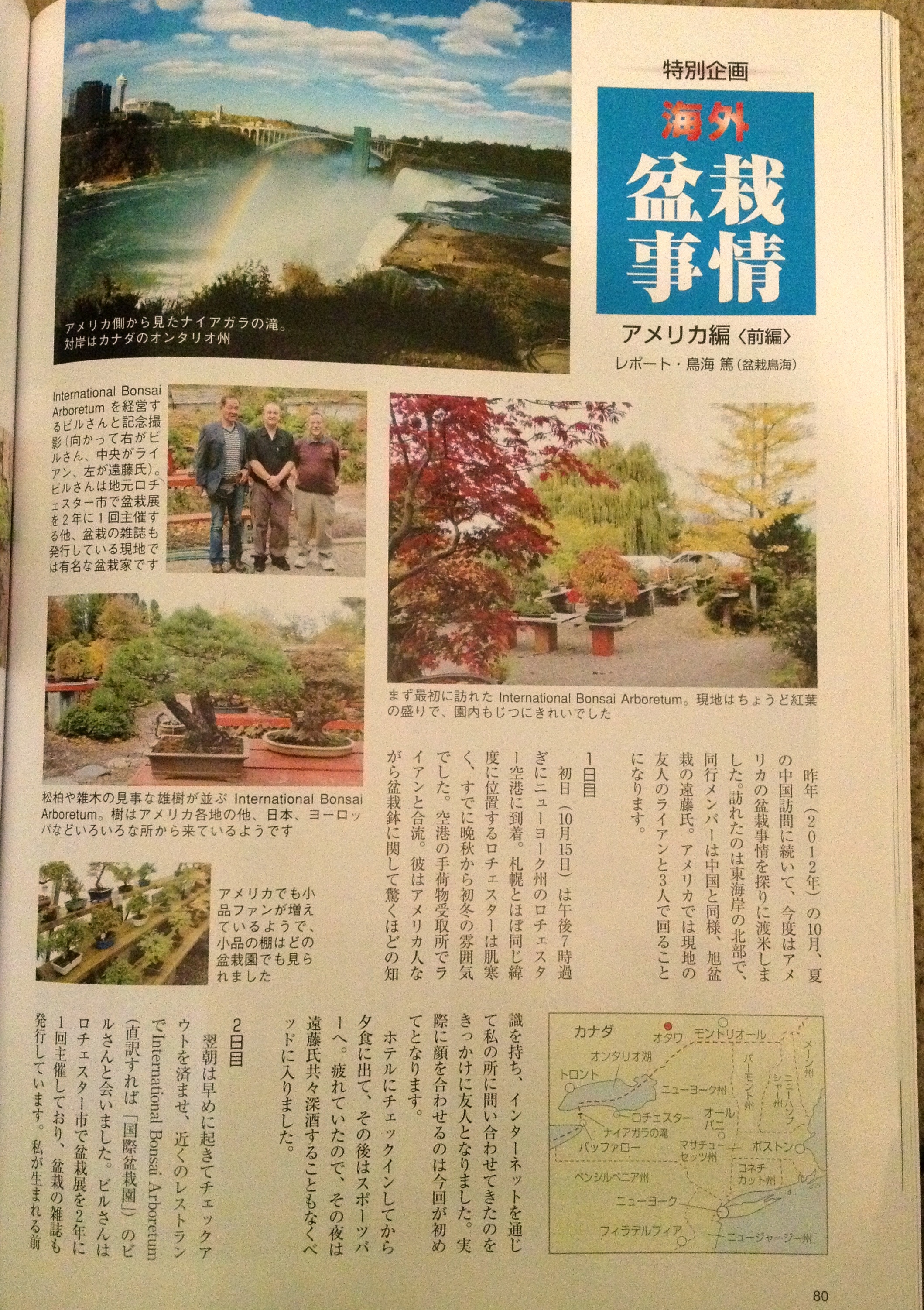
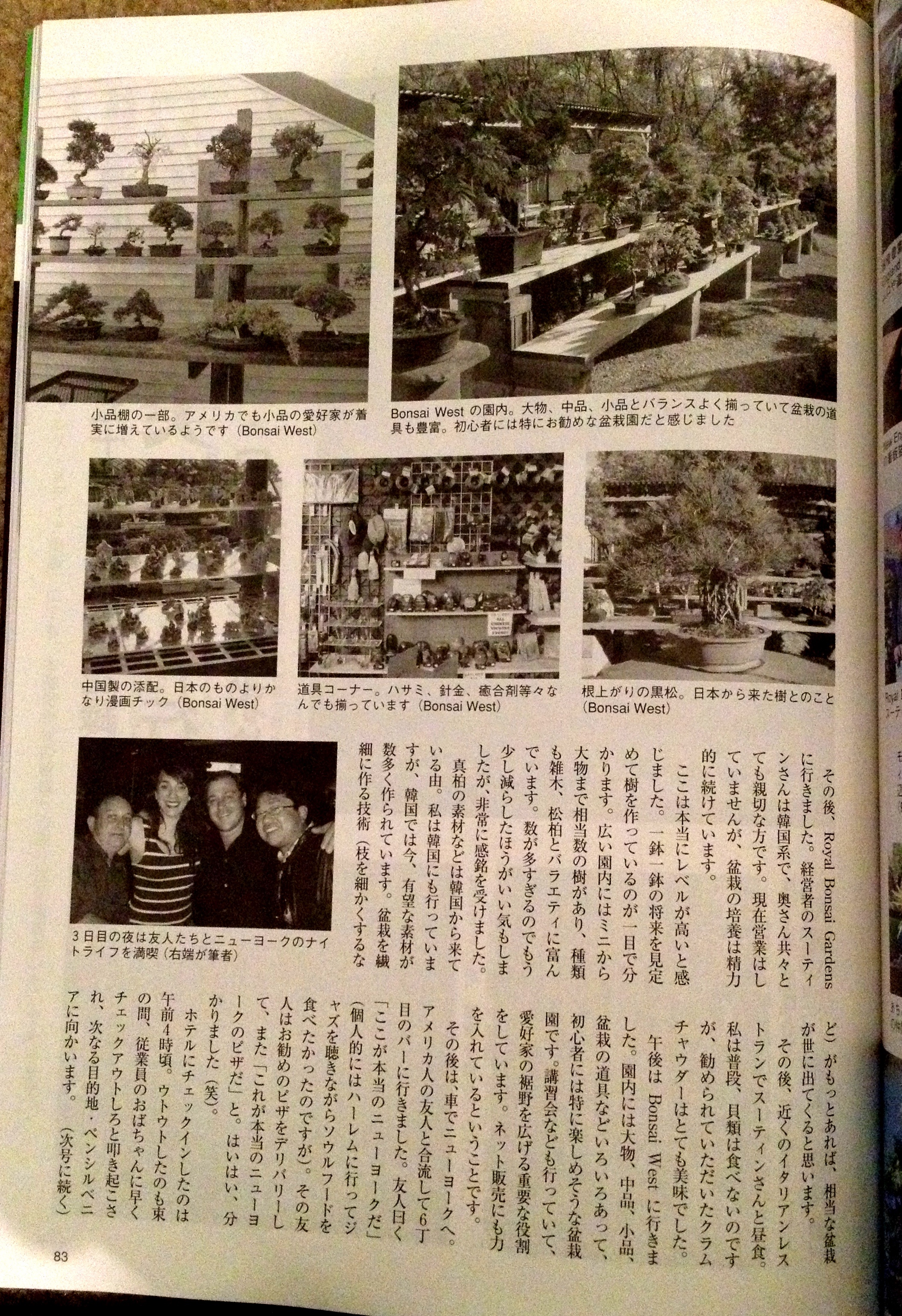
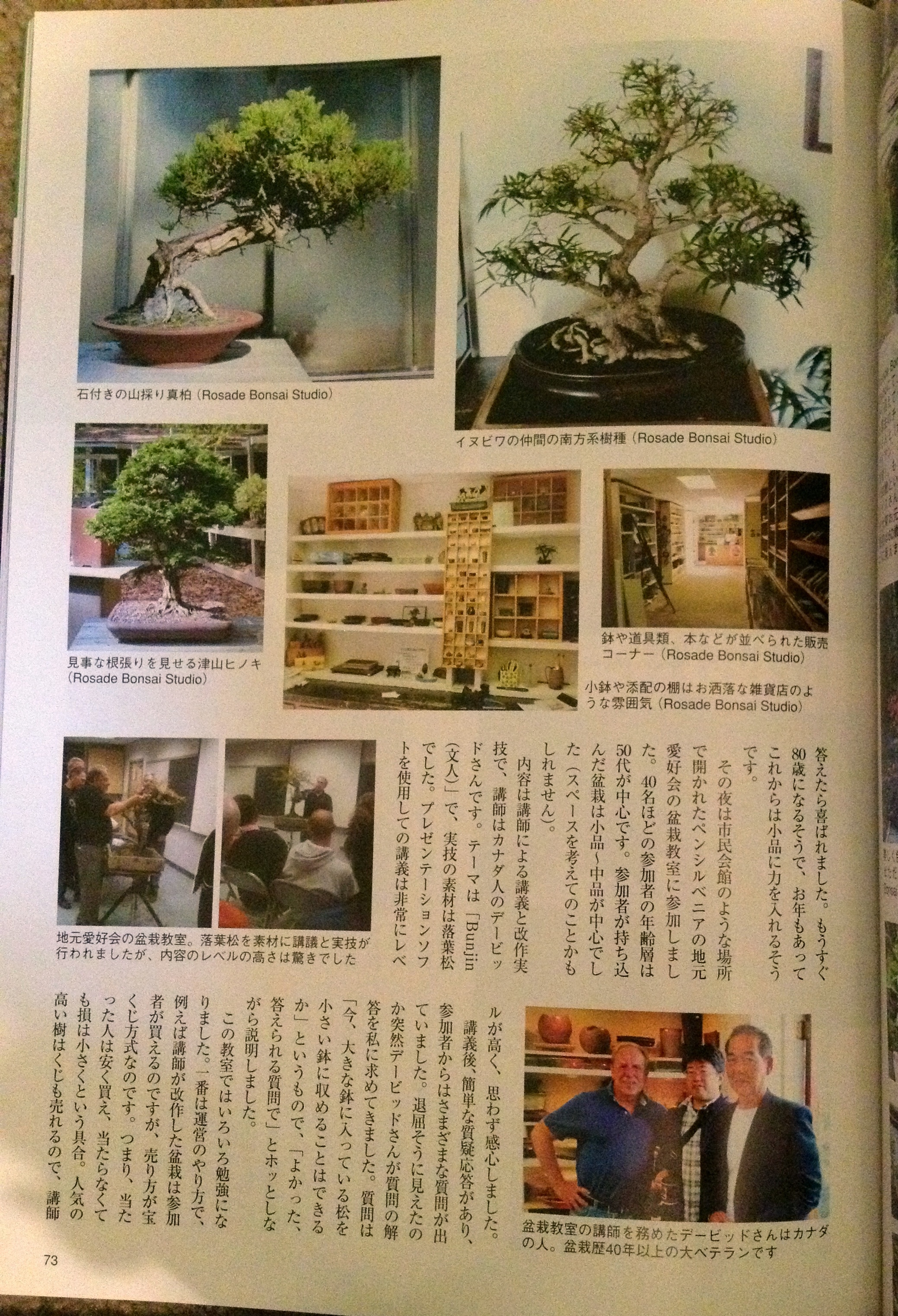
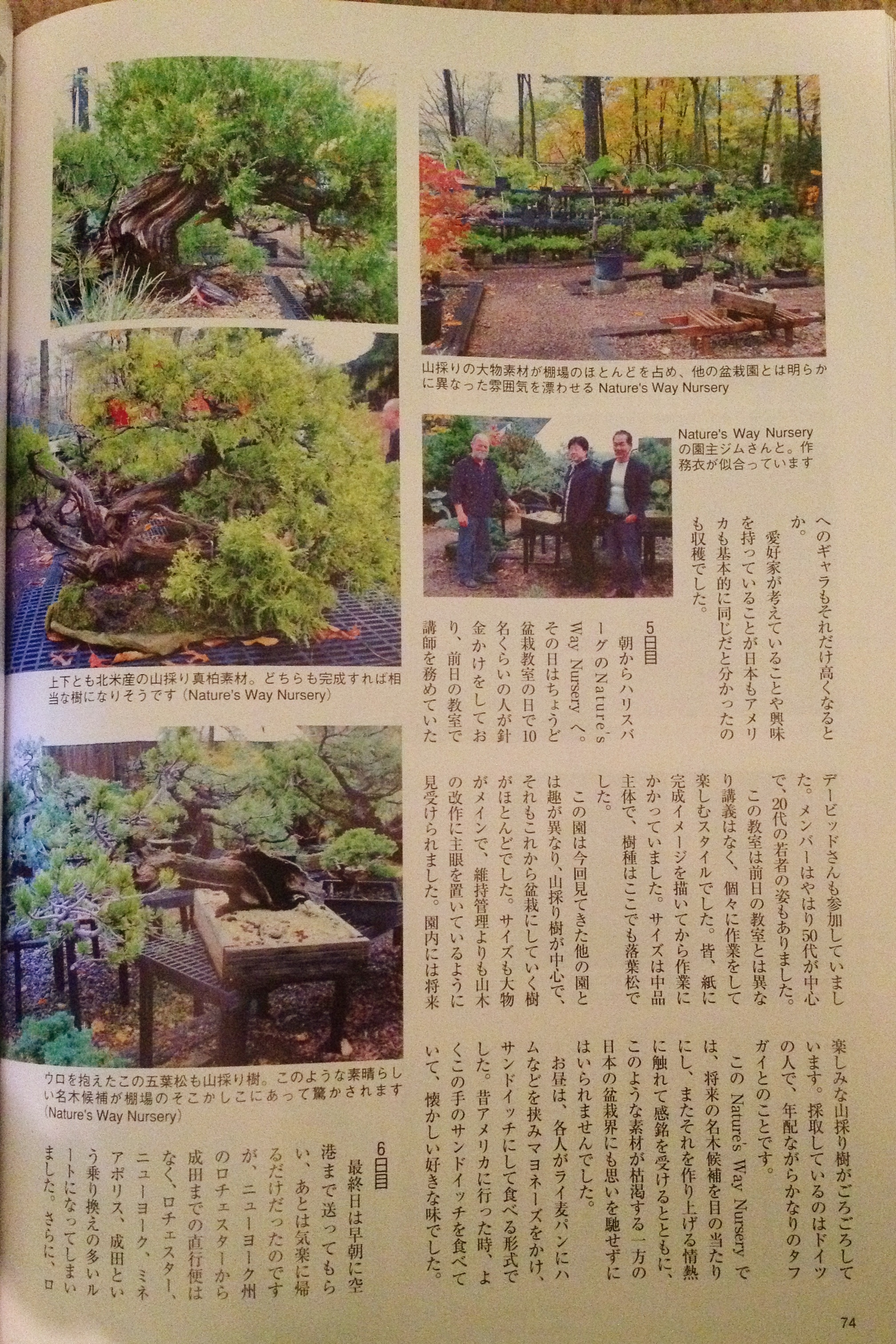
Last November I documented the tour where I guided Japanese bonsai professionals Toriumi Atsuishi and Endo Shoichi around the best Bonsai that the American Northeast had to offer. Their articles on the trip appeared in the February and March issues of Bonsai Sekai magazine. It’s nice to see some of our American bonsai nurseries and professionals featured in a Japanese publication!(and funny to see my amatuer ugly mug gracing a page where, just a flip back, Kimura San styles a massive Pine!)
Take a look back at my articles on the tour here:
Bonsai Gadens of the Northeast 1
Bonsai Gardens of the Northeast 2

Many thanks to Toriumi San and Endo San for two great articles, and the chance to plan trips for them! I look forward to helping with this year’s Bonsai Sekai articles, which we have planned around the much anticipated Artisan’s Cup and Bonsai Gardens of the Northwest.
A look through the articles:

20130330-140157.jpg

20130330-140307.jpg

20130330-140341.jpg

20130330-140351.jpg
The first article, featuring the International Bonsai Arboretum, The collection of Harvey Carrapella, Royal Bonsai Gardens, New England Bonsai Gardens, and Bonsai West(and our stopover in New York City).

20130330-140823.jpg

20130330-140831.jpg

20130330-140840.jpg

20130330-140847.jpg

Thanks for reading! Up next, Collection post 15, featuring some awesome Bushuan and Tyukan pots!

Posted in Uncategorized | 2 Comments

The 8th JSB Association Pottery Exhibition

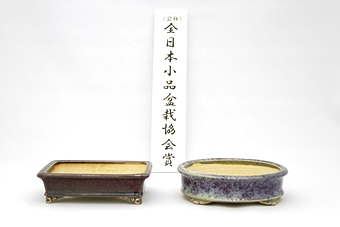
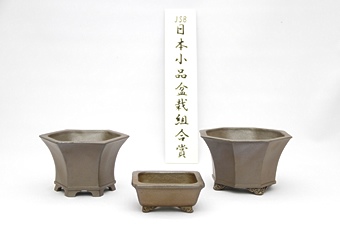
Every Year I look forward to the release of images and results from the Japanese Shohin Bonsai Association’s Kobachi exhibition. The exhibition features the work of 50 potters chosen by Mr. Urushibata, showcasing both advanced amateurs and professional bonsai potters. 3 awards are given by the JSB Association, in the categories of unglazed, glazed, and painted pottery.
This years selection showed some often featured famous potters as well as some relative unknowns(to me at least!). Prizes went to Ito Gekko, Eimei, Shosui, and Kyuzo(久三). I’d not seen much of Kyuzo’s work before this year’s exhibition, but since January it’s been everywhere!
I liked that Kutani Ikko was chosen to be featured, though I lament a little that no background was given other than his name and his years making pottery. I also really enjoyed seeing newer work from Bushuan, Juko, Gekko, and the ever-present-at-these-things Doshitas: Keishin and Hosei.

You can take a look at the potters featured in the exhibition and read some of their histories here:
The 2013 Kobachi Exhibition

20130330-130850.jpg
Koyo Juko

20130330-130917.jpg
Eimei Yozan

20130330-130941.jpg
Kyuzo

20130330-131018.jpg
Bushuan

20130330-131039.jpg
Ito Gekko

20130330-131104.jpg
Kutani Ikko

20130330-131508.jpg
Shosui(former student of Ishida and Yuuki Shoseki)

Thanks for reading and enjoy looking through the 2013 Exhibition! Up next: a revisit to last Novembers “Bonsai Gardens Of The Northeast” in the Japanese magazine Bonsai Sekai, and Pots from my Collection 15.

Posted in Uncategorized | 3 Comments

Semi-Cascade Black Pine and Bjorn

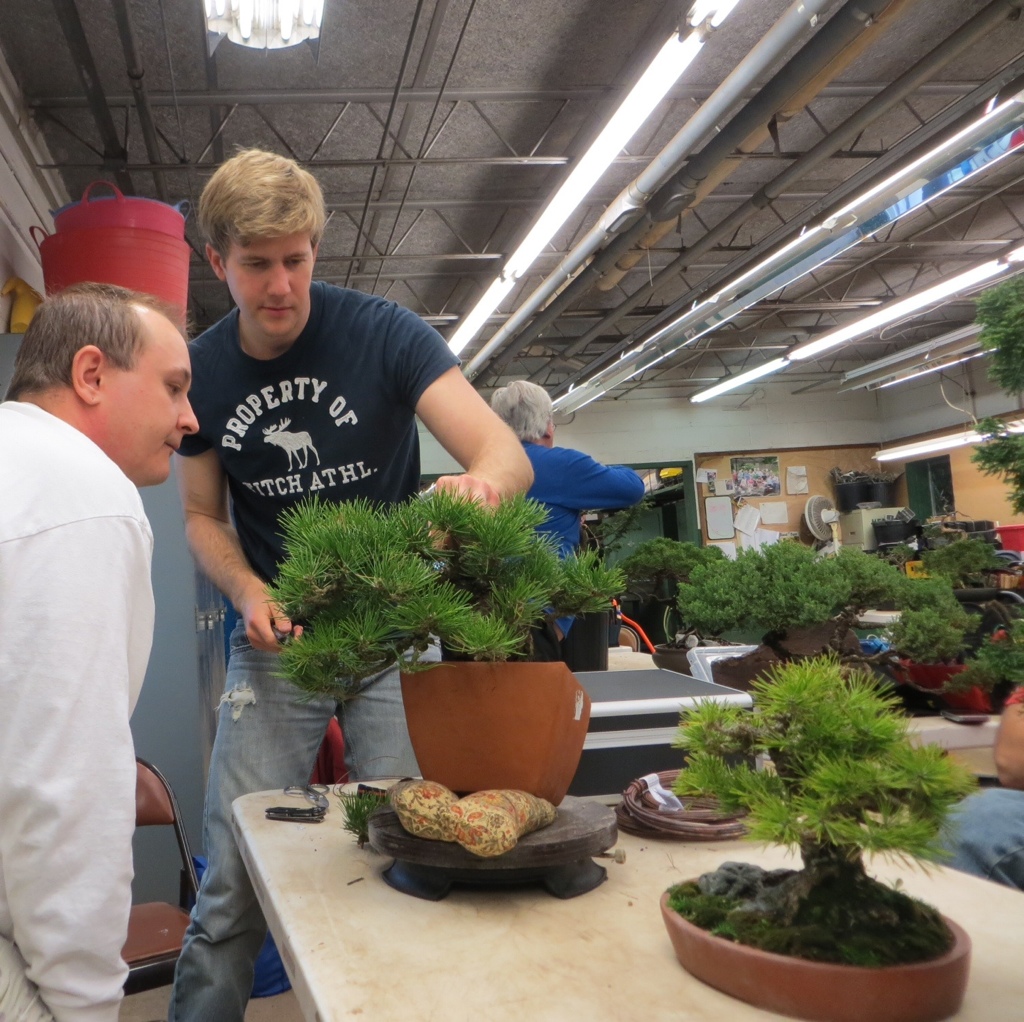
This past weekend I had the opportunity to take a workshop with visiting bonsai artist, Bjorn Bjorholm. Last year, around this time, I spent another day working with Bjorn, and it was a pleasure, so I couldn’t pass up another chance. Many thanks to Brian Van Fleet and the folks at the Birmingham Bonsai Society for having me up.
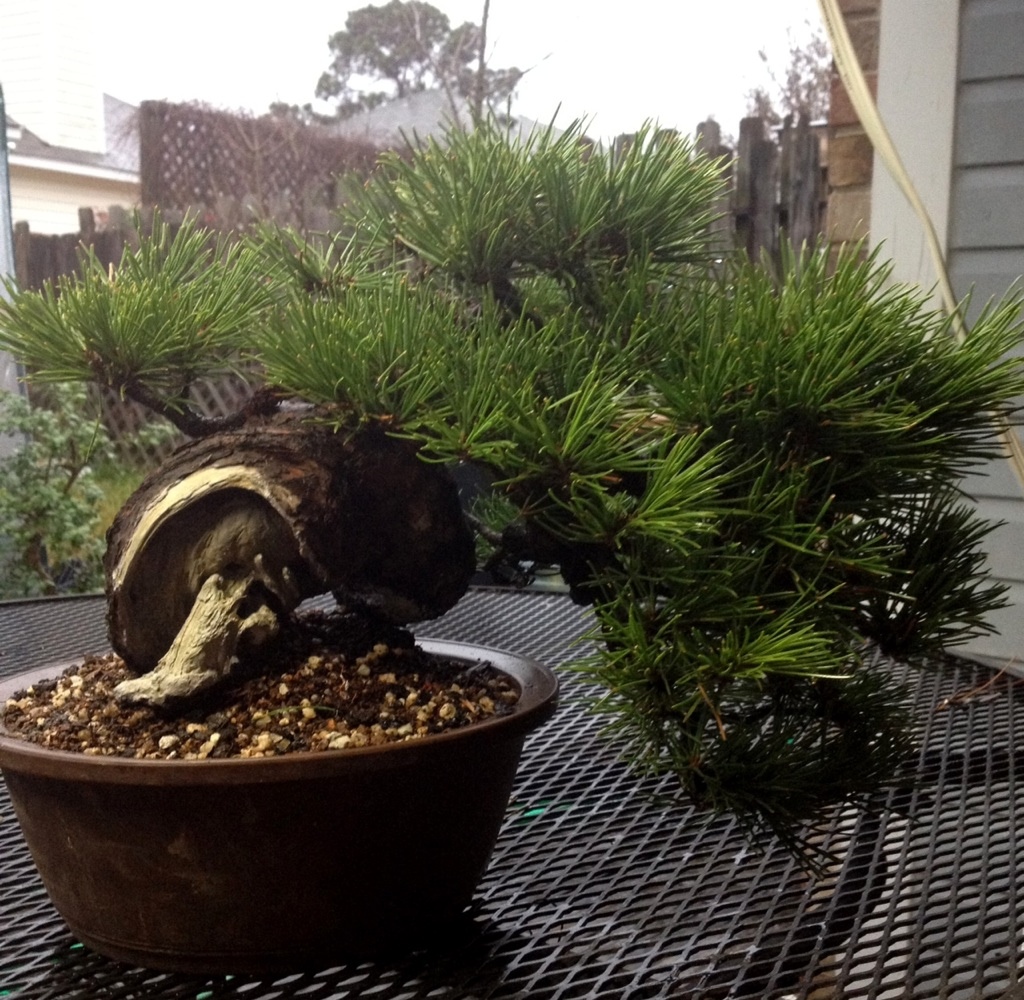
I took along a black pine that I had acquired last year as “solid” semi-cascade or cascade material.

20130326-123521.jpg
“Solid” black pine at acquisition last year
When I went to do a little work on it after acquisition, I picked the tree up by the pot, supporting it by the trunk with my other hand…and my thumb sank to the hilt into the trunk!!!

20130326-123814.jpg
After cleaning the rot and some fiber peeling to make it attractive

20130326-123910.jpg
After torching the deadwood and some lime sulpher applied as a preservative

20130326-124017.jpg
Last Year, after work on the sabamiki
So, needless to say, at first, I was a bit crushed! My “solid” black pine wasn’t so solid after all! But, after the work on the rot and the deadwood, I was happy with it’s initial appearance, so I decided to take it along for some work with Bjorn.

20130326-124308.jpg
A new planting angle is chosen for a semi-casacde
After choosing a new planting angle, Bjorn had me go through the tree, removing heavy branches, branches that emerged at awkward angles or in groups of more than two, and pull needles to make wiring possible.

20130326-125137.jpg
Bjorn advising me on the work to be done before wiring

20130326-124635.jpg
Pulling needles and removing over strong branches
After the preliminary work was out of the way, I set to wiring, and with Bjorn’s guidance, set the branches into pads.
The old apex was removed, and a branch toward the front guy wired back to become the new apex.

20130326-125106.jpg
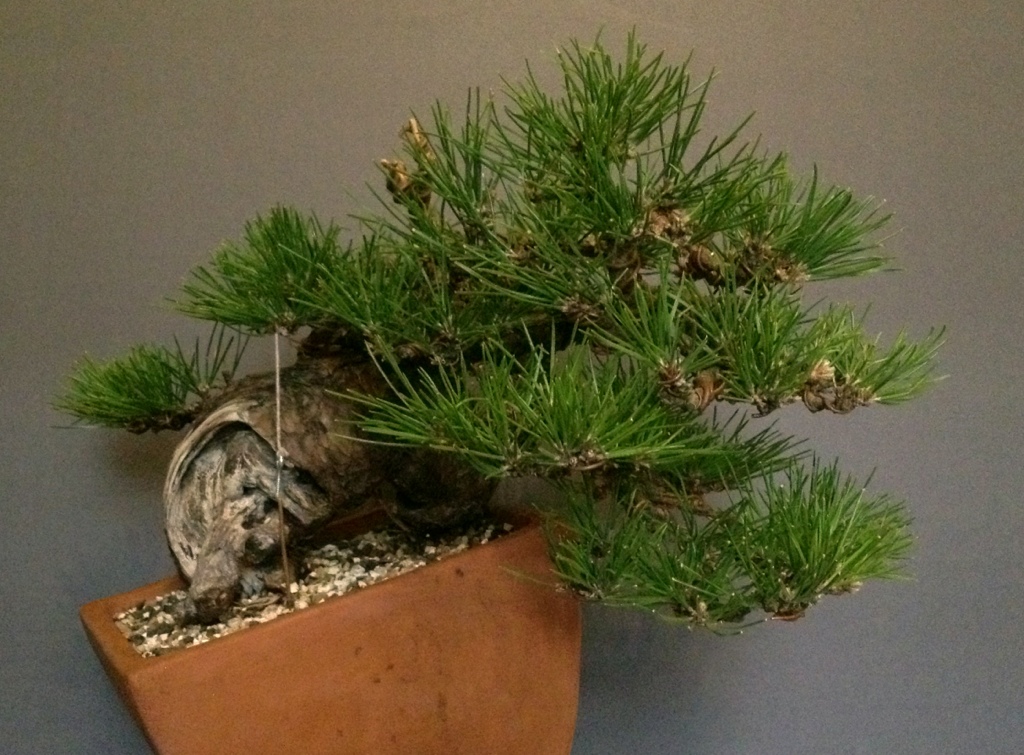
After Work
The apex will be pulled a bit further back this fall, and a new semi-cascade pot chosen and replanted next spring. Additionally, once it sets in place and dries out I’ll work on the ten-jin, and extend the Shari in a spiral into the large deadwood area, the knob under the apex.

20130326-130410.jpg
Something powerful and masculine, along these lines, I think

20130326-130604.jpg
Finished, for now!
I think this pine has a good future set up now, and I’ll keep you informed as to it’s progress. Many Thanks to Bjorn and Brian Van Fleet for his hospitality!
Thanks for reading!

Posted in My Personal Collection, Trees | 2 Comments

Takao Koyo(高雄香葉)

The Kyoto region has had more than its fair share of outstanding potters! In the last two posts, we looked at one of them, Tsukinowa Yusen, and we’ve mentioned Ino Shukuho and Heian Tofujuki before, of course. In today’s post, we’ll take a look at another Kyoto native son: Takao Koyo.
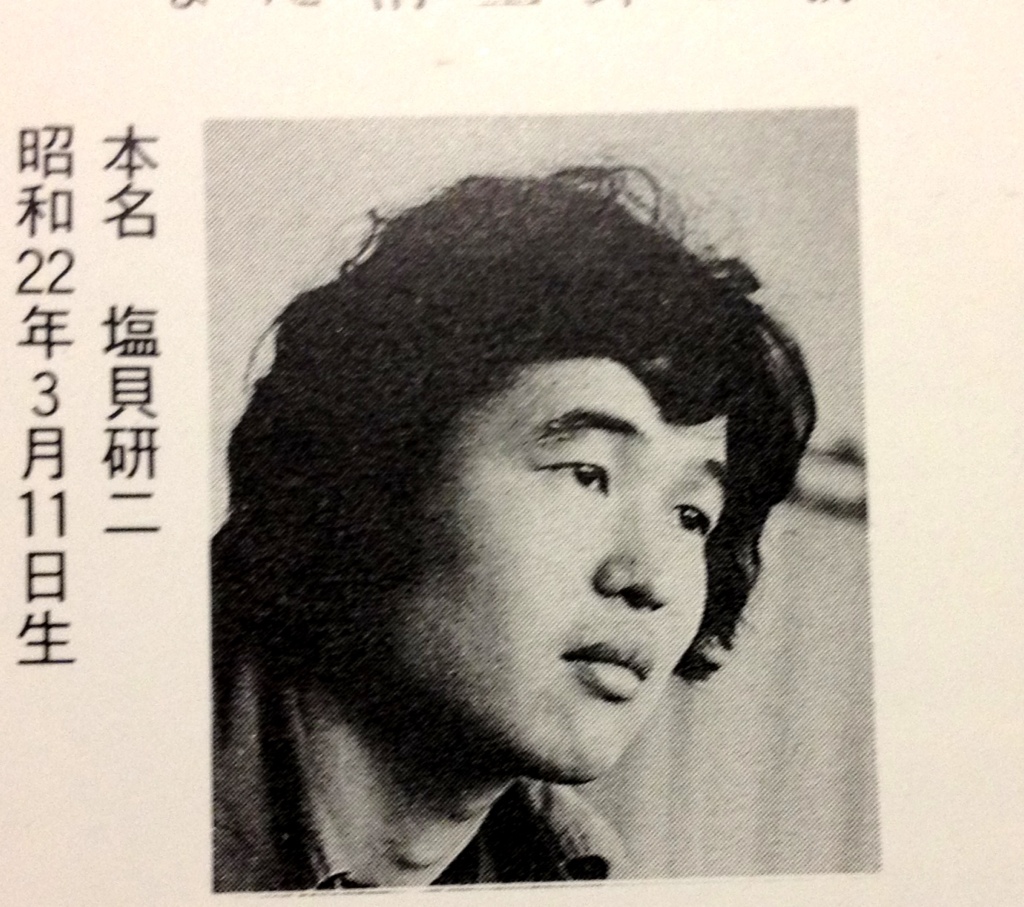
Born in 1947, his given name is 塩貝研二(?Kenji Shiobai?). He began making bonsai pottery at the age 25, in 1972. His influences include Tofukuji, Yusen, and Wakamatsu Aiso. He is self taught as a potter, and as such his work resembles more the work of his idols, than of a master he apprenticed under, like many other painters and potters.
His style is varied, from single color, pure, glazed classics, to interesting new forms, and, of course, his more recent painted pieces.

20130325-144533.jpg

20130325-144626.jpg
Two photos of Takao Koyo. The first is an old image, taken sometime before 1990, and is from the deluxe Japanese pottery encyclopedia, “Bijutsu Bonkei”. The second is Takao Koyo today, posing with his shohin display at a show.
Now, on to the pots!
Painted Work

20130317-054950.jpg

20130317-054958.jpg

20130317-055008.jpg
We’ll begin with a painted piece, following a theme. In the last post we Showed a collaborative pot from Kutani Ikko and Yusen, first today, is a collaborative pot from Ikko and Takao Koyo. The pot work from Takao Koyo is excellent, highly detailed, highly individualistic. Compare the painting work from the Ikko in the previous post, and it’s easy to see why I think the Yusen co-op piece is early work!

20130316-145132.jpg

20130316-145139.jpg
Two sides of a yellow glaze cut corner rectangle with interesting feet and inset landscape windows in sometsuke blue. Clearly Yusen influenced painting style, from the boater looking off to the moon in the distance to the horse and rider landscape scene on the other side…to say nothing of the yellow glaze with inset windows!

20130316-145347.jpg

Image Courtesy of Koju-En

From the corner, a very detailed tallish square. Note the figure on the left looking up toward the moon, and the equestrian scene on the right, more examples of Yusen’s influence.

20130316-145439.jpg
Another showing both the influence of Yusen and the traditional Kyo-Yaki style. The details to the birds are pretty outstanding, as are the traditional Kyoto style geometrics surrounding the windows.

20130316-145533.jpg
We saw this one in the last post, a copy of a famous Yusen, with a few details changed for a personal touch. The detail in this pot is striking, with this quality of work, it won’t be long before Takao Koyo pots fetch the prices of Gekkou and Yuzan. At the moment, a Takao Koyo goes for around half of one the contemporary big 2!

20130319-174844.jpg
Takao Koyo seems to favor window landscapes, which is good, as his glaze skill is every bit as nice as his painting. This piece, with it’s pinkish glaze and landscape, would be interesting to use with a mayumi, with it’s pinkish flowers about to pop, I think.

20130319-175124.jpg
Another footed Mokko shape, this one painted by Koyo himself. The brushwork is outstanding and highly detailed.

20130319-175357.jpg
A simple porcelain arabesque round. Very nice designs to this pot, it would work with a great many species.

20130325-145007.jpg
A darker blue glazed landscape window pot in footed mokko shape. The go-sai painted landscape is superb, with very fine line brushwork and great detail to the weeping willow. The feet are also very nicely done: unlike some painters, who excel at painting but lack craft with glaze and clay work, Takao Koyo excels at all three.

20130325-145122.jpg
Another Yusen homage piece, featuring birds frolicking in a pasture. I really like simple designs like this, they are easy to use in shohin display and yet call to mind a setting very easily. The feet are especially nice.

20130325-145815.jpg

20130325-145829.jpg
A five color piece in a footed mokko shape. The painting is this piece is especially spartan for Takao Koyo, and very nice, it manages to be detailed and colorful without being cartoonish, like many five color pots. The second image shows Takao Koyo’s two Marks and the underside of the pot.
Glazed Pots

20130325-150206.jpg
A swirling glazed pot in gray and white from my collection. I make no secret of my love for interesting, swirling glazes: these are a little more unusual from Takao Koyo, who tends to favor bold, bright single color glazes.

20130325-150425.jpg
A banded oval in a darker cream glaze, also from my collection. This pot has seen some use, and is starting to develop a nice patina.

20130325-152040.jpg
A small pair of Takao Koyo pots from my collection. The ultra shallow greenish grey glazed on the right came with a box, unfortunately it’s unsigned. The crackle cream glaze on the left is very nice, I’m a big fan of crackle glazes.

20130325-152409.jpg
A quintet of single color glazed 6 sided pots, the far left showing a carved design. These pots show the strong, bold single color glazes favored by Takao Koyo.

20130325-152558.jpg
A simple white porcelain round. Single color glazes like this take patina very well, it will be outstanding to see it in a couple decades!

20130325-152719.jpg
Another interestingly glazed soft rectangle. Glazes like this are hard to pull off, and are either outstanding, like this piece, or downright ugly. The harmony between the many different colors is very nice.

20130325-154146.jpg

Image Courtesy of Koju-En

A banded soft rectangle yellow glazed pot with cut feet. I love pure, bright color yellows! You don’t see them in use enough in shohin displays is the states(but then again, you don’t see many great shohin displays in the west, period).

20130325-154340.jpg

Image Courtesy of Koju-En

A really nice oribe glazed tall cascade with swirling colors. The detail in the feet of this 6 sided pot is especially nice.

20130325-154452.jpg

Image Courtesy of Koju -En

A single color red glazed pot with cut corners and feet. Red glazes are tough to use, but look quite nice on the pottery shelves!

20130325-154605.jpg

Image Courtesy of Koju-En

An interesting small blue with white speckles. Very nice glaze to this small pot, the deeper blue and white would contrast well with a tree with red berries or flowers.

20130325-154740.jpg

Image Courtesy of Koju-En

An interesting purplish glazed pot. I really like single colored glazes in unique colors like this one.
Shohin Bonsai In Takao Koyo Pots

20130325-154911.jpg
A gardenia in a blue glazed window landscape pot. The red in the painting and the blue in the glaze contrast well with the bright green of the gardenia.

20130325-155041.jpg
A Nioi Kaede(Japanese musk maple) in a red glazed pot….what did I just say about reds being hard to use? Forget that!

20130325-155235.jpg

20130325-155246.jpg
Two Kaede(trident maple) in bright yellow pots. The bright yellow brings out the light green in the leaves well.

20130325-155425.jpg
A Japanese maple in a blue painted landscape pot. The blue of the landscape painting contrasts well with the deep green leaves.

20130325-155723.jpg
A naked multi trunk Kaede in a swirling grayish green pot, similar to the one in the glazed section above. The colors in the pot compliment the trunk colors quite well.

20130325-155906.jpg
A Kaede in leaf in a very light blue glazed pot. The light blue brings out the bright green of the leaves very nicely, a classical contrast.

20130325-160031.jpg
Asiatic Jasmine in a red glazed mokko shape. What did I say about red glazed pots?! They look especially nice with species with very dark green leaves and darker trunks.
All of the photos today not cited as coming from Koju-en come from Takao Koyo’s own excellent blog of bonsai and bonsai pottery, check it out to see more of his work:
Takao Koyo Blog
I hope you’ve enjoyed seeing the work of Takao Koyo today. Up next, a little post about a black pine I worked on Saturday with Bjorn Bjorholm, and another “Pots From My Collection Post”. Thanks for reading!

Posted in Modern Potters, My Personal Collection | 4 Comments

Tsukinowa Yusen Part 2

So, this is part 2 of the masterpiece pottery of Tsukinowa Yusen.
Glazed and Unglazed Yusen

20130305-230219.jpg
A typical celadon glazed Yusen, with clean lines and a very thick glaze, which softens the edges quite a bit.

20130305-230315.jpg
Another porcelain unpainted Yusen, showing the characteristic Yusen holed footbase. A much thinner glaze than the pot above really sharpens the angles.

20130305-230507.jpg
A glazed Yusen, showing a marvelous patina over a light blue glaze.

20130312-130155.jpg
A simple unglazed Yusen of black clay. Clean lines and nice clay.

20130312-130241.jpg
And we’ll finish up our look at glazed and unglazed Yusen with this rustic rectangle with cut feet, from the collection of my friend Matt Ouwinga, of Kaede Bonsai En. Really nice rustic texture to the clay.
Yusen Collaborations

20130312-130506.jpg
Of the many potters Yusen collaborated with, none are seen more often, or are more interesting, than Yusen pots painted by Seifu Yohei. The above pot is characteristic of Yohei’s painting style, with broad, rough brushstrokes that create interesting landscapes. Yohei’s work is often dark and almost gothic in style, totally different from the light and airy style of Yusen.

20130312-130746.jpg
Another Yusen-Yohei collaborative pot, again from the Collection of Matt Ouwinga. There are but a handful of these Foo Dog figure pots from Yusen, a real rarity!

20130312-130849.jpg
A rare and interesting collaborative pot between Yusen and Kutani Ikko, in 5 color overglaze enamel. I have a post in the works dedicated to Kutani Ikko, so we won’t go into too much detail here, except to say that given Ikko’s extremely detailed and realistic contemporary work, this must be early work indeed!
Yusen Homage Pots
Many painters of the contemporary era idolize Yusen, and it’s not uncommon to see pots that are copies of famous Yusen.

20130313-101432.jpg
An Echizen Hosui in my collection. This pot is a straight Homage pot to a famous Yusen, you can compare with the original, from the Hatanaka pottery book, below.

20130312-132251.jpg
The original that the Hosui is based upon.

20130124-120047.jpg
A really great red painted pot with landscape, hut, horses and riders, by Shuuido Yuraku. The influence of Yusen is pretty clear from this pot, as we can see in the next image, a pot by Yusen.

20130124-120556.jpg

A Yusen with similar landscape designs.

20130312-153214.jpg
A Yusen homage style by Joshu Shozan, note the stereotypical Yusen landscape features, as well as the horse and rider.

20130312-164736.jpg
A Yusen homage pot by Takao Koyo. An excellent copy, differing from the original in its red painted landscape, as opposed to blue.

20130312-164851.jpg
The Yusen original pot.

20130312-164931.jpg
Another piece from Takao Koyo, this one an homage to Yusen stylistically, rather than an overt copy.

20130312-165037.jpg
A Yusen for comparison.
I could write about and show examples of Yusen homage pots all day, as he is the most influential painter of the modern era, but for now we’ll move on.
Shohin Bonsai in Yusen Pots
I’ll have to apologize for the quality of images here, these trees all appear in multiple tree displays, so the individual image quality isn’t that high, then you compound that with my clumsy fingers, well, anyway, you get the drift.

20130317-044504.jpg
It’s not uncommon, yet still rare, to see pines in white pots. Pines in painted white pots is another story. Here is a textbook example of the “dignity of the tree in balance with the dignity of the pot. Something we in the west should note as a concept far far more!

20130313-101629.jpg

20130313-154140.jpg

20130313-154150.jpg
Kinzu, or Dwarf Japanese Wild Kumquat, all in semicascade style. The orange citrus contrasts well with the paintings in the Yusens, and the white of the porcelain provides a good counter for the bright green leaves.

20130313-154239.jpg

20130313-154247.jpg
Asiatic Jasmine, Trachelospermum, in red and blue Yusens.

20130313-154445.jpg

20130313-154453.jpg
Silverberry, or Eleagnus, in red and blue Yusens.

20130313-154545.jpg

20130313-154553.jpg
Pyracanthas. The bright orange berries contrast well with the bright white porcelain.

20130313-154718.jpg

20130313-154738.jpg
Mayumi and Komayumi, Euyonmus species.

20130313-154927.jpg
Obai, or Winter Jasmine, in a blue Yusen.

20130313-155013.jpg

20130313-155019.jpg
Mini Kusamono in thimble sized Yusens.
So, that’s a pretty good selection of Shohin Bonsai in Yusen pots. Despite the rarity of Yusen pots, in any given year at Gafu Ten, 3-15 will be on display, either with trees or as solo displays.
Wrapping Up
In Conclusion, it’s easy to see why Yusen pots are so coveted and expensive! Beauty in and of themselves, beautiful with trees, and rarity all combine to make Yusen pots the pinnacle of any collectors’ shelves! As a send off, let’s take a look at a couple more painted Yusen:

20130313-155503.jpg

20130313-155519.jpg
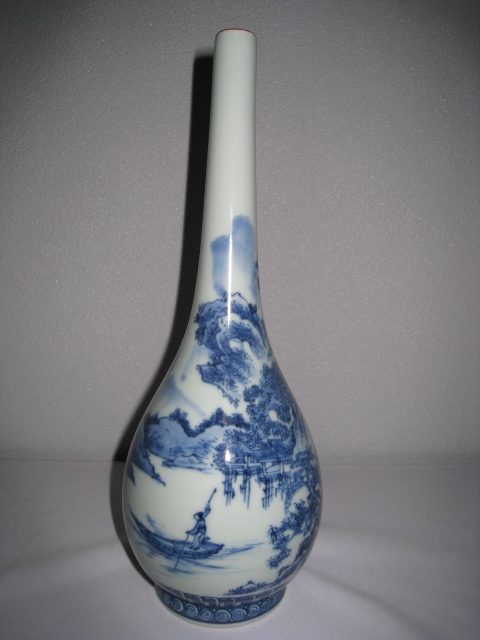
An ultra rare Yusen vase. The craftsmanship to the vase is extraordinary, and the painting itself is perhaps some of the most detailed of Yusen’s work I’ve seen(perhaps because of its size?). While many things are striking about the scene on the vase, what I like most is the reflection of the landscape in the lake.

20130313-171806.jpg

20130313-171813.jpg
Front and detail of a Hatanaka Book Yusen owned by Matt Ouwinga. I really love this pot, it’s an excellent example of Yusen’s masterful style, from the characteristic paintings to the signature style footbase.

20130313-175713.jpg
As published in the Hatanaka pottery book.

20130313-172519.jpg

20130313-172526.jpg
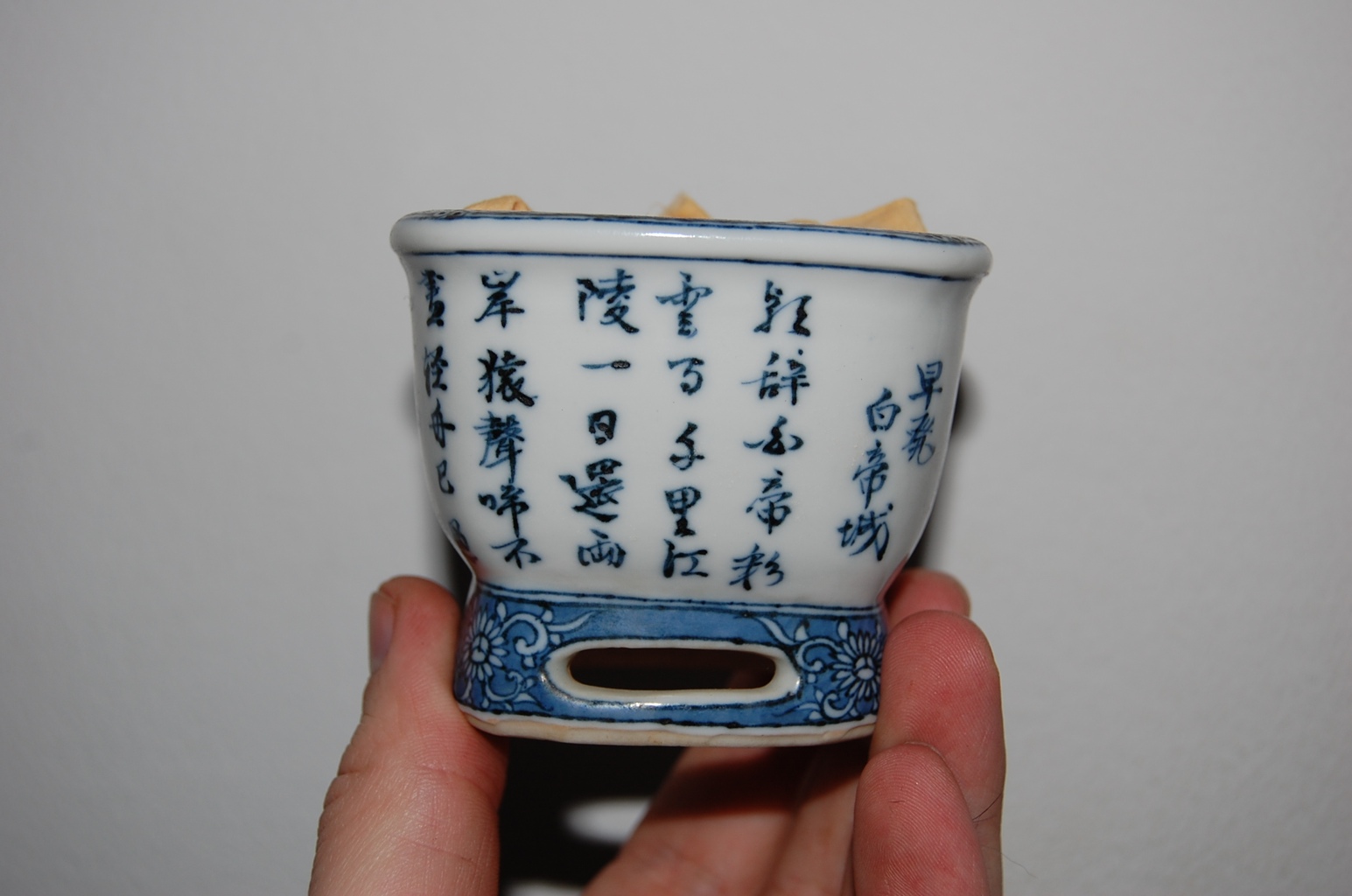
Back and base with signature. It’s safe to assume that the back calligraphy is from old Chinese poetry, and the front illustrates the imagery in the poem.

I hope you’ve enjoyed seeing this two part article on the masterful pottery and paintings of Tsukinowa Yusen. For more on Yusen, check out “Charisma”, a pottery porn lovers extravaganza featuring the works of Yusen and Kouzan. You can order it from Yoshoen, found on the links page!
Up next, Takao Koyo and Kutani Ikko!
Thanks for reading!

Posted in Famous and Antique Potters, Modern Potters | Leave a comment