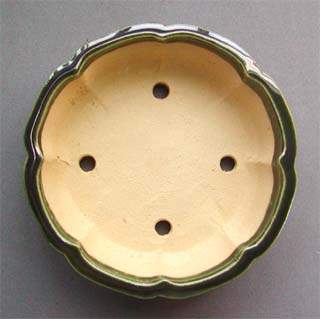
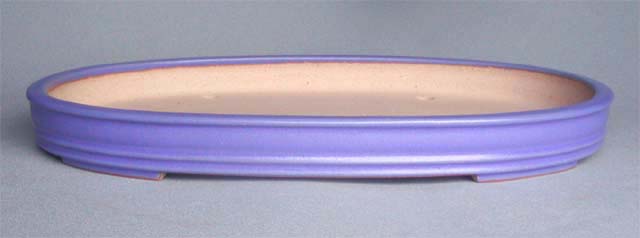
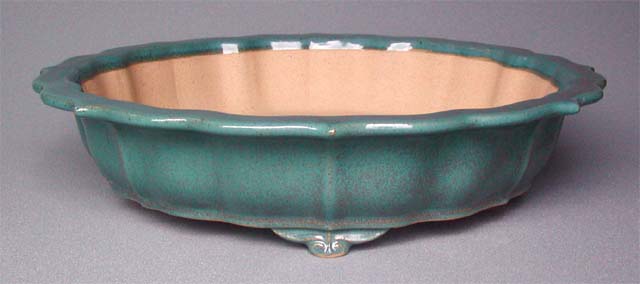
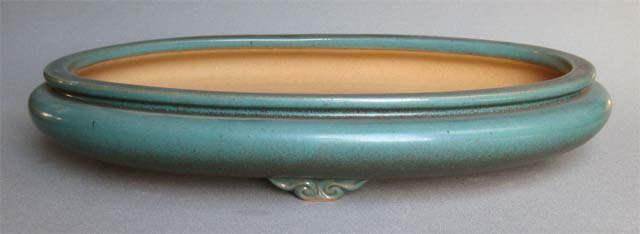
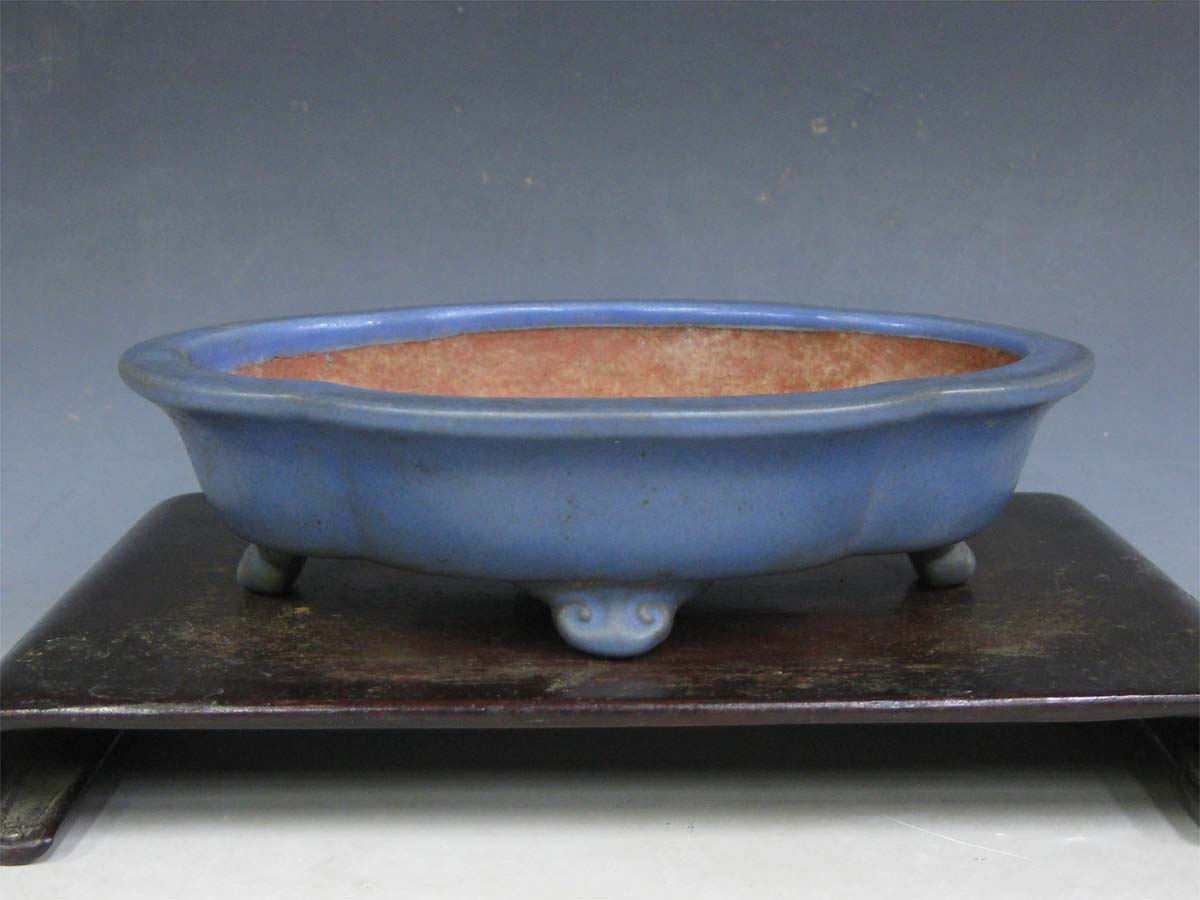
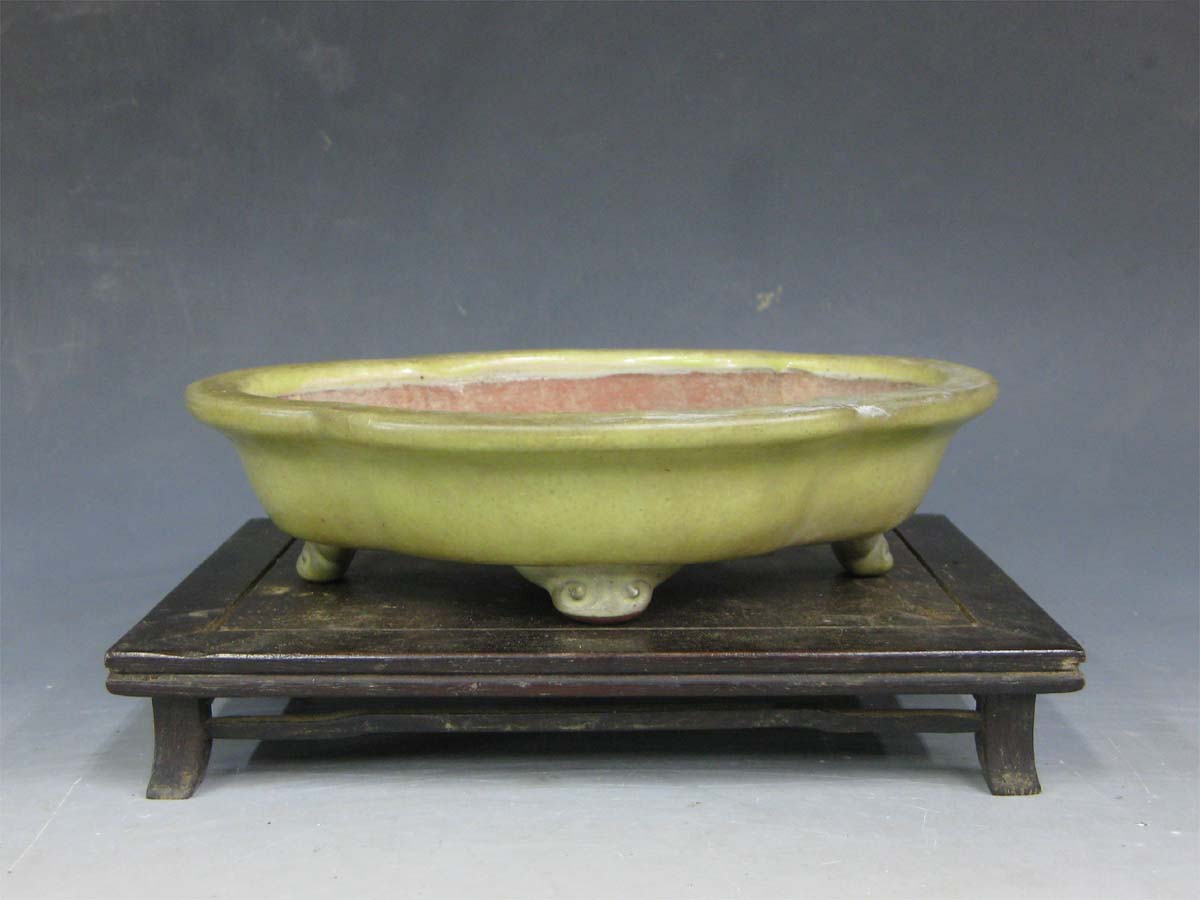
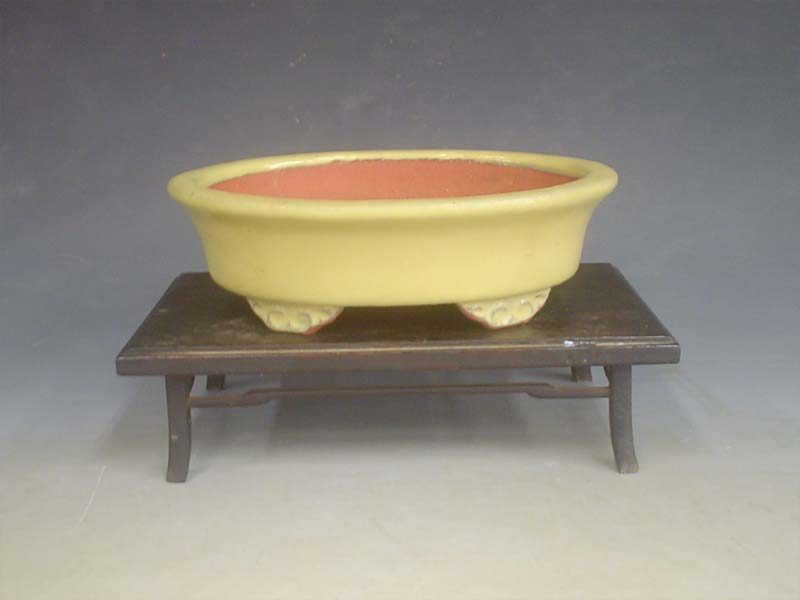
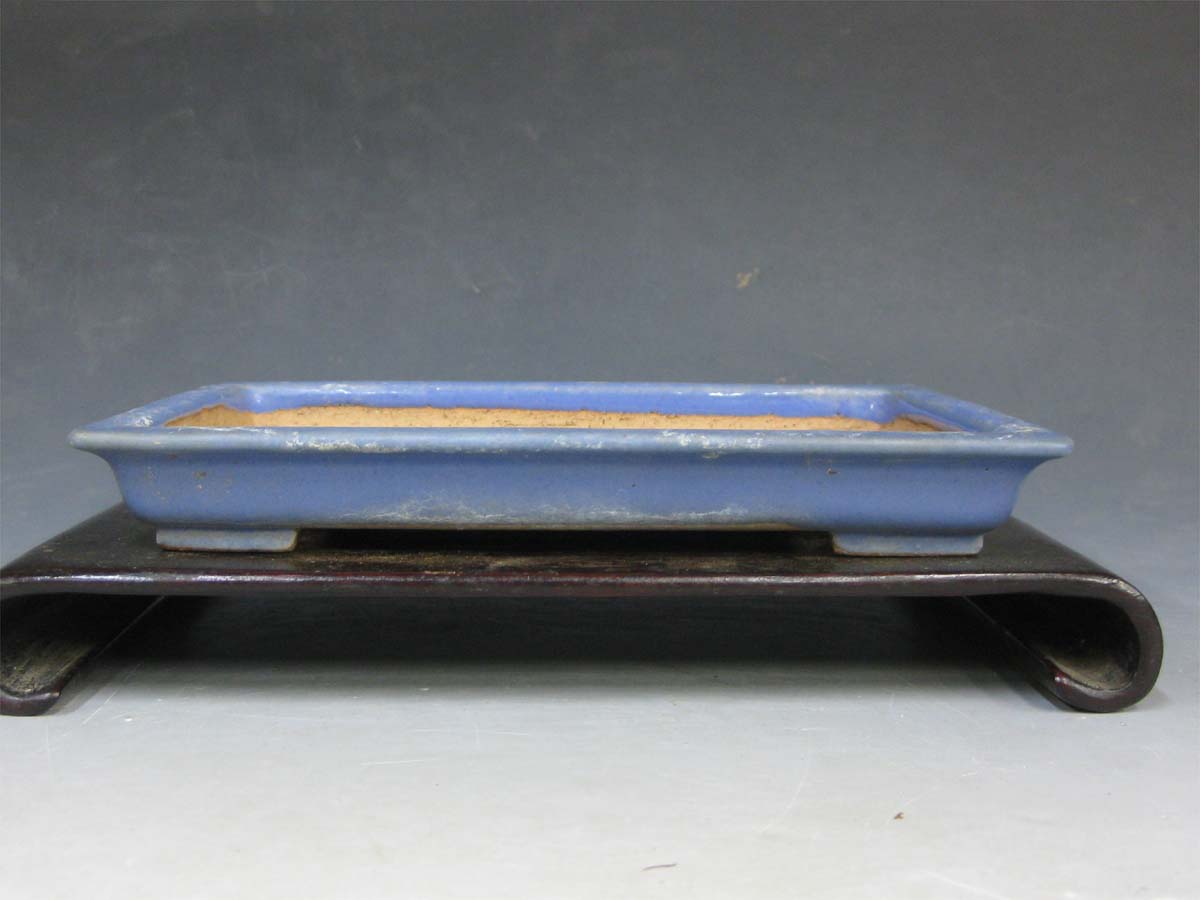
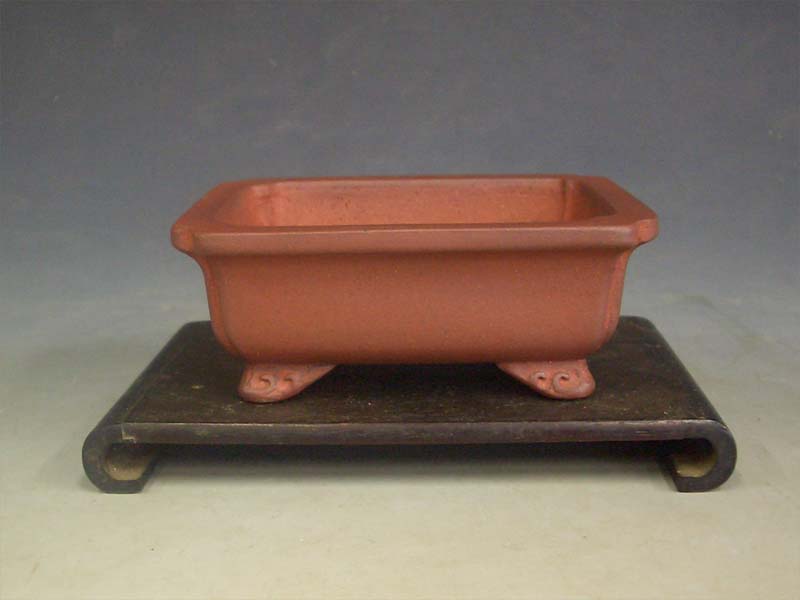
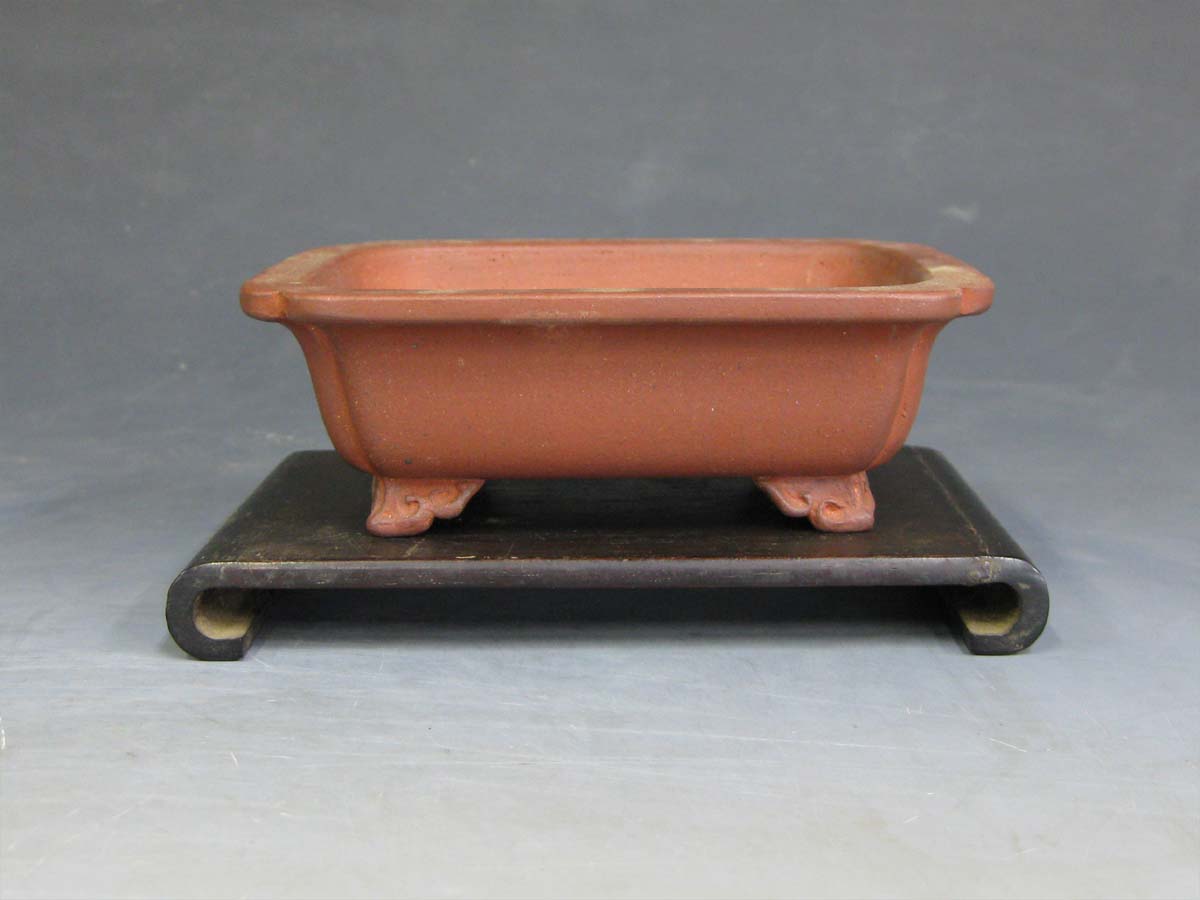
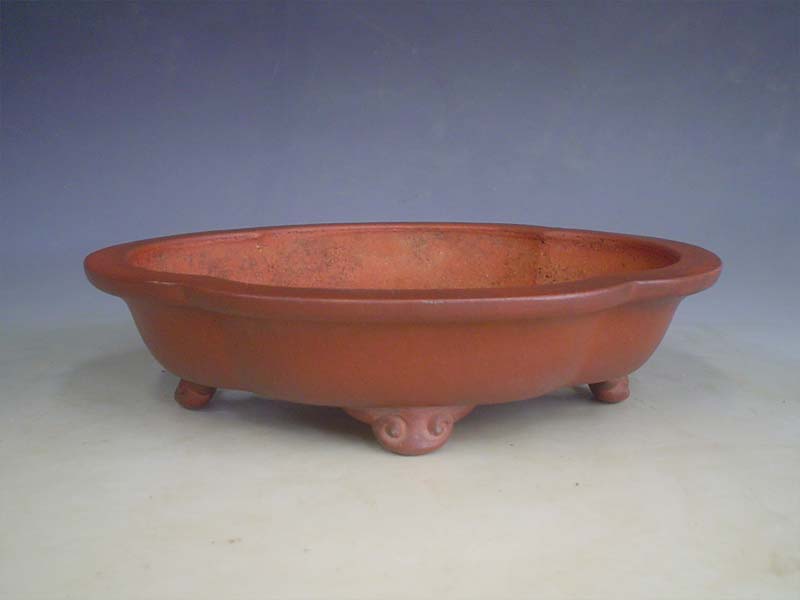
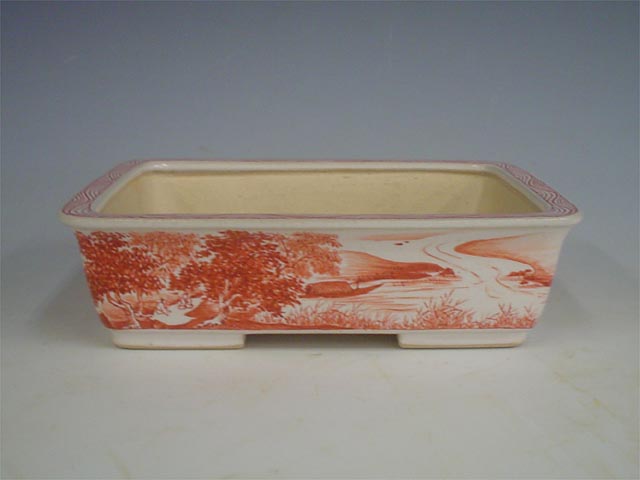
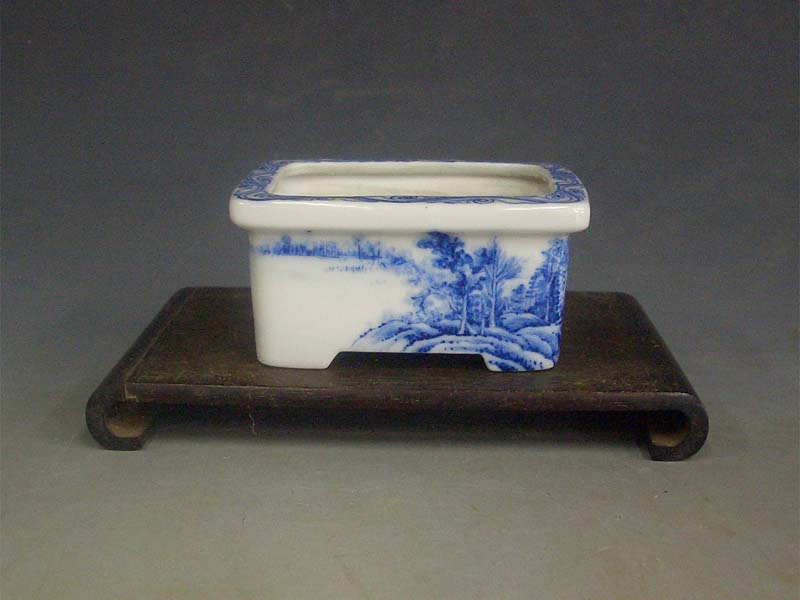
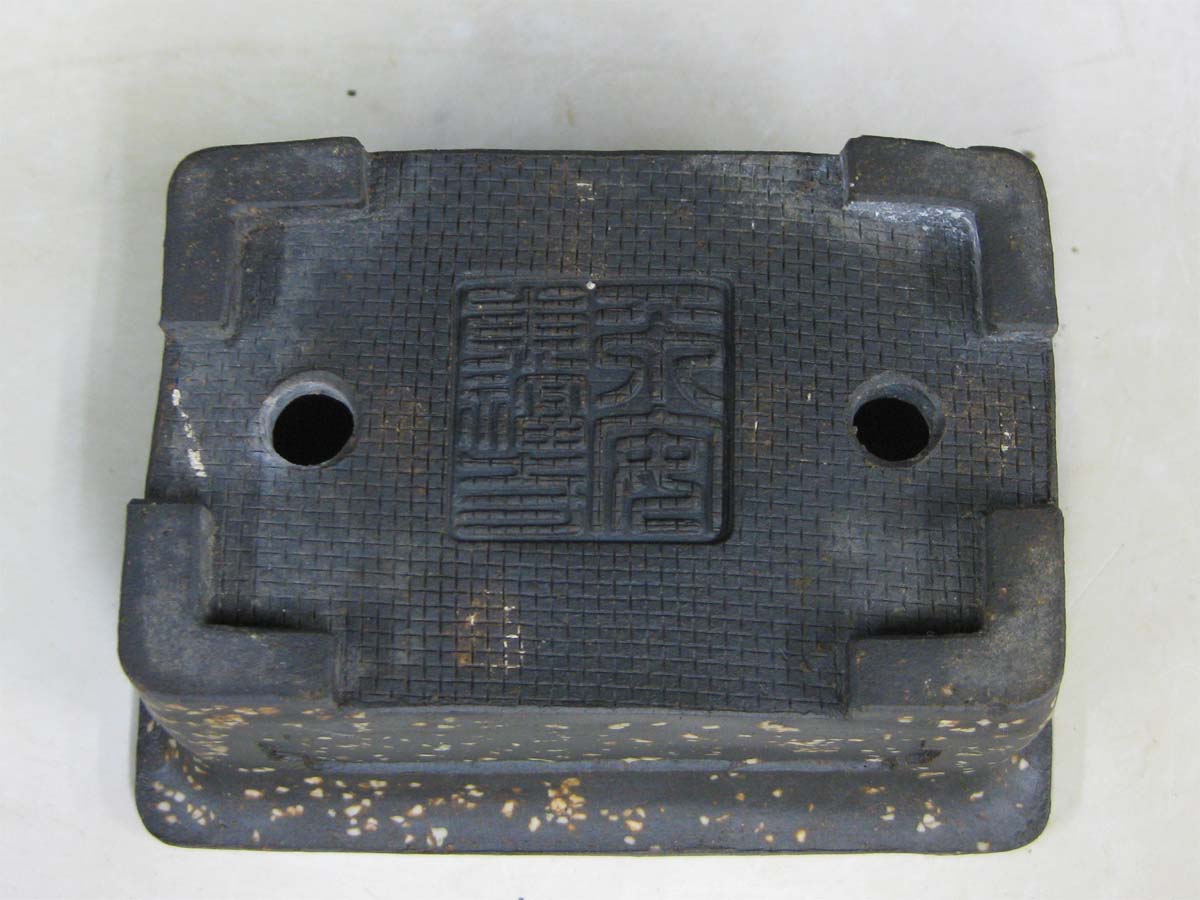
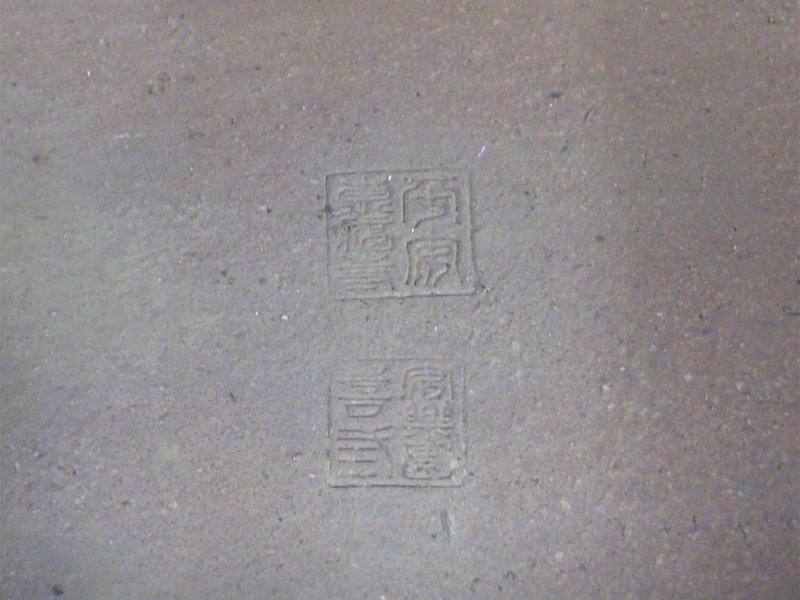
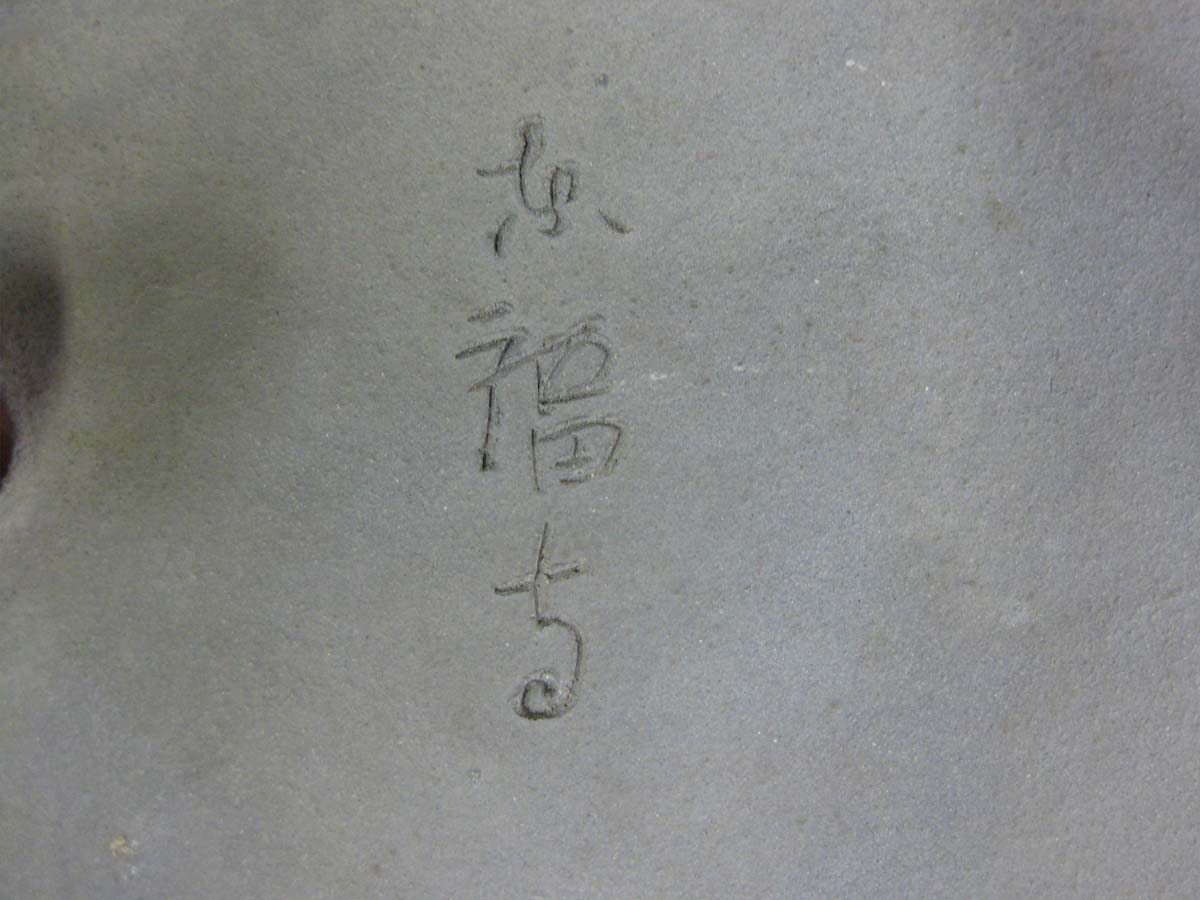
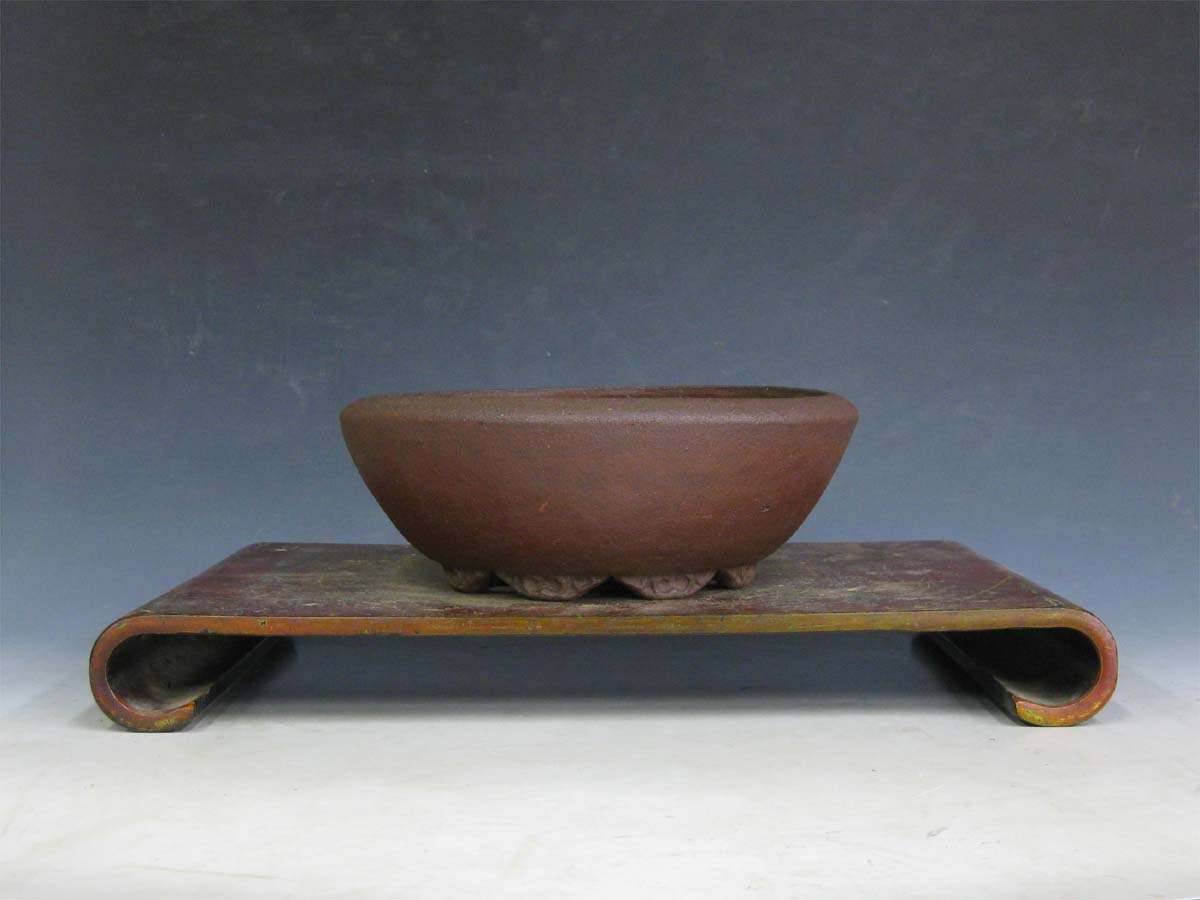
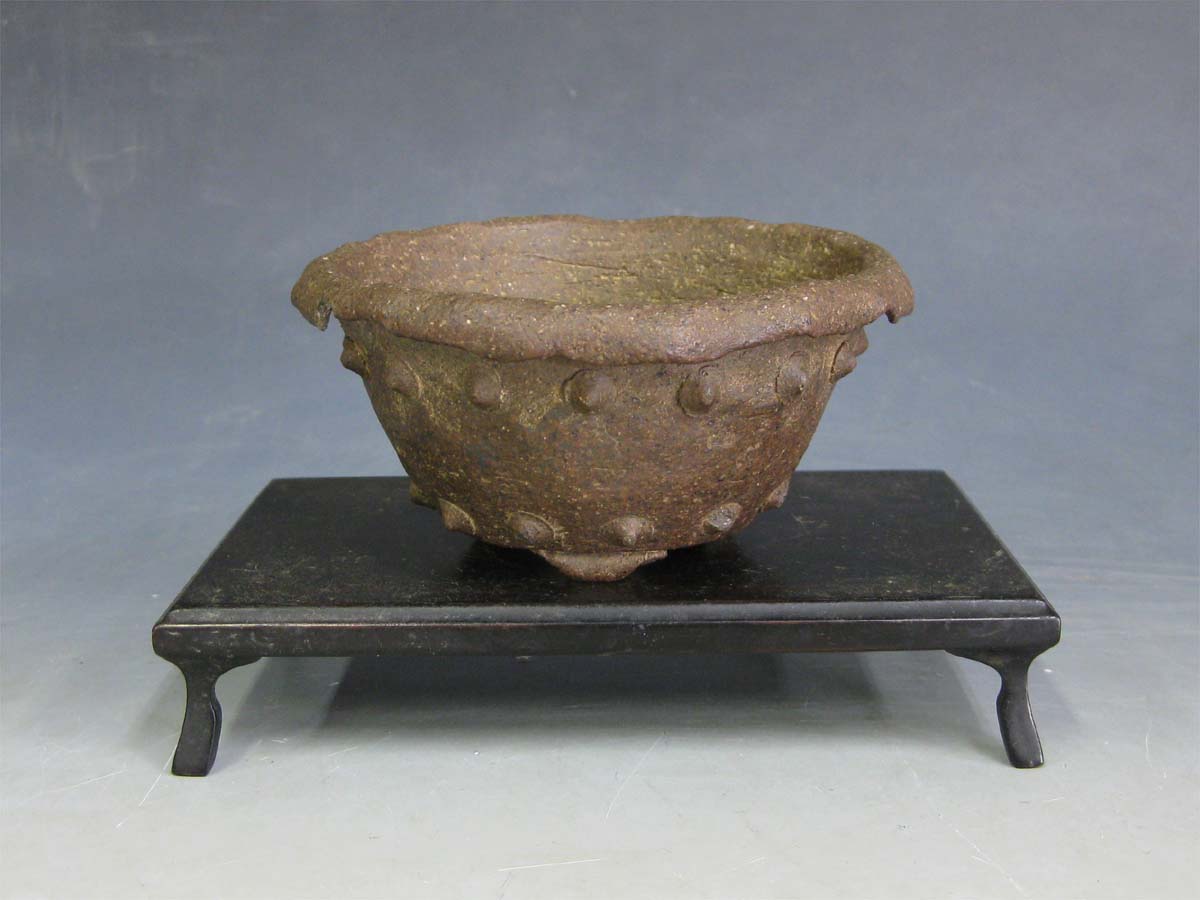
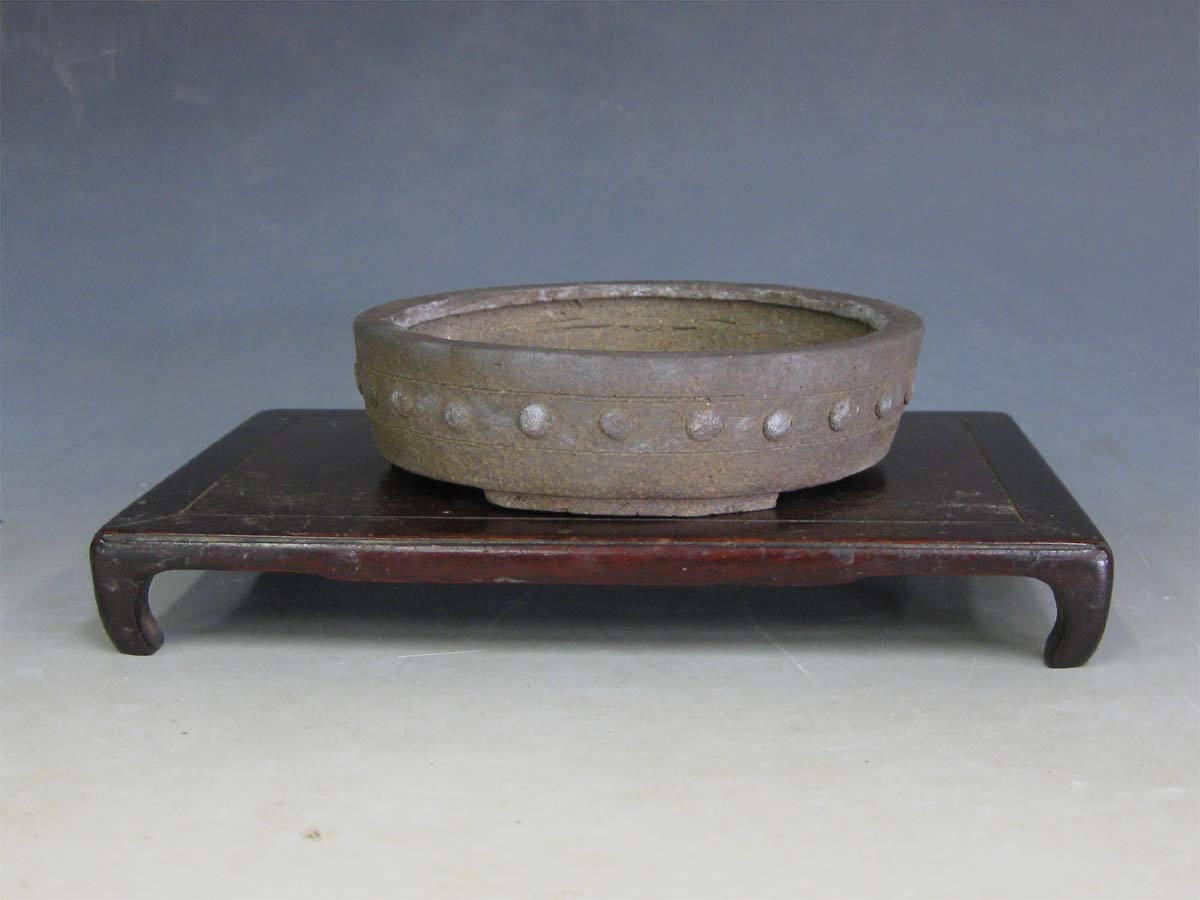
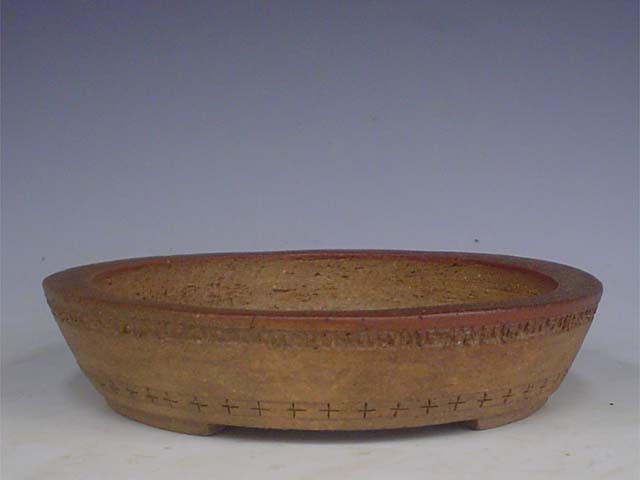
Pots by Okatani Zeshin Part

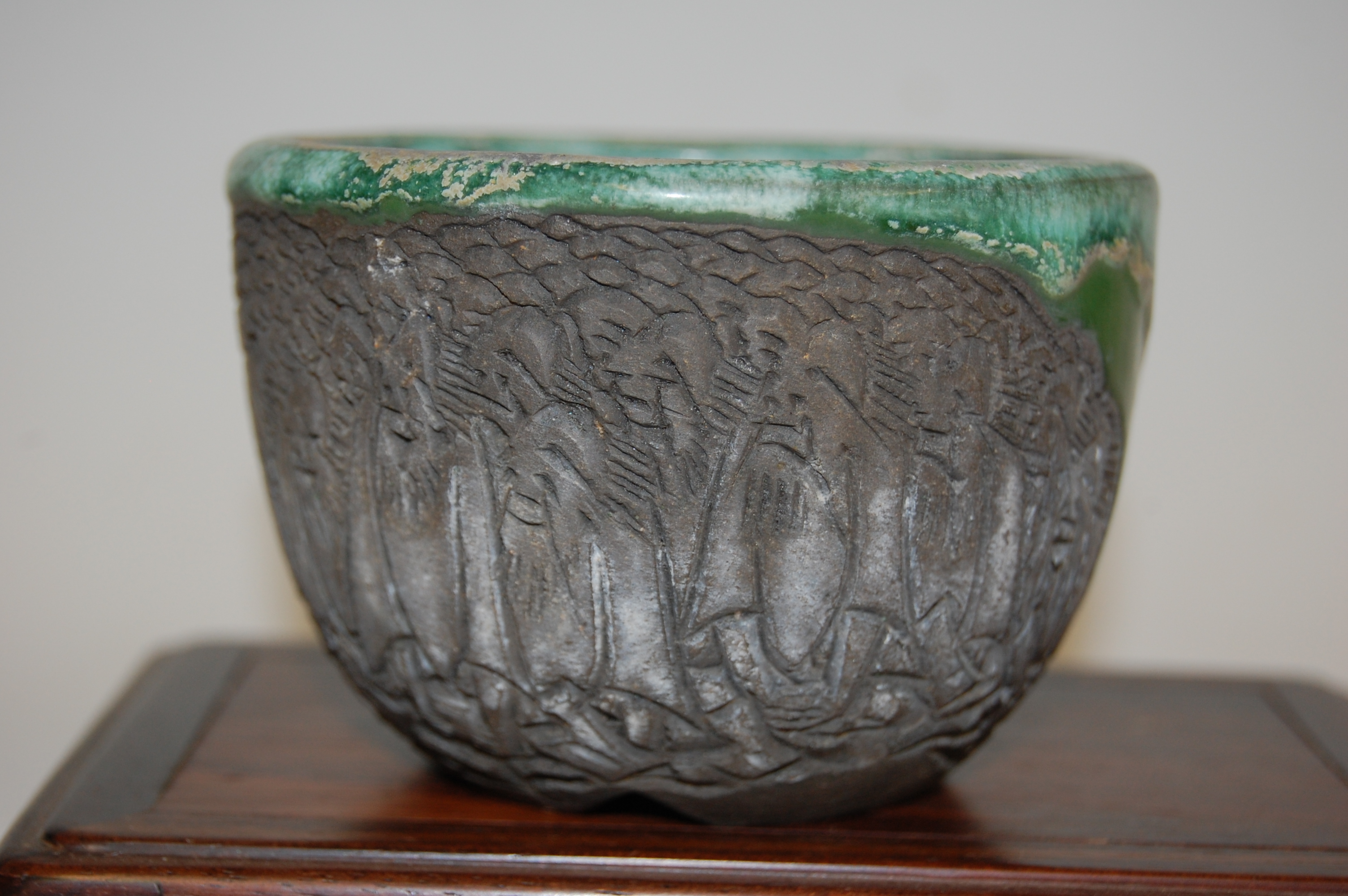
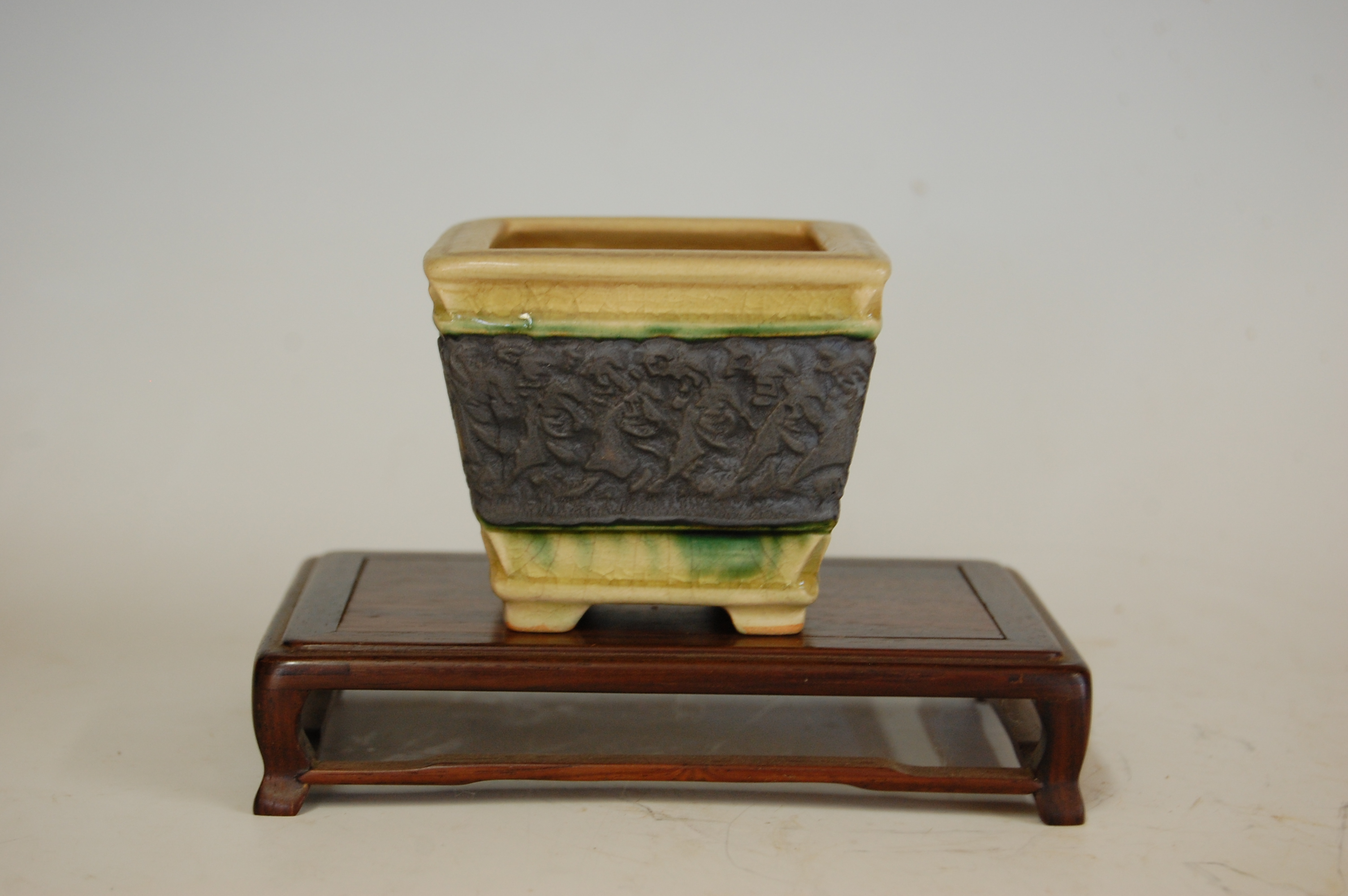
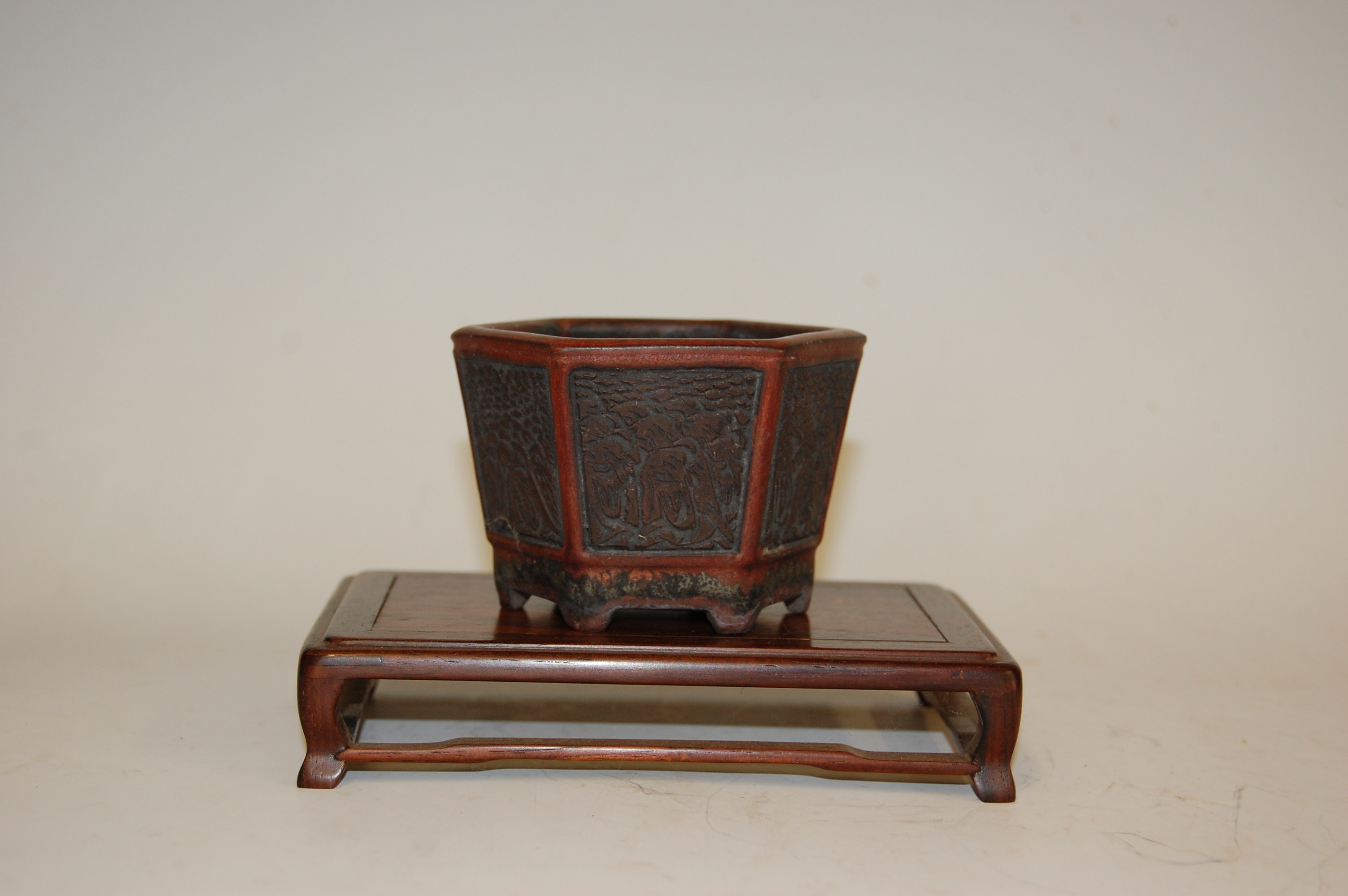
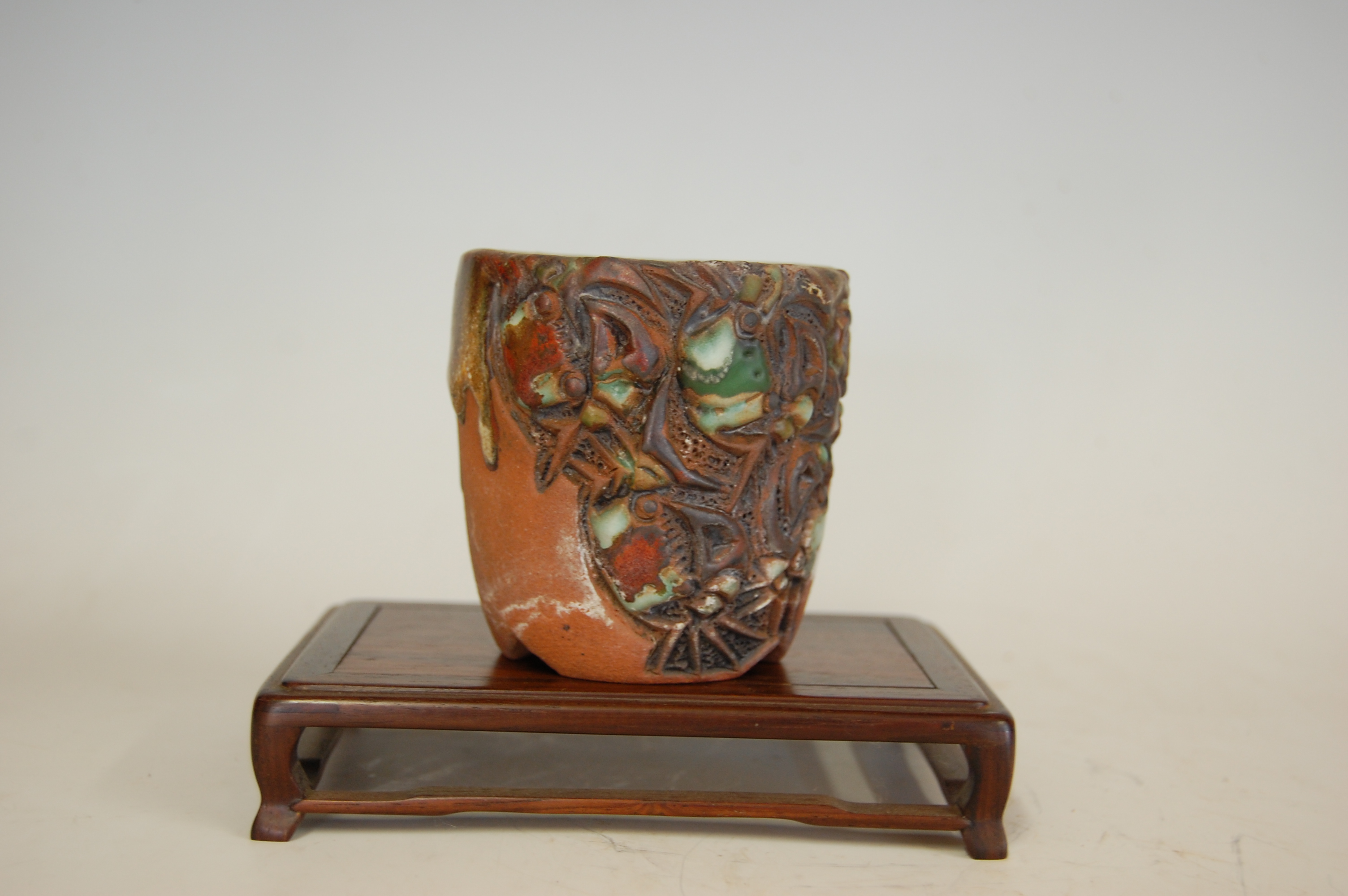
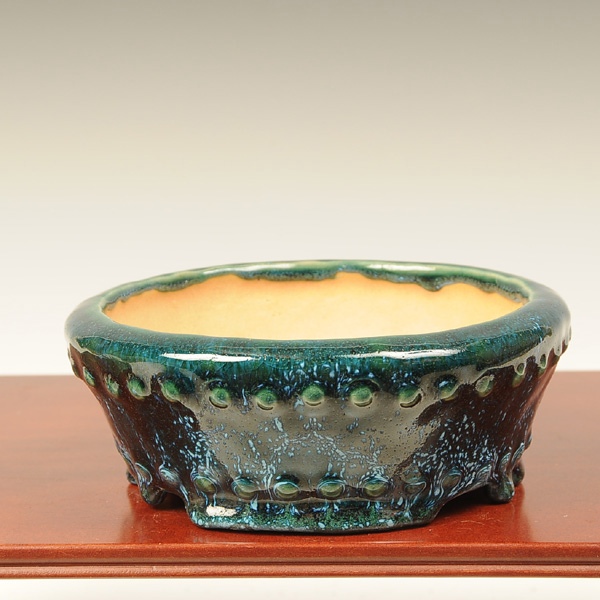
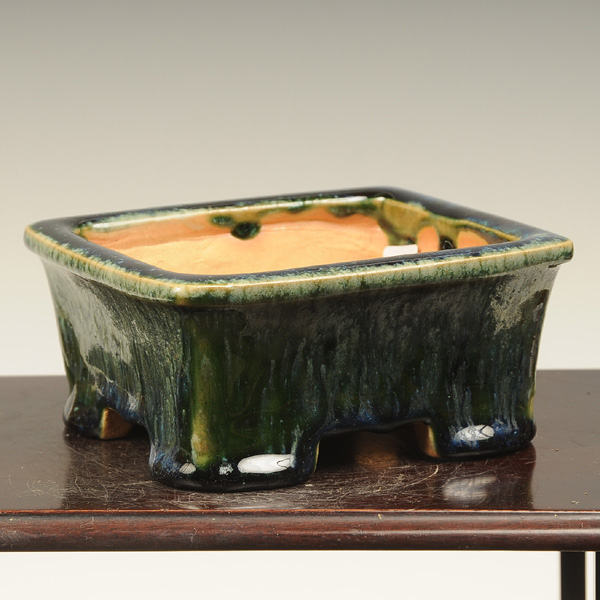
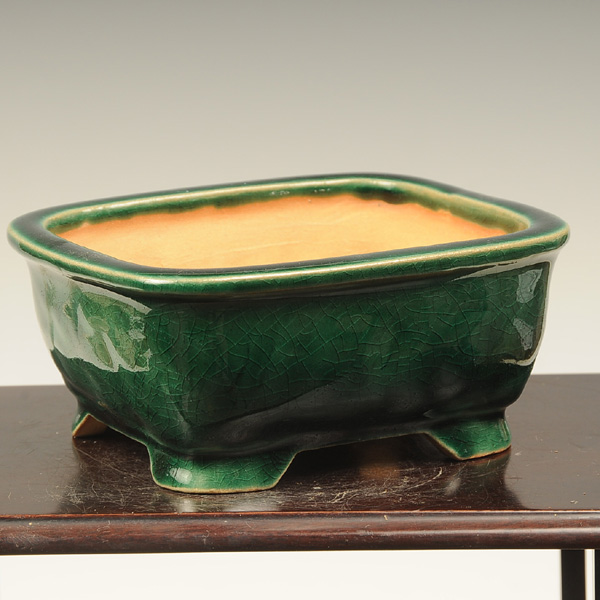
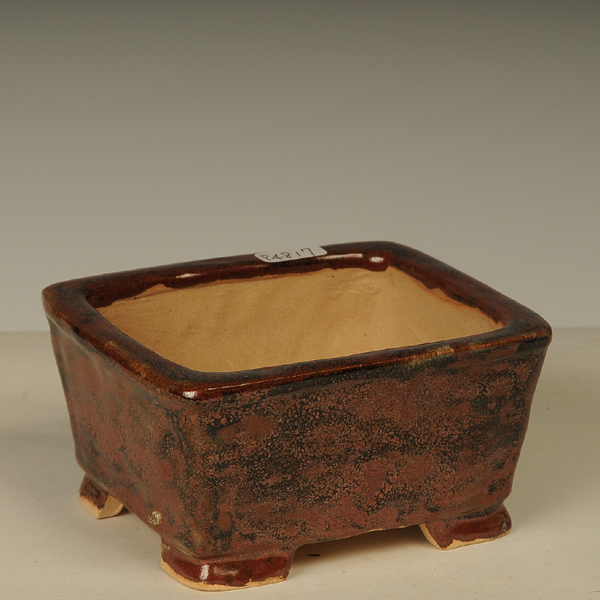
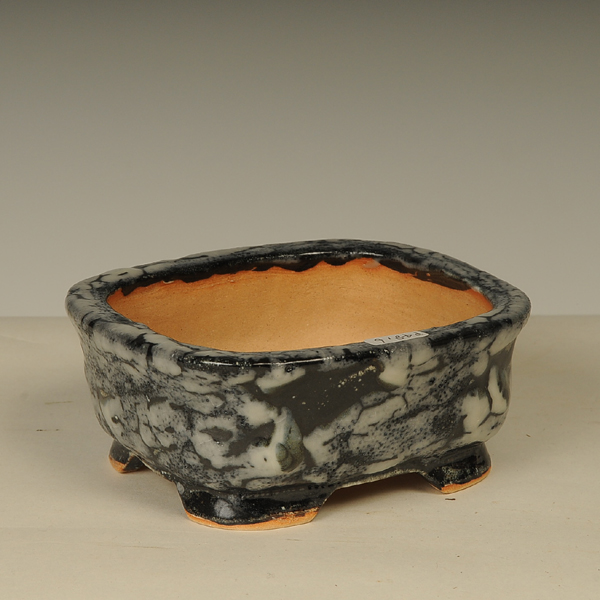
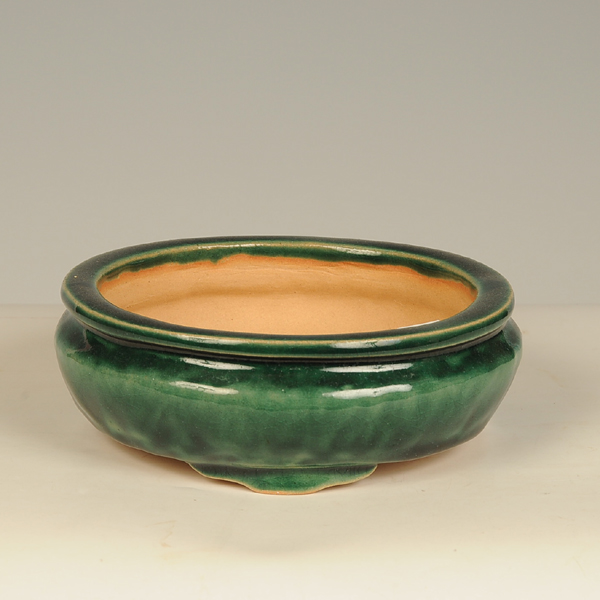
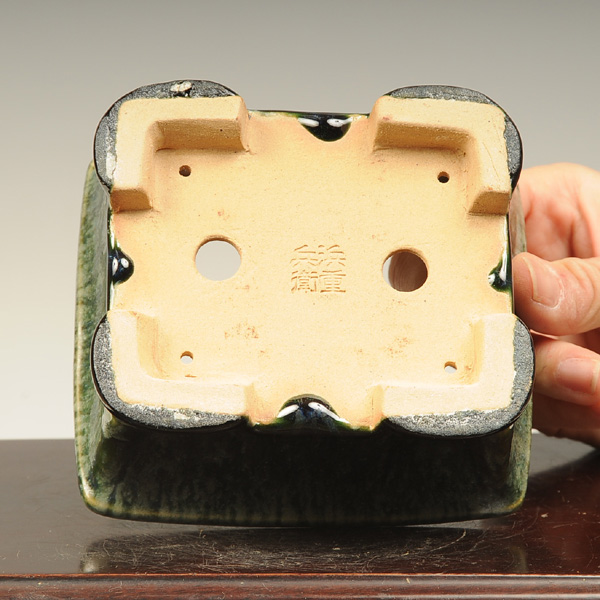
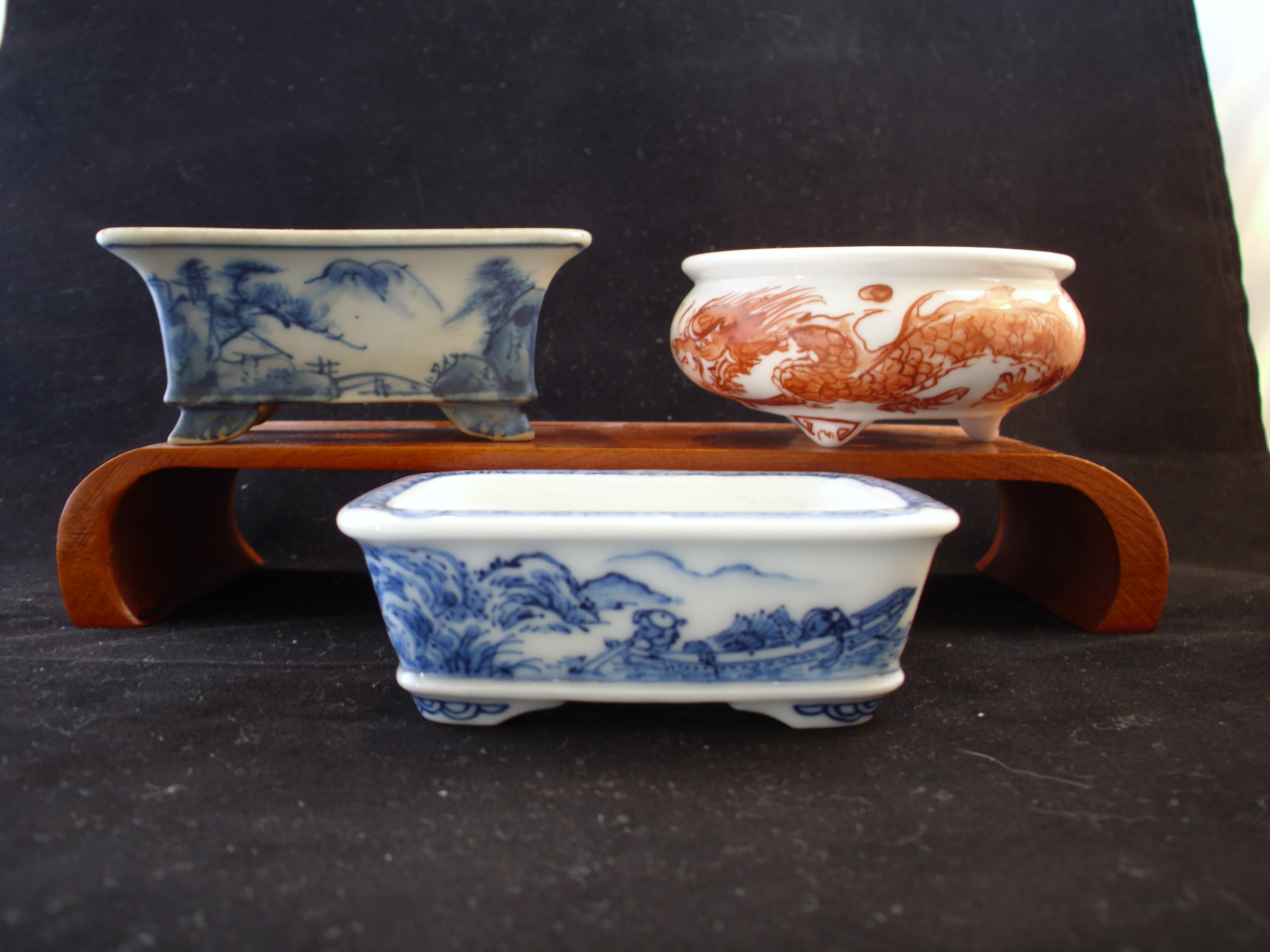
Those of you who frequent the IBC forums will remember a fantastic and strange pot I identified for Dan Barton, who had picked it up in Japan and didnt know who made it. It was made by Okatani Zeshin, and I thought it would be nice to show some more examples of his work.
Zeshin is a relatively unknown potter here in the west, but in Japan he is very well known, his pots have been very influential for the current generation of carving potters, and some of his pots fetch very high prices, over $500. His carvings are surreal, strange, trippy, Suessian, and sometimes downright weird. Some of his favorite motifs include “repeating Monks” reliefs, animals(either as a relief, pattern, or the shape of the pot as a whole), especially crabs, frogs, and owl, landscapes, and “freeform wierdness.”  His glazes and techniques are every bit as masterful as his carving and pot technique, featuring unique colors with great depth and interesting application.
He passed away in 1997, and was member of the famous Yokohama Guild(a group of Bonsai potters who make small pots) and influenced several potters of this group.

Here is a selection of Okatani Zeshin pots. Special thanks to fellow collector and Bonsai artist Matt Ouwinga for photos and Gerry Novotny for allowing use of his extensive collection of Zeshin pots, easily the largest in the United States, probably the largest outside of Japan.

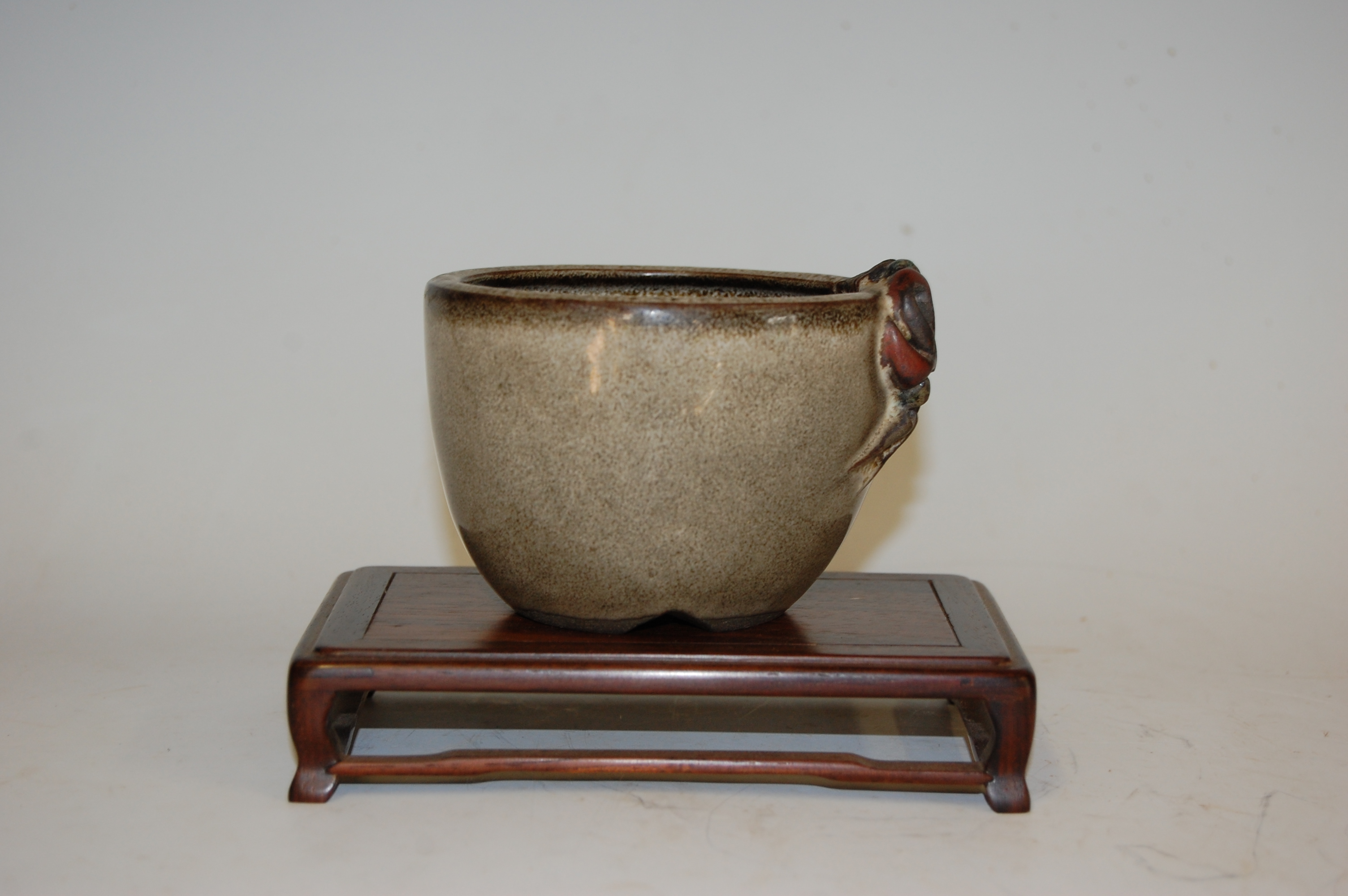
Crab pot with green brown glaze.

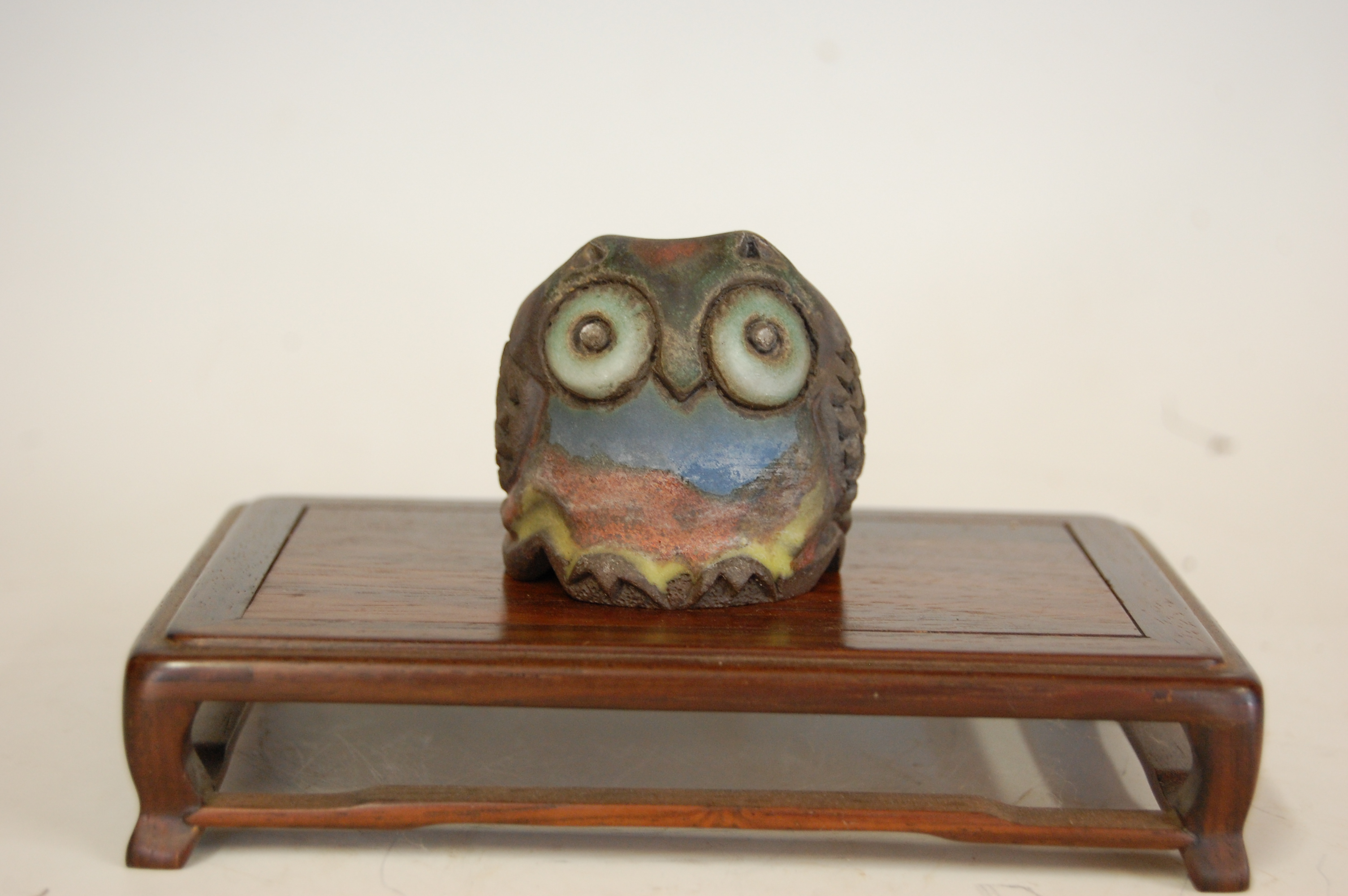
A little owl with masterful glaze and carving.

Im not sure what this little guy is, but he's cute nonetheless! Armodillo? Anteater?

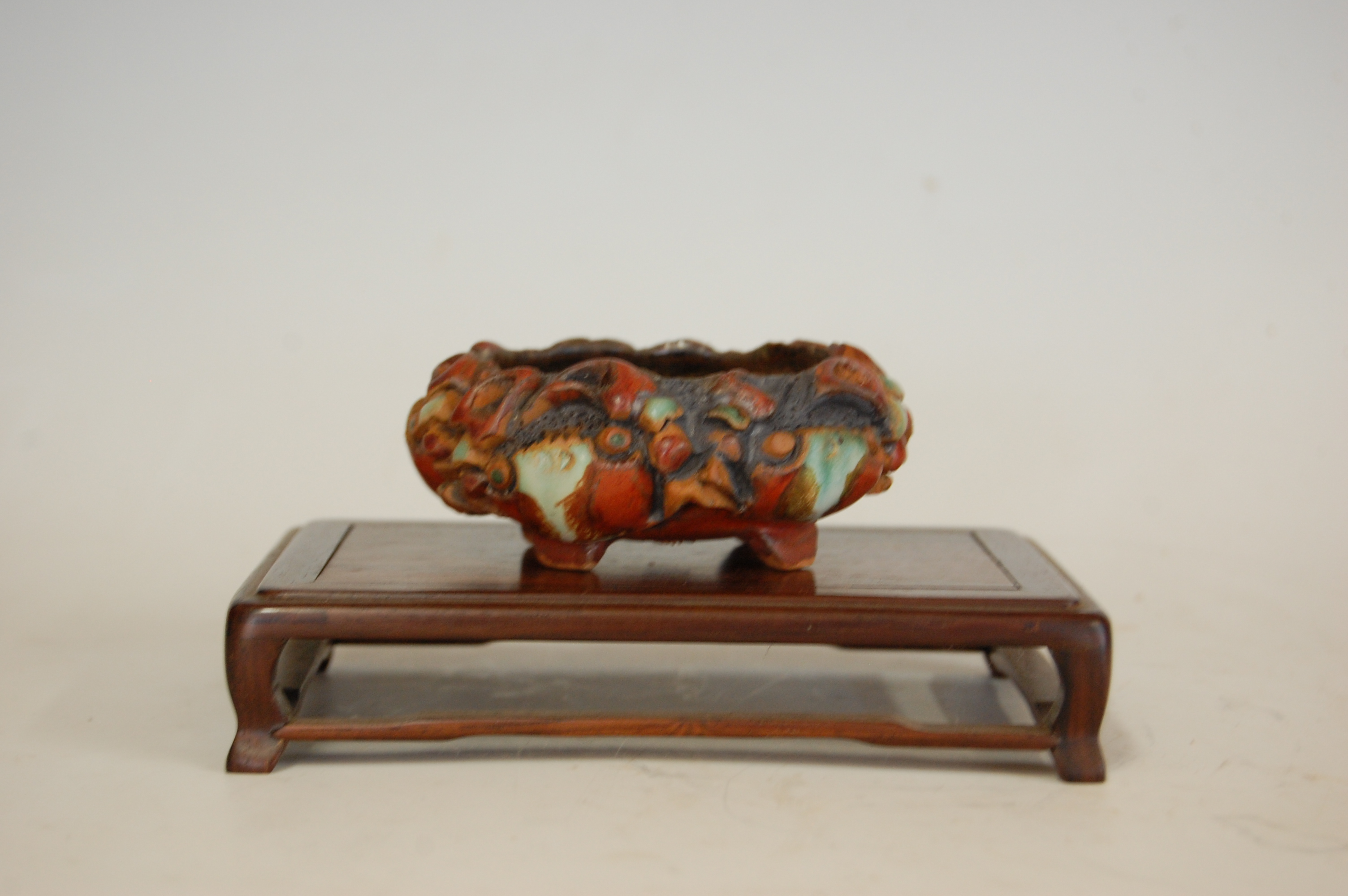
Crab pot with multiple glazes. Zeshin pots where the body of the pot is a crab are very surreal and strange looking...a little evil.

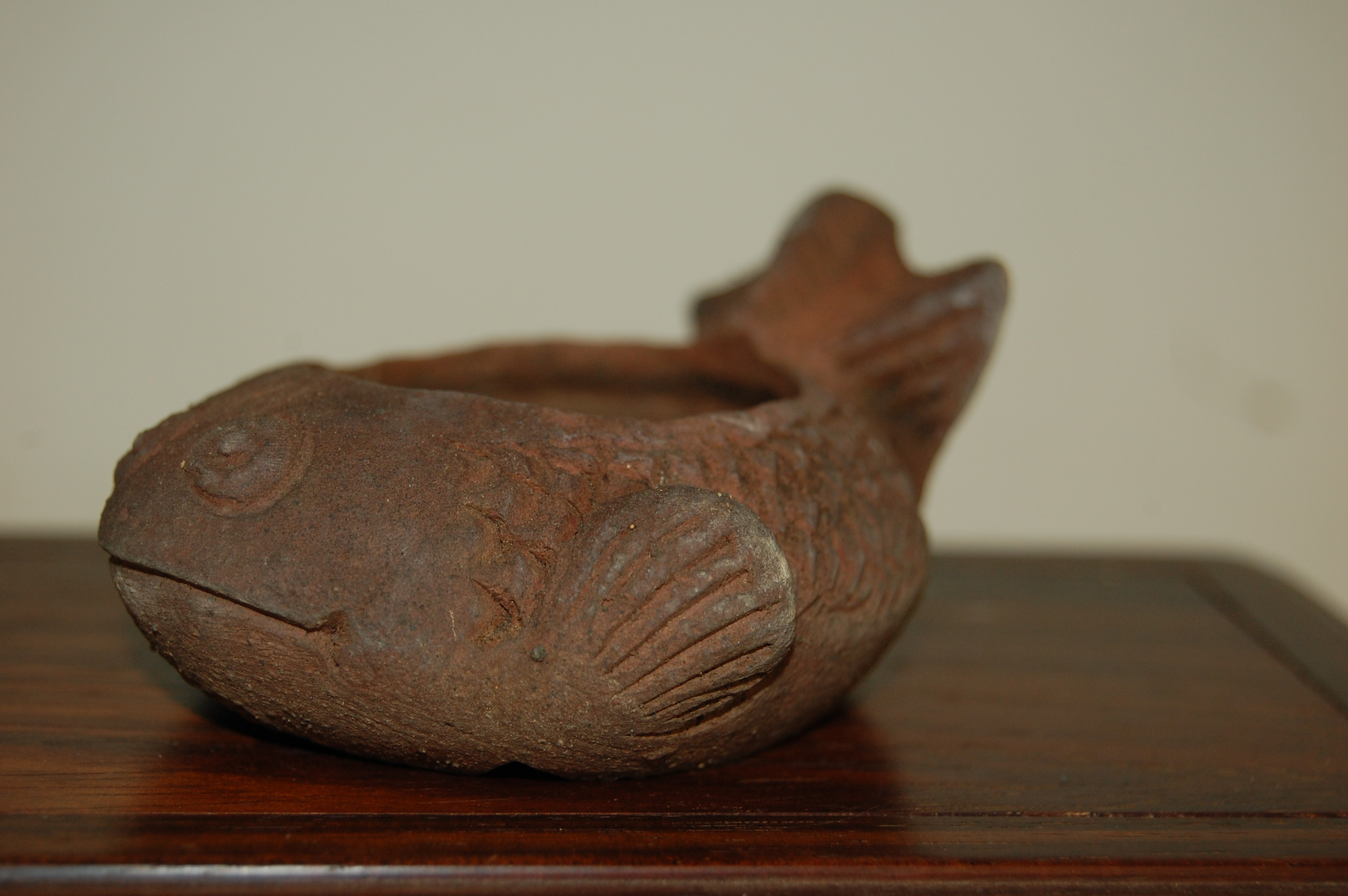
A cute little fish with very nice detail to the scales.


A fascinating carving pot done in relief. Reminds me of the work of contemporary surrealist painter Andrew Gonzalez.

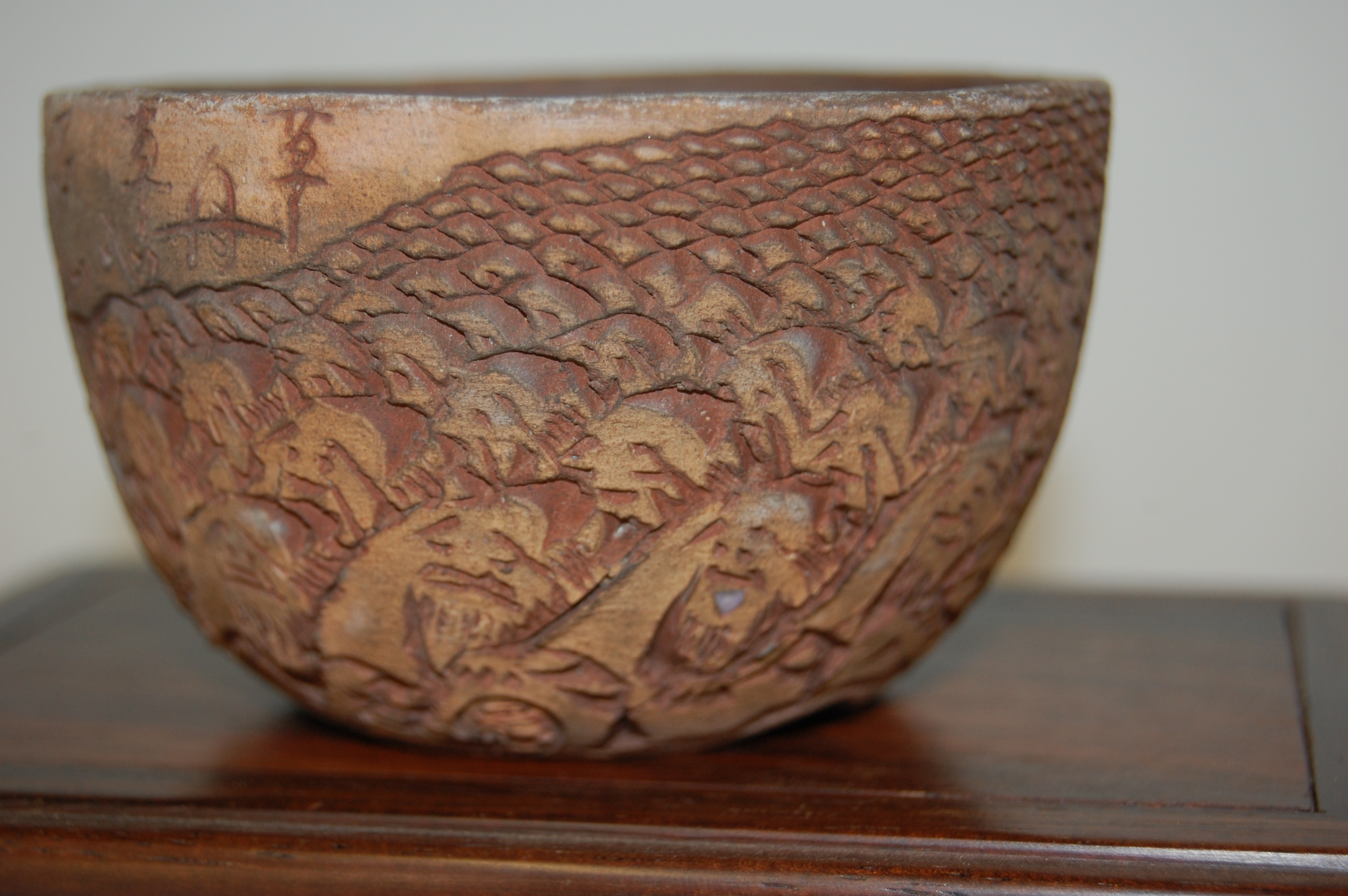
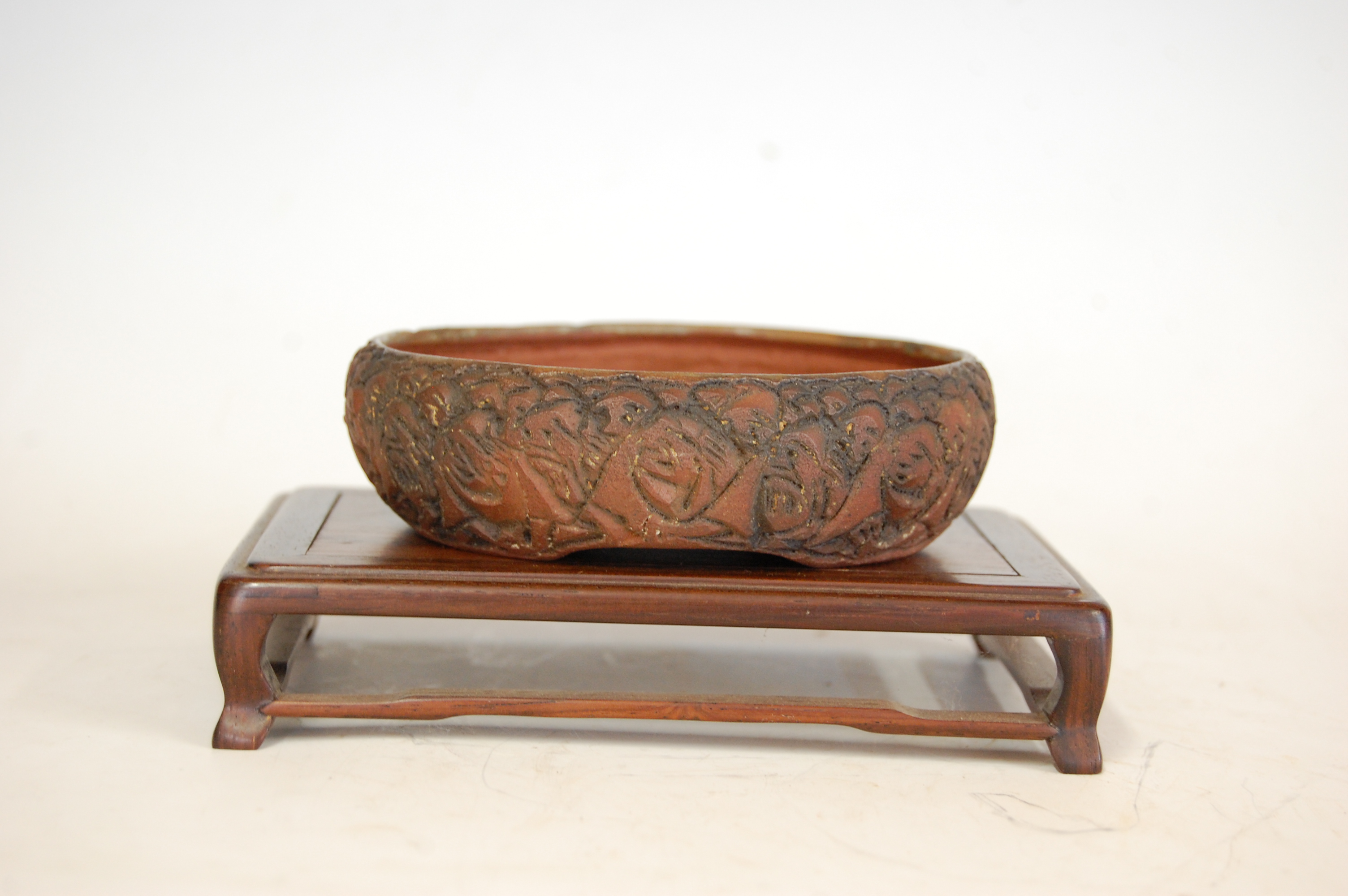
The "repeating monks" pattern so common to Zeshin pots. These bearded monks pop up all over, in a dizzying array of geometric designs and shapes.

A very surreal pot. Like the works of Hunter S. Thompson associated artist Ralph Steadman.


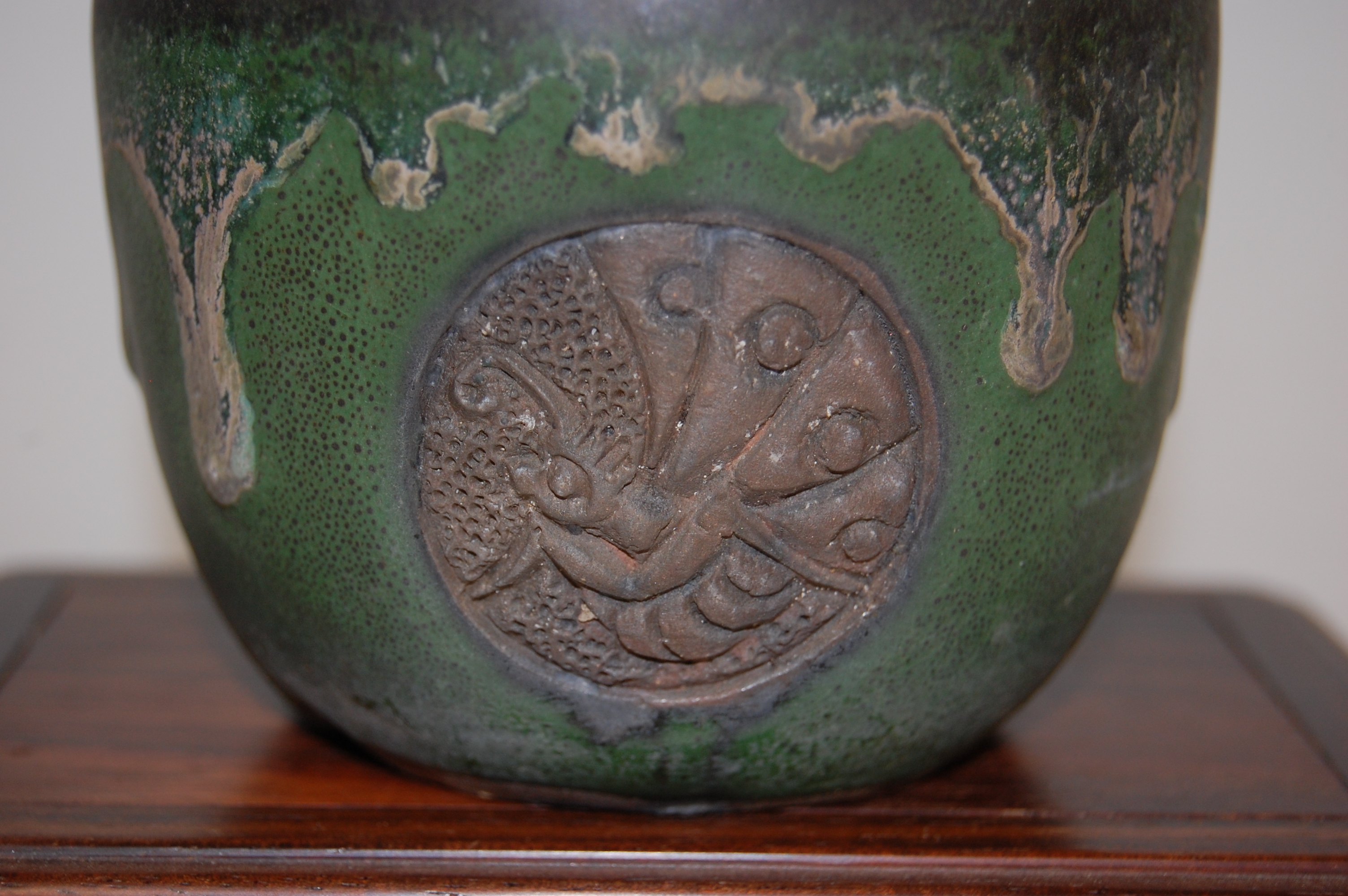
Very cool double clay construction and bas relief.

A very interesting pot. One of the few Zeshins I see that are feasibly usable with many trees.

Hope you enjoyed the pots of Okatani Zeshin!  I know I do!  Ill feature a few more of his carvings in an upcoming post, along with his many Hanko and Rakkan.


Posted in Uncategorized | 1 Comment

Bang for Your Buck Potters, Part 1

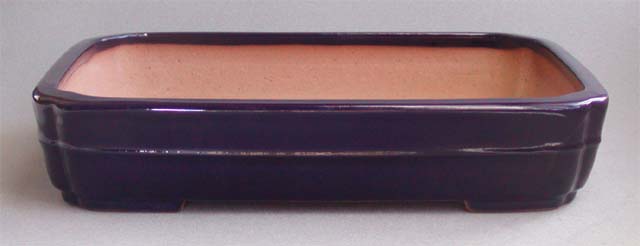
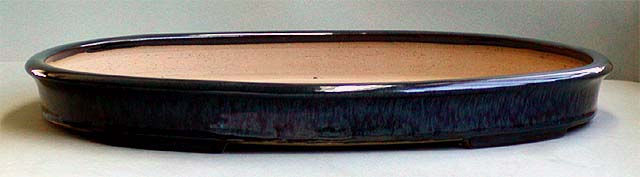
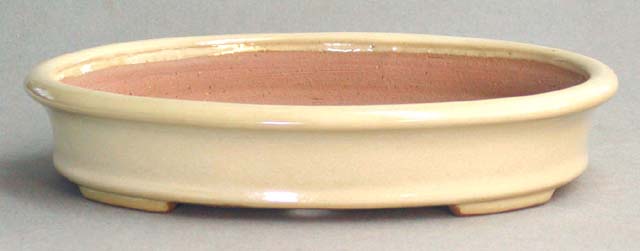
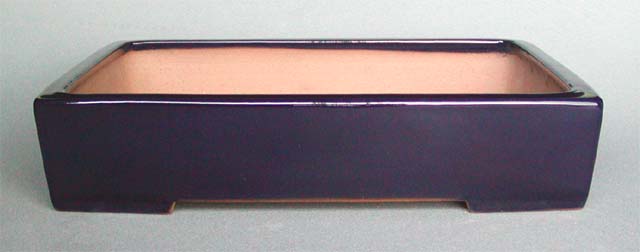
Not all trees are ready for a 1,2, or 300 dollar pot, and many enthusiasts simply don’t have the funds or desire for the more expensive and collectible of Japanese potters. While I maintain that, for the most part, you get what you pay for as it concerns bonsai pottery(especially on the low and extremely high end!), there are many great potters who produce (relatively!) inexpensive pots that are very nice and tasteful, many from the Tokoname region of Japan. Here are a few of my favorites, with some of their work.

Very Special thanks to Mr. Takeyoshi Kojima of the Tokoname Yuyaku Company for permission to use images and information from their site catalogs. All of the pots shown here can be purchased from the Tokoname Yuyaku, visit their gallery listing of pots here:

http://www.tokoname.or.jp/bonsai/gallery/gallery1.htm

All images used in this post are Copyright by the Tokoname Yuyaku Company.
Pots by Yamafusa

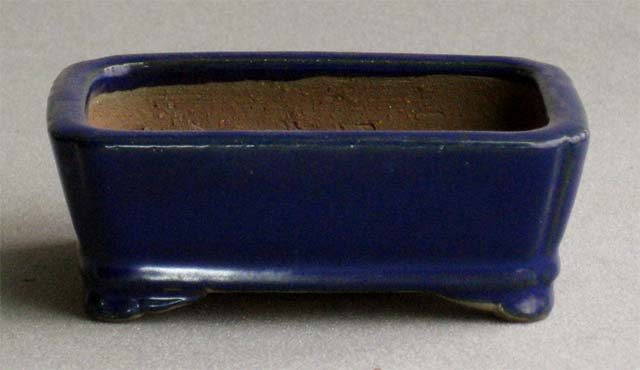
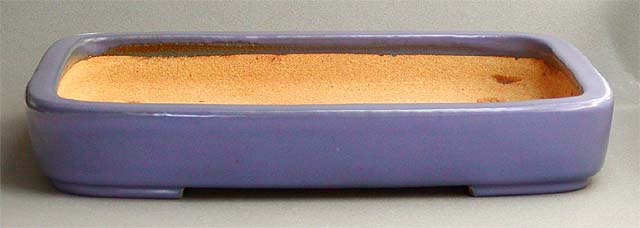
Yamafusa brand pots are made by Koie Kazufusa. His pots are almost always glazed, and are made with very classical, clean shapes. His colours are a little milder than many other potters, for this reason his pots fit a wide range of deciduous trees well.

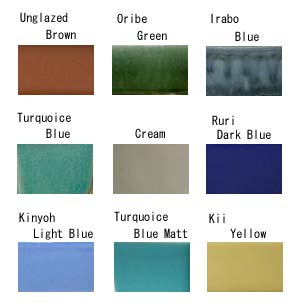
Available Pot Glazes From Yamafusa

Pots By Shibakatsu

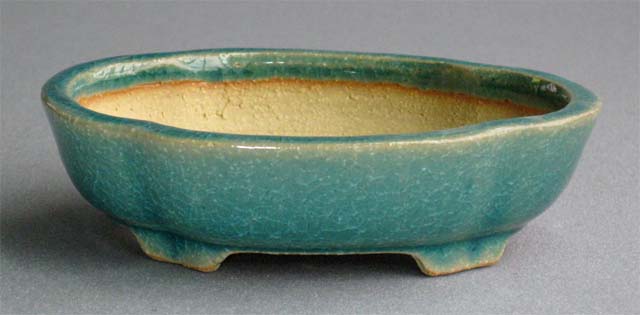
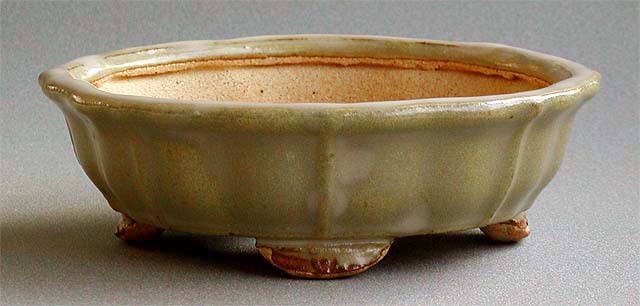
Shibakatsu bonsai pots are made Shibata Shoichi. Most of his pots are mold constructed, but a few handmade and slab built pots are made every now and again. His glazes are bright, rich, and deep, and as a result they often need a little aging and patina before they begin to look right with a tree. One of my personal favorite value potters for shohin size pots.

Available Color Glazes from Shibakatsu

Pots By Reiho Shouzan

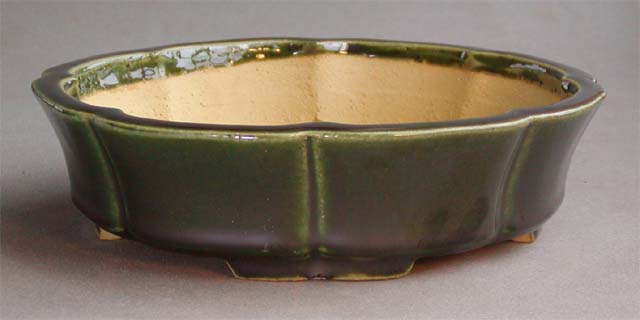
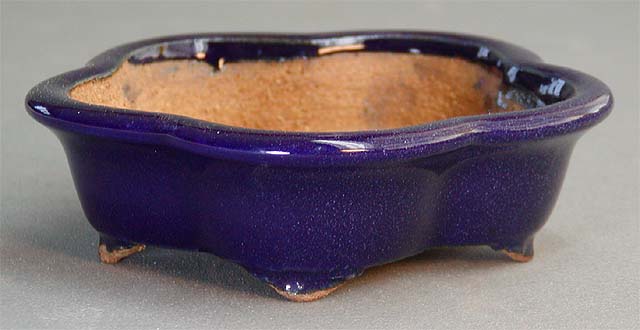
Not exactly a “Bang for your Buck” potter, as his pots range from 60$-400$ or so, depending on size, but included here because his pots are readily available and a significant value for the money. They can often be found used for very reasonable prices. Pots made under the Reiho brand name are made by Katoaka Katsuishi, son of Seizan potter Katoaka Makoto. His glazes are very clean, rich, and elegant, and his unglazed pots, especially drums, are quite nice as well. For Medium to Large size pots, Reiho is tops among value potters.

Available Reiho Color Glazes

Pots By Hattori

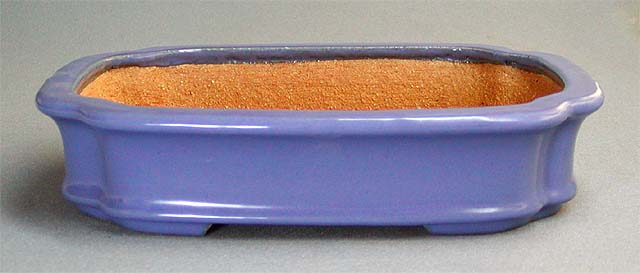
Pots made by Hattori Tomoyuki feature modern and classical shapes and range in glaze color from muted and understated, to bright rich, and crackled. A significant value class potter, one of my favorites for Chuhin sized pots. Look for the signed ones over the stamped ones, in my experience they have the most unique glazes and higher quality. Contrary to popular opinion, this does not hold true for all potters, some potters stamp their best work, some sign.

Available Colours for Hattori Pots

I hope you enjoyed this first part of my Bang for the Buck Potters series. In the next post Ill be covering pots by relatively unknown master carver and potter Zeshin, the Tim Burton of bonsai pottery, whose carving pots are often surreal, strange, and downright trippy. If you thought Nick Lenz made some weird looking pots….

Posted in Uncategorized | 1 Comment

From My Collection 3

Here are a few more interesting pots from my collection, to tide you readers over until I finish the first part of the “Bang for the Buck Potters” series, should be up tomorrow.

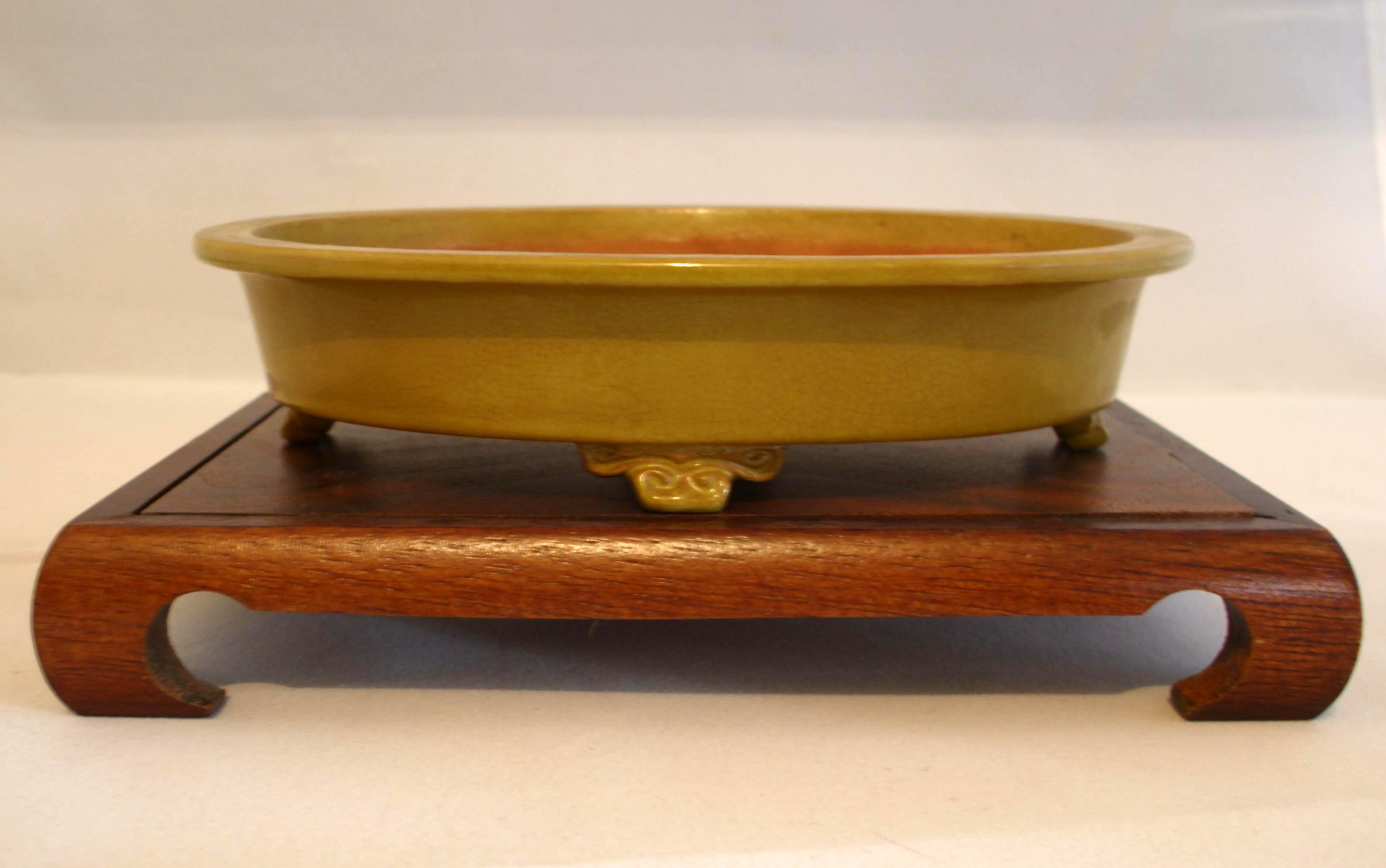
Syungado 6" x 4" x 1"

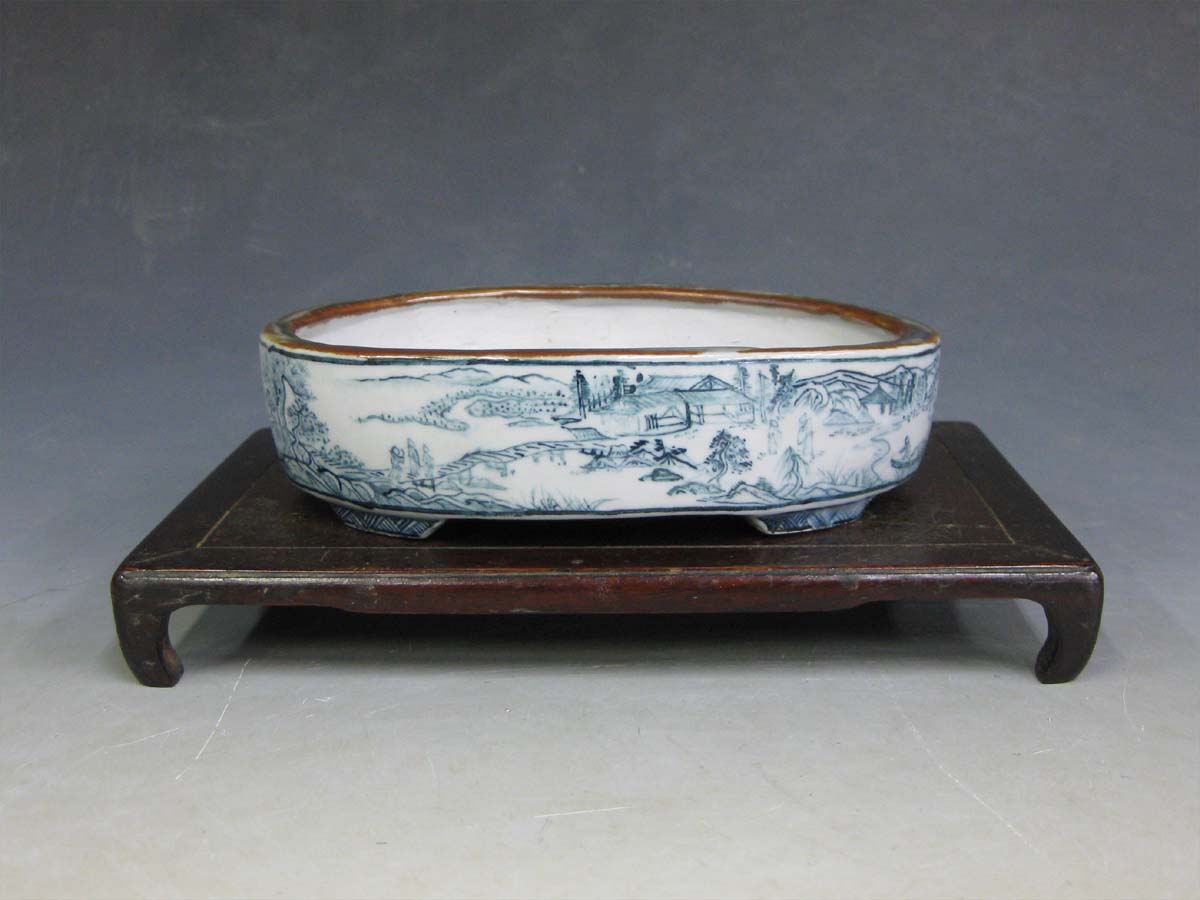
A really nice oval from high end Chinese kiln “Syungado.”  I was informed that Syungado has been made making bonsai pots during the entirety of the modern bonsai pottery era, around the turn of the century.  Many Syungado pots have made an appearance at the Kokufu-Ten.  This particular pot is aeround 50 years old, and has a nice patina and fine hairline crackle.  The ornate feet are very well done as well.

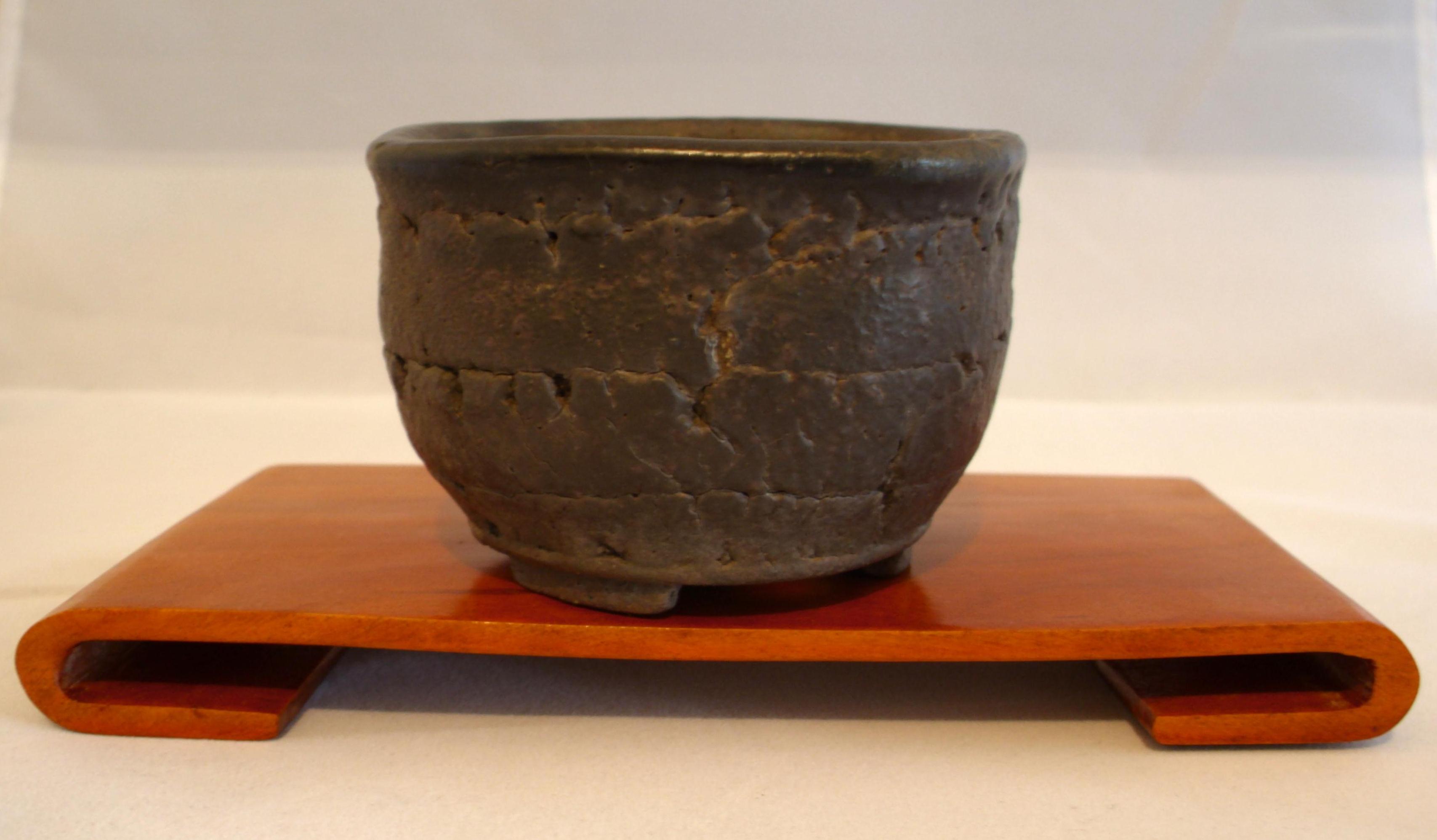
Katoaka Toshio, Yamaaki, 3" x 2.5"

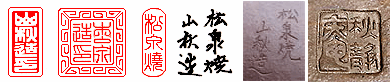
Katoaka Toshio and Akitsugu marks. Image courtesy of Tokaname Yuyaki Company

One of the nicest examples I own from current generation Yamaaki potter Katoaka Toshio, also the head potter of the Ittoen kiln.  This pot resembles the work of Toshio’s father, Katoaka Sadamitsu, far more than it resembles Toshio’s current work.  The patina on this pot is fabulous, the wonky informal square shape, rough cracking of the clay, the 3 offset cut feet, and the rare chop(Its the second one in the diagram.  I dont know how rare it is, to tell the truth, but Ive never seen another one in the west) make this a truly unique Yamaaki.

Unsigned Yamaaki pots with the contemporary Katoaka’s stamp(the first in the above image) are NOT necessarily made by Toshio himself, as Yamaaki employs several professional potters who mold make their lower end pots.  Only signed contemporary pots and pots with the thunder border stamp are made by the head of the kiln, and the others are to be regarded as production grade.  Yamaaki cranks out far too many of these production grade pots, and while they are nice, they’re a little like new cars…theyre worth less than you paid for em as soon as you drive em off the lot!

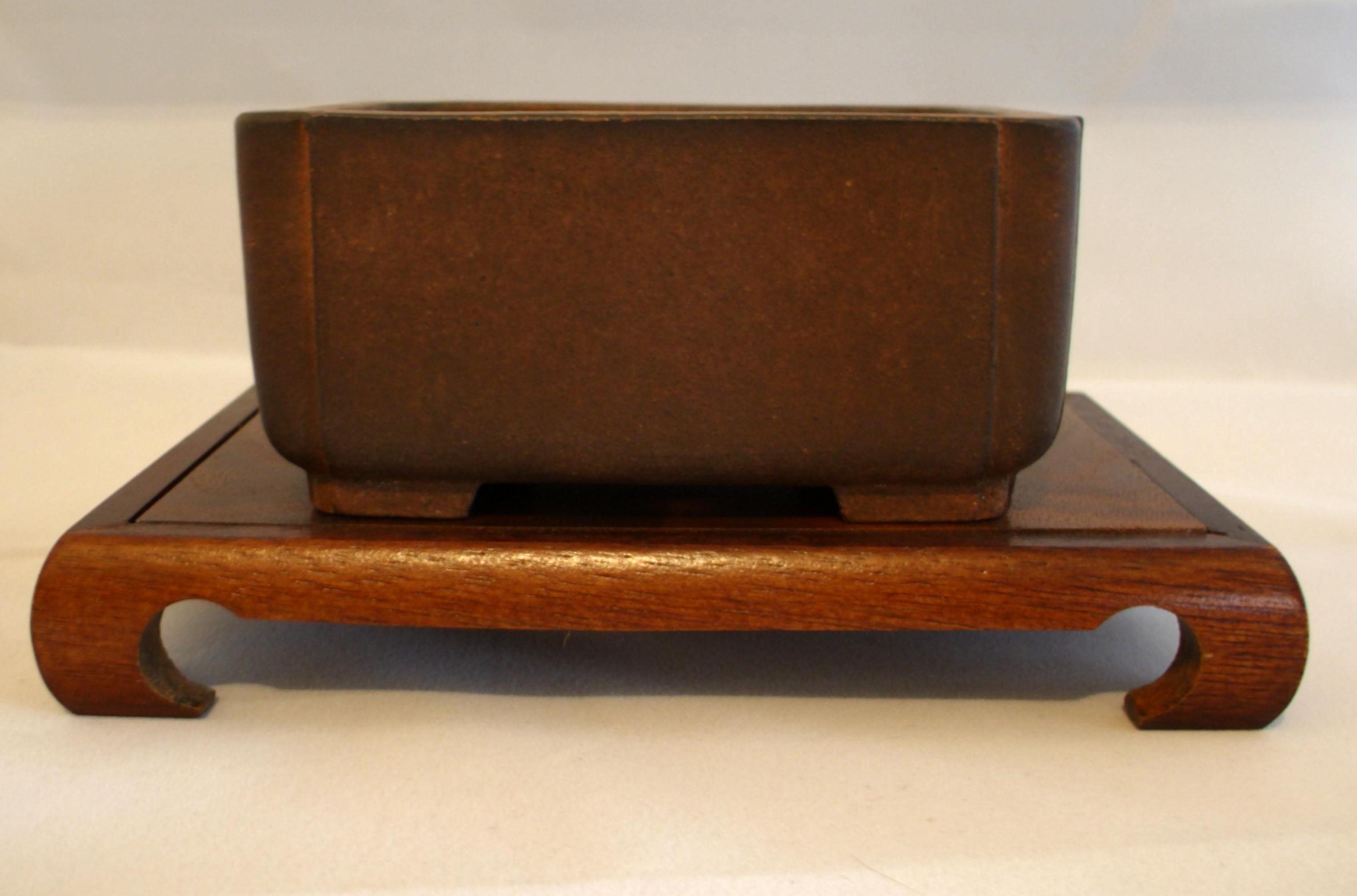
Katoaka Akitsugu, Juuodo Shosen Yamaaki, 5" x 3"

A classical square with nice double cut corners, rounded base, and cut feet by 1st generation Yamaaki founder, Katoaka Akitsugu, whose pots are sometimes referred to as “Juuodo Shousen Yamaaki” as this is the reading of his signature.  A very nice patina on this pot, its starting to “glow” with age.  Patina on unglazed pots is a very strange thing, completely unlike the patina in both scientific cause and appearance of glazed pots.

Heian Tofukuji, 2nd Generation, 4" x 3.2" x 1"

A nice little rectangle from Tofukuji Jr.  This is in a color sometimes but not often used by the father, the thickness of the glaze is notable.  Clean cut lines and good cornering, Kaede Stamped.

Heian Chikuzan, 4.5" x 3" x 1"

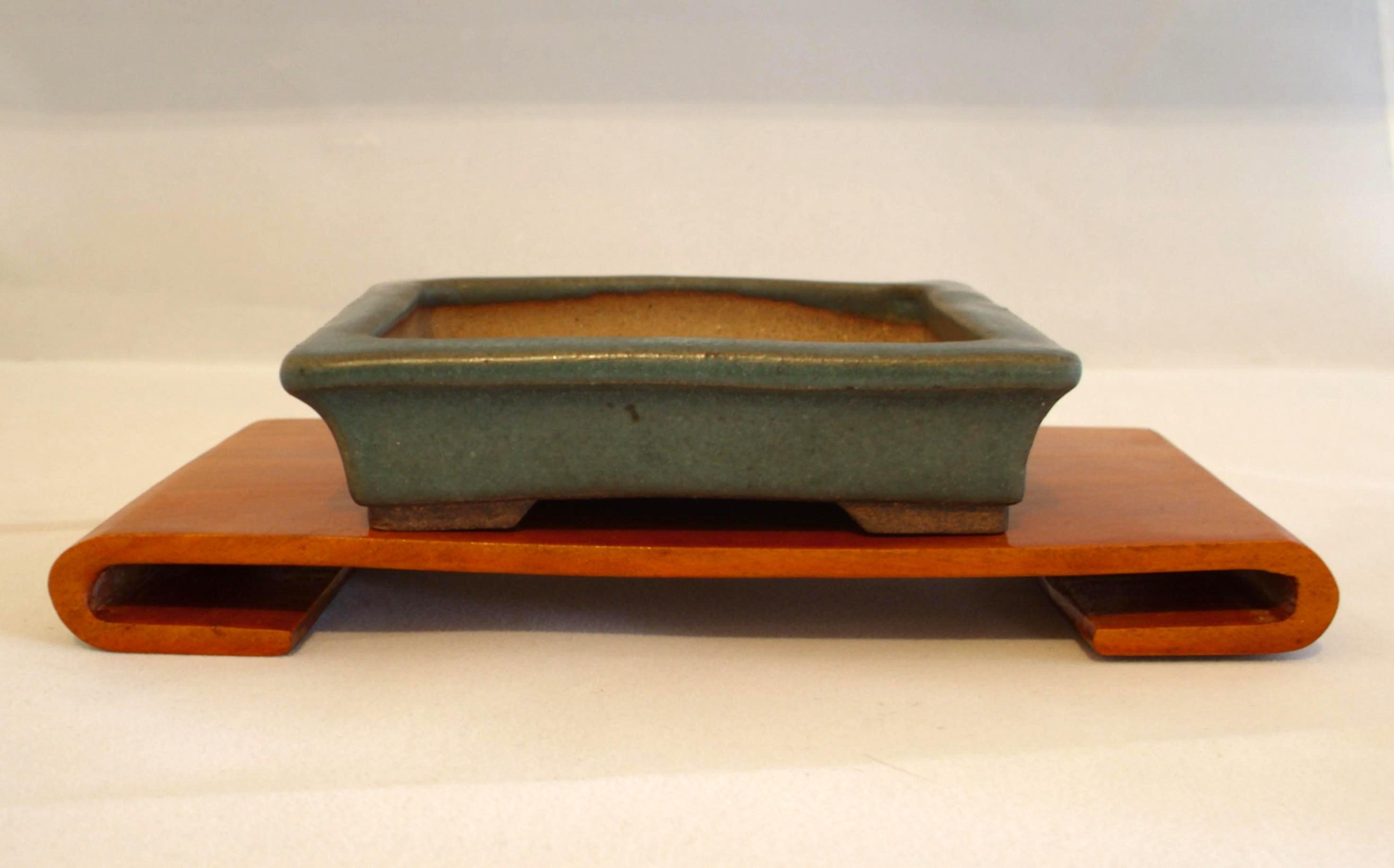
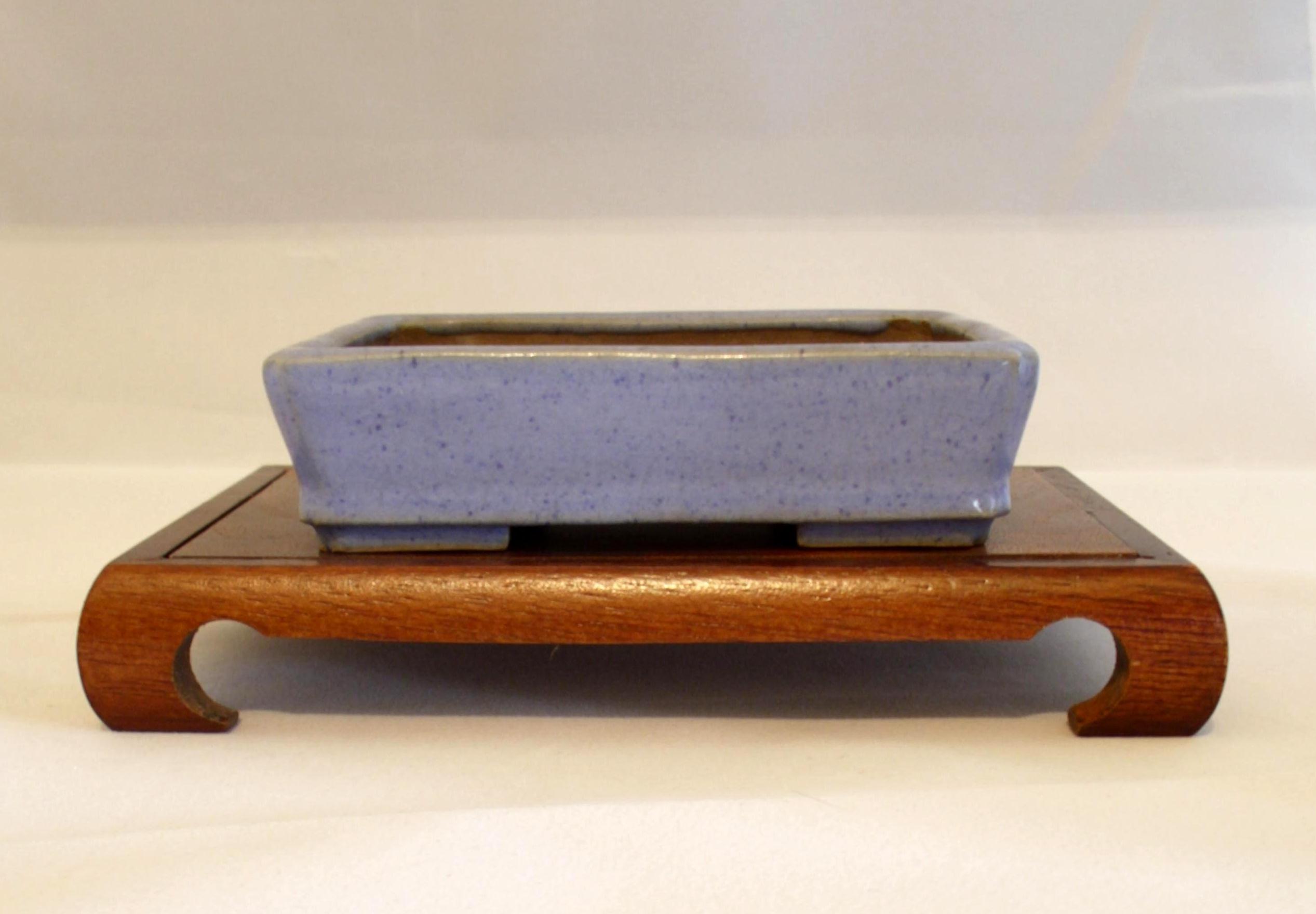
A relatively unknown potter here in the West, Chikuzan is best known for his painting pots.  This small glazed pot is a very nice shade of light blue, with excellent clarity and depth.  Virtually unused, so their is little to no patina…a fact I hope to begin remedying soon!

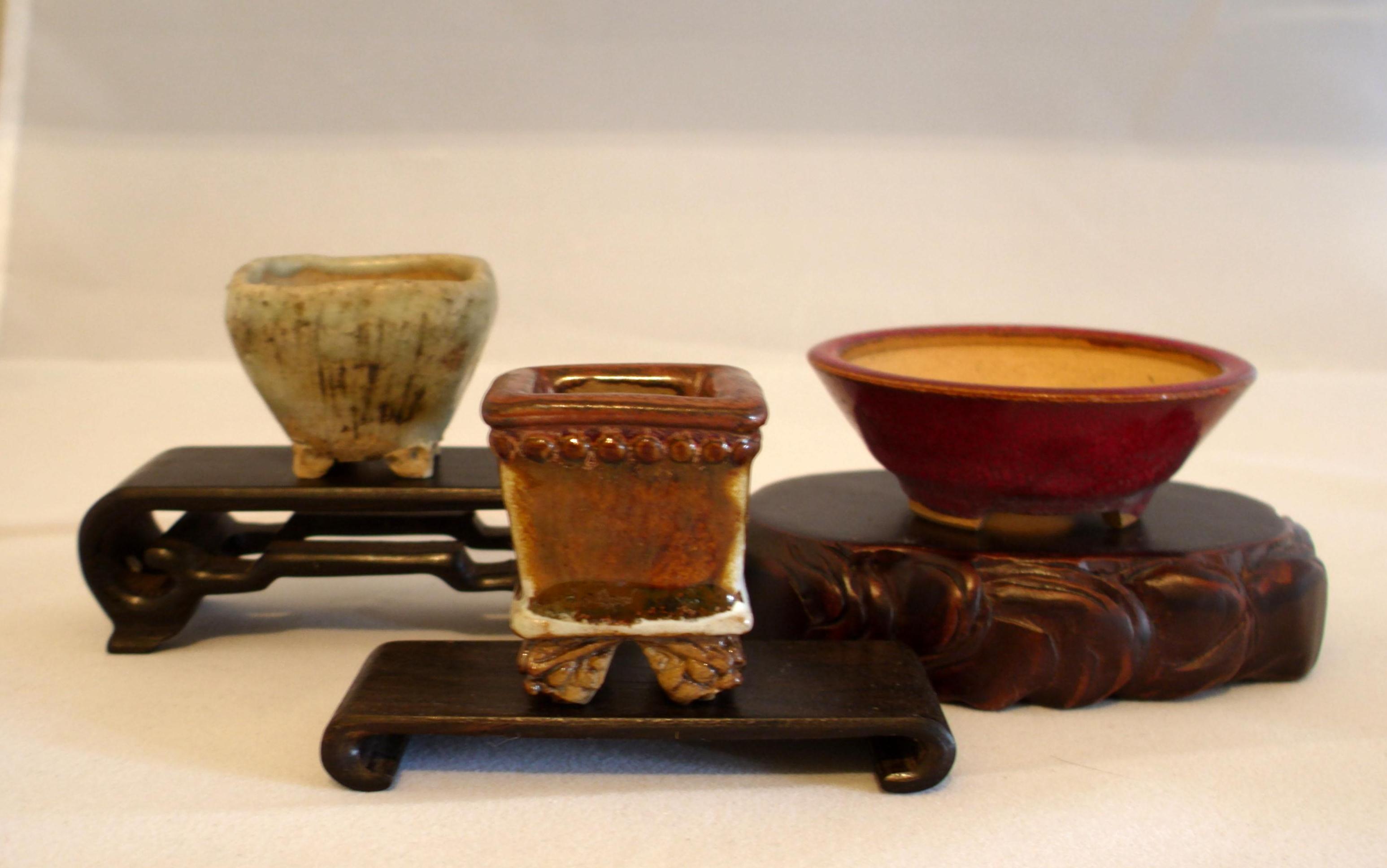
Mame Pots, From Left, Unknown Stamp: 1", Sekishin: 1" x 2", Heian Kouso 2" x 1"

Some Tiny pots!  The foot detailing on the Sekishin is unbelievable!  Enlearge and check it out!  The chicken blood red glazed pot by Heian Kouso is really well made, and starting to develop a nice patina.

While this blog will principally be concerned with Japanese and Chinese Bonsai Pottery, every so often I’ll post a tree or two.  This Nishiki Matsu are looking pretty nice right now, but have some issues, which is why Id like to show It, after decandling, and in 40 or so days it will look even better when the new candles are out!  I have a few more that will be available for sale or trade next month, drop me an email if you’re interested.

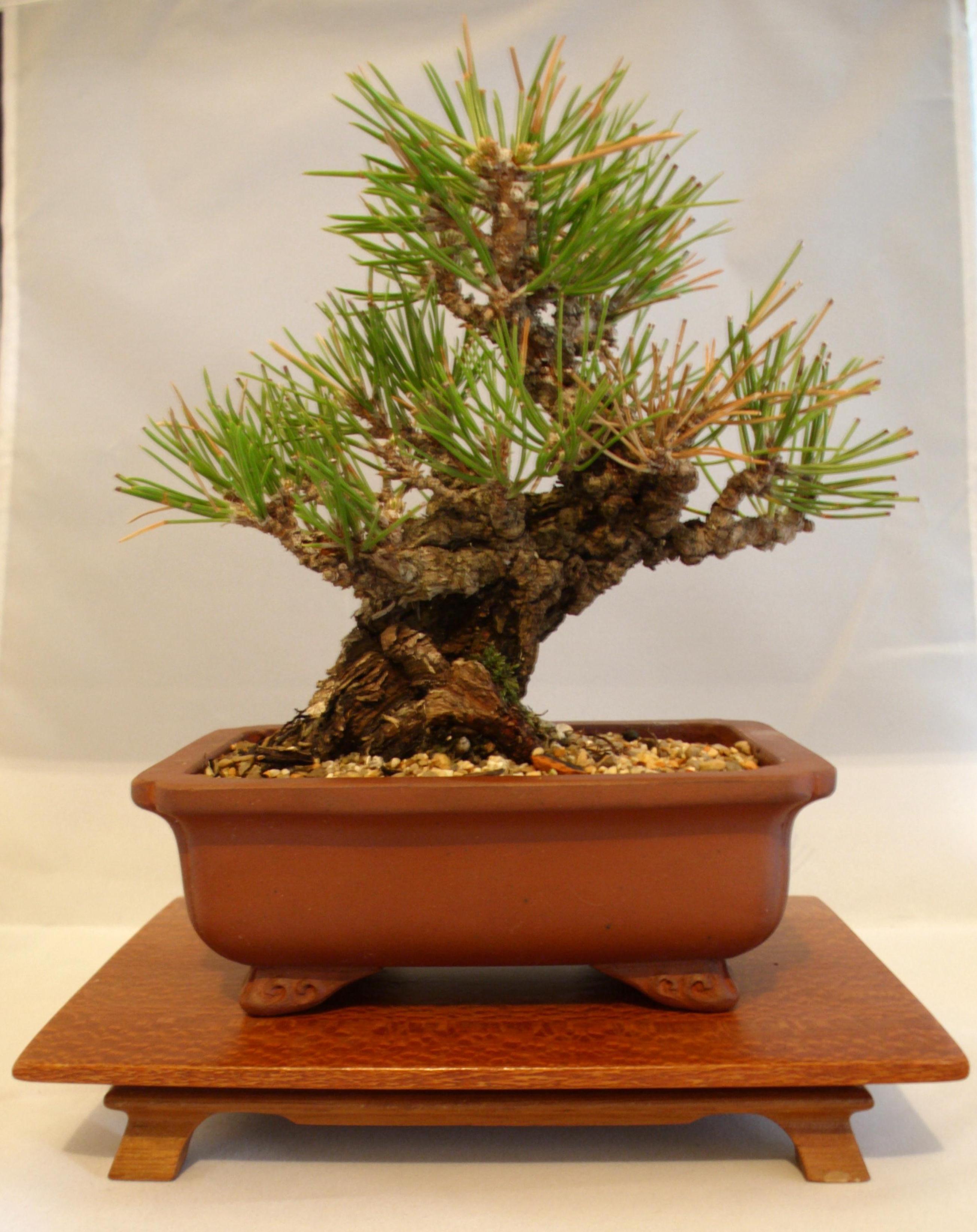
Nishiki Matsu, 6.5" tall with 3.5" base, 2.5" trunk. 6" Ikkou pot

This Cork Bark Japanese Black pine is well on its way to being a good shohin.  Up until last week, I was thinking that maybe 2-3 years of buliding ramification and outline and it would be ready to go…then I noticed the small branch that compliments the secondary branch, on the right, its the cluster of needles right above the secondary branch, closest to the trunk.  See the color?  Yep, they’re dead.  When I noticed the needles beginning to discolour, closer inspection revealed that the branch was little wobbly, and had been fractured.  Who knows what caused the break?  Branches on Nishikis are fragile once they begin to cork, breathe on em too hard and BANG, dead as Dillinger.  Fortunately, their is a cluster near the base of this branch, so it can be rebuilt in the same position….but there goes a year.

Kaede, Acer Buergeranium, 6" tall, Ikkou pot

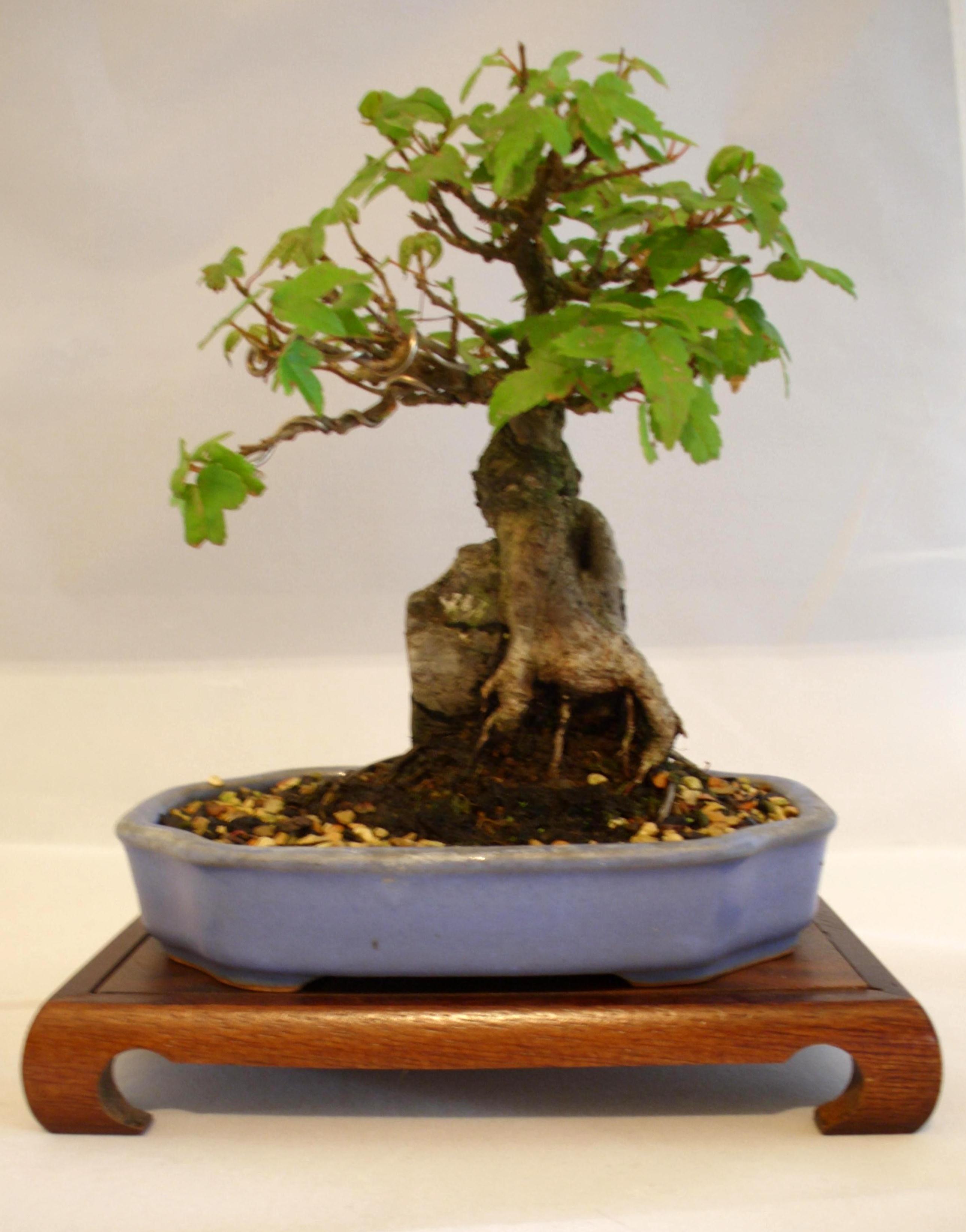
A nice little root over rock Kaede shohin, after a partial defoliation.  The goal with this one is ramification and thickening up those roots at the base of the stone.  Its easy to see how this ROR was created if you look closely.  A band of wire was embedded in the stem of a young tree, which self layered and grew the roots over the stone, after which the original roots were removed.  The signs of the girdle are still evident, but will be gone within 2 or 3 seasons with proper care.

Posted in Uncategorized | Leave a comment

Glazed Pots by Ino Shukuho

The glazed and painted bonsai pots of contemporary Japanese potter Ino Shukuho are some of the best one can find for the money, in the same price bracket as more well known potters Kouyo and Ikkou. His glazed pots are especially magnificient, showing clear influences of Tofukuji and Aiso, while his painted pots are nice as well, showing the influence of traditional Kyoto painted ware.

Born February 13, 1943, in Kyoto, Japan. His pots are completely handmade, and according to Yoshoen, his pottery techniques limit production to a maximum of 3-4 pots daily. The vast majority of his pots are rectangles or squares, ovals are few and far between.

12.8 x 9.8 x 4.2 cm Copyright Yorozuen

12.8 x 9.8 x 4.2 cm Copyright Yorozuen

22 x 17.1 x 3.7 cm Copyright Yorozuen

10.8 x 8.5 x 2.8 cm Copyright Yorozuen

The above 4 pots are typical of Ino’s style of pot with Oribe and green glazes with various other glaze highlights. The silver overglaze speckling on these is an Ino signature move, as we’ve seen in previous posts, a clear homage to Tofukuji. One of my favorite things about these pots, they’re clearly artistic, with myriad coloration and bright splashes, but they never seem to overwhelm the trees that are in them. One can see numerous examples of a host of different species planted in this glaze style Ino pot in Gafu Ten Exhibition books.

10.6 x 7.5 x 4 cm Copyright Yorozuen

An atypical white glazed pot with blue glaze highlights.

10.5 x 7.2 x 3.2 cm Copyright Yorozuen

A marvelous red and green bi-color pot with some very light blue accenting on the red side. A very thick glaze on this pot, if youd told me it was made by Aiso, Imaoka, or Tofukuji, I would believe it!

14.4 x 7 cm Copyright Yorozuen

Light blue glaze square with fancy feet and excellent patina. The richness and depth in this blue is outstanding!

12.8 x 9.8 x 4.2 cm Copyright Yorozuen

A very nice indigo glaze with indented corners. Once again, the glaze is rich and deep.

14.8 x 12.5 x 5.9 cm Copyright Yorozuen

11.2 x 9 x 3.3 cm Copyright Yorozuen

Two yellow glazed pots, the clarity and brightness of the yellow is eye catching. Although yellows and bright reds dont seem to be popular here in the west, in Japan theyre more common. I dont think anyones collection is complete without a few loud yellows!

11 x 8.4 x 4.9 cm Copyright Yorozuen

Another one I’d guess was a Tofukuji if I didnt know better. Thick baby blue glaze and a very nice patina.

12.8 x 9.8 x 4.2 cm Copyright Yorozuen

8.4 x 6.6 x 4 cm Copyright Yorozuen

6.6 x 4.3 x 2 cm Copyright Yorozuen

7.3 x 4.7 x 2.6 cm Copyright Yorozuen

A few of the sometsuke of Ino. As you can see, his painting pots dont rival the greats of his time in detail and quality, but they have their own charms. The plum blossoms in the first pot are very detailed and well presented. I also really like the tree details in the second and third pots, and the horseman in the last pot. One thing that gets me about his sometsuke is that the feet and rims are rarely painted(first pot exception excluded!)two details that I value highly in looking at quality painting pots.

I hope you enjoyed seeing a few pots by master potter Ino Shukuho. In the next post Ill take a look at a few more pots, and maybe a tree or two, from my collection, and then on to a feature on “Bang for you buck” potters, at the requests of a few fellow posters and bloggers….You know who you are!

Posted in Uncategorized | 12 Comments

The Pottery of Watanabe Kazuhiro(Ikkou)

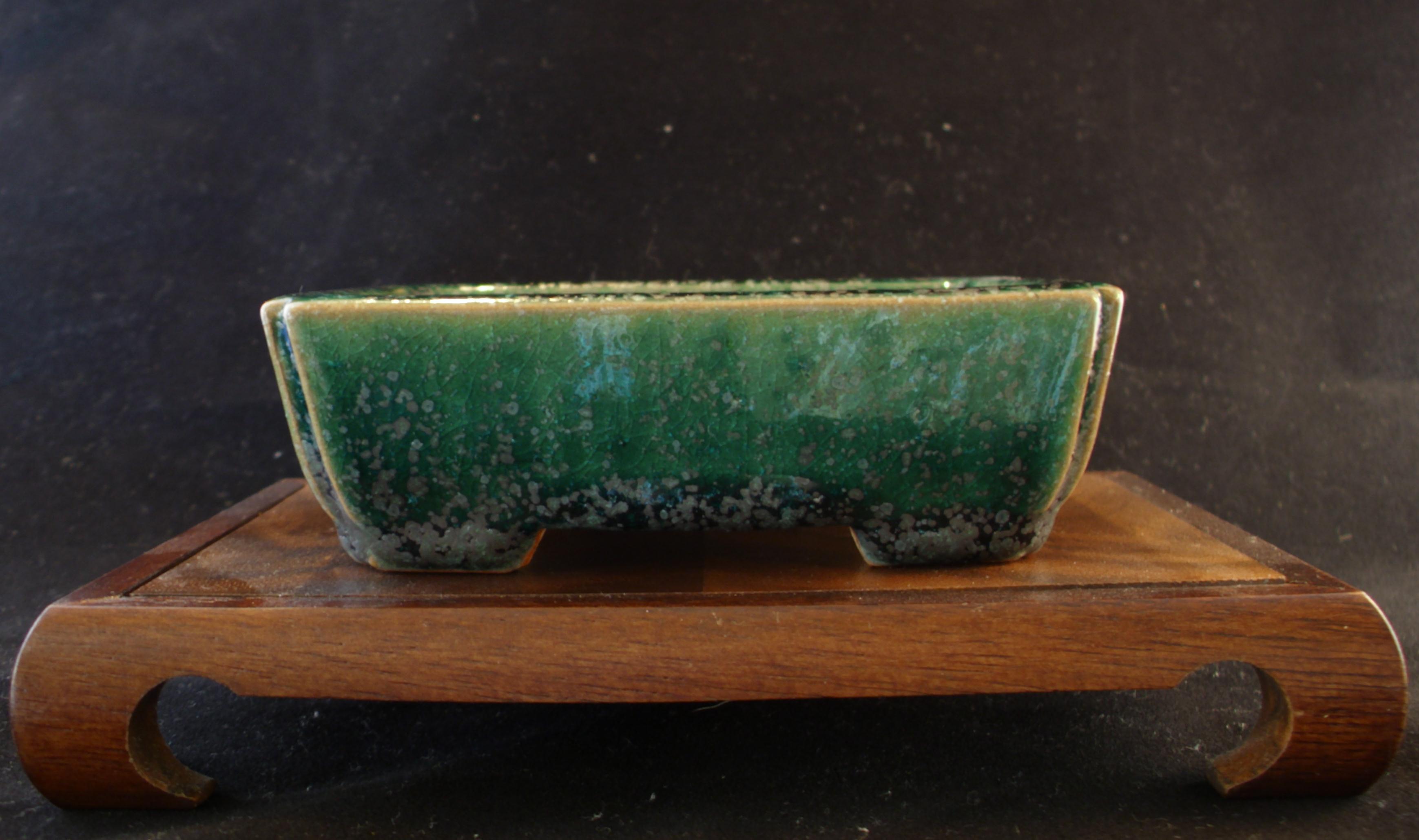
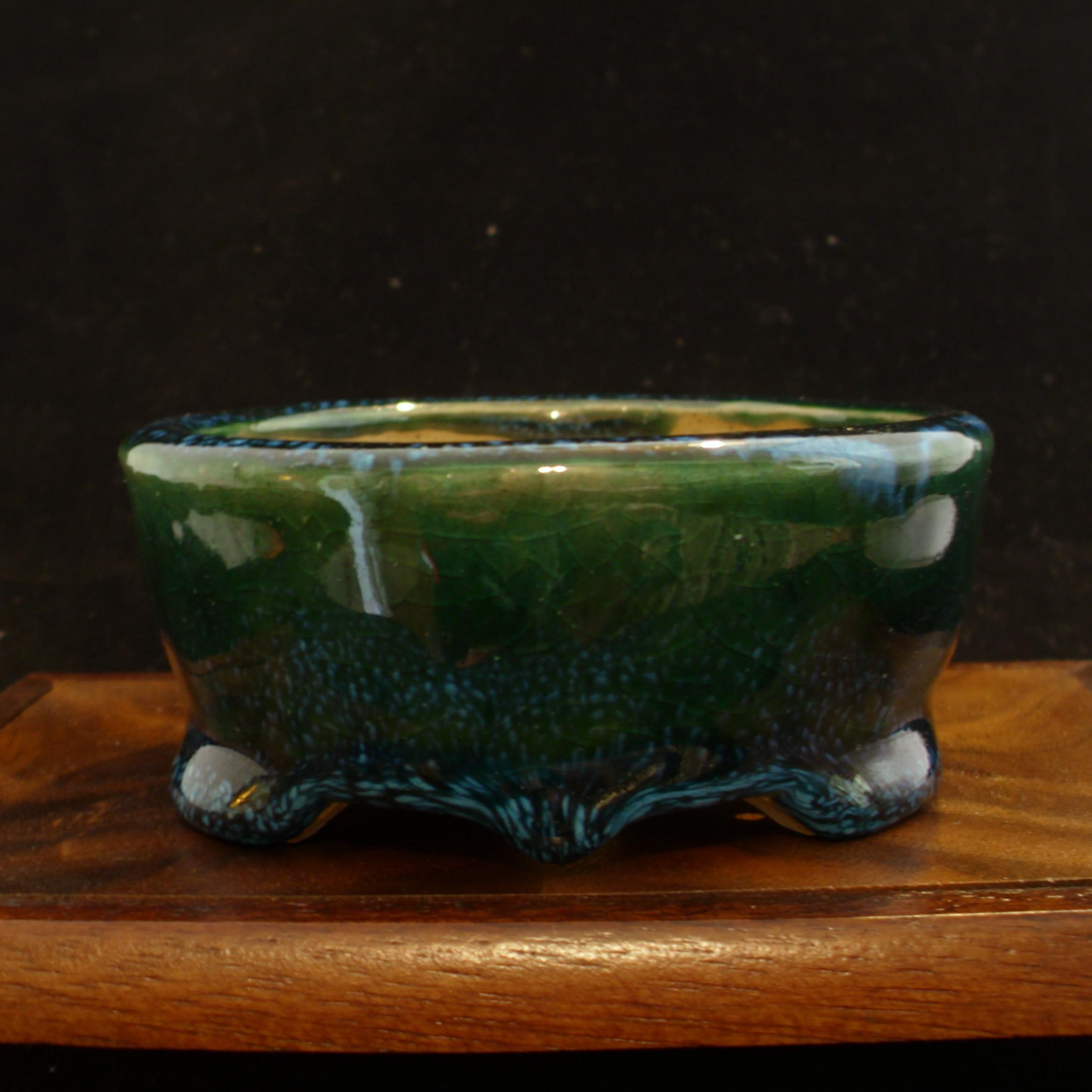
Watanabe Kazuhiro is a contemporary Tokoname potter.  Both his glazed and unglazed pots are popular, although prices are consistent and very reasonable for the quality.  Born November 13, 1956, the son of famous master potter Watanabe Masami of the Syouzan Kaneshou pottery, Ikkou was trained by his father in the art unglazed pots which his father made exclusively.  Although his family background and training are in the making of unglazed pots, his glazed pots, techniques for which he is completely self taught, are wonderful.  My favorite glazes of Ikkou are his blues and greens, normally I prefer his pots pure and single colored, although his greens with slilver overglaze detail and blue overglaze highlights, like the two from my shelves, below, are also very nice.

6.3 x 2.5 inches, My Collection

6 x 3 inches, My Collection

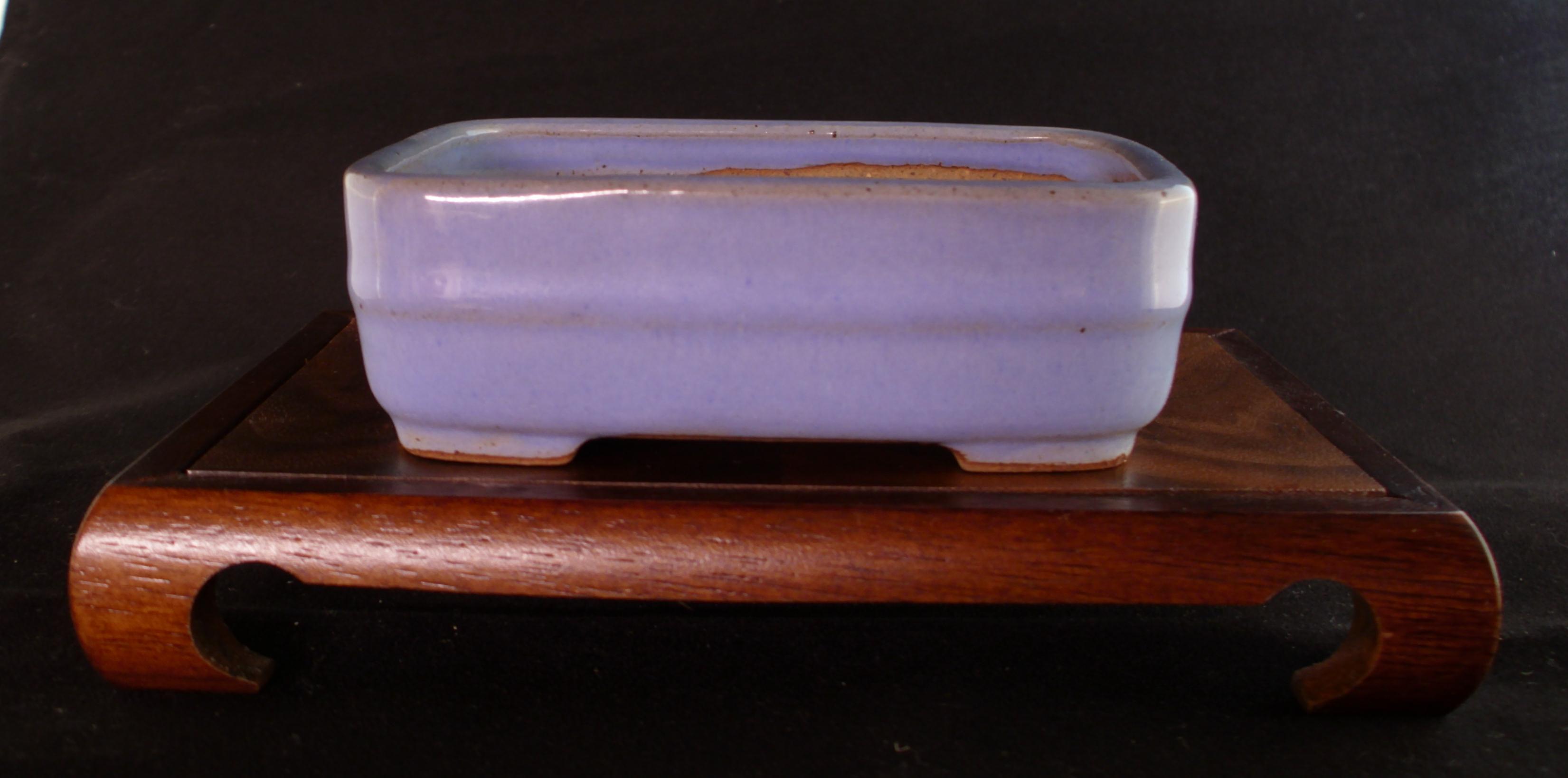
6 x 4 x 1 inches. My Collection

18.6 x 14.4 x 4.9 cm Copyright Yorozuen

My favorite style and color of Ikkou pot.  I love Mokko shape pots by Ikkou, especially in this milk blue glaze.

14.8 x 12.2 x 5.1 cm Copyright Yorozuen

Another style of Mokko pot, deeper with more angular feet.

14.3 x 11.8 x 5.1 cm Copyright Yorozuen

18.1 x 14.8 x 5.3 cm Copyright Yorozuen

This is an interesting glaze for an Ikkou, I havent seen its like.  The depth of the indigo glaze is remarkable, and the full cloud feet are very nice.  Very Tofukujiesque.

7 x 17.8 x 4.3 cm Copyright Yorozuen

A Milk blue oval with a marvelous patina.  I love how this glaze color ages.

17 x 13.5 x 4.3 cm Copyright Yorozuen

The Light green and Yellow glazed pots of Ikkou are nice as well, although I prefer the blues, I wouldnt kick this one off my shelves!

15.7 x 12.9 x 4.7 cm Copyright Yorozuen

19.7 x 13.9 x 2.7 cm Copyright Yorozuen

9.8 x 8 x 3.8 cm Copyright Yorozuen

11.5 x 9 x 4.1 cm Copyright Yorozuen

17.2 x 13.7 x 4.4 cm Copyright Yorozuen

18.4 x 13.3 x 5.4 cm Copyright Yorozuen

In Ikkou’s unglazed pots, it is really easy to see the clean lines, marvelous corner details, foot details, and finishing that his father is a master of as well.  I find his unglazed pots especially suited for black pines, as their color and character lends themselves to the king of bonsai.

Hope you enjoyed reading about Watanabe Kazuhiro.  In the next post I show off a few more interesting pots from my shelves, then a feature on potter Ino Shukuho.

Posted in Modern Potters | 5 Comments

Famous Painters of Sometsuke

In this post I’d like to show several examples from a wide range of my favorite pot painters, both antique and modern. Some of these painters’ works are very well known here in the West, others are more unfamiliar. In future posts I’ll take a look at some of these potters in more depth.
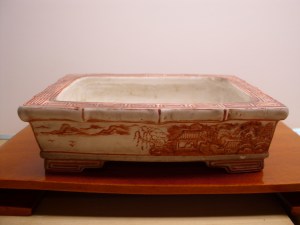
Shozan, 10.7 cm. My Collection.

Shozan, 13.4 x 11.1 x 4.1 cm Copyright Yorozuen

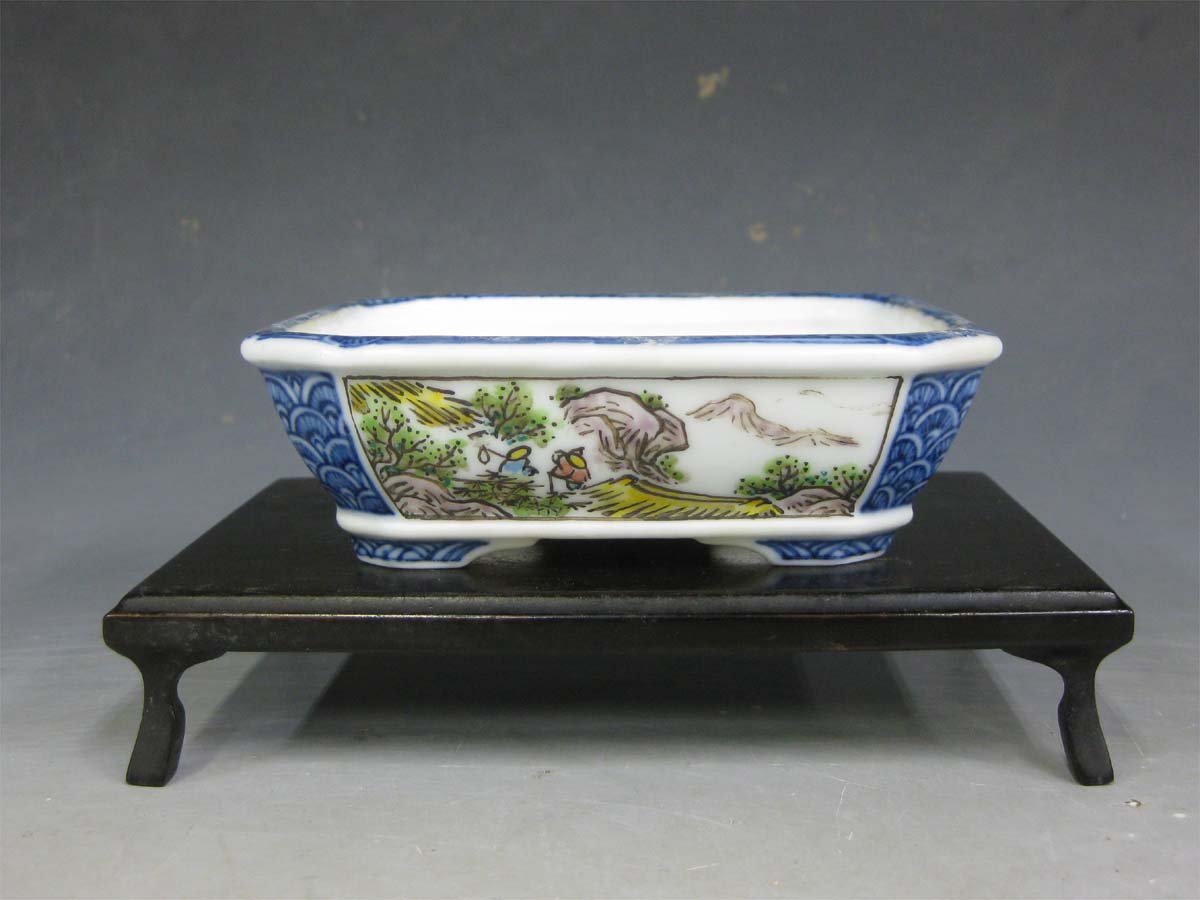
Shozan is a great painter, one of my many favorites. His paintings are often a little rougher than some of the more popular painters, with less clean lines and an almost impressionistic feel. The prices for his pots are correspondingly a little lower, which makes me happy! I love the bamboo rim on the first pot from my collection, a great little detail.

Tsukinawa Yusen, 15.5 x 2.6 cm Copyright Yorozuen

Tsukinawa Yusen, 9.3 x 8.2 x 6 cm Copyright Yorozuen

Probably the most famous Sometsuke bonsai pot painter of them all, Yusen’s paintings can vary from clean lines and high details, to impressionist and soft. His paintings are a real marvel, and his ceramic work is every bit as good. Prices are, accordingly, astronomical…be prepared to drop half a years worth of mortgage payments for a decent one!
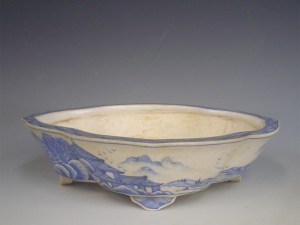
Itou Gekkou 16.5 x 14 x 4.1 cm Copyright Yorozuen
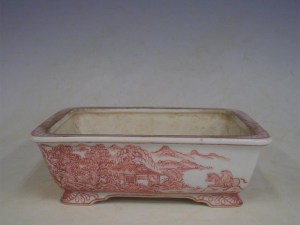
Fujikake Yuzan, 16.2 x 13 x 4.5 cm Copyright Yorozuen

The two most popular and well respected painters of the last 50 years, Yuzan and Gekkou. One need only glance through a Gafu album to see just how popular. Their styles are very similar, both with very clean lines, high details, and marvelous use of negative space. The ceramic work of both artists is also wonderful. I especially love the collaboration pieces between Itou Gekkou and his brother, Itou Tonyo.
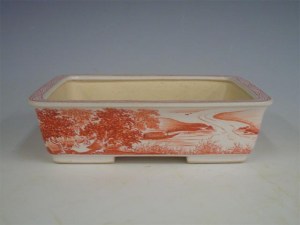
Miyazaki Isseki, 12.5 x 9.9 x 3.5 cm Copyright Yorozuen

Isseki is another famous painter, whose strongest suits are the inclusion of highly detailed, hard to depict landscape features in his pots. Note the detail of the winding stream in this pot, it’s very well done. The Stream Is actually a dual role figure, also playing the role of negative space in the far view. The currents and eddys are very well painted, cooling me off in this crazy southern summer heat wave!
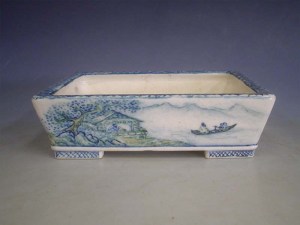
Bikoh pot, Shoseki Painting. 14.2 x 10.7 x 4.2 cm Copyright Yorozuen

Hanko and Rakkan of Bikoh and Shoseki

Shoseki is another famous contemporary painter, who sometimes does work for the Tokoname co-op. His landscapes and animal figure paintings are very nice…most of his work features scenes of children, I’m not a fan of those. An old tree in a pot painted with young children is just too much contrast for me to handle!
This particular pot is extra interesting, a collaboration piece between famous contemporary potter Horie Bikoh and Shoseki. You’ll most likely recognize the work of Bikoh as those smaller pots with medallion inlay glaze attachments featuring birds.

Heian Koso, 12.2 x 5.6 cm, and 11.2 x 4.8 cm Copyright Yorozuen

A virtually unknown potter and painter here in the west, Koso is probably one of the best buys going right now. A third the price of a Gekkou or Yuzan, and really nicely depicted scenes. I especially like his tree work, weeping trees are painted with grace and style.
His glazed pots are also very nice. All of his, publicly espoused influences come through in his pots, Yusen, Tofukuji, and Kouzan.

Haruyoshi, 10.7 x 9 x 3.4 cm Copyright Yorozuen

Another very popular contemporary potter, Hauyoshi is sure to one day join the ranks of the best. I especially like his 5 color paintings and his figure pots featuring birds.
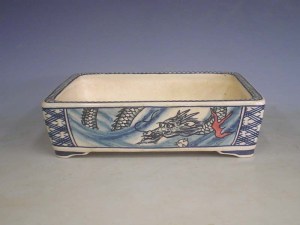
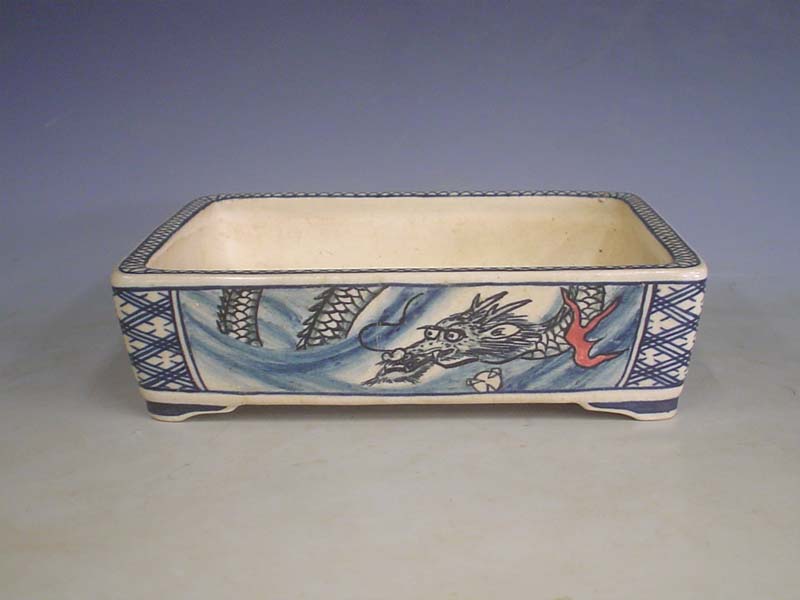
Bizan, 13.2 x 10.3 x 3.6 cm Copyright Yorozuen

A nice dragon painted pot from Bizan. The style of Bizan is unique and easily identified, with muted blues and overall less bright coloration.

Miura Chikusen, 8.3 x 6.3 x 7.2 cm Copyright Yorozuen

I know next to nothing about Chikusen, except that I’ve seen very few of his pots in the books and from Japan. I love the softness of this painting pot however, the impressionistic blur of line is marvelous.

Tani Ranzan, 13.8 x 10.3 x 3.5 cm Copyright Yorozuen

Tani Ranzan is a contemporary potter whose painting work often reminds me of the work of Shoseki. His unglazed pots are spectacular as well, oft featuring basket carving and detail that I like as well as Bigei.
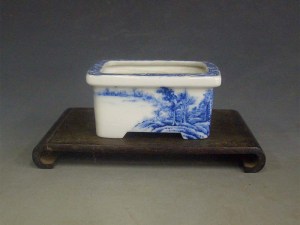
Hayashi Toujaku, 8 x 6.4 x 3.8 cm Copyright Yorozuen

Toujaku is famous for unglazed pots and small carvings, but his painted pots are nice as well.
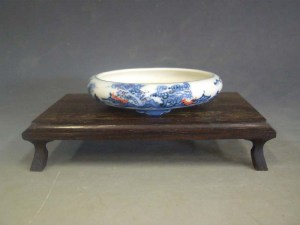
Tarugen, 8.5 x 2 cm Copyright Yorozuen
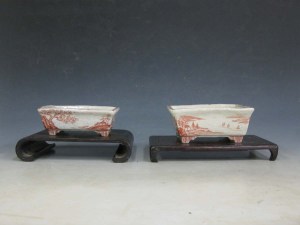
Kutani Shiyou, 12.2 x 10.5 x 5.1 cm and 11.6 x 9.9 x 3.9 cm Copyright Yorozuen

There are many Kutani painters. The Kutani co-op is unique, in that a master potter makes the pot, which is then painted by a different artist.

Sensui Left: 7.6 x 3.9 cm x 8cm. Middle: 9.2 x 8.7 x 2.4 cm Right: 9.3 x 4.4 cm Copyright Yorozuen

The pots of Sensui feature old school geometrics, and unlike some of the potters shown here, are better for daily use. While the prices and quality of some of these pots may cause them to never see our benches, and make an appearance only for a show, the pots of Sensui are nicely painted and inexpensive.
I hope you enjoyed these pots as much as I enjoy sharing them. In the next post I look at the pottery of Watanabe Kazuhiro, better known as Ikkou.

Posted in Famous and Antique Potters, Modern Potters | 1 Comment

The Hanko and Rakkan Of Heian Tofukuji

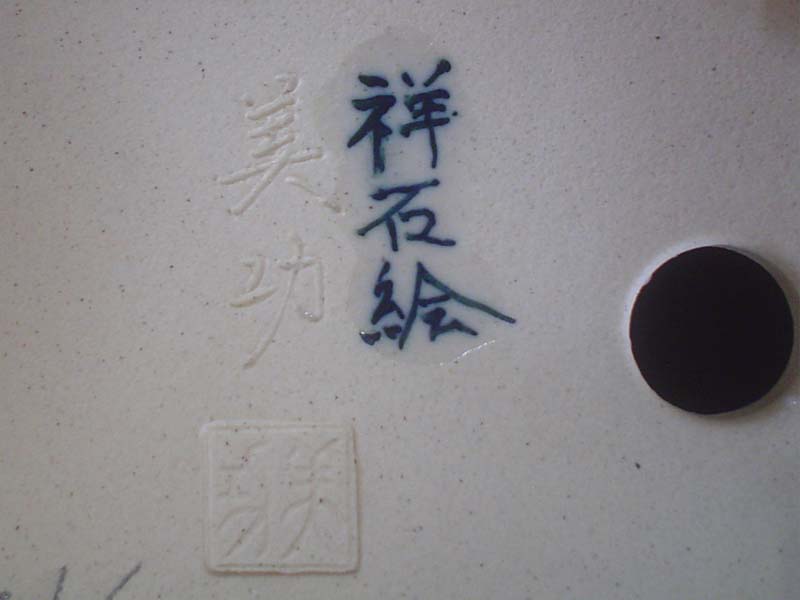
Tofukuji used at least 15 stamps in the course of his career, plus his signature.  Discrepancies in the stamp are often one of the easiest ways to spot a forgery.
Some things to look for in comparing stamps for forgeries are discrepancies in character, depth, stamp edge, and relative size.

Copyright Yorozuen

Copyright Yorozuen

One of the most recognized and forged marks in the world.  Tofukuji used two different stamps of the Trident leaf style, the second is less broad and more rounded at both the top and tip of the bottom leaf, the left leaf dips down slightly, and has less ridge definition.  The letters are larger relative to the leaf size as well.

Copyright Yorozuen

Copyright Yorozuen

Copyright Yorozuen

Copyright Yorozuen

The above three impressions are differing Tofukuji stamps, of the same in line vertical style.  One is boxy and shows a straight line impression around the edges, while the other have ovate edges.  In all Tofukuji used 4 stamps of this style, making forgeries sometimes difficult to detect. Note the depth of the impressions and stamp edge shape, forgeries are often pressed to deep and have different size and/or shaped edges.

Copyright Yorozuen


Copyright Yorozuen

Copyright Yorozuen

Copyright Yorozuen

Copyright Yorozuen

Tofukuji Signature Copyright Yorozuen

I hope this glimpse at Tofukuji signatures and stamps has been informative.  There are many forgeries, both here and in Japan.  Many a collector has been taken in by a good forgery.  A keen eye for details and a strong background in the material are indispensible in spotting the difference.


Posted in Famous and Antique Potters, Pot Info, ID, Hanko, Books, ect. | 1 Comment

The Unglazed Pots of Heian Tofukuji

While Tofukuji is certainly most famous for the quality, variety, and depth of his glazed pots, his unglazed pots are equally well appreciated, listed in the ranks with the best unglazed potters of Japan. Tofukuji used several types of clay for his unglazed pots, probably local, the most easily identified of which are a rich light red and and a deep brown, almost black, both often with flaws leading to “pear-skin” appearance.

12.1 x 4.5 cm Copyright Yorozuen

A smooth round with cloud feet, very clean lines and a much smoother appearance than many of Tofukuji’s unglazed pots.

21.2 x 8.1cm Copyright Yorozuen

Similiar to the pot above, but with slightly darker clay and more rounding to the body.  The multiple decorative feet are quite nice.

12.5 x 6.7cm Copyright Yorozuen

A rich reddish brown pear skin square with cloud feet.  Typical of Pear skin pots with Tofukuji’s signature “Rihidei” clay.

9.9 x 5.2 cm Copyright Yorozuen

A primitive drum with overhanging lip and sharpened rivets.  The more rustic appearance, both of the pot style and the finish, are far more typical of the bulk of Tofukuji’s unglazed pots than the clean, modern pots above.

11.1 x 3.1cm Copyright Yorozuen

Round drum with flattened rivets and cut feet.  In a greyer clay than many of Tofukuji’s pots, I find this unique.

16 x 3 cm Copyright Yorozuen

Rustic round in the dark brown, almost black clay used by Tofukuji.  Often seen with pear skin texture, this single color clay pot is outside the norm.

10,2 x 3.5 cm Copyright Yorozuen

Round drum with with flattened rivets and cut feet.   A style with matching clay color often imitated by Heian Kousen, who is said to have spent a full two years attempting to duplicate the clays of Tofukuji.

4.5-5 x 2.4-2.6 cm Copyright Yorozuen

Three hand formed small rounds, the most common shape and style of Tofukuji pots…also the most forged.  Shown here to illustrate the three most common clay colors in Tofukuji pots.

12 x 9.8 x 4.2 cm Copyright Yorozuen

A Tan rectangle with clean lines and very smooth finish.  Here one can see the rather unreal “glow,”  the form very old patina can take on lighter unglazed pots.

36.7 x 23.4 x 8.7 cm Copyright Yorozuen

Another Beige/tan with very clean lines, cut feet, and thick walls.

12.8 x 2.2 cm Copyright Yorozuen

Light brown oval with cut feet and carved details and a marvelous patina.

16.4 x 12.2 x 3.2 cm Copyright Yorozuen

Another oval in slightly darker clay with carved relief center band and cut feet.  Another marvelous patina here, this center band also makes this pot unique.

13 x 9.5 x 3.4 cm Copyright Yorozuen

Tan pear skin with cut feet.  In the three pots above, its easy to see how age and patina affect different colors and textures of unglazed pots.

In the next post I’ll take a look at the Hanko and Rakkan of Tofukuji, who used no less than 12 different stamps plus his signature.  As can easily be seen from this post, while familiarity with the clays used by Tofukuji is a good indicator of authenticity, study of the stamps is often the easiest way to spot a fake.  While locally dug clays may differ in shade and texture, the stamps used by Tofukuji were always the same, and the depth, shape, and consistency of their impressions is a sure tell.


Posted in Famous and Antique Potters | Leave a comment

Glazed Pots by Shigeru Zyubei

Shigeru Zyubei is a potter from Osaka, Japan.  Virtually unknown here in the United States, and not very well known in Japan either.  Despite this, I think his pots are sublime; with gorgeous glazes reminiscent of Tofukuji, Aiso, Shukuhou, Ikkou, and Kouyo.

Very special thanks go to Rie Aketo and the good people at Yoshoen for their kind permission to use images of Zyubei pots.

17cm. Copyright Yoshoen

A lovely Drum pot with the super thick glaze that the best Zyubei pots exhibit.  I love the two drips on either side of the front foot, perfectly level with the foot bottom.  The blue streaks of glaze throughout appear as if lightning in a dark sky.

10.4 cm. Copyright Yoshoen

Another drum with a similarly masterful blending of glazes.  the drips on bottom of this pot are asymetrical, so it’s not as appealing to me as others, but still very nice.

11cm. Copyright Yoshoen

Blues and greens combine on this rectangle with crazy thick glaze.  This pot calls to my mind the best pots of Kouyo and Youzan.

11 cm. Copyright Yoshoen

The running glaze on this pot, pooling around the base of the feet, rounding them, is just wonderful.  Ive never seen a technique like this used.  In addition to the use of glaze drips as additional feet, or foot details, this is another technique I think unique to Zyubei pots.  In an art form as old and understated as bonsai pottery, it is always really nice to see innovation and invention.

14cm. Copyright Yoshoen

A more classic style pot, with a much thinner green glaze than previous pots…no less pretty for that though!  The green in this glaze has real depth and quality, the crackle is nice, and the outward facing feet are very well done.

11.5 cm. Copyright Yoshoen

A tall rectangle with an interesting red glaze.  Real depth and quality to this red, I think red and yellow glazes are often too bright and pure on Japanese pots, and too muted and mottled on American and EU pots.  This a nice median, not too bright and overstated, not so mottled it appears brown.

10.4 cm. Copyright Yoshoen

Really interesting mix of matte blues, greens, and whites in a very thick glaze.  Like an abstract expressionist painting, this pot is strangely hypnotizing to me.

14 cm. Copyright Yoshoen

White and black glaze mixed and swirled.  I am sure I am not the only one who this pot calls to mind marble and stone.

17cm. Copyright Yoshoen

Another red glazed pot with various other colors.  Leopard?

15 cm. Copyright Yoshoen

A soft bag style celadon glaze and nice flowing feet.  Another more classically glazed and styled pot, but very well executed.  The celadon green has great depth and fine coloring.

14.5 cm. Copyright Yoshoen

A tall six-sided Drum pot with really thick glaze.  Dark and brooding, another pot that recalls some of the darker glazes and drums of Tofukuji.

Zyubei Inexpensive Chop

Zyubei Chop seen on Higher Quality Pots

Posted in Modern Potters | 3 Comments

A Few More From My Collection

Heian Kouzan, 5.5 x 3.5 x 1"

A pre-war green glazed Heian Kouzan with rope detailed rim.  A very old Kouzan with a marvelous patina.  The glaze has become rough and pitted with tiny imperfections over the years, its feel is like fine grained sandpaper, while the clay body has become so smooth it feels like it has been oiled, two characteristics of very old pots that have seen heavy use. The clay body is white(Now nearly dark brown with age), a clear indication of pre-war and early edition pots.

Clockwise from top Left: Suizan, Siewafu, Haruyoshi

A few small sometsuke pots, by three very different painters.  The Suizan has a marvelous patina, and is quite old.  The Siewafu and Haruyoshi pots are both unused.  Haruyoshi has become a very popular painter in Japan in the last few years, and his pots are often seen in major shows.  His 5 color painting pots command the highest prices, and are quite nice!  Ill be writing a post featuring his Sometsuke in the coming months.  Siewafu is a Seto area potter, producing very nice pots with classical Seto style paintings.  I like the dragon on this pot, the use of negative space and foot and rim details are also quite nice.

Ino Shukuho, 5" x 3" x 2"

A typical example of the marvelous handmade pots by Ino Shukuhou.  Like the Ino pot posted for comparison to Tofukuji in the last post, this pot has a very fine overglaze of silver, with blue green underglaze and nice fine crazing.  Cut corners and feet are well done, perfect angles and proportionate lines.
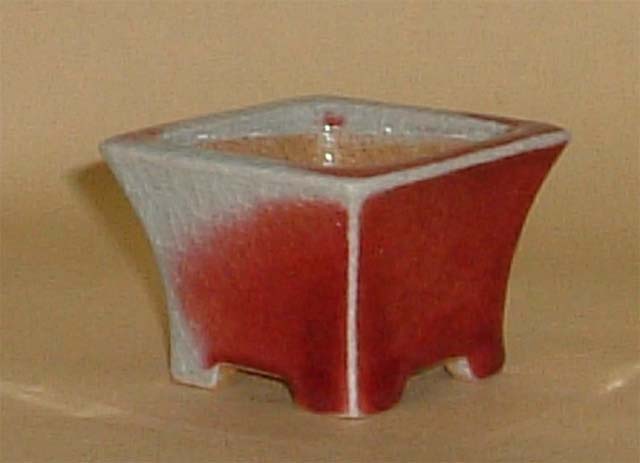
Shigeru Zyubei, 4.5" x 2"

A marvelous glazed pot in greens, blues, and browns by Zyubei, a relatively unknown potter in the U.S. who is one of my current favorites.  His glazes are reminiscent of Tofukuji, Shukuhou, and Kouyou.  The feet, angles, and rim of this pot are relatively thin, and sharp…this should give you a good idea of the thickness of the glaze!  Extremely thick glazes of this quality are rare, common for Tofukuji, not so common for contemporary potters.  I love the center bottom.  The varying glazes come together in a perfect single drip so well placed and formed, it appears to be foot detail!  The glare hides it, but there is also a very nice, fine crackle to the glaze.  In the next post I will feature my favorite 10 pots from this potter.
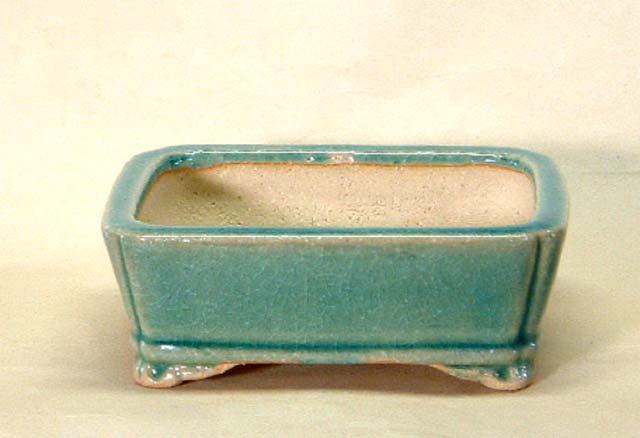
Watanabe Kazuhiro(Ikkou), 4" x 3" x 3"

A light blue glazed deep, banded rectangle by Watanabe Kazuhiro(Ikkou).  I love the blue glazes of Ikkou, as well as his greens, yellows and unglazed clay pots.  The is the most common blue color glaze from Ikkou, and looks especially nice on Mokko(Quince flower) pots.

Watanabe Kazuhiro(Ikkou), 4.5" x3" x 1"

Another Ikkou oval with green and brown glaze and blue highlights.  A really nice patina has started to form on this Ikkou, which will only improve as I cant wait to plant it!  I really like the subdued greens and blue notes, very refined and versatile.

Mino Kenzan, 7"x 4" x 2"

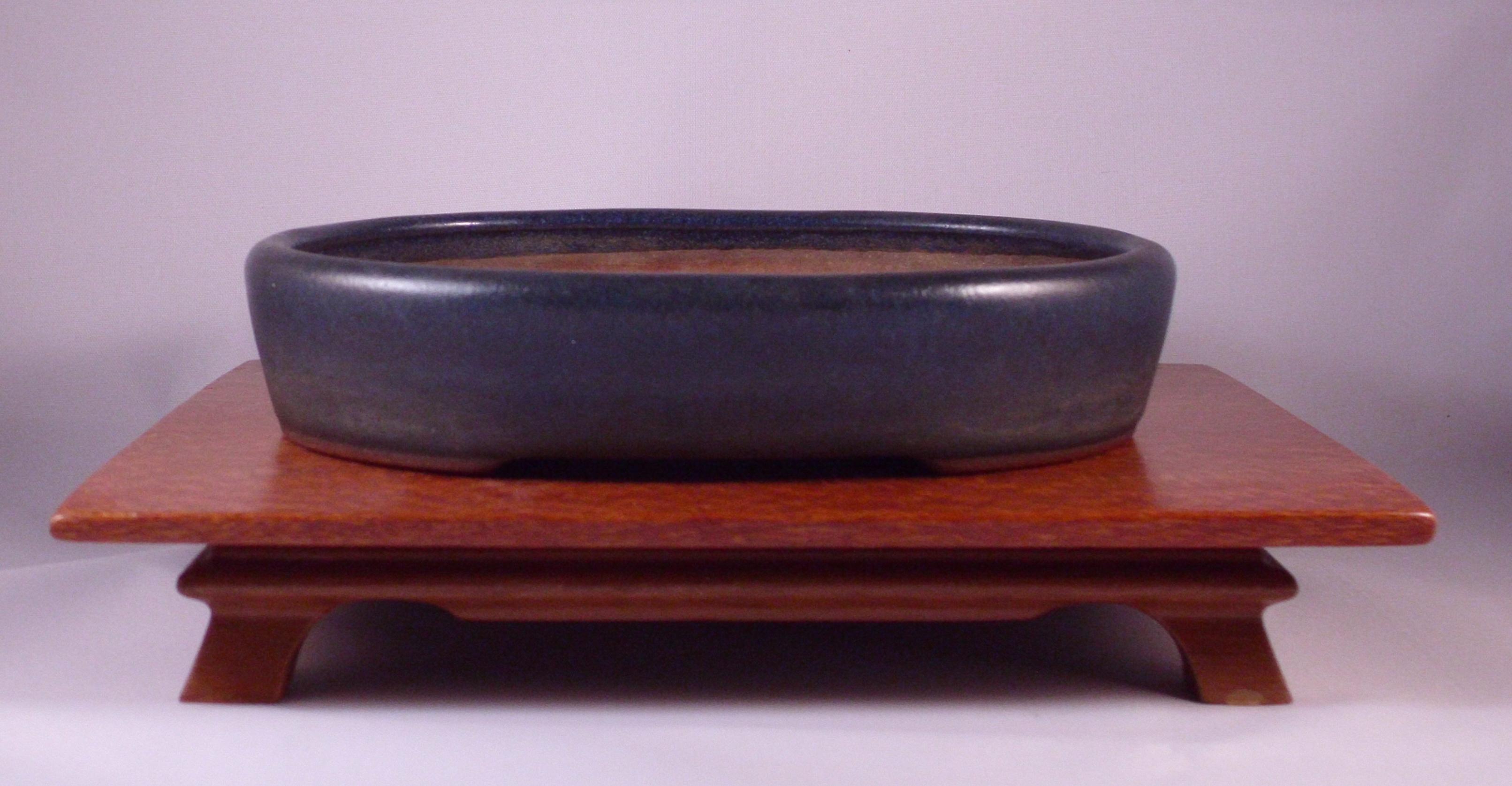
A very nice deep blue glazed oval from Mino Kenzan.  Kenzan makes very classical glazed and unglazed pots, never flashy, or even overstated.  This makes them highly versatile and useful, as can be seen from the patina on this pot.  I like the pots of Kenzan, high usability and better quality than most production line Tokoname.  That all of his pots are classical and functional, is, to me, a virtue of this underappreciated potter.  After all, is not understatement a virtue when matching a tree to pot?

Thanks for reading, I hope you enjoyed it.  In the next post I feature the pots of Shigeru Zyubei, then on to the unglazed pots and clay of Tofukuji, along with a pictorial guide to his Hanko and Rakkan.

Posted in My Personal Collection | Leave a comment