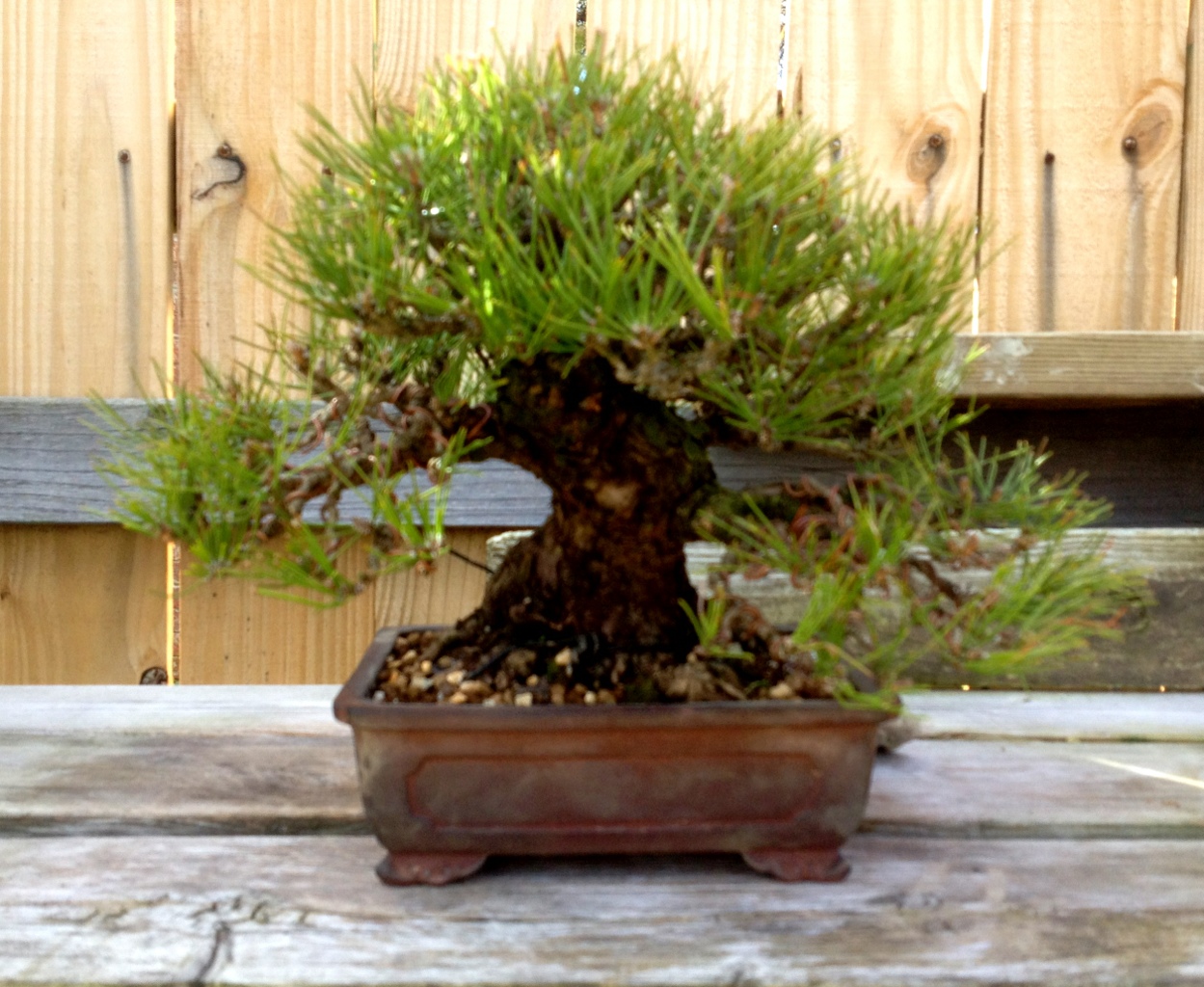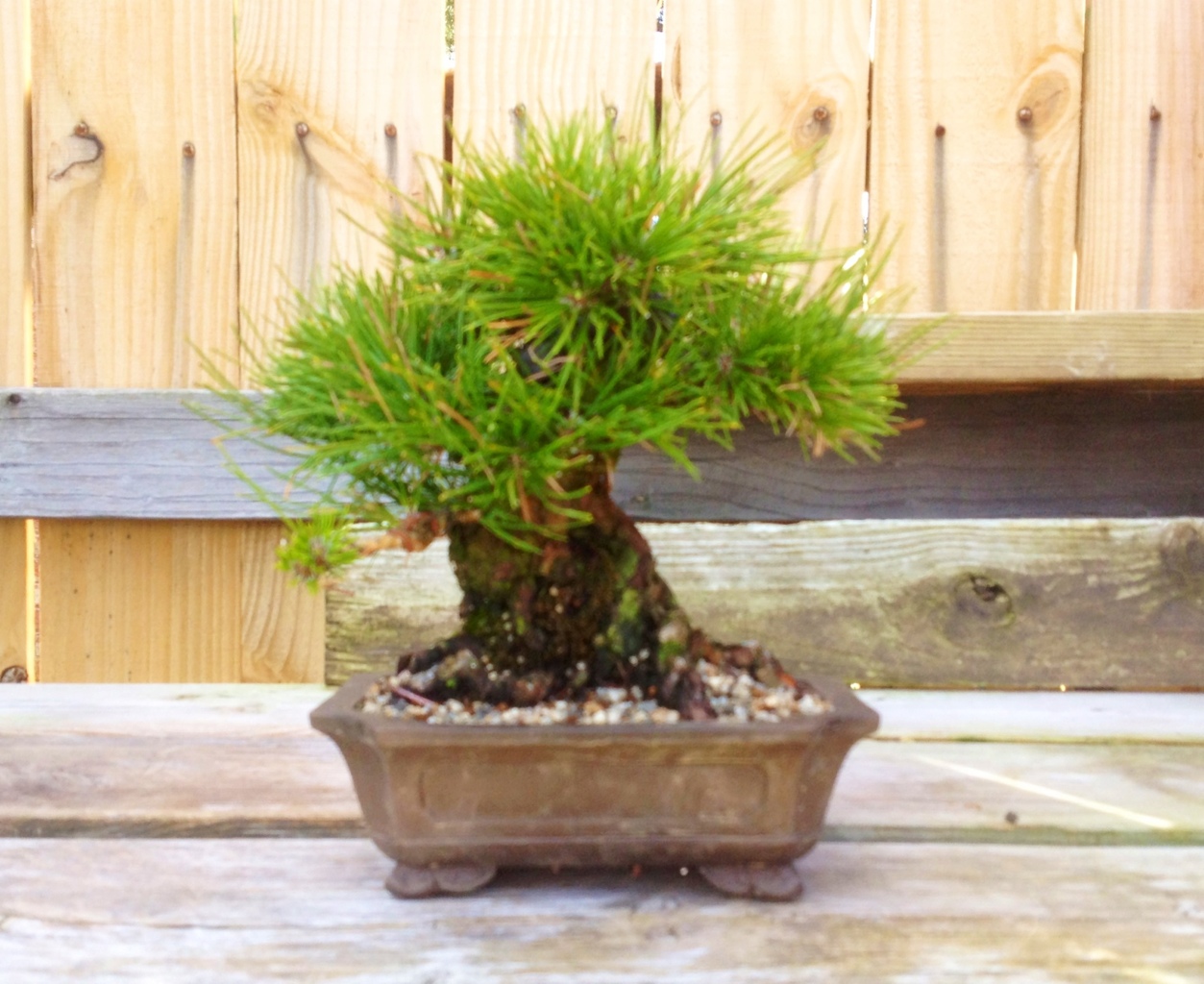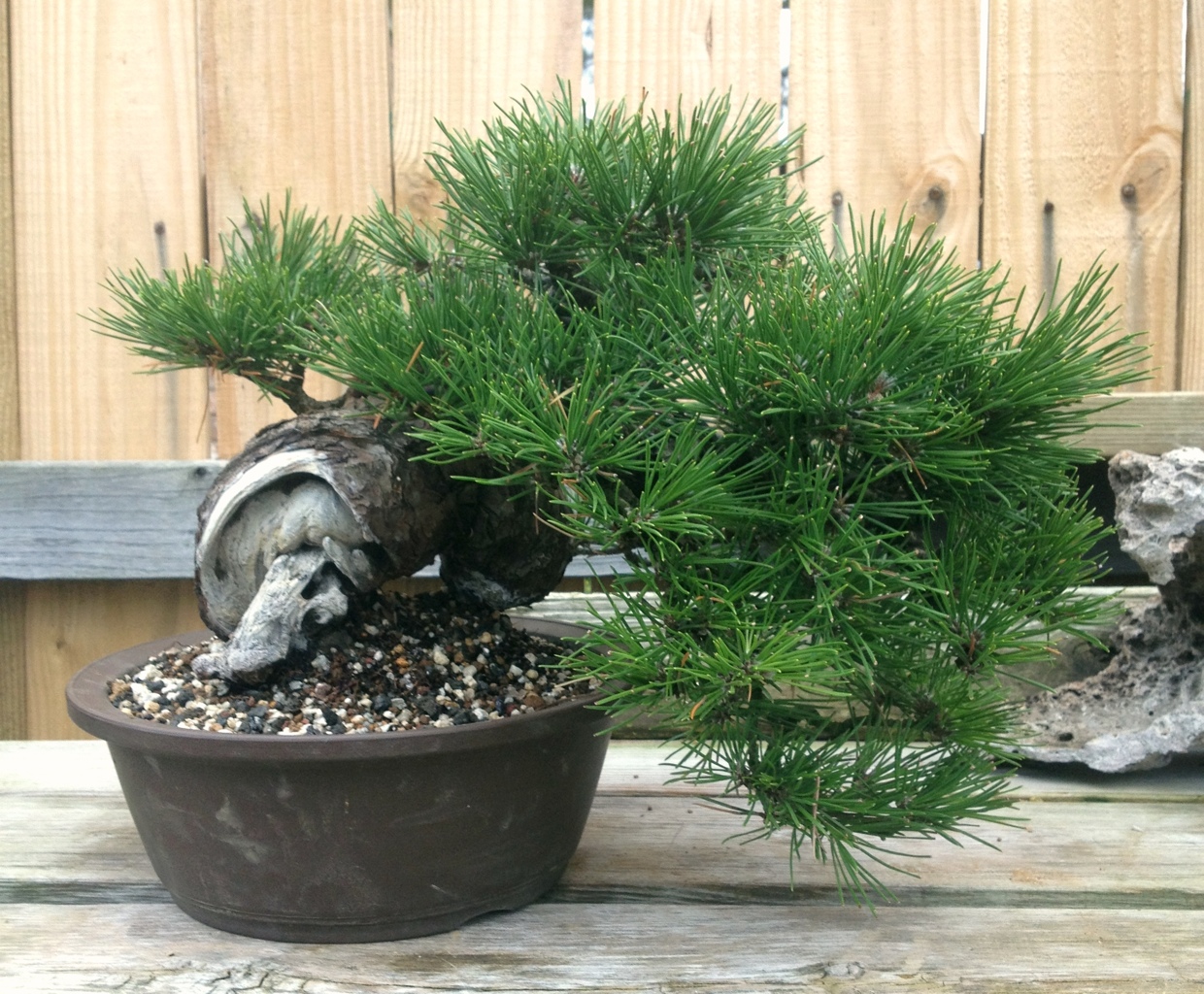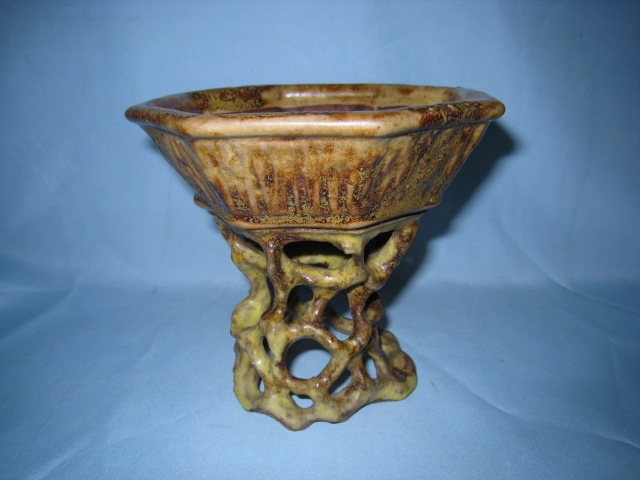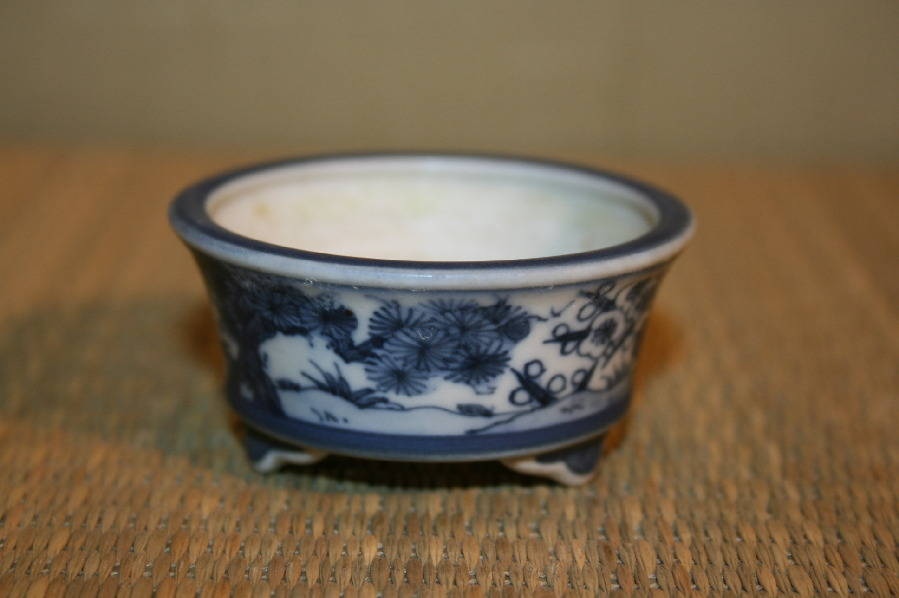
Tsukinowa Yusen-Part 1

Among painters of bonsai pottery, no one is more well known and lauded than Tsukinowa Yusen. His real name was 加藤護一(Kato Goichi), and he lived from 1908 to 1998. He was born in Gifu, and moved to Kyoto to study painting while working in the studios of Kiyomizu pottery. After becoming increasingly interested in pottery, he studied under 石黒宗磨(Sekikoku Soma?). He was forced into hard labor during the war, and as a result was in poor health the rest of his life.
Bonsai was a hobby for him, and in 1961 he began making pots for his own trees.
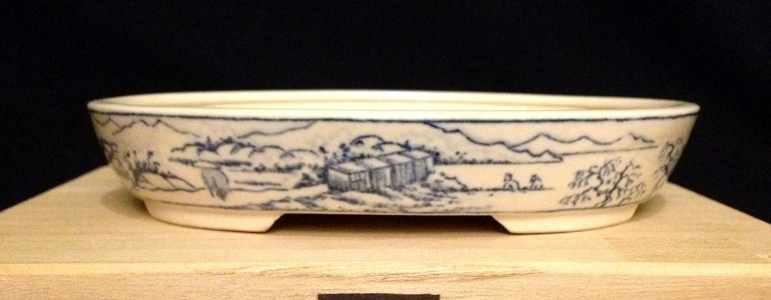
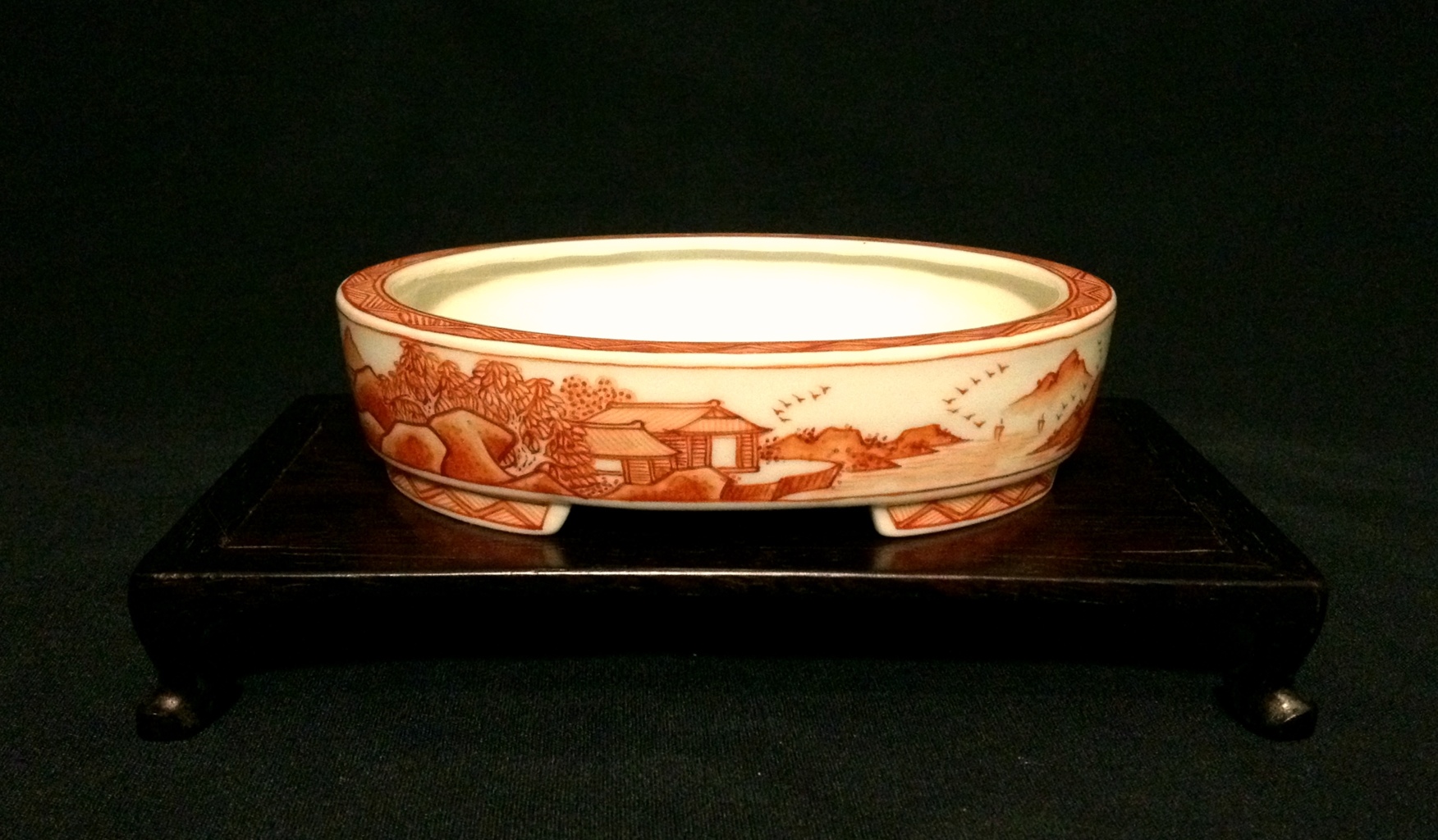
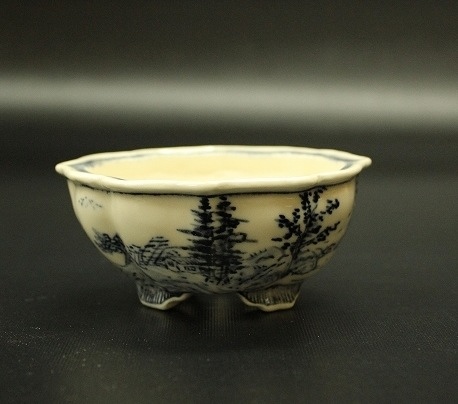
His painted pots represent the pinnacle of Bonsai pottery painting technique, and today, it is estimated than only a hundred or so exist. He is most famous for his versions of Ando’s “53 Stations of the Tokaido Road”, though other well-known motifs include the famous anthropomorphic animals of Kozan, mountain landscape scenes, water scenes featuring birds, and pictorial scenes of famous poetry(see Sam Edge’s excellently researched articles on pieces from American Frank Cucchiara’s collection of Yusens for more on this):
Tsukinowa Yusen-In Search Of An Answer
Not only is Yusen famous for his own work, but he is, perhaps, one of the most famous collaborators in bonsai pottery history as well. Collaborations between Yusen and SeiFu Yohei are perhaps most famous and often seen, but other collaborative pots abound as well, notably with Kutani Ikko, who we’ll look at in depth in a future post.
In contemporary bonsai porcelain painting, no painter is more imitated and duplicated than Yusen. While Yusen looked to old scroll paintings and poetry for inspiration, modern painters simply look to Yusen! It’s far less common to see a pot that is an homage to the Chojugiga (anthropomorphic animals) scroll paintings of Kozan, than to see a copy of Yusen’s homage to them! Homages to Yusen’s work abound, some good and some great, and we’ll take a look at a few of those here too.
20130308-094920.jpg
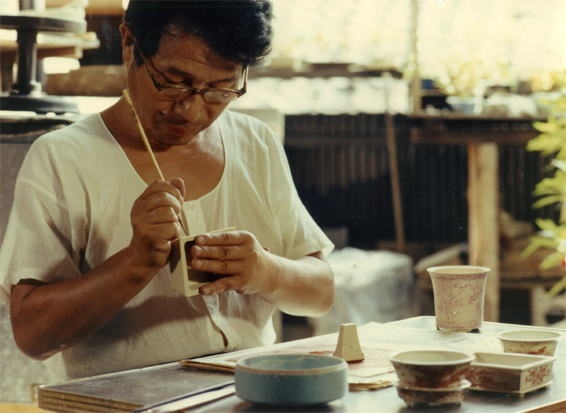
Yusen hard at work painting in his studio, circa 1980, 72 years old. Note how closely positioned to the table he is (for support in painting those sublime details, perhaps?), and the thinness of the brush being used!
Settle in for a long read, I’m going to split this up into two posts to make reading on the phone a bit easier for you non-computer users(like me!).
Up first we’ll take a look at a few we’ve seen before, then in to new material, and in the next post, Glazed and unglazed Yusen, Yusen Homage pots, and Shohin bonsai trees in Yusen pots.
Now, on to the pots!

20120512-231238.jpg

20120512-231227.jpg
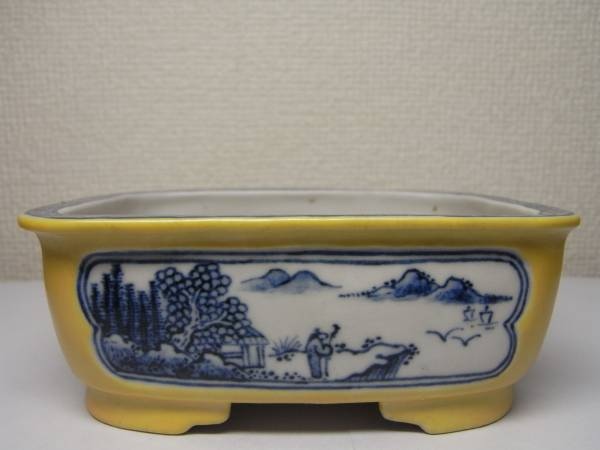
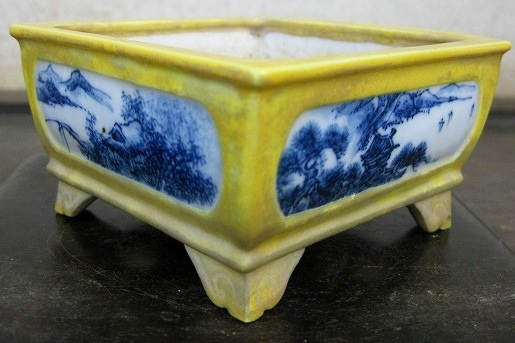
We’ll start off with the rarest and the priciest! Yellow window pots like this from Yusen are few, and VERY expensive, as only a handful exist. Great patina, and note the great feet and ceramic work, clean, flawless. No drip to the window, or blurring. Yusen was nearly as great a potter as painter, a true rarity.
Here are the only others I believe exist. You can study them for your selves. I, for one, am speechless. We’ll see homage versions of this style Yusen in the next post from Takao Koyo.
20120512-231641.jpg

20120512-231653.jpg

20120512-231701.jpg
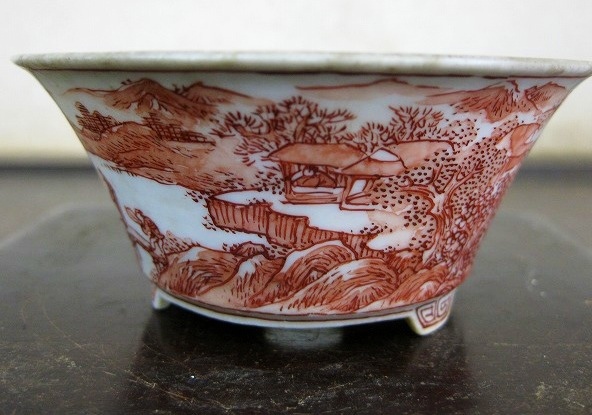
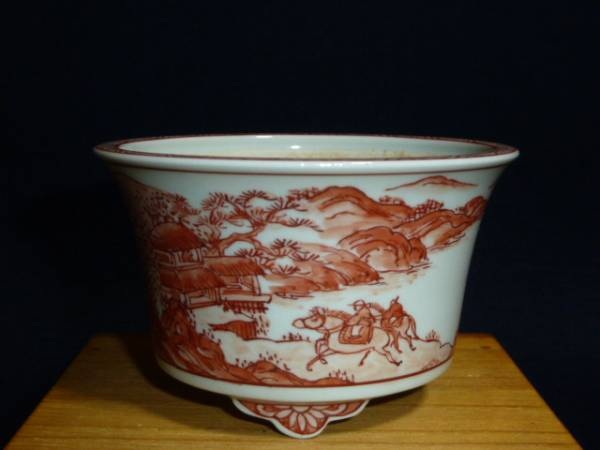
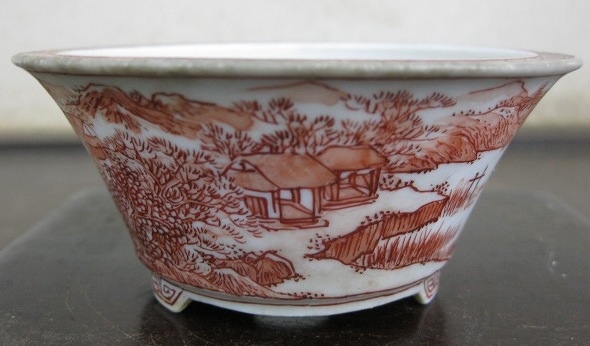
A red painted round porcelain pot, showing some nice patina on the rim. Porcelain patinates at a fraction of the rate of other glazes and unglazed clay, so porcelain pots showing patina are much more valuable and tough to find. This pot is a prime example of why Yusen’s work is prized. Note the detailed brushwork, the full wraparound landscape, the flawless porcelain…gorgeous.
20120512-232013.jpg
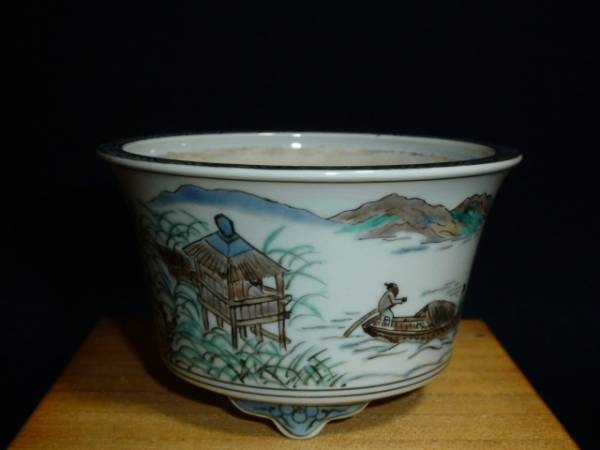
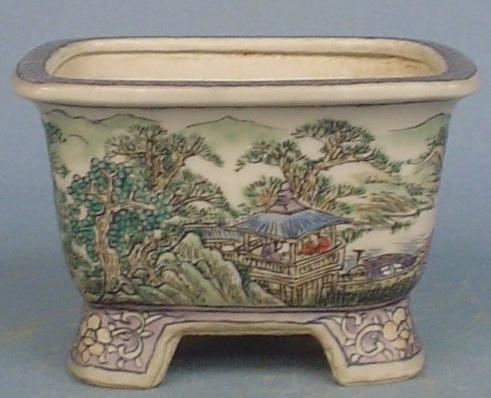
A five color painted landscape, with tall feet. This pot style is common to Yusen pots, and often seen holding lovely deciduous semi-cascades and cascades in the Gafu-Ten shows. Again, marvelous detailed landscape, really great ceramic work.

20120512-232406.jpg
Another go-sai pot to contrast with the previous piece. No feet to speak of, and much softer lines to the pot all around…how cool is that? The pot is softer, more feminine, and the painting mirrors that change precisely! Softer lines and brushwork, more negative space, softer details…wow.

20120512-232817.jpg
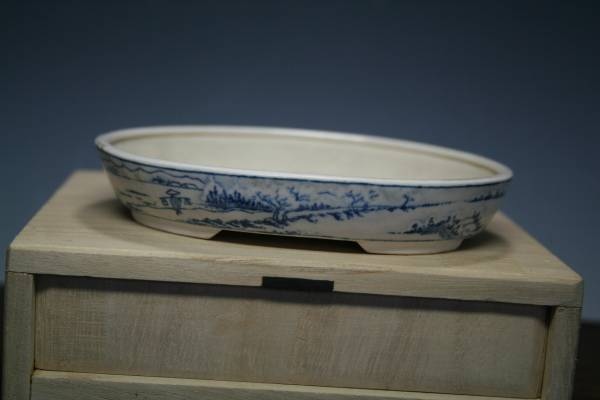
A Yusen Suiban with blue landscape. Great use of negative space, flawless porcelain. I have no clue how many of these exist…less than a handful I’m sure, as this is the only one I’ve seen.
20120512-235213.jpg
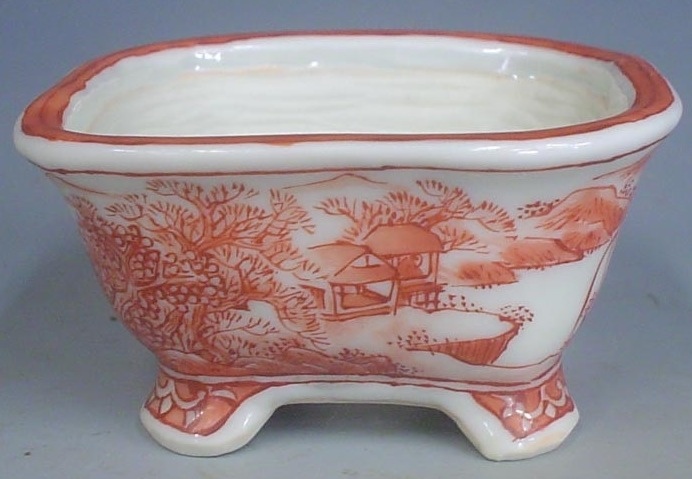
Another red with great brushwork and details. Less negative space here, needs a busy tree to compliment it.
20120513-004509.jpg
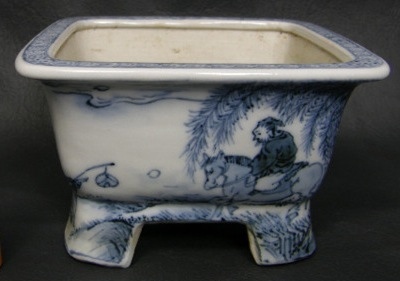
A simple pot with the tall feet common to Yusen pots. Great details and brushwork.
20130305-101636.jpg
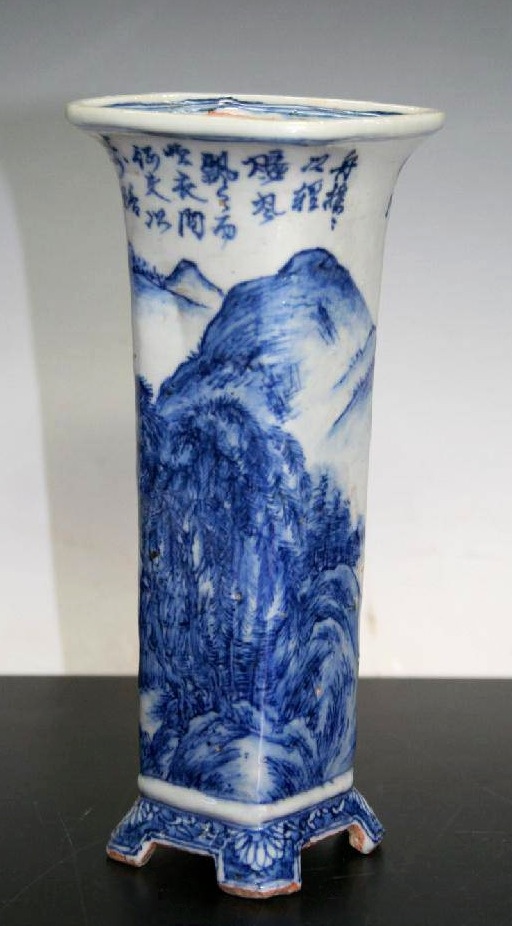
A rare, tall Yusen cascade pot. Note the highly detailed grove that’s the focus, with it’s clearing at the base, seemingly in a valley. A great sense of depth in a two dimensional painting.

20130305-101750.jpg
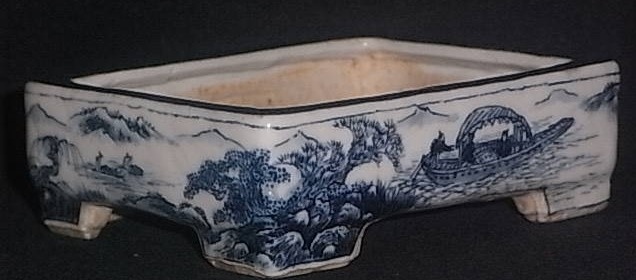
A highly detailed sometsuke Yusen showing the horse and rider so prevalent in much of Yusen’s landscape paintings. Excellent details for such small work! Remember: most of these pots are 4.5″ and under!!
20130305-101910.jpg
From the opposite side and corner, we can see the full wraparound painting, and that the rear features another very common image in Yusen’s work, a boat out on the water.

20130305-115930.jpg

20130305-115937.jpg
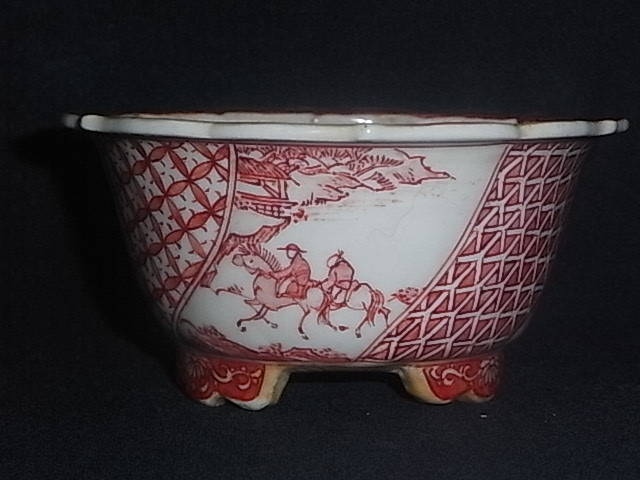
Two sides of a Yusen with painted landscapes interspersed between geometric patterns. The pattern work is superb, as are the brush details to the landscapes. The feet and rim are nice as well. A really nice example of multiple types of Yusen’s skill with the brush, and the clay.

20130305-120154.jpg
A sometsuke Yusen showing two fisherman collecting crab traps. The details to the figures are exceptional, and the sense of depth created by the water receding into the mountains in the distance is superb. A charming and everyday seaside scene made immortal.

20130305-120649.jpg

20130305-120657.jpg
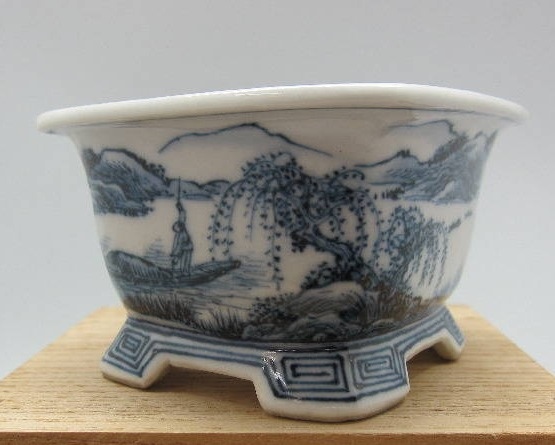
Two sides, from the corner, of a superbly painted sometsuke book Yusen with feet that are characteristic for semi-cascade and cascade Yusen. The details in this small pot are simply outstanding, I’m especially charmed by the weeping tree in the second image, it looks to be willow, or perhaps wisteria with the flowers just blooming.

20130305-121018.jpg
A pair of Yusens, in red and blue, showing the characteristic motifs of birds, and a waterscape with boat, the pilot staring off into the distance at the newly risen moon. Probably the highlight of someone’s collection, a box was commissioned for storage of the two together, despite not being a matched pair in shape, theme, or color.

20130305-121249.jpg
An up close look at an akae Yusen similiar to the one above, showing the typical birds frolicking in a meadow. The patina on this piece is outstanding.

20130305-121455.jpg
A Waterscape with boat and pilot playing the flute. It appears as if the moon has just risen on the horizon. Yusen’s subjects are always evocative of a moment in time, barely captured, like the Western Impressionists, at least ideologically. Another piece showing an outstanding patina. When considering the patina on these, keep in mind that Yusens are 52 years old, max, and the majority 30-40 years old, his peak production years. That’s a lot of patina for 30 years!

20130305-122343.jpg
A Yusen figure painted pot, on porcelain insets. The details to the figures are lovely, and the tall pot charming. Excellent patina, as well. Another great piece.
20130305-122521.jpg
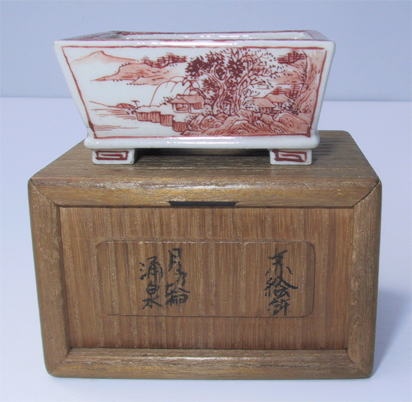
An akae painted Yusen with box. I love the small copse between the houses, with it’s mix of tree species, an the negative space off to the left. Note the flow of the lighter red to the ground and cover, it straight up points to the negative space to the left. An excellent example of directionality in painted pots.
20130305-201857.jpg
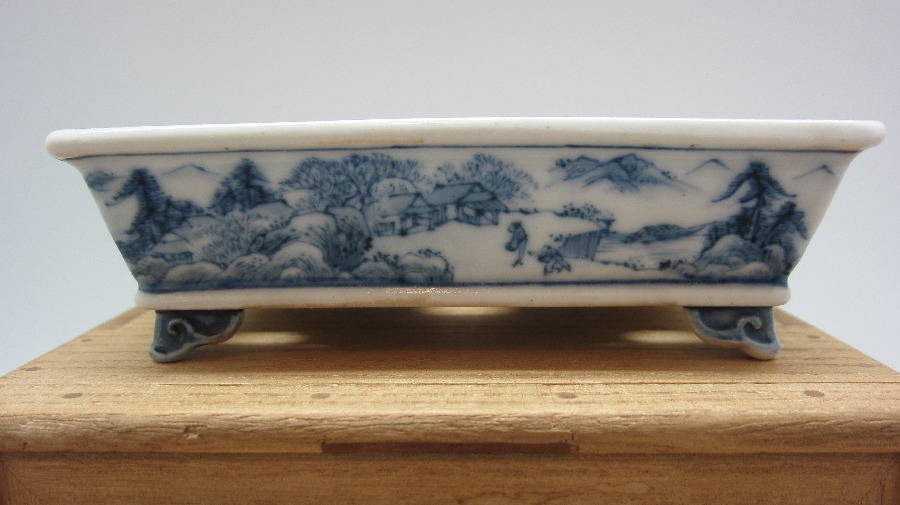
Another Sometsuke blue rectangle, this one with a cliffside scene. Note the mix of both deciduous and evergreen species of trees, and the excellent depth to the painting. In contrast to some of the above pots, one can really see Yusen’s skill at both near and far view landscape scenes.

20130305-202315.jpg
Another Akae painted pot, this one a round, very much traditional Kiyoto ware style, with it’s geometrics and small window landscape.

20130307-230149.jpg

20130307-230209.jpg

20130307-230219.jpg

20130307-230227.jpg
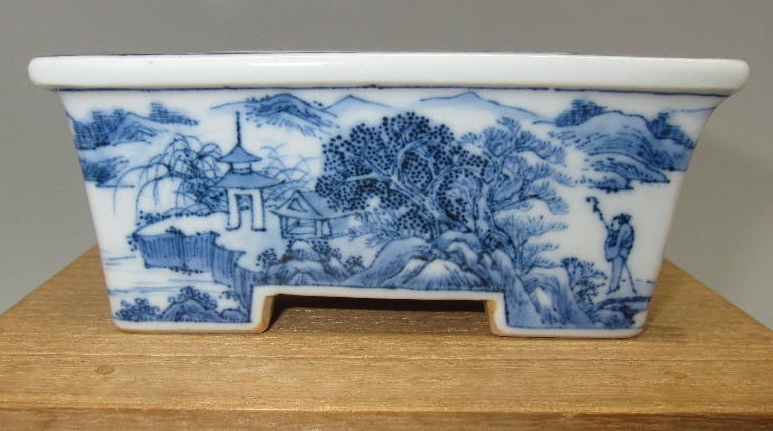
Four different views of a sometsuke square Yusen, showing most of the prevalent themes in his work. This one has it all: multiple tree species, near and far views, mountain landscape, and waterside scene with boat. A couple of birds and a horseback rider and it would be ultimate(not that it’s not, it’s pretty damn nice no matter how you look at it)!!

20130305-230751.jpg
And we’ll move on to the next post after this awesomely painted Akae cascade pot. The pot itself is sublimely made, with it’s delicate, thin walled construction and shape, and the painting is a perfect mix of Kiyomizu style geometrics and highly detailed Yusen landscape. A beautiful image, beautiful pot.

Posted in Famous and Antique Potters, Modern Potters | Leave a comment

Hokido

I recently sold my collection of Hokido pots, so, having some photos on hand, figured this would be a good time to slap together a post while I’m hard at work on a Yusen post.
His real name was Naoyuki Maenami, born in 1942, and started the Hokido kiln in 1976(like many potters, during the beginning of the “boom” years).
He’s been out of production for a while, his era of production was limited to a mere decade and a half. In my opinion, his pots are really well made, for the money, he developed a color of red clay(“Syudei”)that can normally only be found in antique Chinese pots. They are nice enough that many Japanese bonsai enthusiasts mistook them for good antique Chinese pots when they first came out. After last weeks look at all that’s been added, let’s take a look at what just left my shelves!

20130306-234539.jpg
Six points of Hokido, all small shohin size. The top pot is 5.5″, for scale.

20130306-234657.jpg
It’s tough to tell from this image, but the clay used to create the rim and base is a darker color from the body.

20130306-234810.jpg
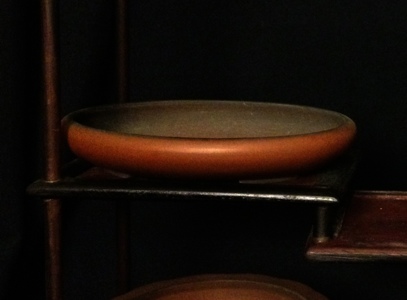
A very simple, very rich, red oval with incurved walls.

20130306-234841.jpg
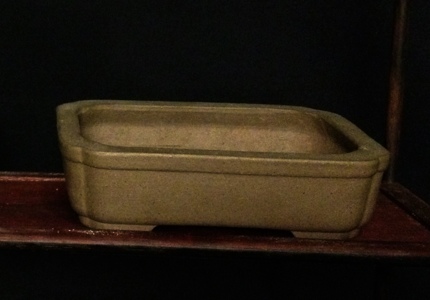
A grayish clay rectangle with cut corners, inset cut feet, and top band. I have another version of this pot that is very early edition, I decided to keep it 🙂

20130306-235011.jpg
The sister of the counterpoint pot on the high stand, in a much lighter clay, untreated by manganese wash or other patination.

20130306-235130.jpg
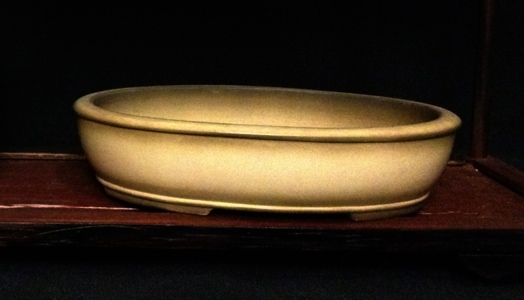
White glazed oval. Glazed Hokido are few and far between, and to my knowledge, the only glaze he ever produced is this cream color. It looks especially nice on his signature antique mirror shape pots…more on that later.

20130306-235320.jpg
The counterfoil piece, a scalloped semi cascade antique mirror shape with faux patina. It’s lovely, every bit as nice as a Bigei 3 times as pricey!

20130306-235456.jpg
A large Hokido I’ve show before, in his trademark style Antique Mirror shape with three cloud feet. The clay is as rich a red as you’ll see from any potter, for twice to 3 times the price for a 12″ antique mirror shape. Despite selling the ones I had, I still maintain theyre quite the deal for the quality. Well burnished, well shaped, high quality, uniquely tinted clay…what more could you want?

20130306-235756.jpg
A Hokido oval 10″ in his signature “Syudei”. The quality is tops, and the finish nice, but not totally smooth. Still, a fraction of the cost of a Burnished Bigei of the same size!
So those are the Hokido that left my shelves this week! Later today I should finish up a long, and long overdue, article dedicated to Tsukinowa Yusen.
Thanks for reading!

Posted in Modern Potters, My Personal Collection | 5 Comments

From My Collection 14: Antique Chinese

So here we’ll take a look at some new Antique pots gracing my shelves from China.

20130225-141521.jpg
Up first we have a stamped, unglazed cloud footed rectangle with lip, Huruwatari(middle crossing period, 1800-1911). This pot is shudei. Unlike more recent red unglazed Tokoname pots, Antique Shudei clay pots are made with a natural occurring clay, and gets it color from minerals in the clay. Most recent red pots use “Bengara”, a red earth pigment to tint the clay red.

20130225-142051.jpg
A cream colored glazed rectangle with cut feet. Also middle crossing, over 100 years old. Very nice patina to this rectangle, which was hard to capture. It’s a bit more grey than the photo shows.

20130225-142301.jpg
Close up of the patina.

20130225-142359.jpg
A fluted round with braided top and center band, cream glaze over brown clay. Nice detail to the rim and center band, not often seen. I purchased this hoping it would be nice with one of my princess persimmons, unfortunately, it was a bit too large.

20130225-173013.jpg
Tall cream glazed footed rectangle with a great patina. I think this has a Chojubai somewhere in its future!

20130225-173119.jpg
Detail of rim and interior showing patina.

20130225-173223.jpg
A light greenish fluted oval. Not a lot of patina on this one. The glaze is a rare one from old China though.

20130225-173350.jpg
Another old rectangle with a cream glaze and excellent patina. The patina on this rectangle is a bit lighter than the previous one, could still be used as a cream.

20130225-180840.jpg
And rounding out this post we have an antique Namako(sea cucumber) glazed round over dark black clay. A handmade pot. There are finger indentations all up the inside, with ridge detail from the fingerprints! It’s always hard to see patina on dark glazes, it’s more a general darkening of the color rather than a distinct stain. This Namako has some nice patina on the rim and base.

20130225-181133.jpg
Detail.
Hope you’ve enjoyed seeing some new antique pots I’ve added in the last couple of months! Check back in a couple if days and I should have finished some great posts on some famous potters!

Posted in Famous and Antique Potters, My Personal Collection | 7 Comments

From My Collection 13: Glazed and Unglazed

In this post we’ll take a look at glazed and unglazed pieces I’ve added to my shelves since collection post 11.

20130221-093212.jpg
A fantastically glazed, lipped rectangle from the Bushuan top shelf line of pots. Its no secret to longtime readers of the blog that I’m a huge fan of his work, my logo tree Miyasama Kaede is in a bicolor blue and white one. You can hit the table of contents for many more posts about Fukuda Shigeru’s Bushuan kiln, my favorite among contemporary potters.

20130221-093625.jpg
From the opposite side. It’s easy to see why Bushuan pots are so often compared to Tofukuji. His mastery of Yohen, or kiln change, glazes is spectacular and unique. Compared to other contemporary potters who specialize in such multicolored glazes, like Echizen Bunzan, Yoshimura Shuho, and Juko, he stands head and shoulders above the pack.

20130221-110628.jpg
A very old, large blue round with cut feet and gold plate repair from Sansyu Ichiyo. Ichiyo pots are highly desirable and very easily matched with trees, so it’s unavoidable that the vast majority of the ones of usable size have some damage. Ichiyos seem to be especially delicate at the rim, as almost all of the ones I’ve seen over 8″ have some rim chips. The gold repair work done on the chips on this piece is well executed and nice, I have an antique Chinese piece where the plate is flaking off, revealing some type of cement or epoxy. The gold in these repairs feels solid and doesnt scratch easily. The pot has a very nice patina as well, though some scale to one side will have to be dealt with this summer.

20130221-111010.jpg
A much smaller mokko shape blue glazed Ichiyo. This one also has some minor lip chips, but they’re hardly noticeable. The patina on this piece is nice as well. Ichiyo’s blues are very distinctive, though he’s really famous for his greens.

20130221-111200.jpg
A side by side for comparison of the differing blue glazes.

20130221-111502.jpg
A shallow round oribe-ish nanban style by Nakano Yuuji, Gyozan. Glazed pots by Yuuji are rare, small shallow glazed ones rarer still, and rustic pots almost nonexistent. A trifecta rarity! Can’t wait to find an elegant shohin or Chuhin Bunjin-ji deciduous or flowering tree for it!

20130221-111901.jpg
A small hand formed Terebineri Heian Tofukuji with an iron or cinnabar ish glaze. I may have shown this one before, I couldn’t remember. Rustic and individual, trademark Tofukuji.

20130221-112037.jpg
A shallow, unglazed rectangle from 1st Generation Heian Kozan. Although the signature is “Kozan” and not “Koso”, as in pots made after 1973, from the clay body, the signature, and the style I still believe this to be a late in life pot. Possibly late 60s or early 70s. From the clean, rigid lines one can easily see why Heian Kozan is nicknamed “The Razor.” I think a formal upright Sugi or small Ezomatsu would work well here. Something with very small, very short needles.

20130221-112329.jpg
Signature in porcelain on underside.

20130221-112412.jpg
Mokko shape woven basket carved unglazed red clay Sruga Yamasyou. I’ve featured Yamasyou on the blog before, his carvings are intricate and masterful, influencing a whole generation of carving potters who followed him, like Bigei.

20130221-114456.jpg
Signed and double stamped, an indication of a potters pride.

20130221-114705.jpg
A big, Old Chinese indigo rectangle with lip, incised corners, and cloud feet.
I estimate the age at about 60 years old, maybe a little more. The glaze is nice and a decent patina has started to form.

20130221-115415.jpg
Detail of glaze on rim showing some crystal formation and patina.

20130221-184240.jpg
A rustic brown nanban by rarely seen(in the west) Tokoname potter Fukuho. really nice rustic, warm feeling to the pot, with a sense of dignity and age much greater than its 30 or so years.

20130221-184601.jpg
A small rich red clay square from another little seen Tokoname potter in the west, Togen. The clay slip decoration to the outside is pronounced and very nice. This technique isn’t often seen in the East, but much more frequently used by Western potters. Togen made excellent quality pots, they’re a real value buy now in Japan.

20130221-184445.jpg
An old black clay classic lipped, cut foot rectangle in dark blue from Aiba Koyo. Very nice patina to this 9″ pot…it’s begging me for a Winterberry or a red Maple!
Thanks for checking out pots from my collection 13, Up Next, From My Collection 14(Antique Chinese), and then Takao Koyo and Tsukinowa Yusen. Posts are also in the works on ShoAmi, Hikosanjin, and some of the most famous Kutani potters around: Ikko and Senzo.
Thanks for reading and stay tuned.
I’m kept pretty busy these days looking for pots from Japan for the Artisans Cup, but if anyone else is in need of top quality display pieces, drop me a line, I’m already looking 😉

Posted in Famous and Antique Potters, Modern Potters, My Personal Collection | 2 Comments

From my Collection 12: Painted Pots

It’s been awhile since I did a full collection post, so I’ve added quite a few nice little pieces since “11”, so I’m going to have to split them up into 3 posts, painted pots today and glazed and unglazed tomorrow, then Antique Chinese Pots Friday.
Let’s take a look at what I’ve added to my shelves so far this year.

20130221-092819.jpg
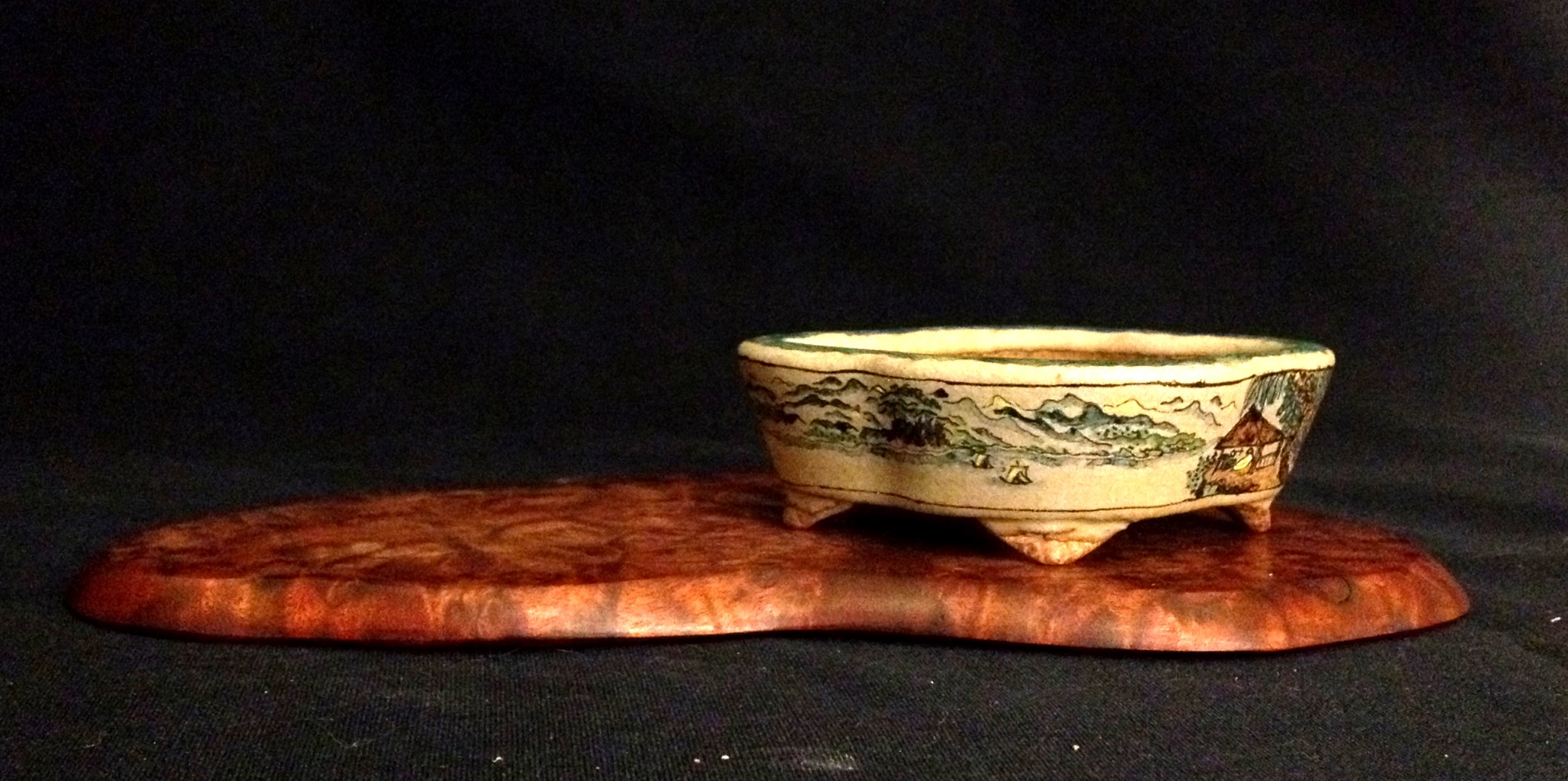
Up first is a small porcelain oval sometsuke by Miyazaki Isseki. One of the top 5 Japanese porcelain painters of Bonsai pottery in the 20th century, Isseki’s work is diverse in shape, style, color, and size. Awesome detail and brushwork for such a small pot.
For more on Isseki, please see this post:
Miyazaki Isseki

20130221-093046.jpg

20130221-093052.jpg

20130221-093058.jpg

20130221-093103.jpg
Detail of the 4 sides of the pot. I especially like the use of negative space to create depth to the small scene, as in the tree lined road which stretches away into the distance.

20130221-093942.jpg
A very early edition collaborative piece, painted by Ito Gekko and made by his brother, Ito Tonyo. Arabesques and flower pattern Gekkous are rare, collaborative pieces more so, so this one is a double find! The Patina is nice as well, showing many years of use.

20130221-094255.jpg
Close up of the base, showing the nice patina, Gekko’s hand painted signature, and double stamps from Tonyo.

20130221-104504.jpg
Five color small rectangle by Gekko. Later work, showing the high detail, contrast, and color differentiation of Gekko paintings in the last decade.

20130221-104703.jpg
Opposite side, note the negative space changes the directional use of the pot, so it can be used with a tree with right or left movement.

20130221-104929.jpg
A middle period akae(red) Gekko oval with cut feet. Has lost that new pot sheen from a decade or more of use, and the less astringent brush work and less rigid use of detail is notably characteristic of middle period Gekko pots. The detail is still very fine, however, just a little softer than more recent work. Compare with the 5 color above.

20130221-105227.jpg
Mokko shape Koseki five color landscape pot. The use of color is bright and eye catching, and the landscape scene, with it’s liberal use of negative space, isn’t too busy. Most Koseki pots are tiny little accent and mini pieces of only 3-7cm, I picked this one up because, at 6″, it’s the largest and most usable size I’ve seen from Koseki.

20130221-105432.jpg
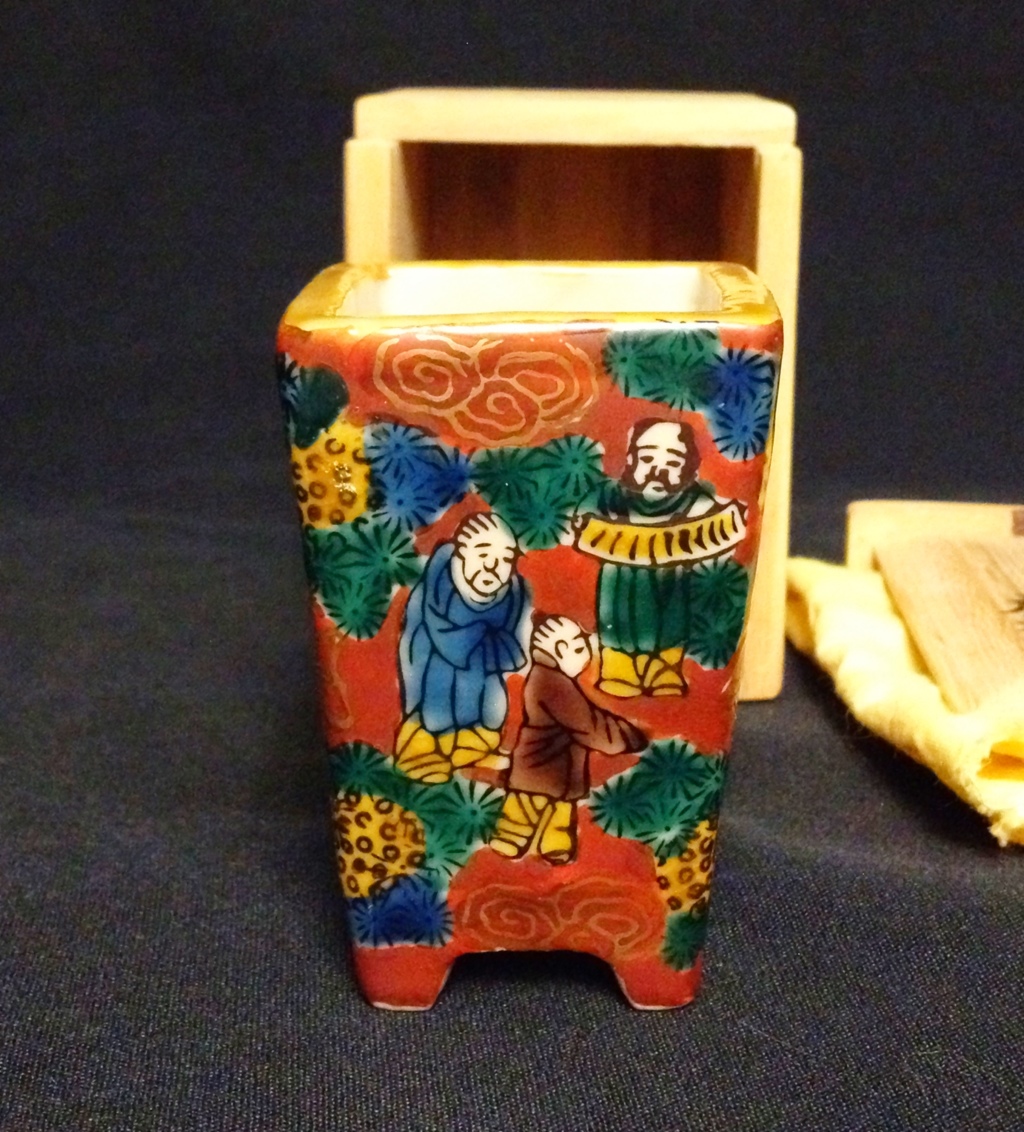
An older Kutani overglaze enamel cascade pot with signed kiri bako and turmeric cloth. Very characteristic Kutani go-sai overglaze work: slightly cartoonish, but charming nonetheless.

20130221-105645.jpg
Detail of pot and figures.

20130221-174332.jpg
A small oval collaborative pot made by Hattori Tomoyuki of Tokoname and painted by Hikosanjin. Really soft lines and focus to the red painted distant landscape scene make this pot easily usable. The darker clay body enhances the color and feeling. I love the feeling of depth and space created by the river valleys winding into the distance. A lot of detail for a small pot that somehow doesn’t appear too busy and crowded.

20130221-174557.jpg
A lipped rectangle sometsuke landscape. The pot is signed, but I’m not sure of the name of the maker, it’s “歌麿”, which I think is “KaMaro”. The kiln is Chinese and pots from it pop up pretty frequently. Around 30-40 years old, like most Chinese unknowns, made by kilns formerly specializing in other wares who began making bonsai pots during the boom years in Japan. The painting is quite nice for an inexpensive pot: the style reminds me of Ito Gekko.

20130221-174646.jpg
And we’ll finish up collection 12 with a small mokko collaborative pot, again by Hattori and Hikosanjin, this one a 5 color painted scene. The details are very fine for such a small pot.
Up Next: Pots from Collection 13, New Glazed and Unglazed Pots!

Posted in Famous and Antique Potters, Modern Potters, My Personal Collection | Leave a comment

Shohin Bonsai Around My Garden 2

So, In the midst of repotting over the last week, I took the time to snap the annual spring progress photos of my bonsai, and figured I’d share.

20130218-160235.jpg
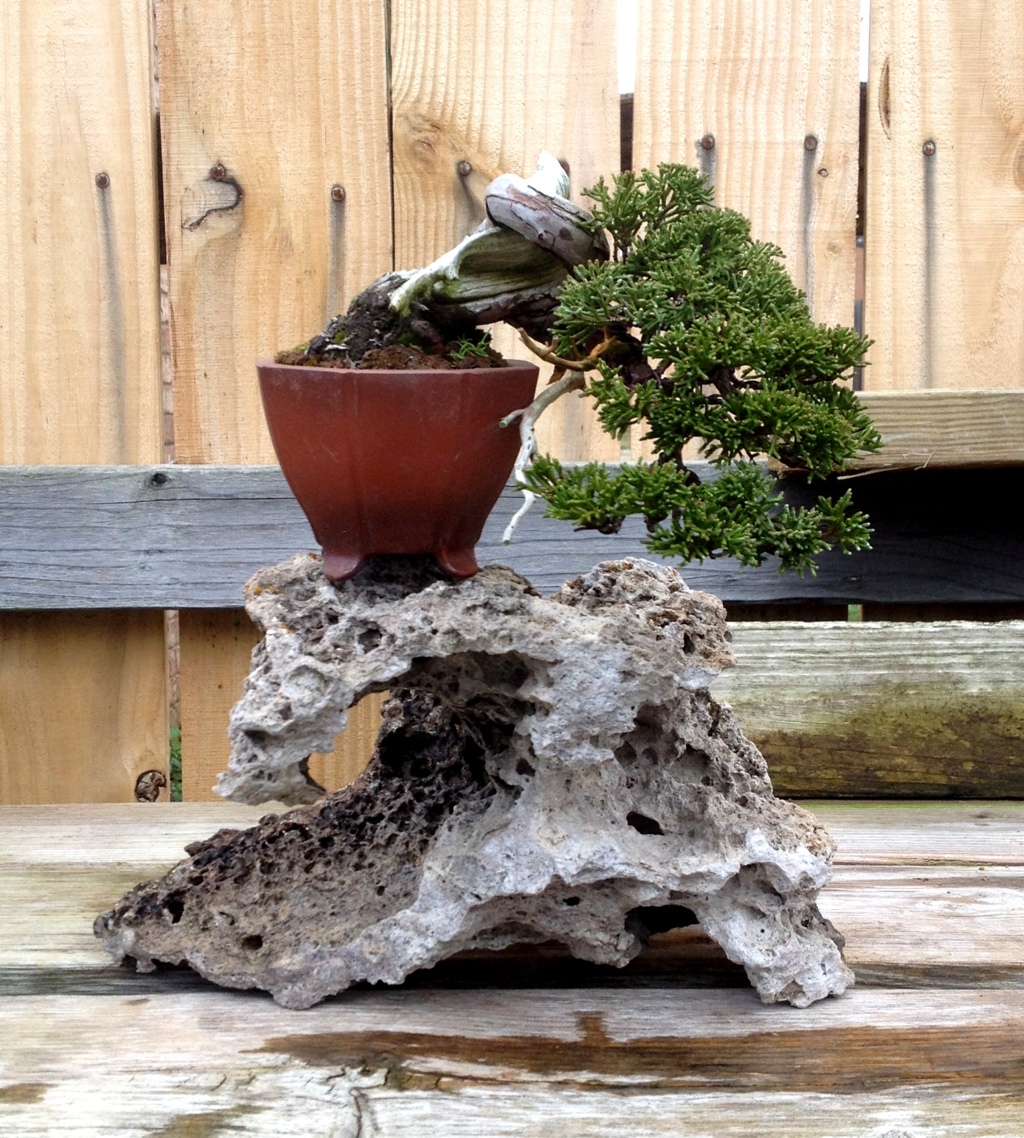
Itoigawa Shimpaku Cascade on a quick makeshift lace rock stand(due for a pine planting soon!)

20130218-160424.jpg
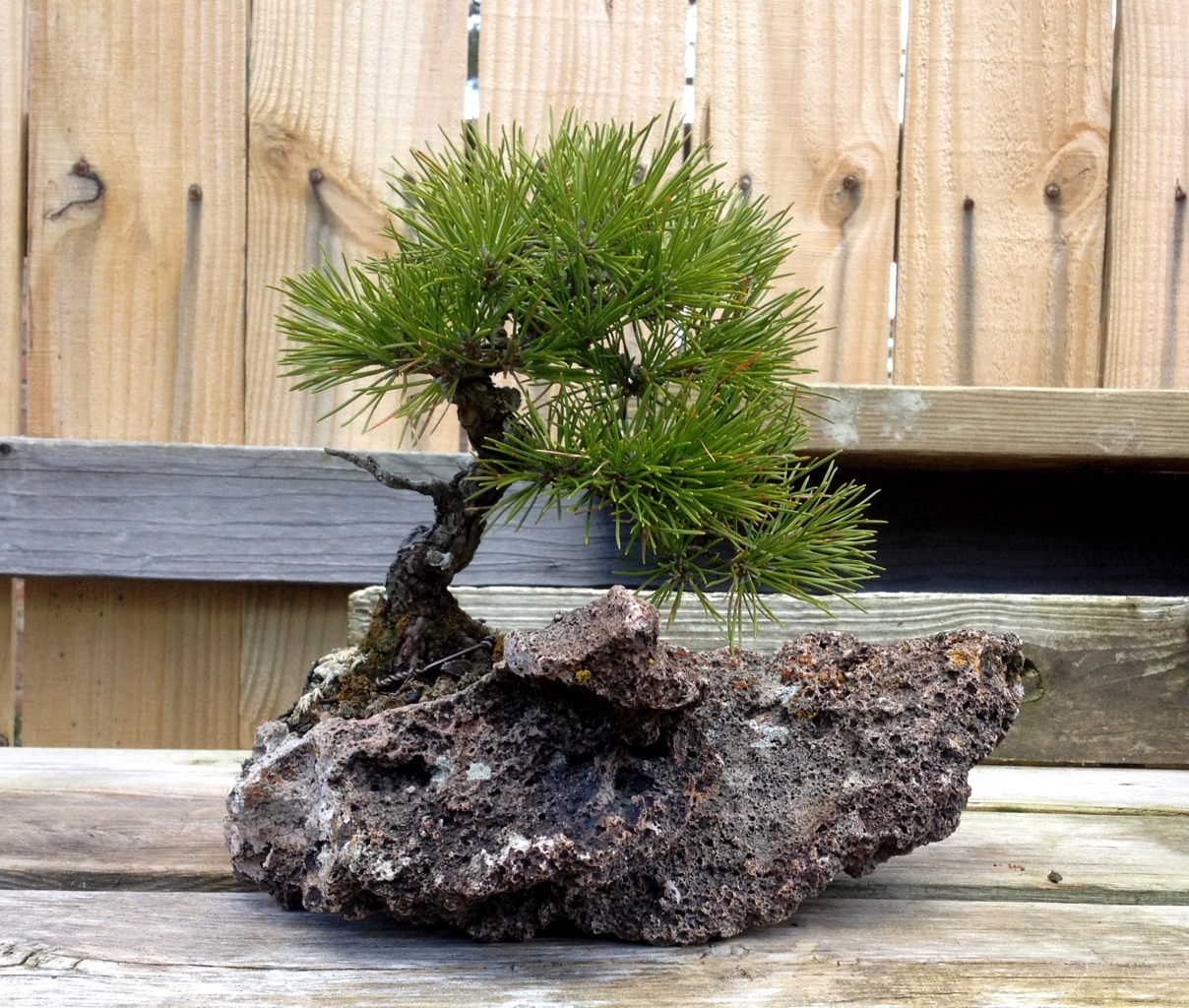
Japanese black pine on lace rock

20130218-160525.jpg
Root over Rock black pine, due for a wire this fall

20130218-160616.jpg
Big, old black pine shohin, Hekisui pot. Hopefully I’ll find some time and finish wiring it up this week.

20130218-160730.jpg
Another fat shohin black pine, Chinese Pot. A lower left branch is being developed, by summer 2014 I should have a nice pad there.

20130218-160859.jpg
Hawthorn, Koyo pot, in bad need of some wire!

20130218-160936.jpg
Premna in a Koyo pot.(aka “Nioi Kaede” or “Stinky Maple”, true to the name, the wood, and especially the roots, smell like death!)

20130218-161006.jpg
Zelkova, broom style, Heian Kozan Jr pot.
And these last 2 aren’t Shohin, they’re Chuhin, but, despite the title of the post, I’ll show them anyway!

20130218-161125.jpg
Shimpaku with a nice, spiral trunk, Bigei Nanban. Developed some juvenile foliage after working last year, once it grows out it should be nice!

20130218-161656.jpg
Future Cascade black pine with interesting(and quite frankly surprising when I discovered it) deadwood and hollow trunk. I’ll be taking this one too a workshop this spring with Bjorn Bjorholm, should be a fun one to style! Hope you’ve enjoyed seeing a few trees kicking around my yard, til next time!

Posted in Uncategorized | Leave a comment

Shishimaru(獅子丸)

So, I’ll preface this post by saying that I had a devil of a time finding information about this potter, and the reason why should become clear! I was pretty sure I had all my ducks in a row, but I had to call in the Japanese language big guns to fact check for me. Thanks go to Bjorn Bjorholm and Peter Warren for making sure I’m not publishing inaccurate information!
His full real name is unknown, all I know is his name is Sato, and he lives in Kanda. Couldn’t find a date of birth for him, although he did merit a page in the Hatanaka book of pottery, at the very end, on page 247. Sato has long been a prominent and well known figure on the bonsai scene, though he adamantly denies making the pots(although he once told Haruyoshi that they only take 2-3 hours to make!).
As best as I can ascertain, Shishimaru pots were, at least originally, a scam perpetrated on the bonsai community, beginning in the 80s. The original Shishimaru pots are unsigned and unmarked, appear to be much older than they are, and are either copies of or homages to famous and very expensive potters’ work, such as Tofukuji, Sekisyu, Ichiyo, and Ono Gishin. The intent is clear: unmarked pots resembling pots worth thousands of dollars in the boom era: malicious forgery. Over time, it seems, rather than simply making these unmarked pieces, Shishimaru created the “Shishimaru” identity: a fictional potter purported to have lived decades ago whose work was just surfacing, and was sold to the bonsai community by his uncle. Again, the intent was malicious, an effort to part wealthy collectors from their money!
Over time, the ruse was discovered(though he still denies making the unmarked pots), and “Shishimaru” pots dropped into a hole, price wise, from $500, $1,000 and sometimes much more, in cases where unsigned Shishimaru were thought to be Tofukuji, to next to nothing.
These days Shishimaru no longer makes new pots, and his older pieces are starting to be appreciated on their own merits, and not merely as scams and forgeries. Unique among forgers, Shishimaru never expressly marked the pots as being made by anyone other than himself, he left it up to others, appraisal experts, to say “this is a Tofukuji” or “that’s an unmarked Gishin!”. While the original intent was probably malicious thievery at worst and mischevious shenanigans at best, the end result is quite different: Shishimaru pots are now desirable in their own right. As master potter Haruyoshi writes: “The Fiction has become the reality.”
Let’s take a look at some of his pots.

20130209-172737.jpg
We’ll start with an unmarked pot that was originally thought to be the work of Tofukuji, you can’t see it in the head on picture, but the clay is a spot on match. The style is one Tofukuji used as well, though mokko shapes are super rare from Tofokuji…if it were him, it would be somewhere in the neighborhood of 800,000¥, around $10,000. As a Shishimaru, it’s considerably less, but it’s a nice pot nonetheless. Note the glaze and apparent patina, at only 30 years old, this pot appears much much older than it really is.

20130209-173155.jpg
Another unmarked piece with a really nice yohen in the glaze. Could also be one of a number of famous potters. It’s tough to see from this photo, but the pot is distinctly bowed, as you see in antique Chinese pots and Japanese works made before the advent of more modern firing techniques.

20130209-173517.jpg
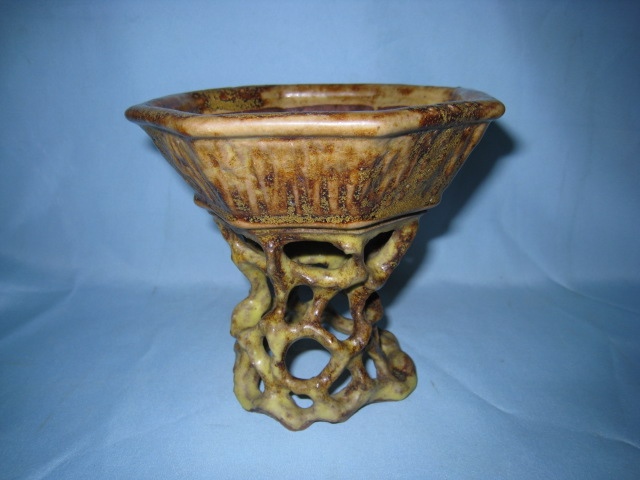
Here we have a marked Shishimaru. Really cool and unique, the pot has its own built in stand! The glaze is very nice too. Exceptional clay work and design. A good example of why, despite their malicious origins, they’re starting to be appreciated for their own skill and craftsmanship.

20130209-173730.jpg
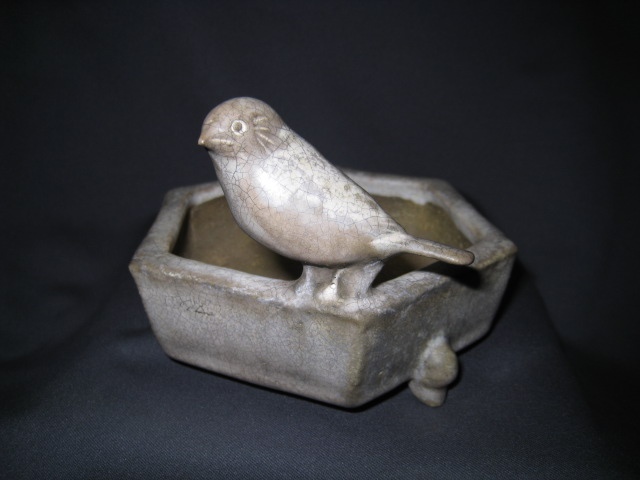
Another unique marked pot. Very well glazed, the crackle is even and fine, and the details to the sparrow are nice. Another that looks much older than it is! I’m not sure what methods were used to artificially patinate these pieces. It doesn’t look like a brushed on wash, and if it is, it’s fine work!

20130209-173904.jpg
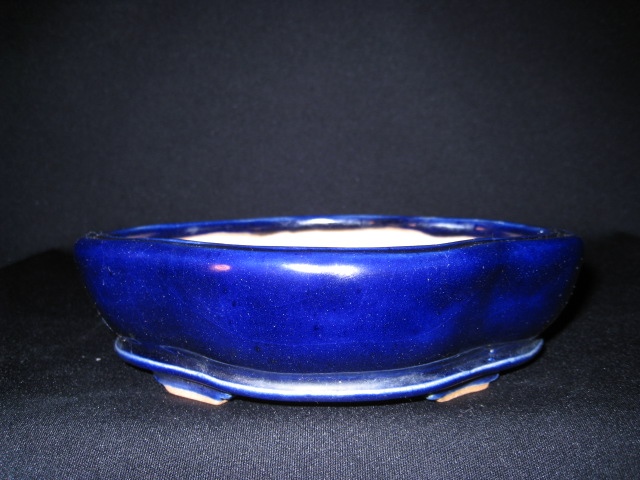
A really nicely glazed blue Mokko over white clay. A great and easily usable pot: The blue isn’t too dark to use with lighter leaves varieties like Kaede, but it’s dark enough to contrast well with dark red berries, like Umemodoki.

20130209-184324.jpg
Another marked piece, both the stand and the pot are Shishimaru. Really excellent kiln change glazes. I mention “kiln change” and “yohen” quite often when speaking about the pots of Tofukuji, Bushuan, and Shunka Shozan. Yohen are glazes that mix and match, producing unpredictable, and often unrepeatable, glazes. For the Japanese, it’s spoken of as a partnership between the potter and the divine when beauty results from these unpredictable glazes.

20130209-210638.jpg
A cooperative painted pot made by Shishimaru. I’m not sure who the painter is in the piece. The pot is well made porcelain, however. In some of the better info I found on Shishimaru, Haruyoshi writes that he laughed at him after being asked to do a co-op piece…perhaps the legacy of thievery still stands strong!

20130209-210941.jpg
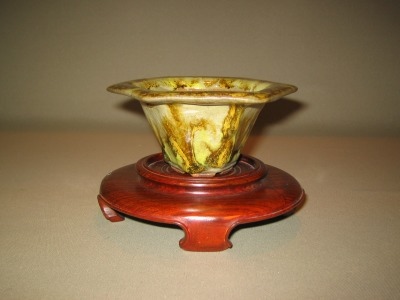
A really nice and clean yellow. Pure, bright and single colored. Very nice and usable in this bag shape.

20130209-211112.jpg
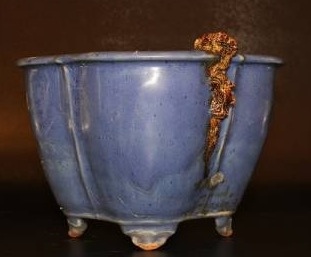
A really unique and cool tall cascade mokko in light blue with cloud feet and seahorse. The detail on the seahorse is very nice, and the differentiation between the glaze of the pot and ornament is perfect.

20130209-211741.jpg
Another, smaller, painted pot. A really well made piece, looks to be single block carved.
20130209-211850.jpg
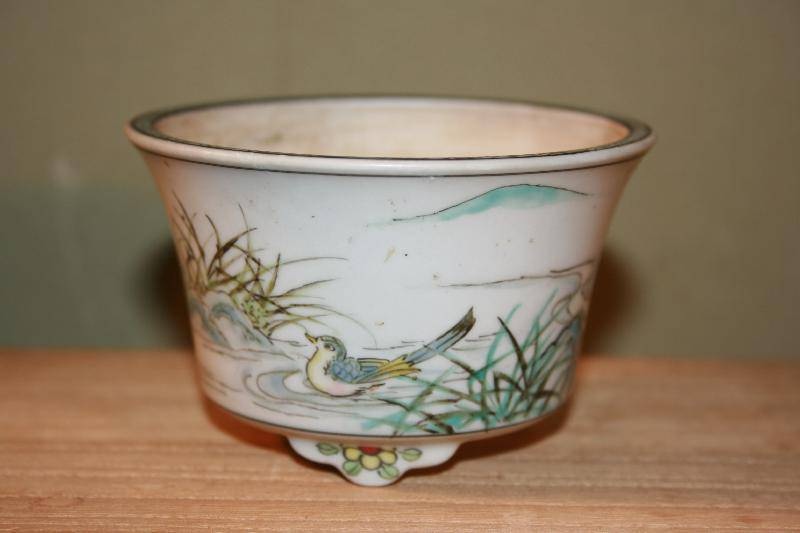
A deep, rich blue mokko with pointed accents and bottom band. Super nice glaze, I’m not sure if it’s a trick of the light or what, but that little accent of light blue in the center and center right really makes it a stand out pot. Very well made, clean lines and razor sharp detail.

20130209-214326.jpg
A rustically glazed yellow crackle round with feet and lip. Really nice yellow crackle, and the white clay body used makes it subtle, it would be overwhelming with a darker clay body.

20130209-235107.jpg
I’m not sure what this glaze is called, but I’m going to call it “Kyotenmokukaki”. The fine speckling on the red glaze looks like the variety of Himekaki(princess persimmon) called “暁天目”-“Kyotenmoku”; even the shape is persimmon like! (click on the image and enlarge to see what I mean!)

20130210-000316.jpg
“Kyotenmoku” Himegaki, showing fine Oil droplets on the fruit. There are at least 50 different shapes and colors to Princess Persimmon fruit, many with these fine oil droplets. That’s a lot of variety for a species that has been used for bonsai less than 40 years!

20130210-000550.jpg
Another deep rich blue bag pot, unmarked. Important to show for one reason: the “patina” is backwards. Patina always builds first in cracks, crevices, and indentations, unless they’re shielded. In this pot, the patina should be deeper under the rim, I think, whereas the area under the rim looks as new as the day it was made! Clearly a good example of techniques Shishimaru used in his scheme.

20130210-000935.jpg
A really nicely made, and glazed, tall cascade with a speckled brown iron glaze over a yellow base. The anchor shaped feet are an especially nice touch, as is the almost intentional appearing drip, very wabi sabi.

20130210-001102.jpg
And we’ll finish up with a pair of earlier work marked Shishimaru with box and cloth. From the period before the ruse was unearthed. These were available for sale last week, and they weren’t all that expensive(relatively speaking). The seller, one of my favorites, who I’ve bought many pots from in the past, had the box made for the pair and hunted Shishimaru down at Kokufu Ten 5 years ago, and got him to sign and stamp the box and cloths with all his seals and signatures. A cool collectors item and a couple of nice Shishimaru pots!
I hope you’ve enjoyed seeing a few pots from master forger come master potter: Shishimaru. Thanks for reading! Up next. Pots from My Collection 12, Shohin Bonsai Around My Garden 2, Painted Pots from Shunka Shozan, and a full post on Tsukinowa Yusen! Stay Tuned!

Posted in Modern Potters | 6 Comments

Gold Accented Fujikake Yuzan

I found this Fujikake Yuzan pot on the excellent Japanese blog of Takayuki Miyamoto, second generation proprietor of Miyamoto En, and a well respected appraiser and collector of famous shohin pots.
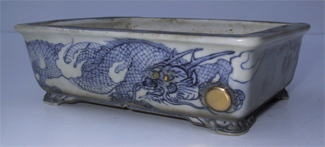
Made when he was 50 years old(1986) to commemorate the middle of his life, this Yuzan dragon pot is something really special, as the accents of the dragons’ eyes and the pearl he grasps are 20 carat gold! Gold is often used in thread crack repair for very expensive pots, but this is the first time I’ve seen it used as a part of the pot’s original design.

20130208-140905.jpg
The gold is used on only one of the two eyes of the Dragon, as if caught by sunlight and glinting. The painting of the dragon is well done and lifelike, and there is a very nice patina for only having been around 25 years. Note that while the porcelain is developing some patina, the gold is still as bright as the day the pot was made!
Most Yuzan are under 5″, so at 7″ this piece is at the top of Yuzan’s range.

20130208-141308.jpg

20130208-141318.jpg
An angle view for size of gold coin “pearl” and a close up.

20130208-141403.jpg
Rounding off this special commemorative pot is Yuzan’s full signature, and “Yuzan Made” stamped in gold on the bottom.
Thanks for reading, and I hope you enjoyed seeing this unique Yuzan!

Posted in Famous and Antique Potters | 4 Comments

WTF! Spring!? And Kokufu Ten.

Last year was an El Niño year, so the unseasonably warm and early February arrival of spring wasn’t very unexpected to me. I waited through February, March, and early April on tiptoes, ready to rush out and protect the trees from that late frost that never happened; and I empathized wholeheartedly with my Northern friends, like Bill Valavanis, for whom the other, wintery shoe did drop, repeatedly…
This year appears to be the same deal in my garden, despite the lack of El Niño. My bonsai seem to believe its spring, so begins a mad rush to repot and work much earlier than expected. Here’s hoping my maples don’t see their shadows, a la Puxatawny Phil, and it will be smooth sailing with no hard freezes from here out!

20130208-135229.jpg
Cigar like buds extending on a Miyasama Kaede

On a different(and more winter worthy note) Kokufu Ten is this week, and all over Facebook, blogs, and YouTube you can see footage, photos, and commentary. I’ve thumbed it all, and I recommend nothing more than Peter Warren’s Saruyama blog for the day by day(and blow by blow to Peter’s constitution) of the haps at the green club and the exhibition. There aren’t as many pictures as other spots, but the narrative, inside professional track, and commentary(and the damn humor, man! The humor!) is a step above anything else you’ll read about the goings on in Bonsai Japan at this peak time. Peter’s blog manages to be very personal and very objective simultaneously, no mean feat, that. Check it out, and keep up the good work, Trev!
Saruyama Bonsai:The Blog of Peter Warren
this advertisement not paid for by Saruyama bonsai, Trev, or it’s affiliates
This week finds me hard at work on trees, so a few minutes here and there to publish pottery ramblings AND get paid to Chef it up are difficult to come by and hard won. Later today Ill finish up a post about a 20 carat gold accented Yuzan, and I’ll be posting up a new Pots from my Collection post in the next day or two, featuring some killer new acquisitions for my collection from supa big names and blog favorites Miyazaki Isseki, Ito Gekko, Sanshu Ichiyo, Bushuan, and Heian Kozan, along with a couple of Patina laden Antique Chinese Pots. Also working on finishing a “Shishimaru” post and a “Takao Koyo” post(with the help of Koju En and Masumi San, thanks!)…..so, stay tuned!
A few teasers from upcoming posts:

20130208-000601.jpg
ShiShimaru pot with its own built in root stand. Too cool.

20130208-000659.jpg
Takao Koyo’s excellent painting, glazing, and clay skills

20130208-000826.jpg
My new Isseki…had for a song. Probably the most expensive pot I own!

Thanks for reading and I’ll see you tomorrow with a new post!

Posted in My Personal Collection, Trees | Leave a comment

Shuuiudou Yuraku(秀功堂遊楽)

Today we’ll take a look at painted pots by Shuuiudou Yuraku. He was born in 1953, and died in 2001. Yuraku was exposed to the work of Tsukinowa Yusen early in his career, at age 30-1983, during the boom of bonsai and bonsai pottery in Japan. He would spend the rest of his life emulating and glorifying Yusen’s style. Later work shows an individual painting style that differs from Yusen, very highly refined and detailed. Through trial and error, he duplicated the work of the master, and it’s said that his greatest works are the equal of Yusen’s from his heyday. Less than a hundred of his pots of the professional stage of his career are still in existence.
Let’s take a look at some of his pots!

20130124-120047.jpg
A really great red painted pot with landscape, hut, horses and riders. The influence of Yusen is pretty clear from this pot, as we can see in the next image, a pot by Yusen.

20130124-120556.jpg

20130124-120651.jpg

20130124-120700.jpg

20130124-120706.jpg
Three views of brilliantly painted water scene in 5 colors. Unlike some 5 color pots, this Yuraku manages to be bright and highly detailed without being cartoonish.

20130124-131038.jpg

20130124-131030.jpg
Two sides of a 5 color round, one with an highly detailed wagon, and the other a landscape. Really nice details and brushwork.

20130124-131232.jpg
A dark indigo sometsuke dragon. Very Yusen-esque.

20130124-131339.jpg

20130124-131345.jpg

20130124-131353.jpg
A trio of waterfowl in the 3 basic porcelain painting styles: Sometsuke, Akae, and Go-Sai. All three are copies of Yusen pots, the last being a quite famous one featured in the Kinbon 3 volume pot book set, Yuraku section, page 79.

20130124-232601.jpg
Yuraku seal. “遊楽”-“YuRaku”.

20130124-131533.jpg
The opposite side of the sometsuke waterfowl pot above. 3 gentleman engaged in some activity, I’m not sure what. Tug of war with a scroll?

20130124-230817.jpg

20130124-230830.jpg

20130124-230838.jpg
With the first month passing us by, we’ll finish up our look today with well wishes for the new year. Pine, Bamboo, and plum, traditional Japanese symbols for long life and strength, vitality and vigor, and reawakening in the New Year.
Hope you’ve enjoyed taking a look at the pots of Yuraku! Check back soon, I’m writing up a post on Takao Koyo as I put the final touches on this one!

Posted in Modern Potters | Leave a comment