From My Collection 16: A Few New Bushuan

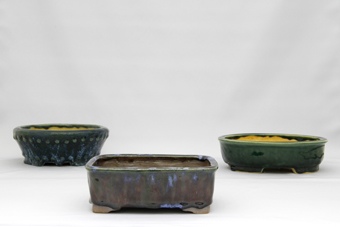
I’ve added a great many pots in the last several months since I wrote a collection post, but the lions share of them are definitely Bushuan. Made by Shigeru Fukuda, Bushuan pots feature very nice signature glazes and a very unique style, often compared to Heian Tofukuji. For more on Bushuan, check out these previous posts:
Bushuan Posts
Now, on to the pots!
20140202-123052.jpg
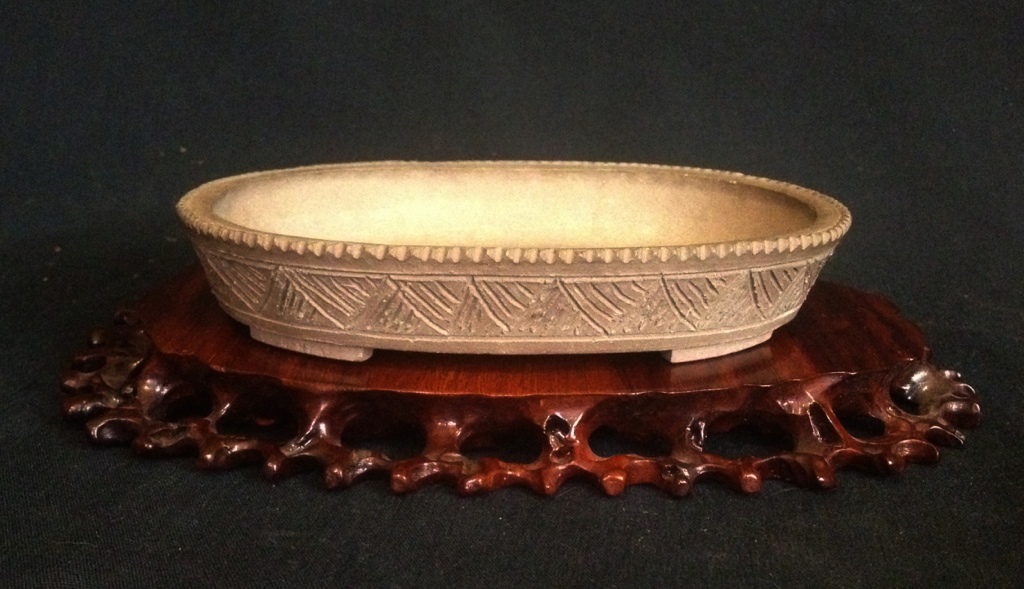
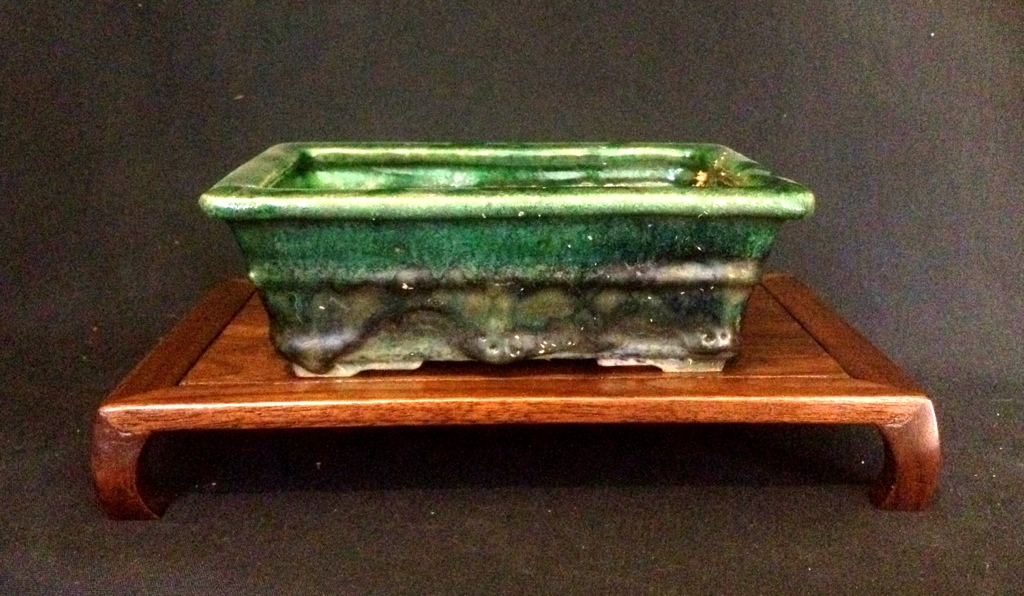
A really nice lipped rectangle with outward angled walls, belt, and cut feet. The lava like signature Bushuan Oribe-esque glaze is always awesome, to me. In this pot it shows the darker blues and greens more than in others, which often show some lighter creams and blues. At over 8″, this a larger kifu size container.
20140202-123123.jpg
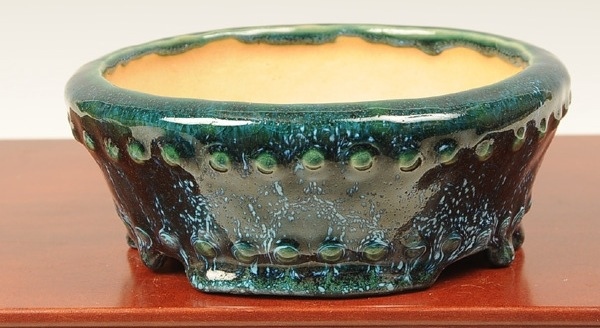
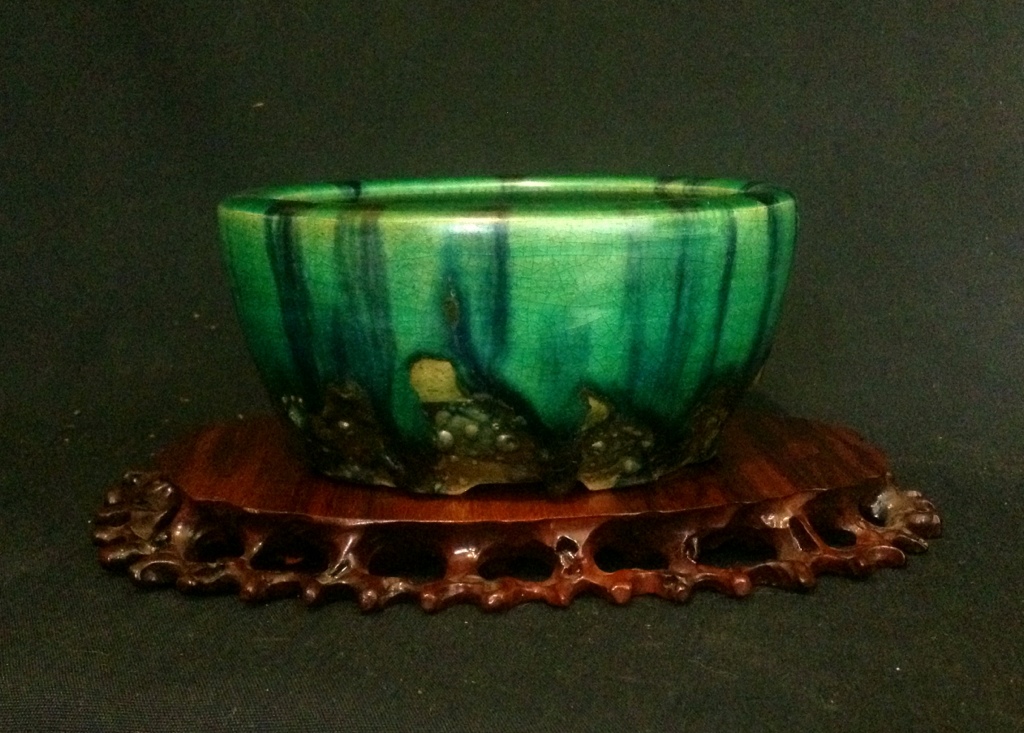
Another kifu sized container, this one a round with some glaze pitting in the underglaze, which gives the pot a more rustic and masculine feel.

20140202-123132.jpg
A large chuhin sized cascade pot, in Bushuan’s signature glaze. A really fantastic mix of light greens, dark greens, dark blues, light blues, and creams! The asymmetrical dripping of the overglaze really gives it a nice feel, and already a nice patina is beginning to develop.

20140202-124113.jpg
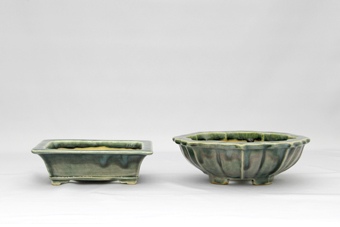
A Shohin sized rectangle with medium blue glaze over light green. Nice asymmetry to the overglaze, and the pot shows a bit of use.

20140202-124120.jpg
Chuhin size mokko shape in Oribe. There’s a very fine crackle in this piece that’s tough to see, but will become more apparent with use. Really nice mix of blues and greens in the Oribe-yu glaze, and nice cloud feet.

20140202-124129.jpg
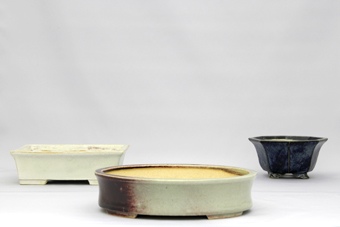
A really nice Shohin size rectangle with bright Ruri Indigo over cream glaze. The running of the Ruri creates an interesting pattern. Unlike many potters, whose cream glazes actually appear a bit darker than cream, the lighter colored clay used by Fukuda really brings this glaze out as a bright white, which provides a better foil for blues. I showed this pot in a previous post, but have since acquired it so I thought I refile it here 🙂
Down the road, I think this will be an especially important feature of Bushuan pots, as the patina will leave them an off-white color, rather than tarnish green, as is seen in Shiro Glazed Tofukuji.
20140202-125327.jpg
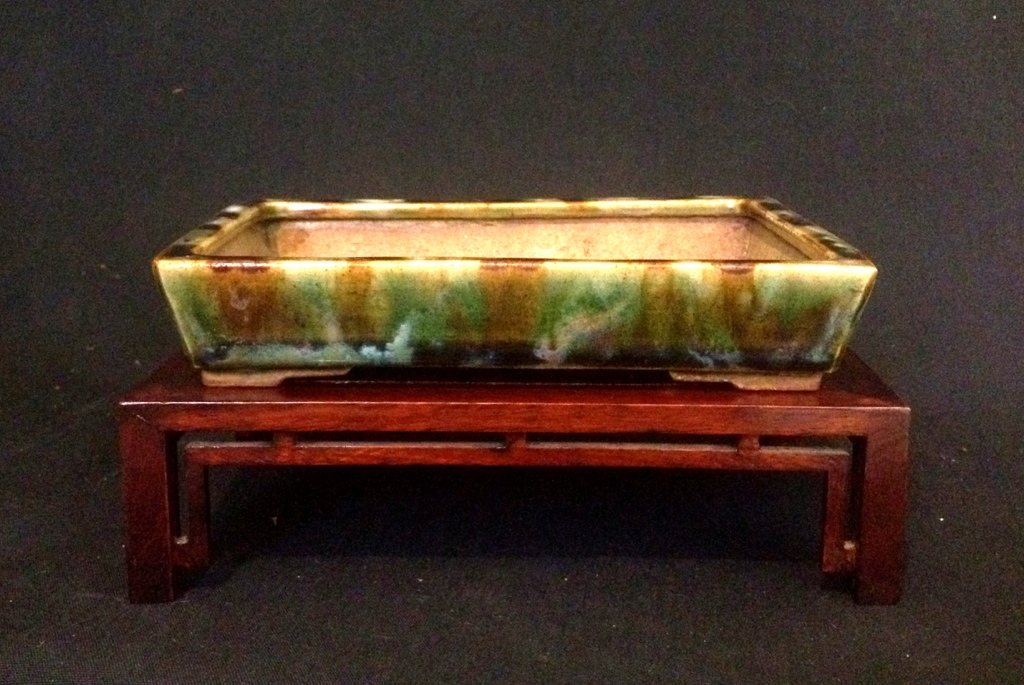
A Shohin sized rectangle low profile pot. A cool mix of colors in this glaze, which has brighter highlights of white than I could capture in a photograph.
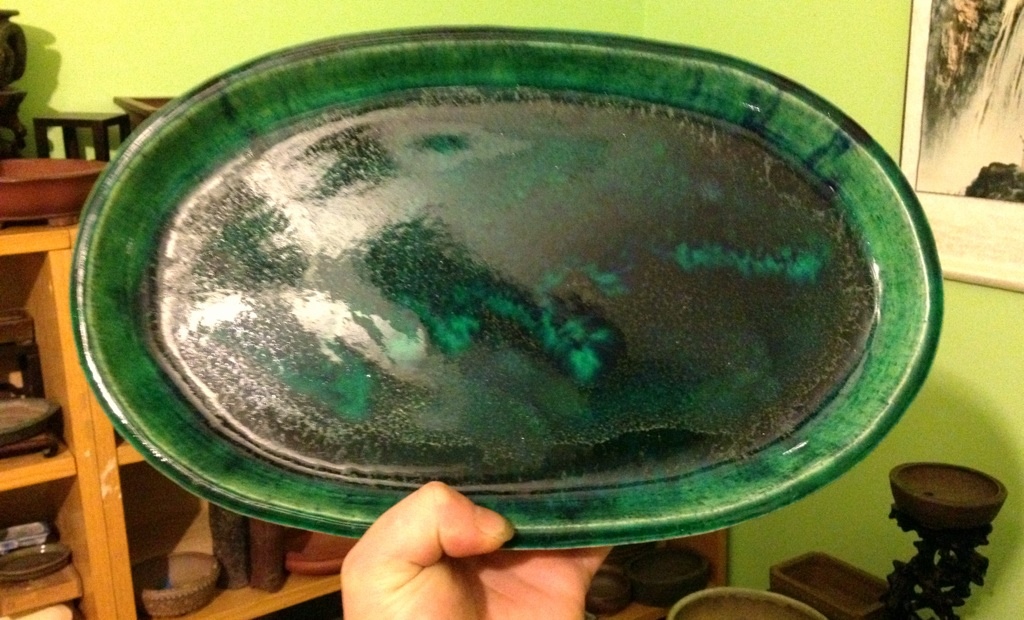
20140202-125349.jpg
So here’s a tragic story, hopefully it will have a satisfying conclusion. This is the only Bushuan suiban I’ve seen. While I was taking the pictures for this post, a stone fell from an upper shelf in my display room and broke it in twain….I show it here as I’m going to have it professionally repaired with gold, and will post the results when it’s done. While I’ve done gold repair work myself in the past, my results were mediocre, mending the pots and making them usable, but not really adding to their beauty. Stay tuned for a future article on this suiban.
20140202-125418.jpg
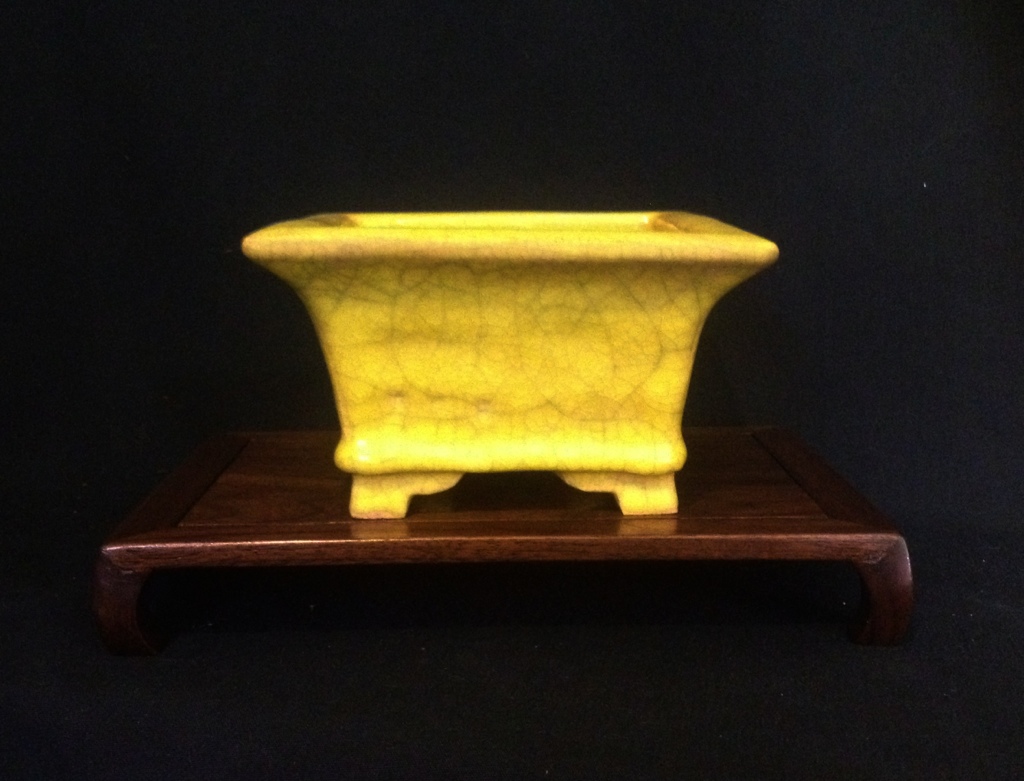
Given the previous photo and caption, I thought we’d finish on a brighter note. Bright yellow, that is. Here is a very nice yellow crackle glazed chuhin sized square. This piece has seen some use, and is beginning to develop a bit of patina.

Thanks for reading! Up next: Pots From My Collection 17, featuring pots from Shishimaru, Gyoun, Ikkou, and Ino Shukuho(and friends).

Posted in Modern Potters, My Personal Collection | 5 Comments

Baking 101(this is not what you think)

So, most of you probably know that I’m a professional Chef. There are some advantages to this job, but very few of them are bonsai related. But there is one. And it involves….POO!
That’s right, Poo. Poo balls, or cakes, the homemade fertilizer equivalent of the Japanese Abraxas rapeseed cakes. There are recipes all over, but I mixed up a very large batch yesterday, and here’s what I use.

4 parts Cottonseed Meal
2 parts bone meal
1 part blood meal
1 part Bob’s Rolled Oats
(all dry ingredients thoroughly powdered in a spice or coffee grinder)
Plus 1 part All Purpose Flour and a heavy dash of Fungal Innoculant(with mycorrhizae)

2-3 parts liquid mix(equal parts BC Grow, BC Bloom, (update: I add Kelp and Seaweed now as well), with an equal amount of water(with 1.5 tablespoons of Micro Nutrient Chelates, and 1.5 Tablespoons Humic Acid per quart)
Salt and pepper(to taste)

I don’t use fish emulsion, because I have neighbors that are very close and they already have to deal with me. Even the deodorized stuff is stinky as hell when you have a whole lot of it in close quarters to neighbors already on the edge of a full mob and pitchfork party. The “BC” liquid products are hydroponics liquids for weed. They’re readily available online. Micro Nutrient Chelates should be available at your local quality nursery(usually under the name “Chelated Iron(with other micronutrients)”, Humic acid is also easy to find online, I like Grandma Enggy’s.
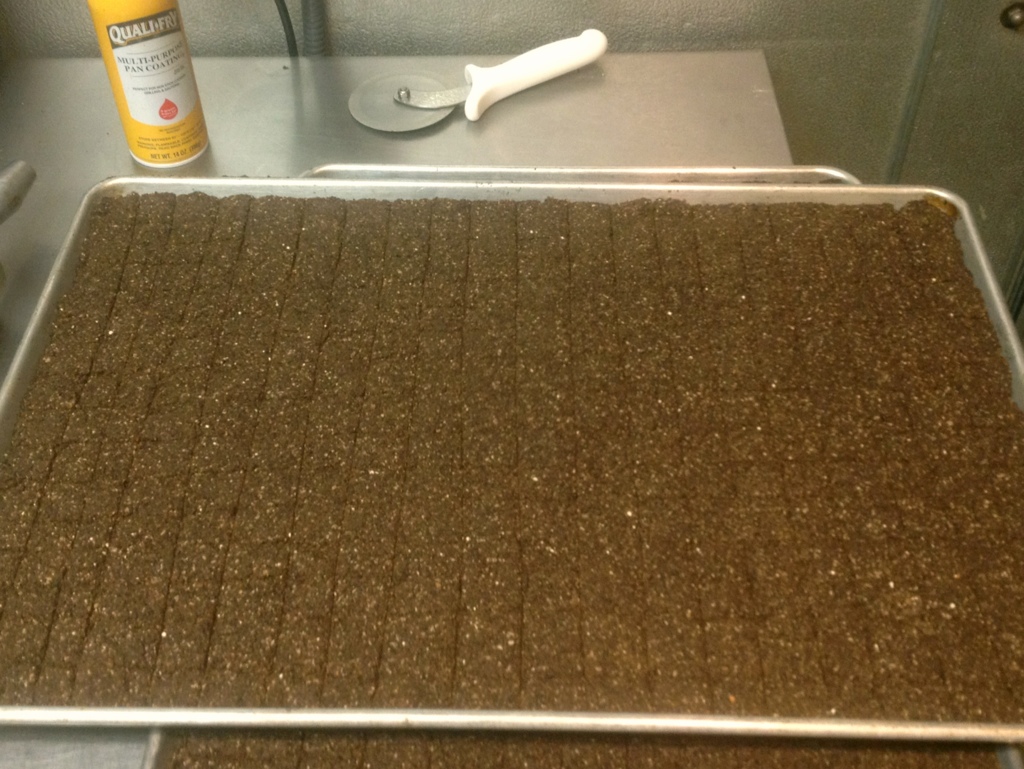
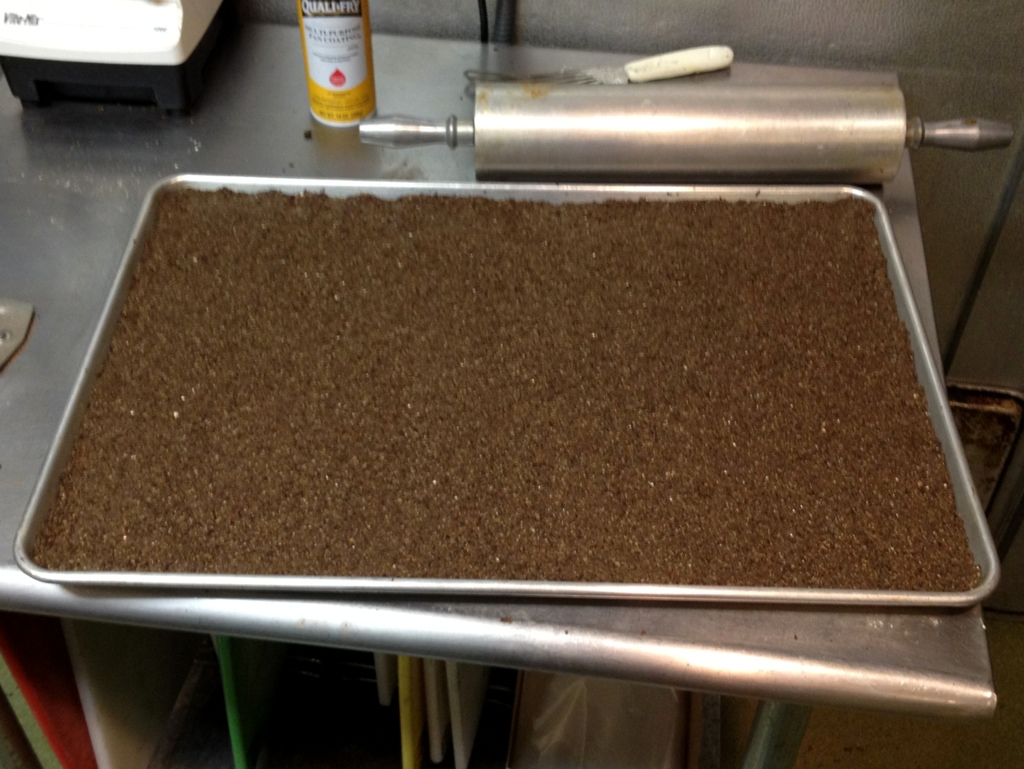
I use a gigantic stand mixer with the bread dough attachment to mix all this together until its cookie dough thick and then press it into large hotel sheet pans.

20140202-021337.jpg
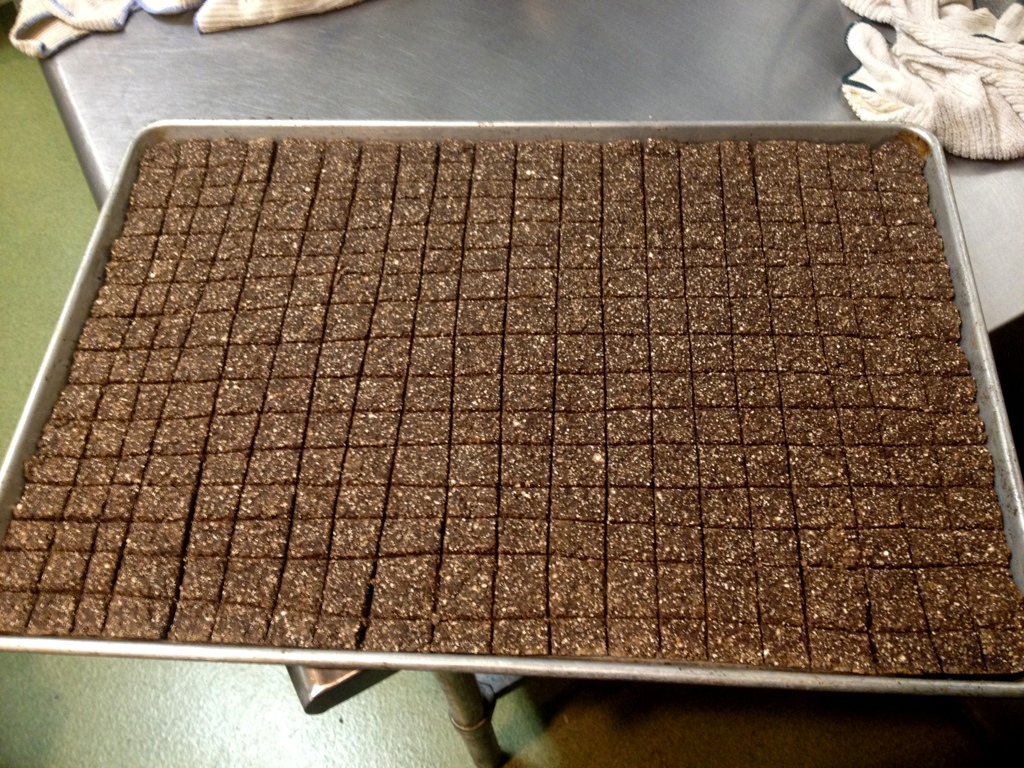
Starting with 16 pounds of Cottonseed meal, I get 2500 cakes(5 pans) and the grand total cost is around 50$. Not too shabby. It would be cheaper and easier to take the Crataegus route, but I think the “all in one” fertilizers smell like, well, poo. These are completely odorless, and animals don’t steal them. I have raccoons, possums, you name ems, and they dont touch these!

20140202-022106.jpg
If it has fish in it, this bastard will take it!

After pressing them into sheet pans, they get rolled with a pin, and cut with a pizza wheel.

20140202-022240.jpg
Then it’s in to the double deck convection oven with a high fan, at 175 degrees for 2.5-3 hours. They won’t be completely dry at this point, but they’ll continue to dry as they cool when they come out of the oven. By quick drying in this way, the outside of the cakes will be dry as it gets, but the interior still a bit moist. This keeps them preserved while maintaining usability(moist cakes perform better, so it’s said).

20140202-022916.jpg
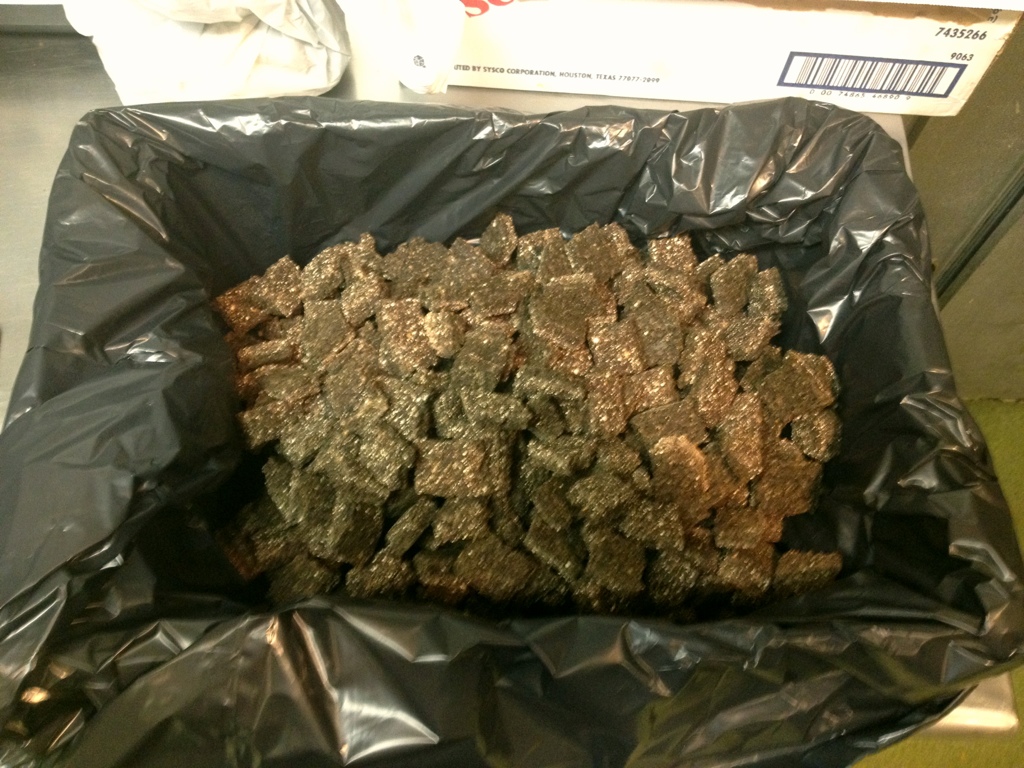
And then it’s out of the oven. The cakes have shrunk a bit as they’ve lost moisture, and most barely need encouragement to break apart. I’ll break them up wearing a couple of pairs of latex gloves as soon as they come out of the oven and let them cool in a single layer at room temp.

20140202-022925.jpg
Once cool, load them up! Start to finish, 4.5 hours, active time, 30 minutes. No weeks drying in the sun. No mixing with a paint stirrer. No smelly “deodorized” emulsion. And best of all? No Cleanup! Because dishwashers. So there’s that benefit of being a chef! I’ll be adding this as pastry skills to my resume, of course. 2500 Fertilizer brownies baked and ready to feed! Bring it on spring!

Thanks for reading!

Posted in Trees, Uncategorized | 7 Comments

An Interesting Surprise?

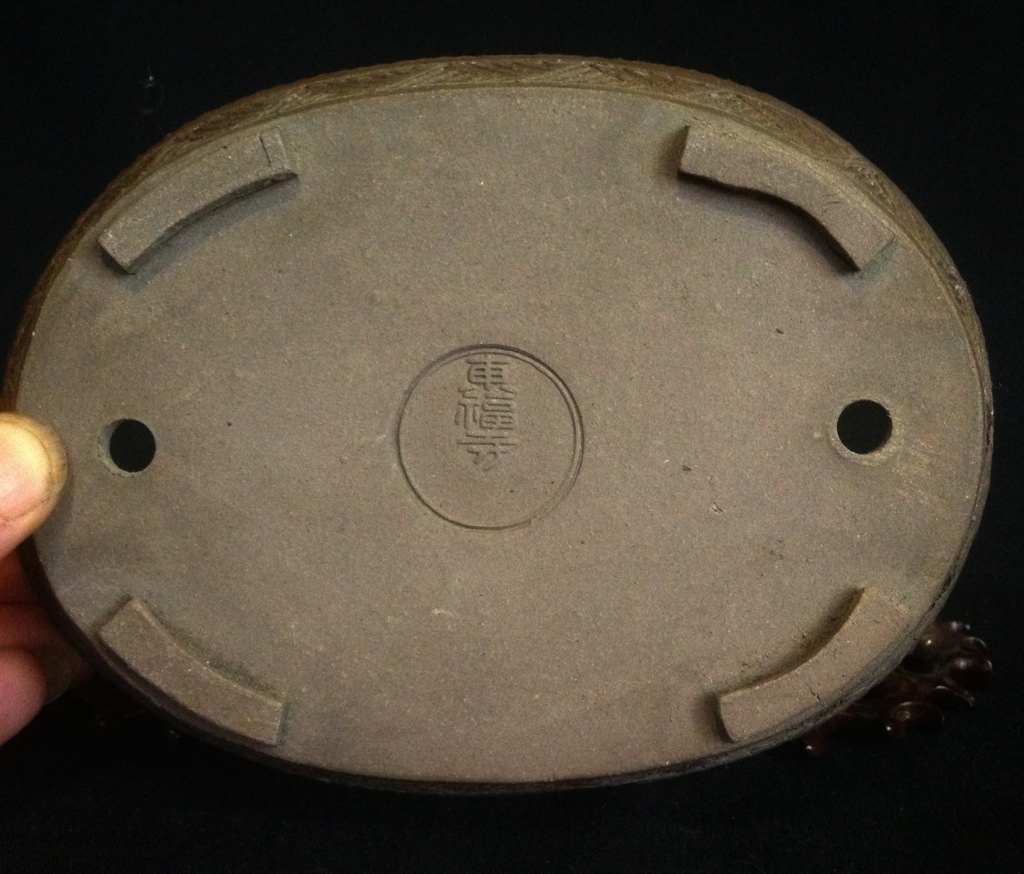
Last month I received a group of pots I had purchased from Japan in a lot, nothing special, just 10 pots sold as a group that looked decent. I didn’t look too closely before I purchased them, because, well, cheap.
It was a good buy, because their were nice stamped pots in there, but nothing special, mostly production grade Tokoname and Chinese. But, looking closely, there was this….

20140201-200221.jpg

20140201-200227.jpg

20140201-200236.jpg
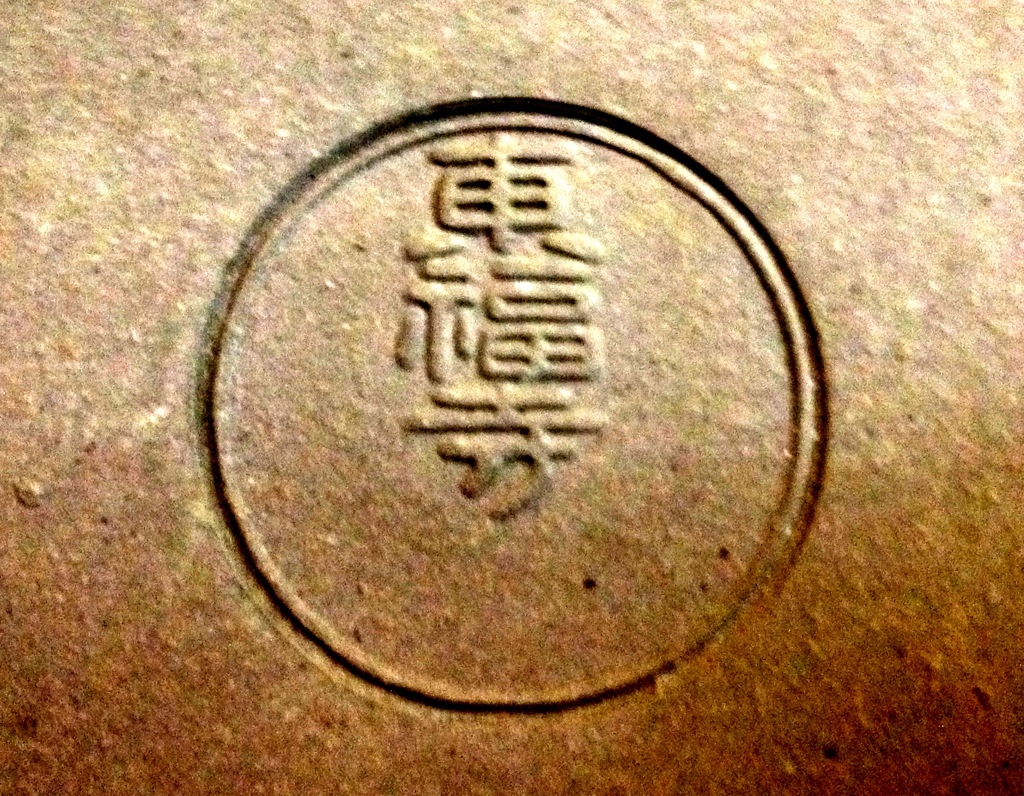
Holy crap! Does that say “東福寺”?! Yes, it sure does.
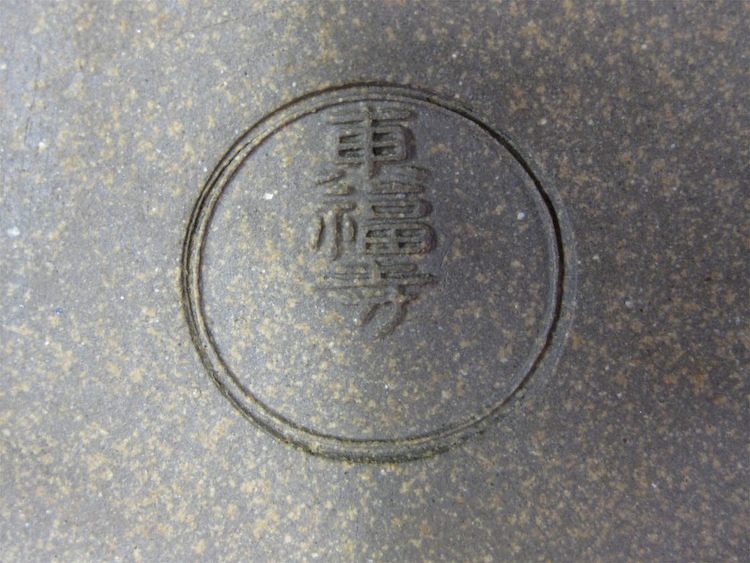
And for comparison, here’s a verifiable stamp.

20140201-202228.jpg
A spot on match right? Yes, it is. Let’s all get excited for me!!
Okay stop. Because, Well, this pot is faker than monopoly money. Faker than wax lips. Faker than The Hills. Or as Lil Wayne says, “Faker than some flour in a powder bag.” Okay, enough with the analogies, it’s fake. Well, maybe not that fake, it might be Second Generation but I doubt it. So, what can we learn?

First off, don’t buy anything from sites like Buyee and Jauce.  They only exist to lighten your wallet for BS pots, forgeries, And damaged goods.
Second, refer back to when you all got super excited for me. The Chops. Theyre a dead on match. Perfect in every detail. So, what does that tell you about Chops and forgeries? That’s right. Chops should be the LAST thing we look at when evaluating authenticity of famous artists. It’s by far the easiest piece of information that one must duplicate for a decent forgery.
So, how do we tell? The work Of the artist must be known very very well to distinguish a real from a fake. And the Tofukuji book simply is not enough to go by, for the most part, because the pots showcased in there are all exceptional, landmark examples of the work of an artist whose pottery career spanned 40 years. In addition to the world class pieces, you need to study less exceptional work as well, since it makes up the bulk of the catalog(and you’re unlikely to be authenticating anything of book quality any time soon!).
In this pot, there are several things that simply aren’t kosher. Let’s start with the clay.
The color is all wrong. While Tofukuji used several different types of clay(beggars can’t be choosers and Tofukuji live in poverty), none of them resemble this. It’s too dark, lacks chamotte, and also looks relatively modern.
Then there is the rope design on the rim. While this is feature of Heian Kouzan Pots, not so much Tofukuji. And the nail carved designs on the walls? Well, this is a technique that Tofukuji used a lot, following in the footsteps of the third Ueda Naokata, from whom he also learned the Terebineri method(hand turning). But these are way overdone. Tofukuji used wavelike lines, ripples, and dots, never geometric designs.
Then, there’s the total lack of patina. If real, this is a cool little pot, so it would’ve seen some heavy duty action in the last 40-80 years. The lack of patina is a glaring sign(although it isn’t always).
There are a couple of things that are right about the pot, on the other hand. The cut feet are stylistically a match. The tool marks on the interior look good and are common to Tofukujis. The drainage holes are of a decent size for earlier work Tofukuji. And, best of all, the forger left a small amount of clay from the cut to the drainage holes, and did not buff it out or finish it. This is a Tofukuji trademark(well, it is now. At the time he was just being sloppy. Our good fortune!). But these good points don’t nearly add up to the detractions above.
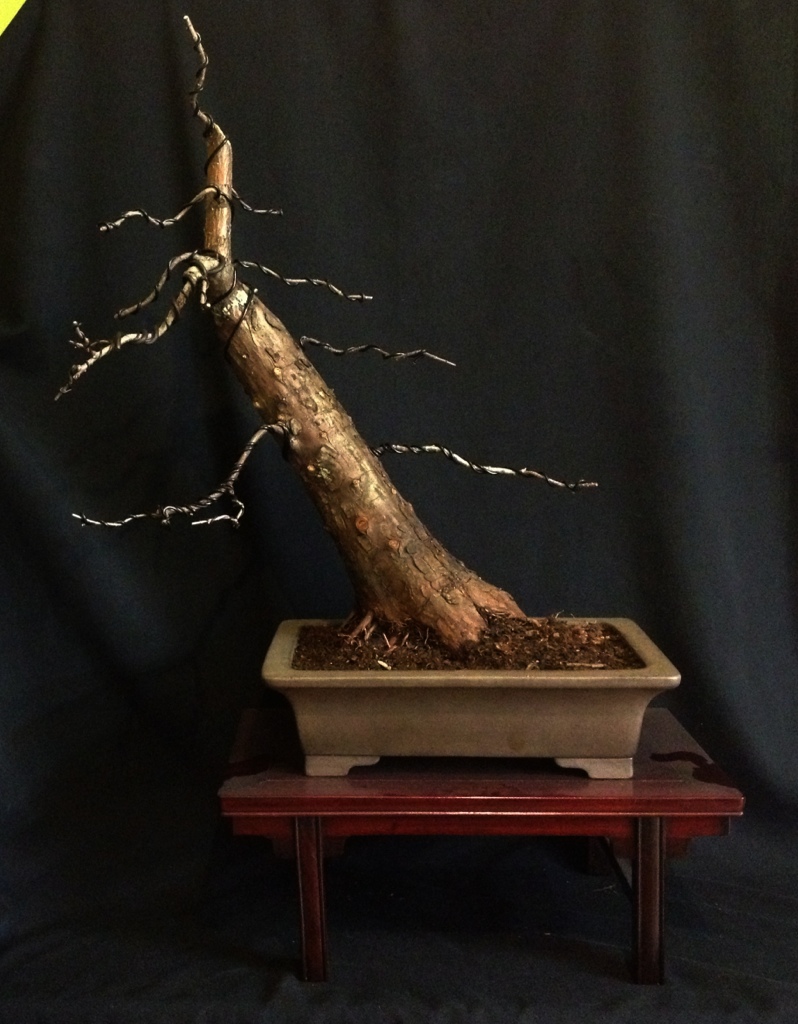
In any event, best 10$ I ever spent. Thanks for reading! Up next: Baking 101(not what you think), Pots from My Collection 16: 8 New Bushuan, and Pots from My Collection 17.
Thanks for Reading!

Posted in Famous and Antique Potters, My Personal Collection, Pot Info, ID, Hanko, Books, ect. | Leave a comment

The 9th Annual Shohachi Ten

I always look forward to the publication of the pictures and results of the annual
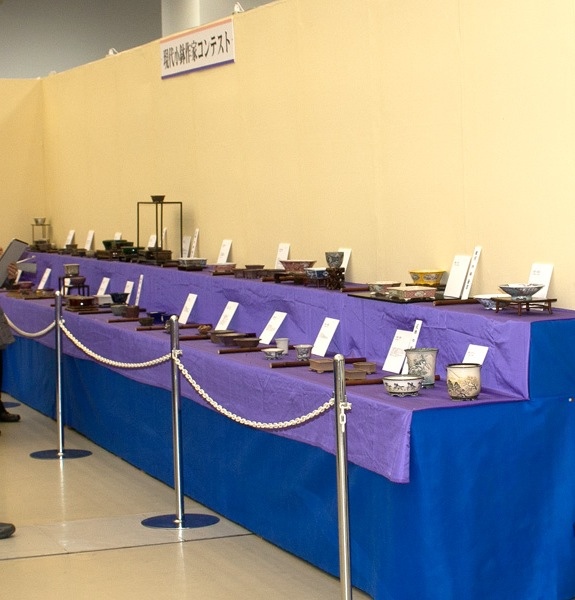
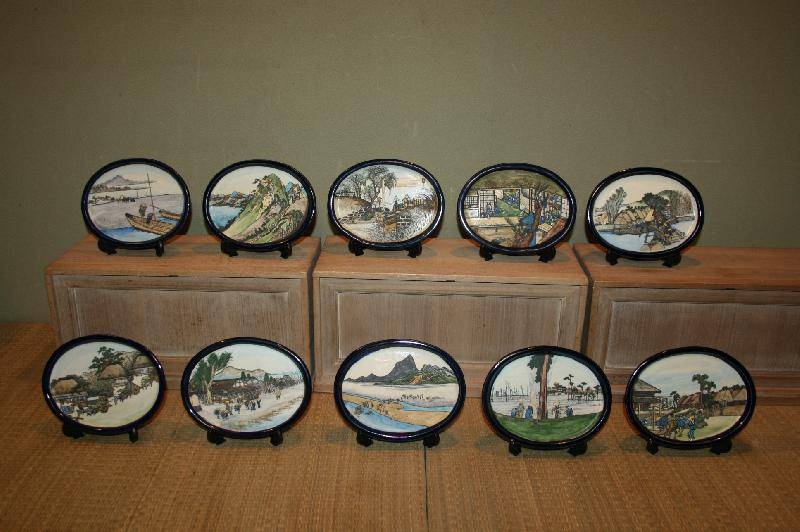
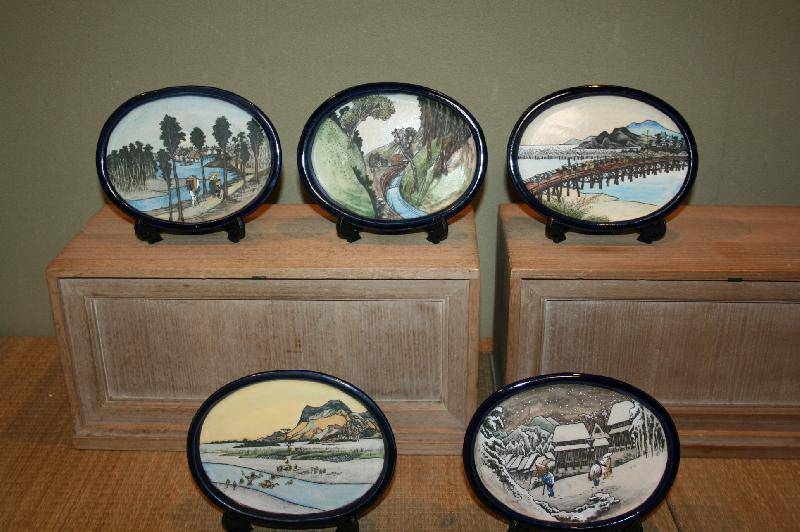
現代小鉢作家展(Modern Small Pot Creators Exhibition). Coinciding with Gafu Ten, the largest Shohin Bonsai show in Japan, in January, the exhibition includes 50 potters chosen by the President of the Japanese Shohin Bonsai Association.
20140130-113315.jpg

20140130-113322.jpg
Overviews of the Exhibit.

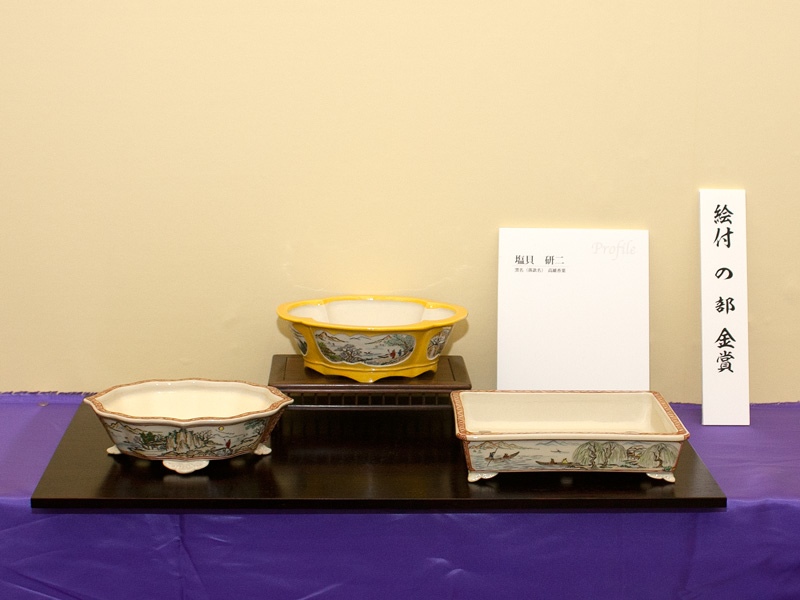
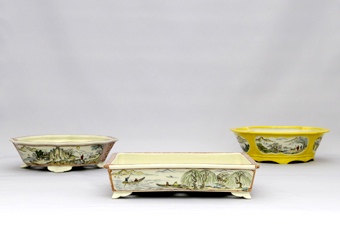
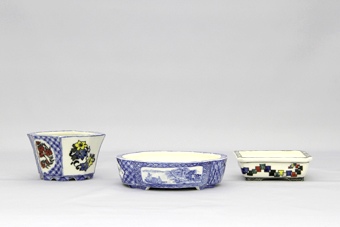
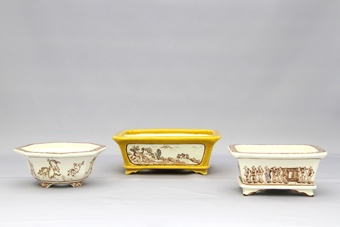
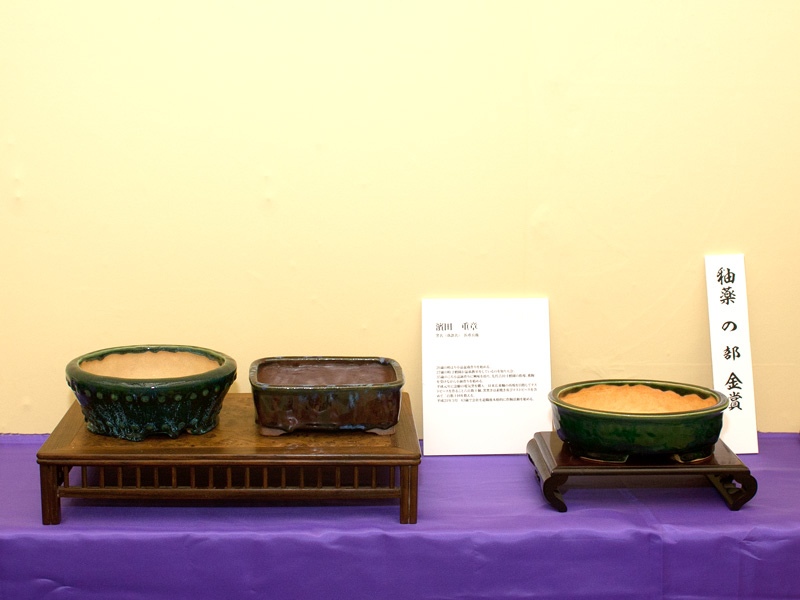
In previous years, the format has included an award for unglazed containers, glazed containers, and painted containers. This year’s format is a little different, and has awards in the same categories in Gold, Silver, and Bronze. I like this format, as simply by being chosen for the exhibition it is recognized that a potter has done outstanding work in the previous year.
Awards this year went to three artists whose work I’ve tauted extensively on the blog, Shunka Shouzan, Shigeru Zyubei, and Takao Koyo, so, it’s nice to see they’re catching up with me over there 😉
To see the potters’ histories and their entries, follow this link:
9th Modern Shohachi Creators Exhibition

My only complaint is that the images published on the website are extremely low resolution, so I dug around for a while for you to find high resolution images of the gold award winners.
On to the Pots!

Painted Pots:

20140130-113217.jpg

20140130-104128.jpg
The Gold award went to Takao Koyo, whose painted pots are beginning to rival some of the best bonsai container painters of all time. For more on Takao Koyo, click here:
Takao Koyo Article on JBP.Net

20140130-104137.jpg
The Silver award went to former student of famous painter Owari Yuho: Shunho. The rather modernist geometric dragon on the right is especially interesting.

20140130-104143.jpg
And the Bronze award went to blog favorite Shunka Shouzan. Having only begun producing painted pots recently, this is pretty exceptional. For more, here:
Painted Pots from Shunka Shouzan
And
Shunka Shouzan article

I also thought the entries from Shun Ryuzan(俊 龍山), Kutani Ri-Bushi(九谷理節), and Toho(唐峯) were especially nice.

20140130-110340.jpg
Shun Ryuzan(俊 龍山)
For more:
Shun Article

20140130-110349.jpg
Kutani Ri-Bushi(九谷理節). The ornate overlay enamel piece on the left is especially beautiful.

20140130-110356.jpg
Toho(唐峯), a former student who also made countless pots to be painted by the late Sano Daisuke. The inlay panel pot is exceptional, and the carved pots as well. An excellent entry showing variety and excellence in every container skill: unglazed clay work, carving, glaze work, and panting.

Glazed Continers

20140130-114923.jpg

20140130-114934.jpg
The gold prize for glazed containers went to blog favorite Shigeru Zyubei. When I first wrote about Zyubei it was nearly 3 years ago, and he was relatively unknown both here and in Japan. Good to see him getting the recognition he deserves! The pot on the left is virtually identical to one in my collection that was a birthday gift from Matt Ouwinga.

20140130-133244.jpg
More here:
Zyubei Article 1 on JBP.net
And
Zyubei article 2 on JBP.net

20140130-120134.jpg
The silver award went to famed Satsuki enthusiast and potter Sharaku. I’ve been planning a post on Sharaku for a while now, but examples of his work are hard to come by. The antique mirror style on the right is reminiscent of the best work of Ichinokura Sekisyu, in both style and glaze.

20140130-120407.jpg
The bronze prize in the glazed container category went to Hekisho(碧祥), of whose work I’ve seen very little. Good variety of color and style.

20140130-120950.jpg
Also bearing mention in the glazed category is the entry from FuKou(風香). Really excellently glazed containers and good footwork.

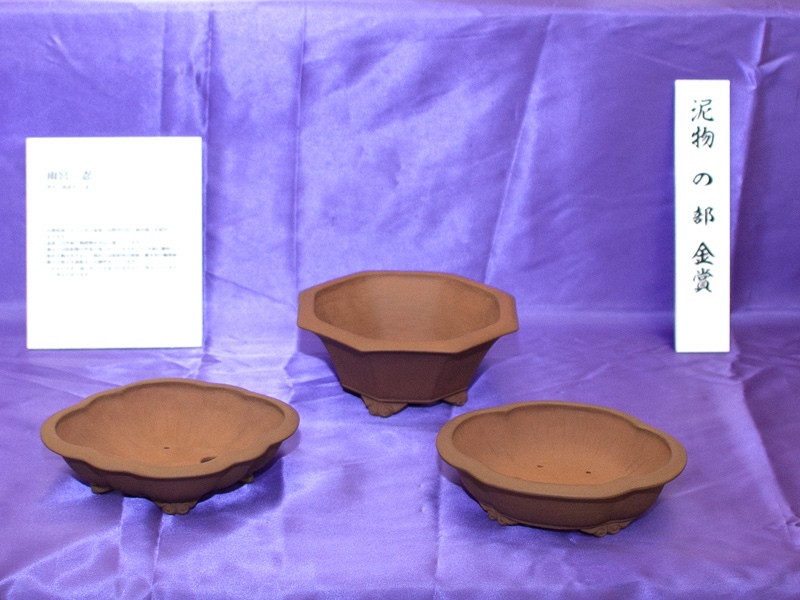
Unglazed Pots
20140130-121758.jpg

20140130-121807.jpg
The Gold in unglazed containers was awarded to Shinobu(忍), formerly of the defunct bonsai garden Amemiya-En(雨宮園) in Yamanashi, which now grows….organic grapes. In any case, Excellent variety of shapes, good clay colors, and clean lines. Very nice unglazed containers with little to tool markings.

20140130-123337.jpg
The silver award went to Shi(次). Very clean lines and simple easy to use styles, and nice cloud feet.

20140130-124049.jpg
The bronze prize for unglazed containers was awarded to Toyosen(豊千), a former student of famous potter Hayashi Toujaku. Very simple and rustic designs with nice, and varied, clay showcasing the variety that can be achieved with Shigaraki soil.

20140130-124921.jpg
Also bearing mention in the category was the entry from Takashi Ono(大矢 忠), who won the grand award for the category in 2011. His excellent carvings and motifs bring to mind the best work Sruga Yamasyou.

Thanks for reading! If you’re interested in acquiring pots from any of the potters featured in this exhibition, feel free to drop me an email, most are readily available!
I hope you’ve enjoyed this tour of the best contemporary Japanese Artists!

Posted in Modern Potters, Pot Info, ID, Hanko, Books, ect. | 1 Comment

Trees Go Up For Sale On Facebook

A close friend of mine recently found out that he has pancreatitis. It’s severe, and he needs some pretty expensive procedures. He has no other way to come up with his deductible other than selling off some of his best trees.
So, these 6 trees will go up for sale on Mark Goodman’s Bonsai Classifieds tomorrow, with pretty reasonable reserves for old imports.
If they don’t sell there, they’ll go up on EBay next Monday. Happy bidding!

20140126-155719.jpg
Akamatsu(Japanese Red Pine)

20140126-155731.jpg
Kaede(Trident Maple)

20140126-155745.jpg
Kuromatsu(Japanese Black Pine)

20140126-155936.jpg
Shimpaku

20140126-155950.jpg
Goyomatsu(Japanese White Pine)

20140126-160003.jpg
Momiji(Acer Palmatum)

Good Luck!

Posted in Trees | 3 Comments

GNOBS, Guy Guidry, and Bald Cypress

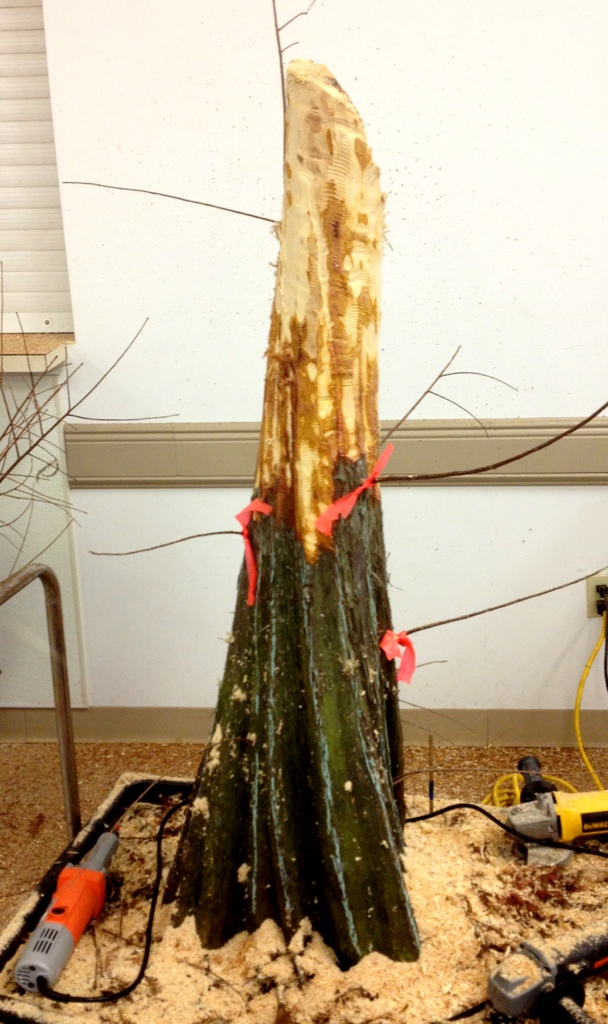
Late last year, in an effort to broaden my collection and knowledge towards native American species, I signed up for a bald cypress workshop with Guy Guidry, and joined the Greater New Orleans Bonsai Society.
The workshop was quite enjoyable. Guy is full of energy and enthusiasm for bonsai and design, and was able to make some good looking starts from what was, in all honesty, for the most part, pretty dim material.
I wouldn’t hesitate to take another cypress workshop with Guy, and look forward to some more activities with the club.
Here’s some pictures:

20140121-182236.jpg
My draw for the workshop….

20140121-182323.jpg
Guys rendering of the design.

20140121-182247.jpg
And the finished product. This will go in with my tropicals for a month to get a headstart on growth.

20140121-182517.jpg
Damon Williams and Guy working on his pig.

20140121-182533.jpg
Guy carving a big cypress in the foreground, and Bill Butler working on a massive project in the back(this was the bring your own workshop!).

20140121-182736.jpg

20140121-182742.jpg
Bill Butler’s massive Cypress and his artists rendering of the final design.

Thanks for reading!

Posted in Uncategorized | Leave a comment

Heian Shouami(平安昭阿弥)

In contrast to the last article dealing with the highly refined and detailed work of Kutani Ikko, in todays article with deal with the whimsical and playful painted pottery of Heian Shouami.
The first generation “Shouami”(昭阿弥), whose given name was 高野網一(Takaya Amiichi) was born in 1905 in Kyoto, and passed away in 1993. Beginning in 1930, he studied pottery and painting under the famous Kyoto potter 柴田如阿(Shibata Joa). He passed away in 1993, passing the reigns on to his son, 高野進二郎(Takaya Shinjiro…interesting note, the sons name, 進二郎, if my translation is correct, means “Progress of the second Son”). The second generation Shouami is in current production.
Shouami is well known in Japan as a master of Kyo-Yaki ceramics. They specialize in making eating utensils, tea ceremony items, and other ceramics, in a very traditional Kyoto style. Bonsai pot production has been by special request and commission only, consequently, the numbers of Bonsai pots around are relatively low. That being said, they’re still relatively inexpensive as painted containers go, around the low end of the middle range.
The pots shown here are both first and second generation. To my eye, there is very little stylistic difference.
Now, on to the pots!

20140114-115802.jpg

20140114-115811.jpg
First up, a whimsical go-sai dragon pot. Note the cartoonish dragon, and overall surreal quality of the painting. Very typical.

20140114-120002.jpg
And something completely different! Traditional Kyo-Yaki Over glaze enameled flower. Very lovely. You can see examples of this style from many other Kyoto potters, Wakamatsu Aiso is famous for them.

20140114-120015.jpg
A traditional landscape in panel with alternating panels of Kyo-Yaki style geometrics. Compare this piece to other famous Kyoto potters whose work has similar designs, like Yusen and Takao Koyo, and even painted pots made by Tofukuji.

20140114-120026.jpg
Another very traditional design. Lovely feet.

20140114-120704.jpg
Another dragon. Very cute and whimsical, which I think are the terms that best describe Shouami work.

20140114-120715.jpg
A more detailed sometsuke piece. More detailed than the dragon above, but still, quite whimsically painted.

20140114-120724.jpg
A really fantastic gold overgraze enamel dragon. Very cool.

20140114-121056.jpg
A really impressionistic panel pot, with Kyo-Yaki geometric waves.

20140114-121103.jpg
Interesting combination of gold and 5 color over glaze enamel. A common theme.

20140114-121117.jpg
Similar to the piece above, but with more detail.

20140114-121401.jpg
Another dragon. I like the buttoned bases on this one and the gold overgraze dragon above. Very cool and unique.

20140114-121408.jpg
A really nice gold overgraze over red. You see these from Kyoto potters frequently. Yusen’s son, Shunseki, is famous for them.

20140114-121416.jpg
A whimsical painting of children.
Non-Bonsai Items
Since Shouami is famous for tea ceremony items and other wares, I think I would be remiss if I didn’t show a few of them to showcase the full breadth of the work.

20140114-121700.jpg

20140114-122920.jpg

20140114-122925.jpg

20140114-122932.jpg

Thanks for reading! I hope you’ve enjoyed this profile of potter and painter Shouami!

Posted in Famous and Antique Potters, Modern Potters | Leave a comment

Kutani Ikkou part 2(or, The Best Co-op Ever!)

Okay, so maybe “The Best Co-op Ever!” is a bit of hyperbole. But, when I saw this two pot set from two of my favorite artists, I almost fainted dead away.

20140113-115120.jpg

20140113-115128.jpg

20140113-115137.jpg
The two pot set, and the signature and stamp on the bottom of each. The painted signature is, of course, Kutani Ikko. The stamp? Bushuan, Shigeru Fukuda.

20140113-115323.jpg
From the four sides.

20140113-115330.jpg
Some detail shots. The shading and brushwork is incredible.

20140113-115511.jpg
The 5 color, from four sides.

20140113-115523.jpg
Like most Kutani Ikko, the detail is really first rate. A more typical subject matter for Kutani Yaki on this piece.

I make no secret here that Bushuan is one of my favorite potters, so to see a collaboration with one of my favorite contemporary painters is something special! While I have you, let’s look at
Some More Kutani Ikko
You can refer back in the Table of Contents to the first post I did on Kutani Ikko. Here are a few more that I didn’t feature in that post.

20140113-122222.jpg

20140113-122233.jpg

20140113-122245.jpg
A really nice Mokko shape Akae co-op between Kutani Ikko and Takao Koyo.

20140113-200322.jpg

20140113-200331.jpg

20140113-200339.jpg
Ducks!

20140113-201627.jpg

20140113-201640.jpg
The classic double pheasants. I’ve sen versions of this motif from just about all the major painters, Yusen, Gekkou, Yuzan, ect…

20140113-201806.jpg

20140113-201816.jpg

20140113-201827.jpg
And we’ll finish up today with this wonderfully detailed akae dragon pot, with Heian Kouzan style latticework in gold. Why more needs to be said? Badass.

20140113-202007.jpg

20140113-202026.jpg

20140113-202050.jpg

20140113-202034.jpg
Detail views.

Thanks for reading!

Posted in Uncategorized | 6 Comments

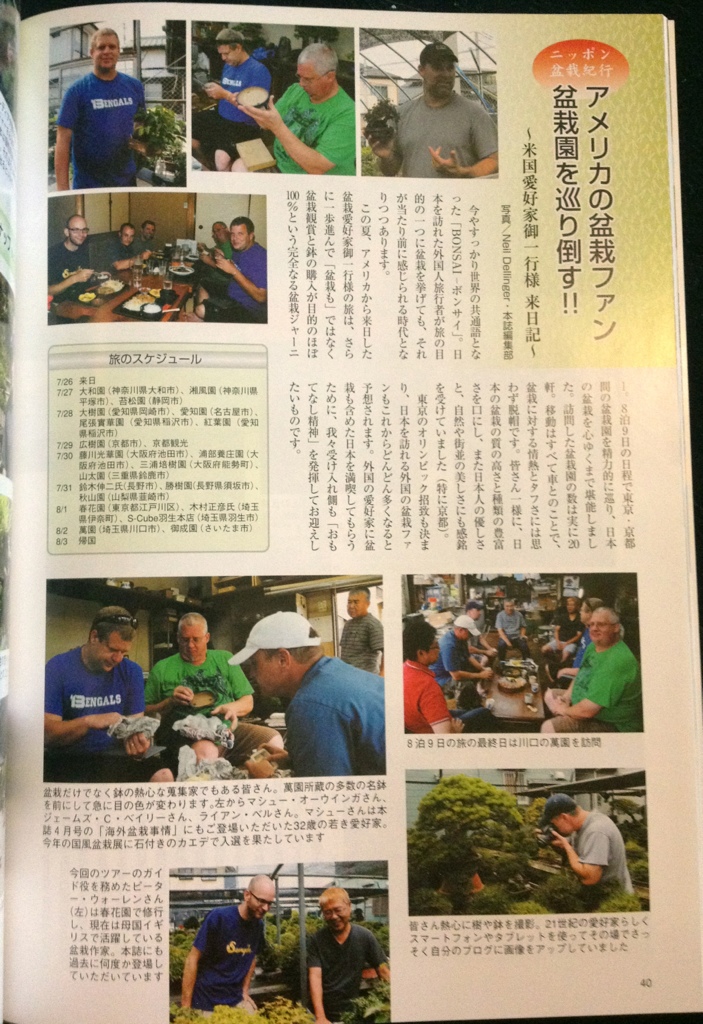
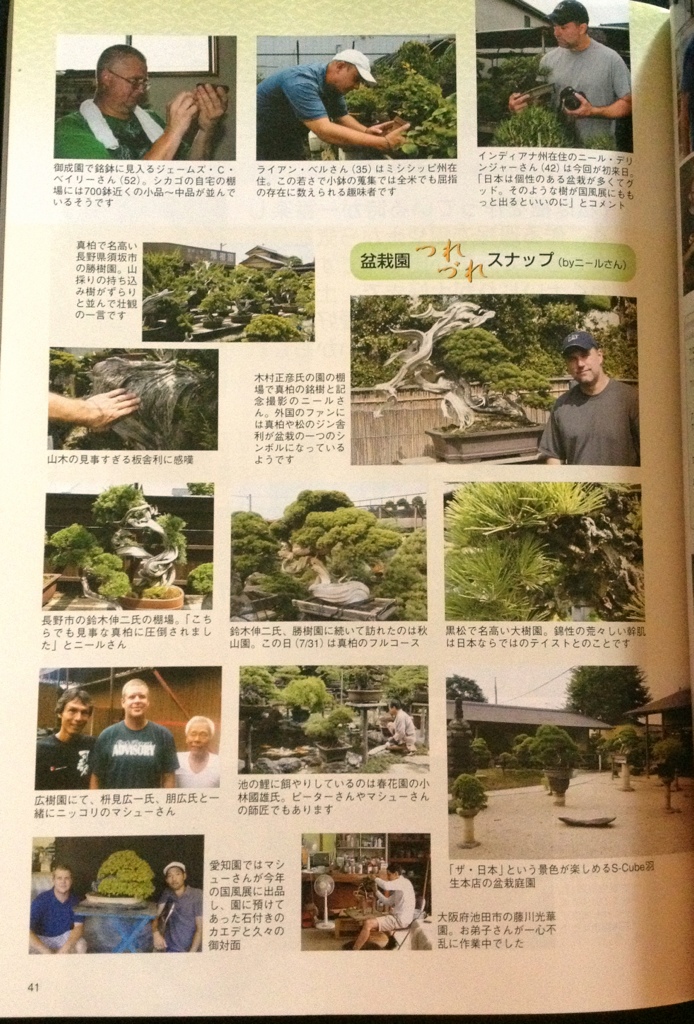
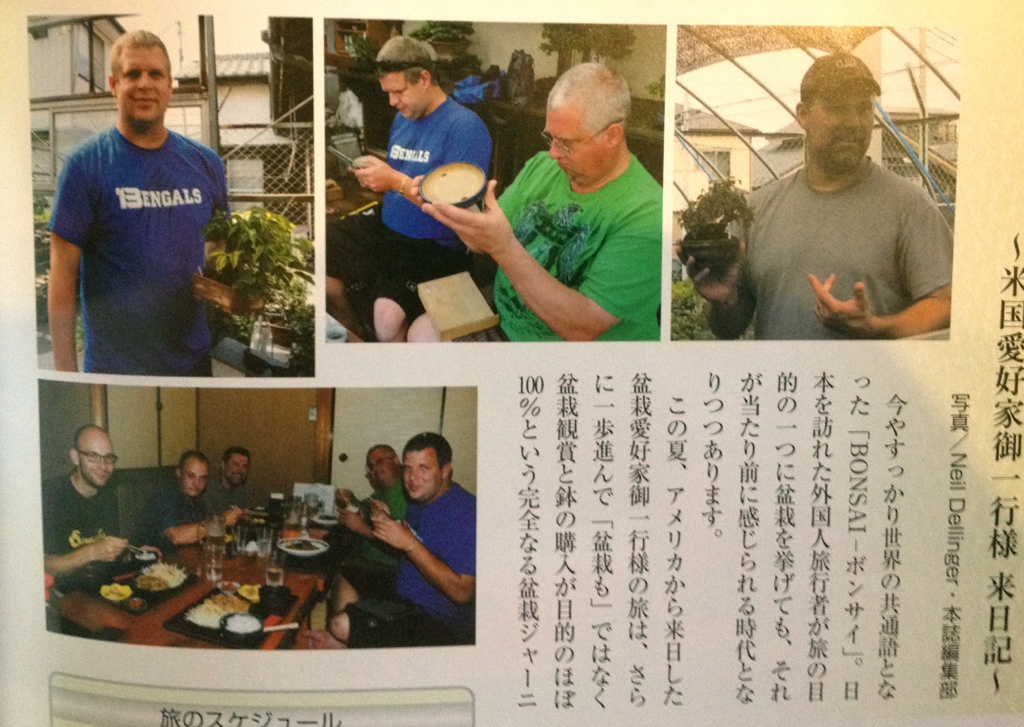
Bonsai Sekai Article number 3

Last March, I published a post that detailed the Bonsai Sekai articles written by my friends Toriumi Atsuishi and Endo Shoichi about our tour of Bonsai Gardens of the Northeast. You can see that post, and my own articles about the tour, here:
Bonsai Sekai Articles
Bonsai Gardens of the Northeast 1
Bonsai Gardens of the Northeast 2

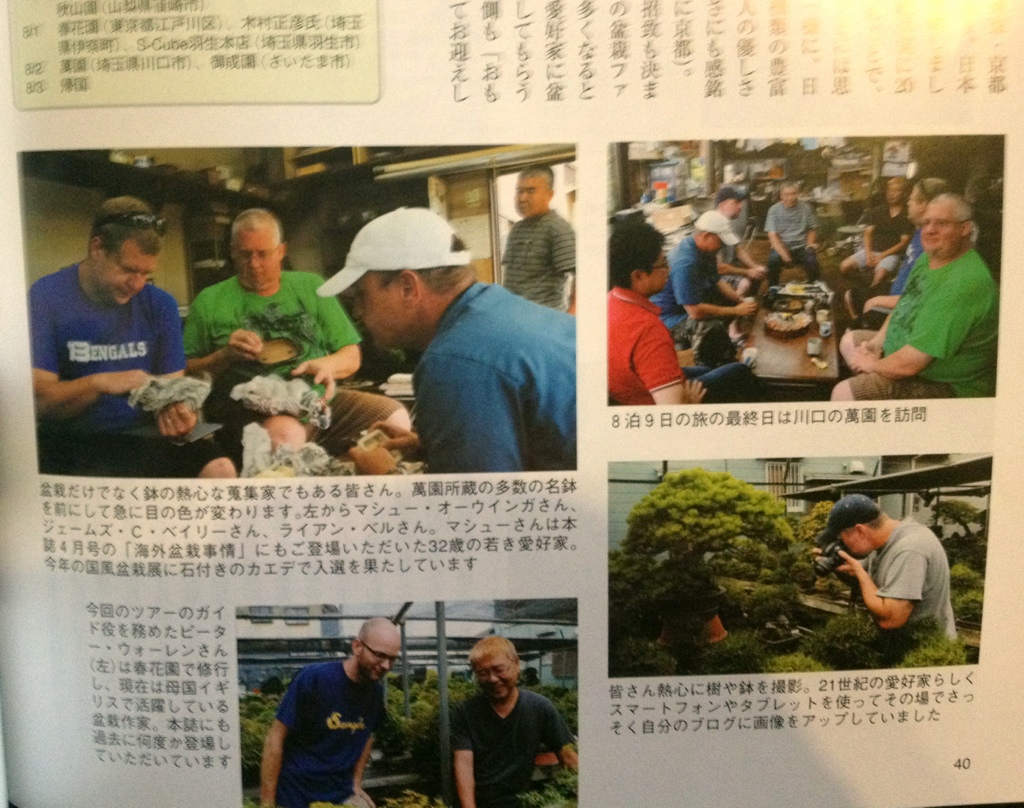
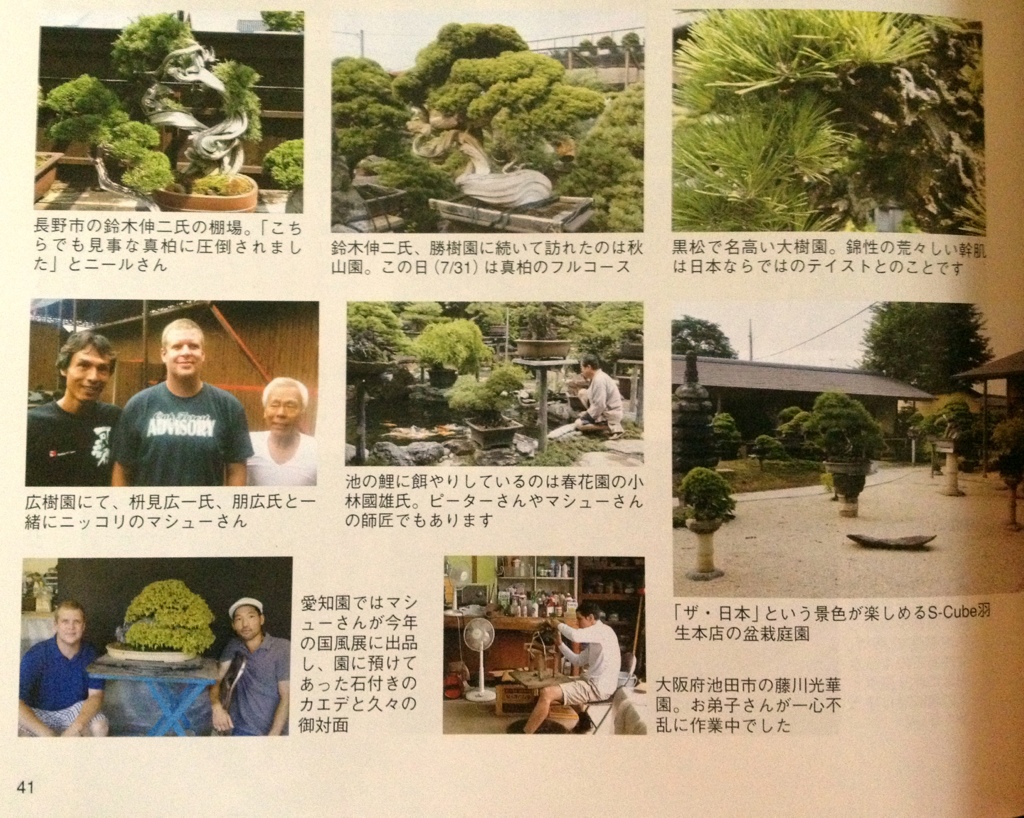
It seems reciprocity has its place! Last months’ edition of Bonsai Sekai featured an article detailing our visit to Yorozuen, and, more generally, our tour of Japan. Always cool stuff to see!

20131231-112411.jpg

20131231-112418.jpg
The full two page spread.

20131231-112556.jpg
That’s Jim Bayley examining a Tofukuji on the left, me in white hat center, and Neil Dellinger on the right.

20131231-114230.jpg
Matt Ouwinga top left, Matt and Jim examining Tofukuji pots at Yorozuen, Neil Dellinger top right. Below left, the 5 of us at lunch.

20131231-114520.jpg
Top left, examining Tofukuji!, In the reception room at Yorozuen(that’s Toriumi on the left), Neil snaps a photo, and Peter Warren with Fukano Ayumu.

20131231-114741.jpg
And images from the other gardens we visited. That’s Matt with his Kokufu Kaede and Ken Fujiwara on the bottom left.
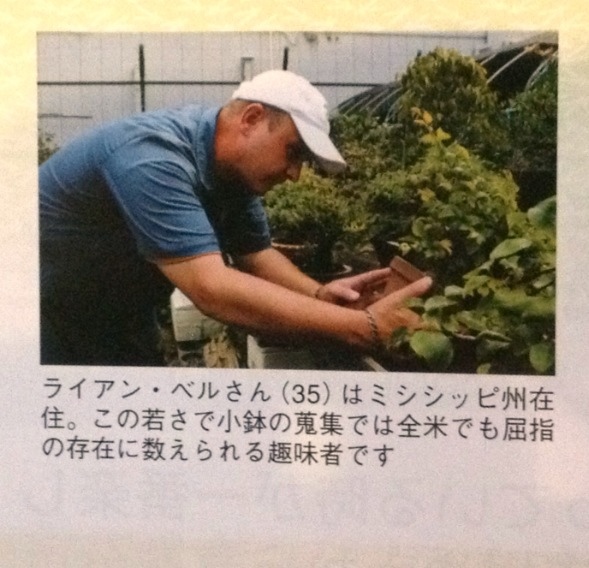
20140104-014405.jpg

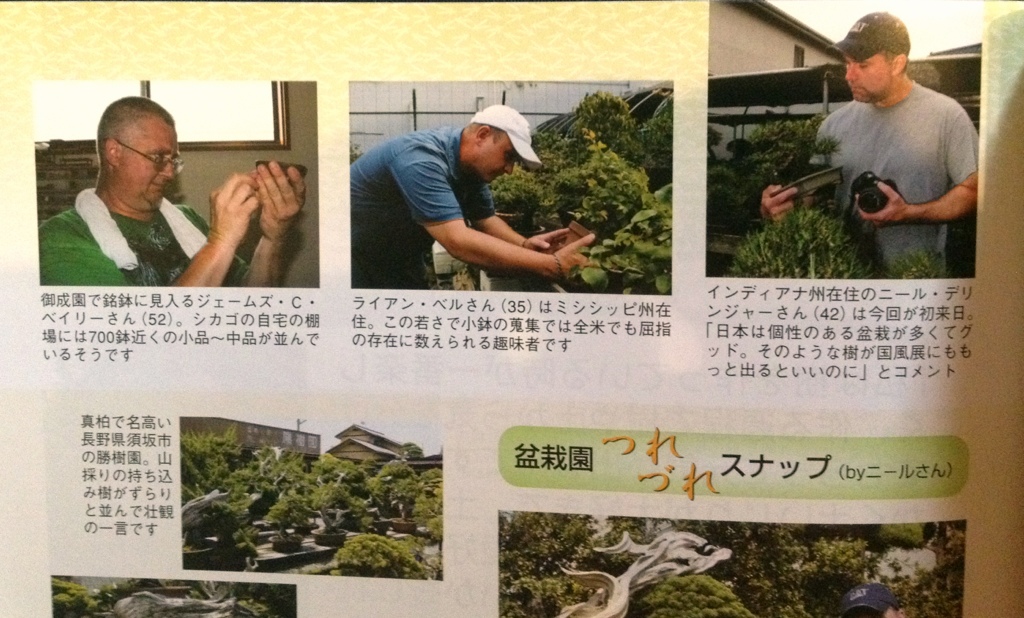
Well, here I am. I must say, Bonsai Sekai did an awesome job hiding my horrific eye pain! Caption: “Ryan Bell(35) He Lives in Mississippi State. He is famous for collecting Small bonsai pots.”. Grrr.

Thanks for reading, that’s a fitting way to wrap up posts on the blog for the year, don’t you think? Many more posts on the way in the New Year, stay tuned! Happy New Year!

Posted in Uncategorized | Leave a comment

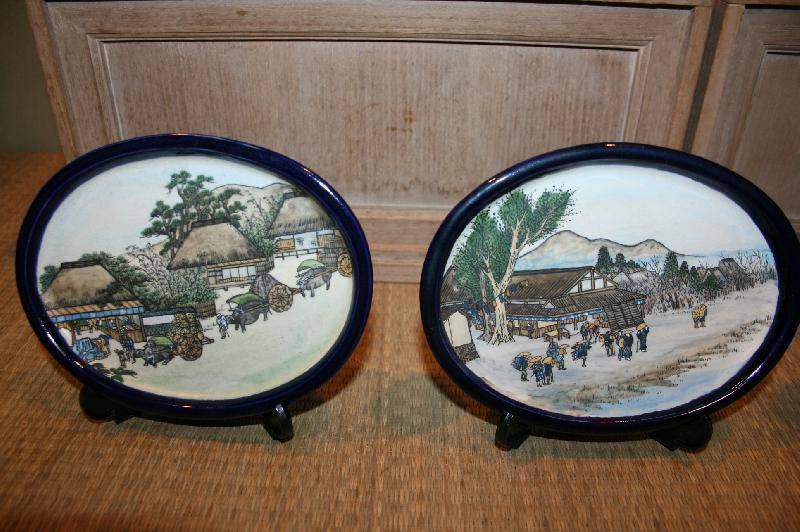
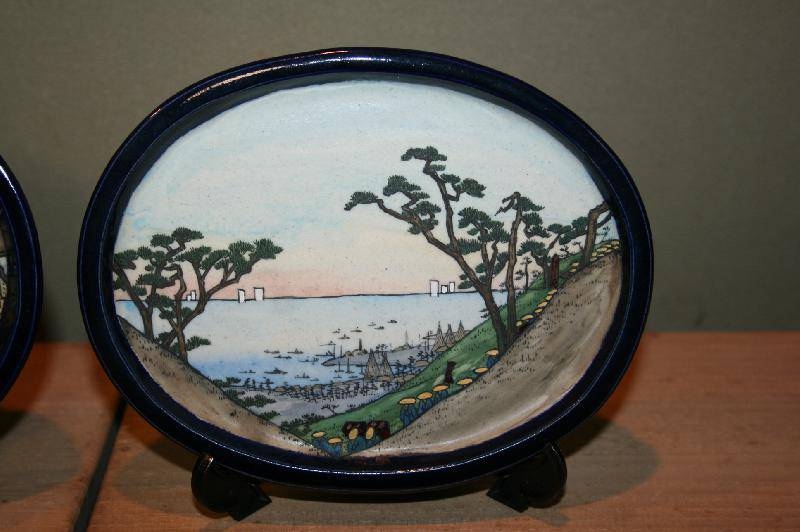
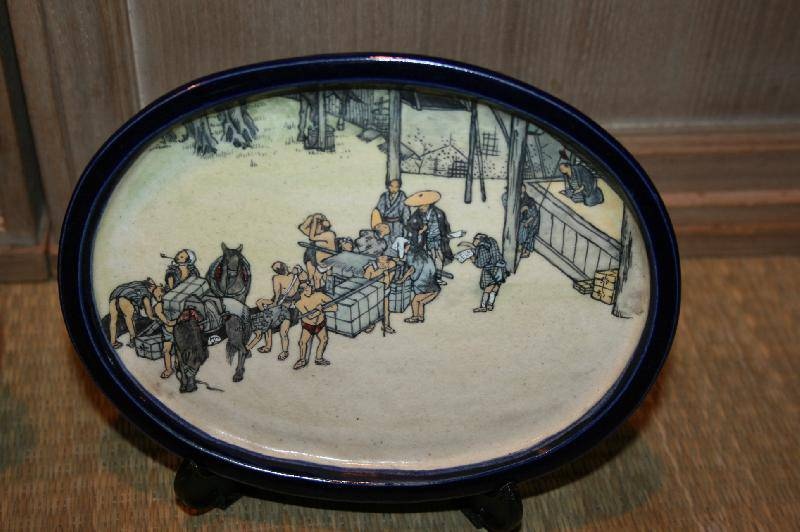
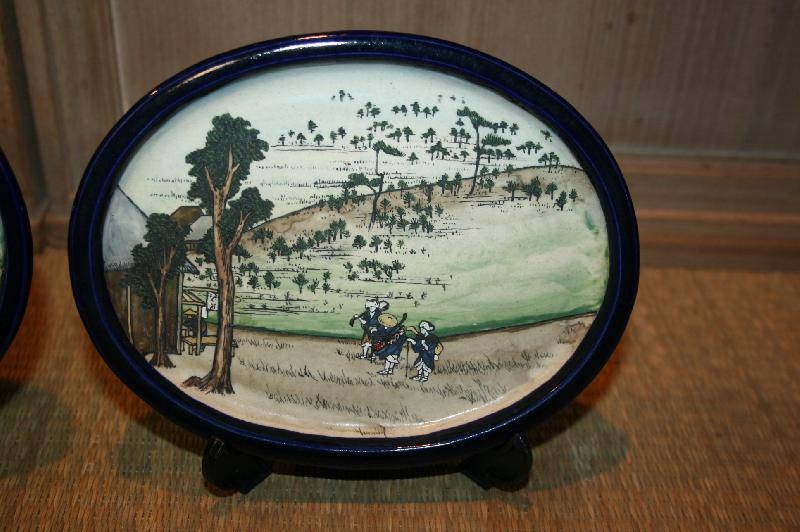
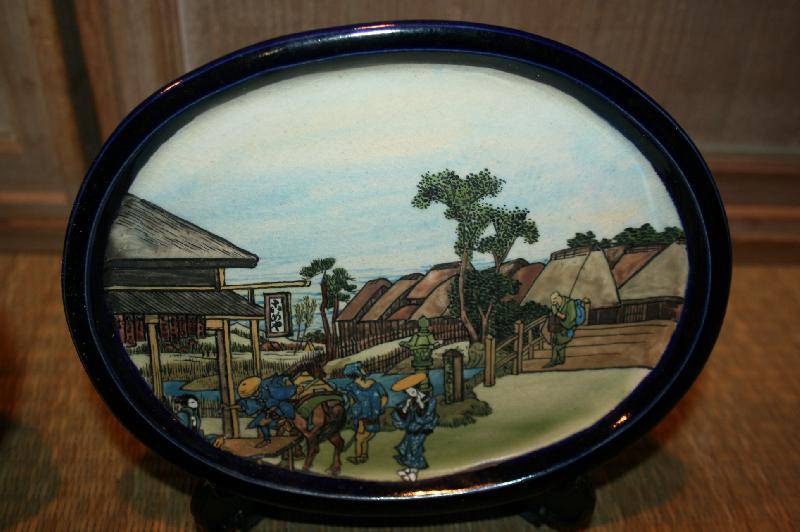
Daisuke Sano, Hiroshige, and the 53 Stations

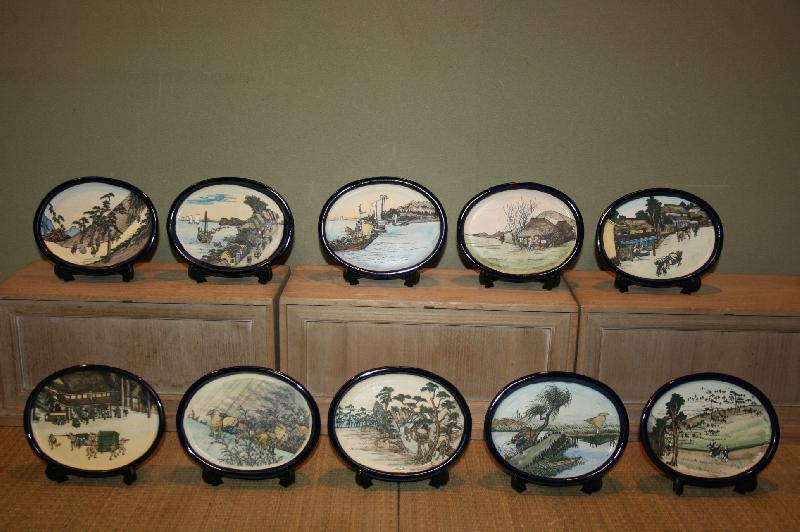
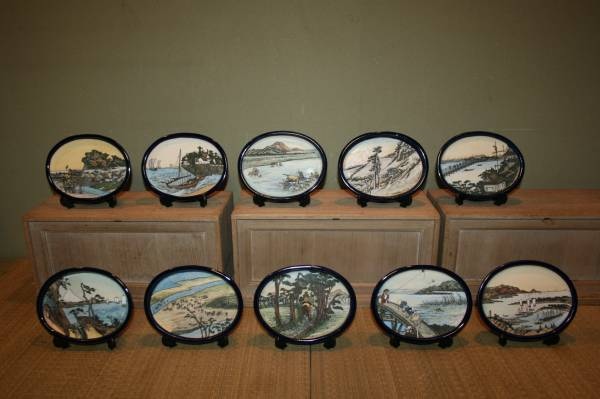
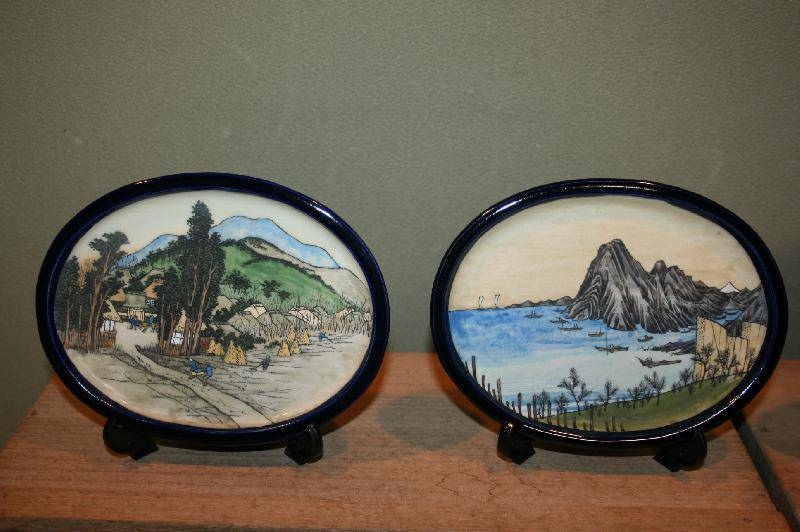
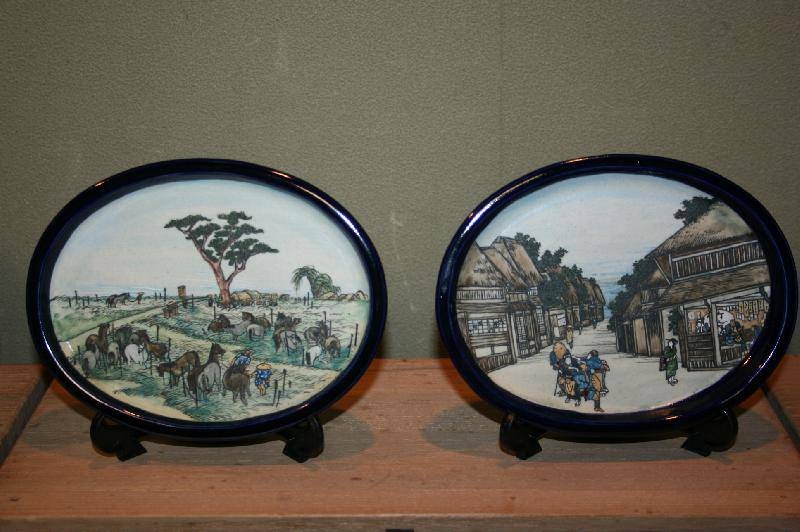
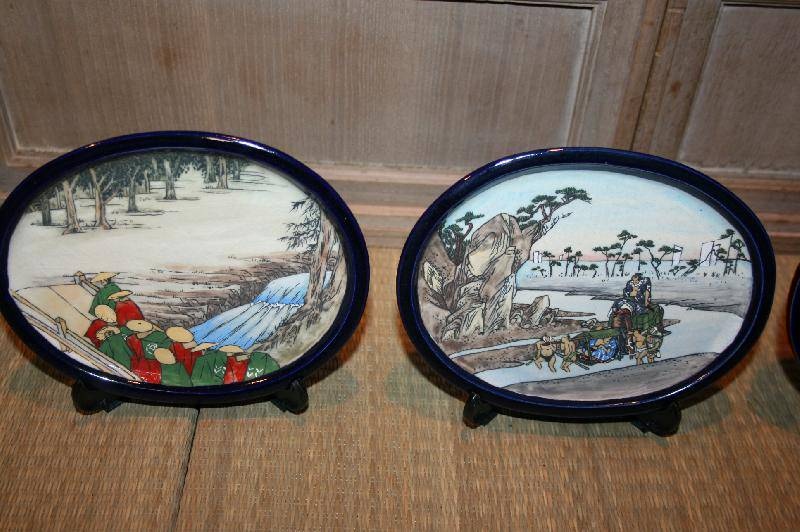
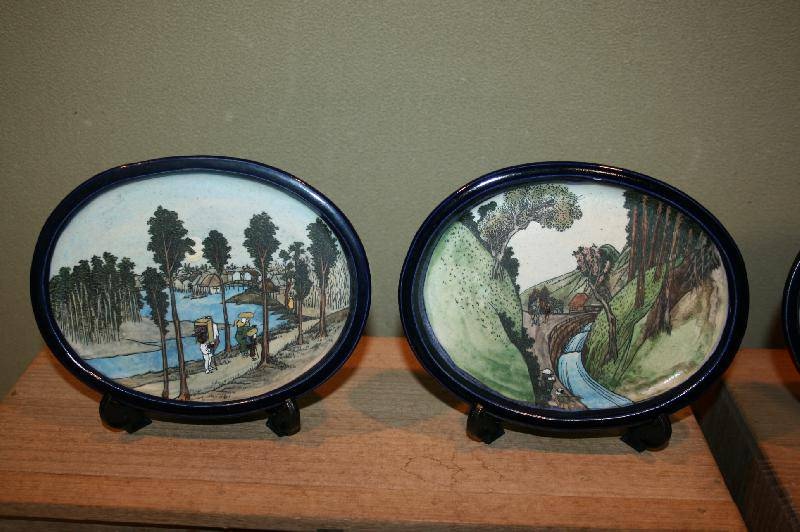
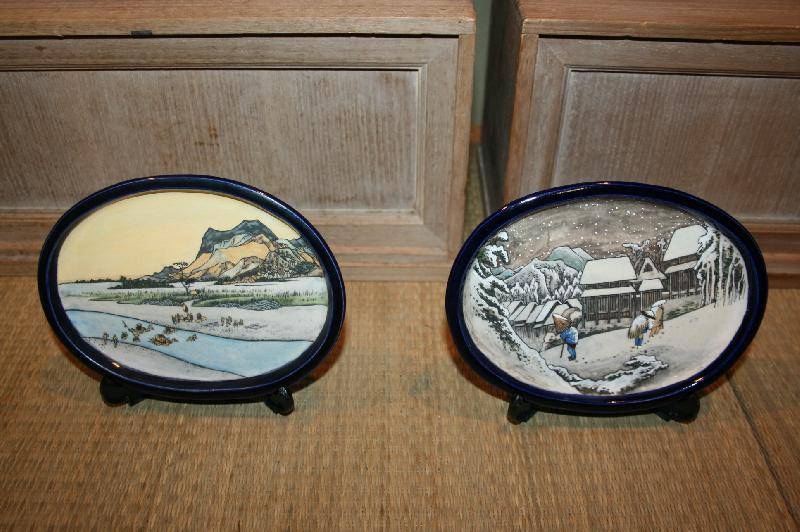
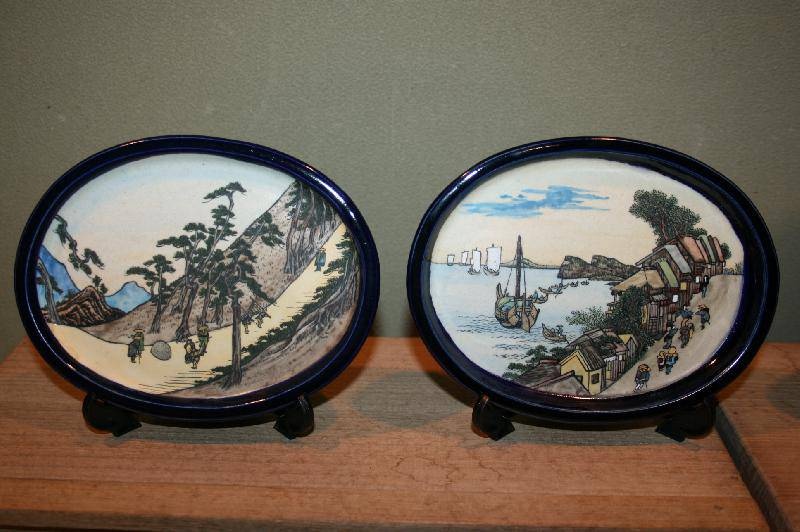
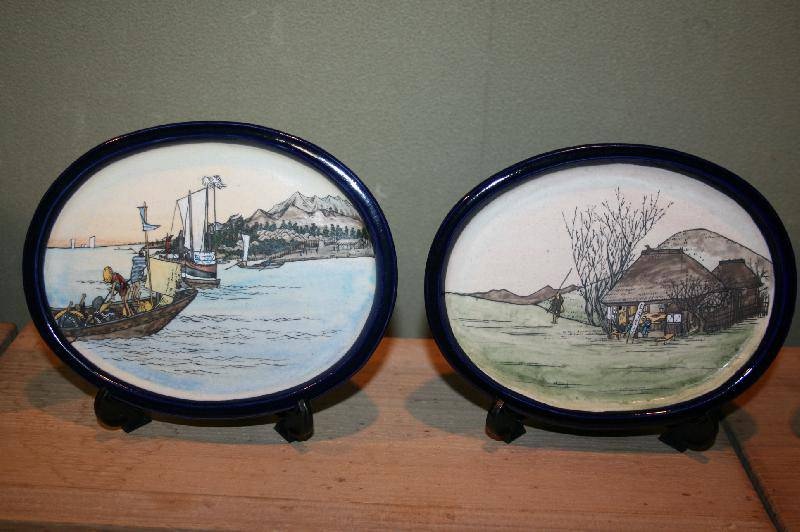
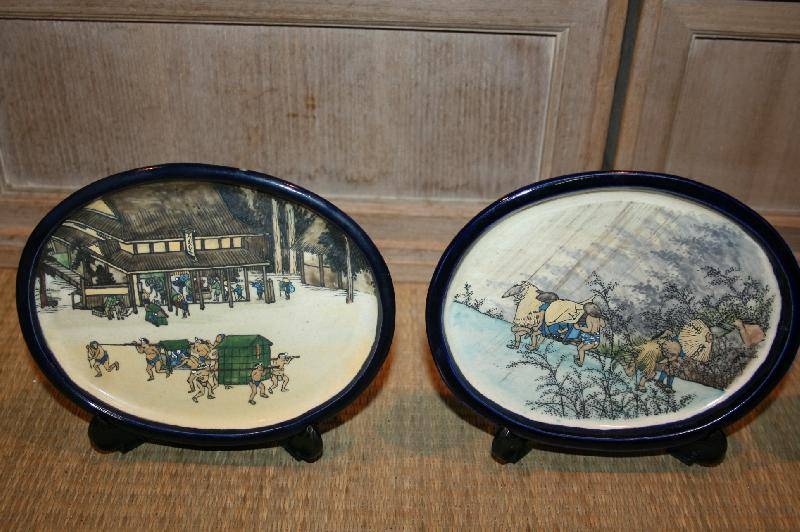
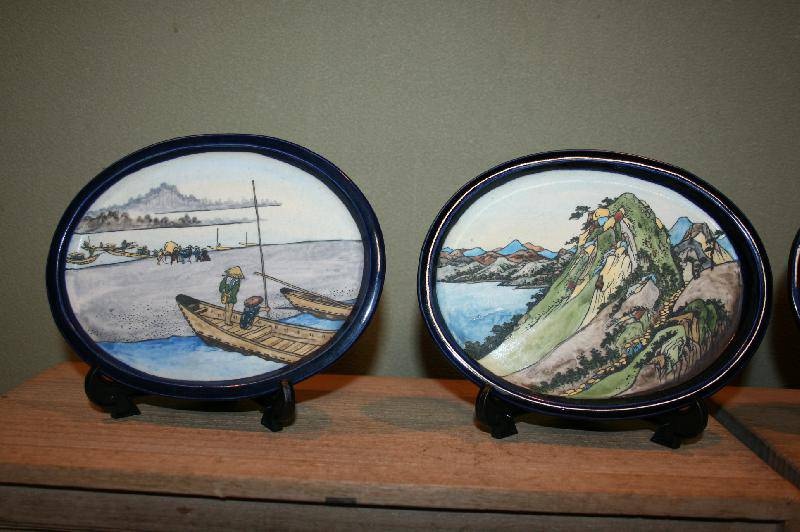
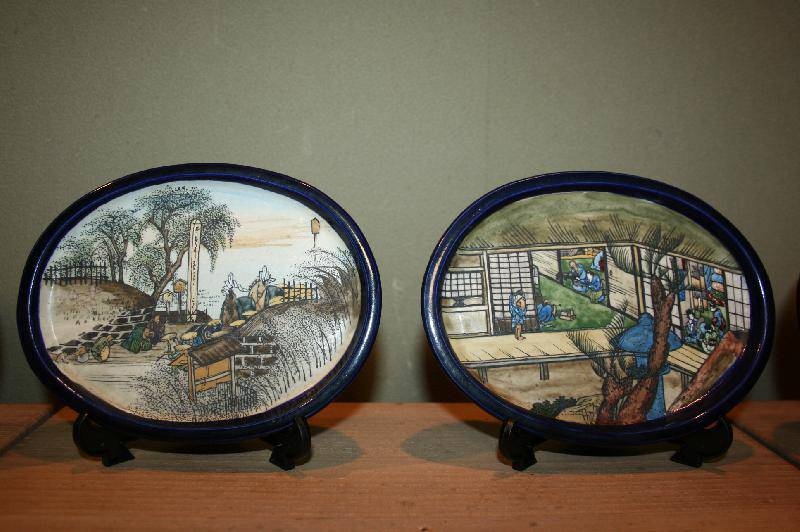
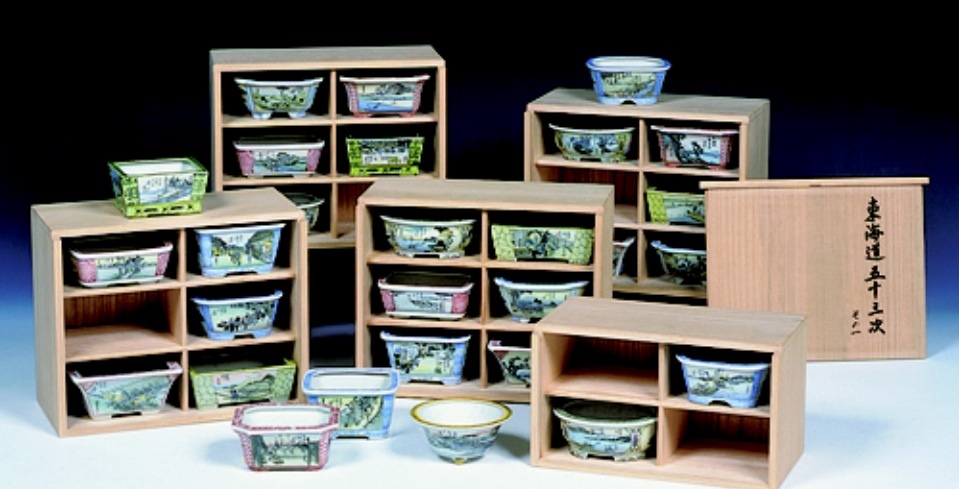
I’ve mentioned them before here on the website, but when I saw these Suiban by Master Painter Sano Daisuke, I thought these would be an excellent opportunity to go into much greater detail about Ando Hiroshige’s 53 Stations of the Tokaido Road.

The Tokaido Road was the commerce and transport artery between the Shogunate capital of Edo and the Imperial capital of Kyoto. Hiroshige first traveled it in 1832, and created the first series of woodblock prints of the 53 stations a year or two later. Along with Katsushika Hokusai’s(previously mentioned on the blog as well) woodblock prints, they created a new trend among the Japanese literati for landscape prints.

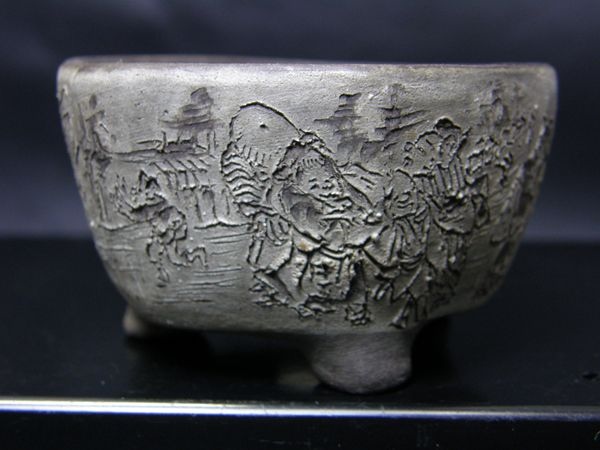
Hiroshige’s prints of the 53 stations are important both to Japanese art in general, and bonsai pottery art specifically. Many(if not all) of the major painters of bonsai ceramics have painted versions of the 53 stations, first, and most famously, Tsukinowa Yusen. I’ve also seen full versions, and parts, from Tsukinowa Shosen(at last years Gafu Ten a full compliment was displayed) Fujikake Yuzan, Tosui, Isseki, and Haruyoshi. The most famous of Hiroshige’s 53 Stations is the Hōeidō edition, which includes views of the 53 stations plus an extra for the Nihonbashi and Kyoto, for a total of 55 prints.

The version presented here is Sano Daisuke’s rendering of the Hōeidō edition in full. For comparison shots, see
Hōeidō edition Wiki
And scroll down to the “The Fifty-Three Stations of the Tōkaidō (Hōeidō edition)”.
Now, on to the Suiban!
20131229-140859.jpg
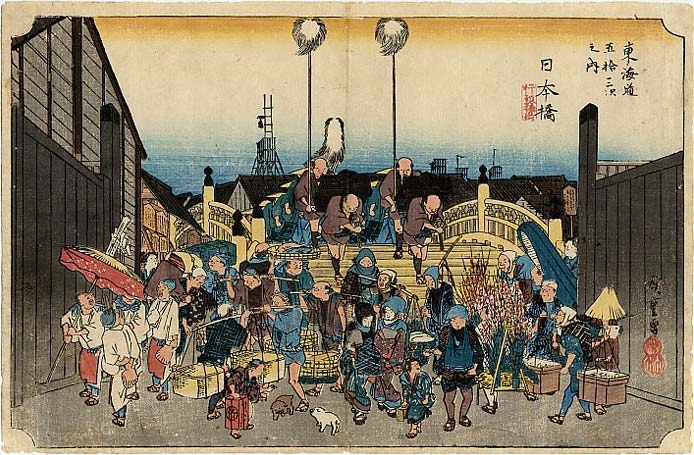
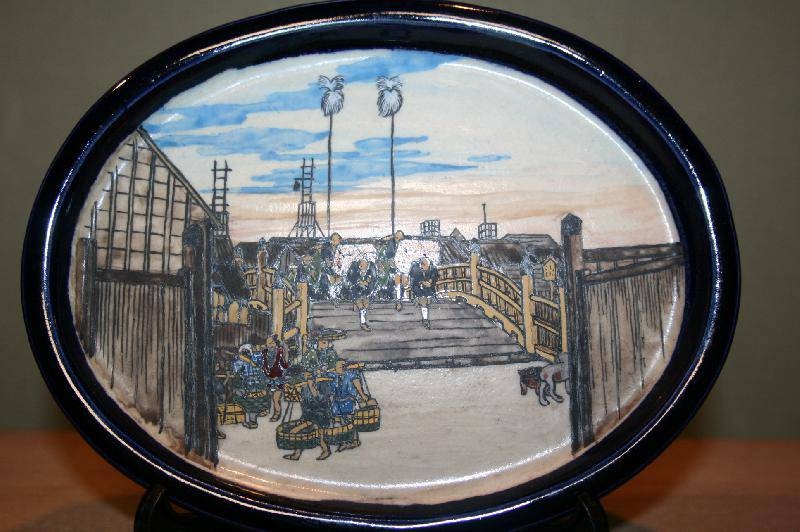
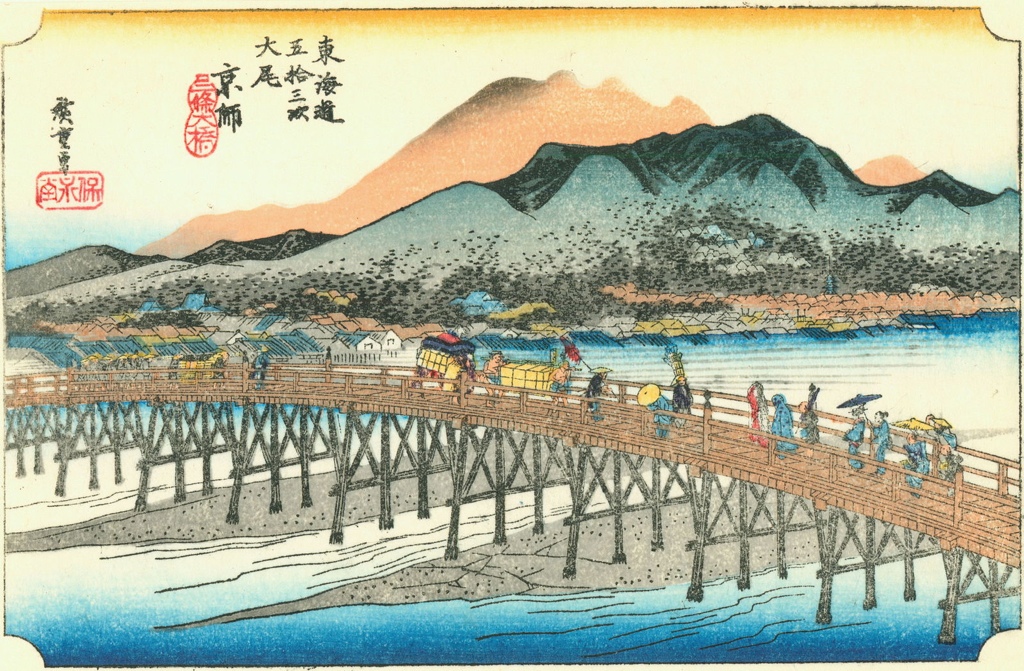
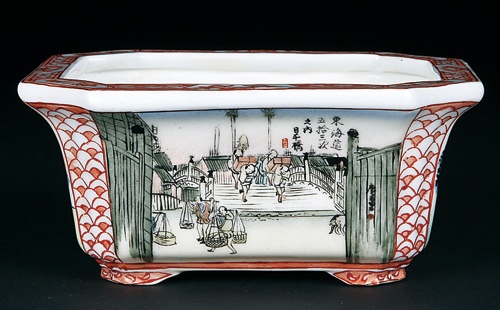
We’ll begin with the beginning and the end(or the end and the beginning, respectively). Here we have the last of the prints on the left, Sanjō Ōhashi at Keishi (“Arriving at the capital”); and the first of the prints on the right, Nihonbashi(“The Bridge of Japan”).

20131229-141417.jpg20131229-141425.jpg
Here, for comparison, is a detail view of Hiroshige’s original “Nihonbashi” and Daisuke’s Homage. Note the differences.
20131229-141630.jpg
And the original 55th print, Arriving at the Capitol.
20131229-141748.jpg20131229-141758.jpg20131229-141804.jpg20131229-141812.jpg20131229-141821.jpg20131229-141829.jpg
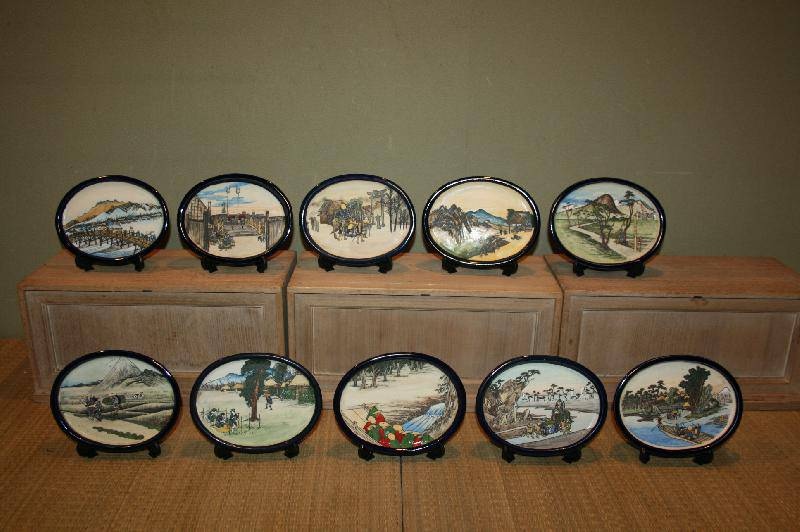
The full collection, 55 Suiban by Daisuke with Kiri Bako.
20131229-142140.jpg20131229-142147.jpg20131229-142155.jpg20131229-142203.jpg20131229-142218.jpg20131229-142231.jpg20131229-142243.jpg20131229-142253.jpg20131229-142301.jpg20131229-142309.jpg20131229-142325.jpg20131229-142335.jpg20131229-142344.jpg20131229-142354.jpg
A few two plate detail views.
20131229-142437.jpg
20131229-143416.jpg
Detail of Daisuke’s “Shirasuka”(the 32nd station) and Hiroshige’s original.
20131229-142445.jpg
20131229-143917.jpg
Detail of Daisuke’s “Fujieda”(the 23rd station) and Hiroshige’s original.
20131229-144048.jpg20131229-144055.jpg
Detail of Daisuke’s “Kawasaki”(the 2nd station) and Hiroshige’s original.
20131229-144252.jpg20131229-144302.jpg
Detail of Daisuke’s “Okazaki”(the 38th station) and Hiroshige’s original.
20131229-144428.jpg20131229-144610.jpg
Detail of Daisuke’s “Futagawa”(the 33rd station) and Hiroshige’s original.
20131229-144716.jpg20131229-144917.jpg
Detail of Daisuke’s “Hodogaya”(the 4th station) and Hiroshige’s original.
20131229-145035.jpg20131229-145239.jpg
Detail of Daisuke’s “Totsuka”(the 5th station) and Hiroshige’s original.

And, a few other Homages to the 53 Stations:
20131229-163451.jpg20131229-163502.jpg20131229-163457.jpg
First, we have the entire 55 prints emulated by Chinese Painter 景徳鎮, KeiTokuShin, with two detail shots.
20131229-163657.jpg
Shinano Chazan.
20131229-163724.jpg20131229-163732.jpg20131229-163741.jpg
And three Miyazaki Isseki. Now, go here:
Isseki Pot Video
Awesome.
20131229-163902.jpg20131229-163909.jpg
Haruyoshi Winter scenes. While not direct copies of Hiroshige’s Tokaido, they owe much to Hiroshige’s depiction of “Kambara”.

20140103-134934.jpg
Bigei, the 1st print.
20131229-164047.jpg
“Kambara”, the 14th station, by Hiroshige.

20131229-164434.jpg
Tsukinowa Shosen.

Thanks for reading! I hope you’ve enjoyed seeing this glimpse into the history of painted Bonsai containers. Up next, Bonsai Sekai article, and From my Collection 16!
Happy New Year!

Posted in Famous and Antique Potters | 1 Comment